In recent days, the central office of the communist republic of china, the office of the state council, has issued an opinion on strengthening protection of intellectual property rights, and has issued a circular requiring the various departments of the regions to follow up in practice。
The full text of the opinion on enhancing intellectual property protection follows。
Strengthening the protection of intellectual property rights is the most important element in improving the system of protection of property rights and the greatest incentive for improving the competitiveness of our economy. In order to follow up on the decision-making arrangements of the party centre and the state council to strengthen the protection of intellectual property rights, the following observations are made to further refine the system and optimize the mechanisms。
I. General requests
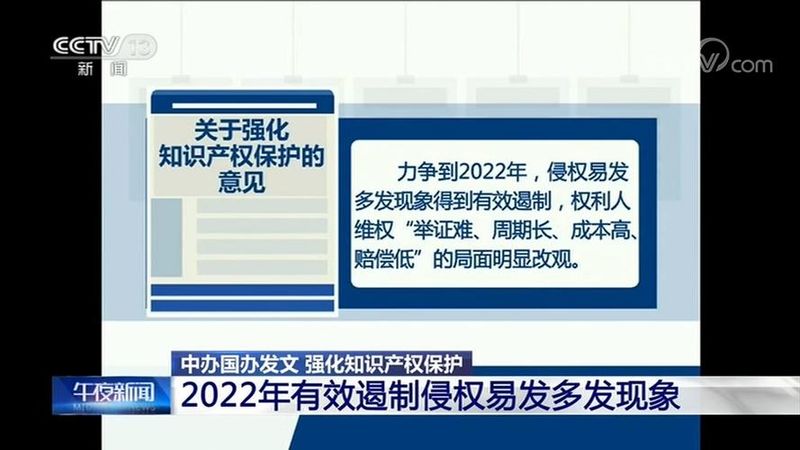
Guided by xi's socialist philosophy of china's new era, the 19th congress and the 19th congress, the 3rd and 4th china congresses, have been guided by the spirit of the party's 19th and 19th congresses. They have been closely focused on the integrated promotion of the overall “four ones” and the coordinated promotion of the “four all fours” strategy. They have firmly established that the protection of intellectual property rights is an innovative concept. They adhere to strict protection, coordination and coordination, focus on breakthroughs and equal protection. They have continued to reform and improve the system of protection of intellectual property rights. By 2022, the risk of multiple violations had been effectively curbed, and there had been a marked improvement in the rights-holders' situation of “provenness, length, high cost and low compensation”. By 2025, social satisfaction in the protection of intellectual property rights has reached and remained high, protection capacity has increased effectively, protection systems have improved, business environments that respect the value of knowledge have been optimized, and the fundamental safeguard of intellectual property rights systems that inspire innovation has been more effectively implemented。
Ii. Strengthening institutional regulations and responsibilities for the strengthening of the protection of investments
(i) increased penalties for human rights abuses. To study the need for and feasibility of developing basic laws on intellectual property rights, and to expedite improvements in patent, trademark and copyright laws. Improving legislation on the protection of geographical indications. (c) expedite the introduction of a system of punitive damages for tort in the areas of patents and copyrights. (c) substantially increase the cap on legal damages for tort and increase damages. Strengthening civil legal protection and effective enforcement of the punitive compensation system. Research has been carried out on measures such as the confiscation of proceeds of crime and the destruction of counterfeit goods in violation of the law, and administrative penalties have been increased. Regulation of malicious registration of trademarks, irregular patent applications and malicious actions. Explore enhanced effective protection of business secrets, confidential business information and their source codes. Strengthening criminal justice protection and promoting the revision and improvement of criminal law and judicial interpretation. (b) to intensify its efforts to combat crime, to study the lowering of the criteria for the criminalization of offences against intellectual property, to increase the penalties imposed, to modify the description of offences and to promote the resolution of matters involving violations. To strengthen the system for combating fraudulent crimes of human rights violations, to explore and improve the mechanisms for the detection and detection of false intelligence, and to carry out specific regularized counter-attacks and maintain high-handedness。
(ii) strictly regulated standards of evidence. (c) to further the reform of the “triple court” mechanism for intellectual property civil, criminal and administrative cases, to improve the appeals mechanism for intellectual property cases and to harmonize judicial standards. Development of standards for the determination of trademarks and patent infringement in administrative enforcement. (c) regulate standards of evidence for different channels of justice, administrative enforcement, arbitration, conciliation, etc. Promoting the harmonization of administrative law enforcement and criminal justice standards, improving referral requirements and evidentiary standards, developing evidence guidance and smooth administrative law enforcement and criminal justice interfaces. (b) develop a judicial interpretation of the rules of evidence in civil proceedings relating to intellectual property, with a view to addressing the problem of proof by rights holders. (d) explore the establishment of a system of notarized rewards for violations of the right to evidence and reduce the burden of proof on rights holders。
(iii) strengthening case enforcement measures. Establishment of a sound judicial confirmation mechanism for agreements for the settlement of intellectual property disputes. Establishment of a system to improve the “blacklist” of the integrity files of market subjects, the regulation of credit classification of market subjects, the establishment of a system for the social publication of lists of enterprises for repeated and intentional abuse, and the development of a joint disciplinary mechanism for breach of trust. (c) the progressive establishment of an area-wide guidance mechanism on intellectual property protection cases and a public hearing mechanism for major cases. Increased scrutiny of expatriation and promotion of a unified and equitable rule of law environment。
(iv) improving the system of protection in new areas of business. In response to developments in new areas of business, research has strengthened the protection of patents, trademarks, copyrights, new varieties of plants and integrated circuit charting. Explore the establishment of a drug patent link system, a drug patent term compensation system. Research to strengthen the protection of intellectual property rights in the broadcasting of sporting events. Strengthening the promotion of notary electronic storage techniques. Study the establishment of rules for the protection of intellectual property rights of cross-border electricians and standards for the management of the protection of electrical platforms. Production and issuance of guidance on the protection of intellectual property rights in enterprises, development of operational guidelines such as model contracts, rights-based processes, and encouragement to enterprises to strengthen risk-prevention mechanisms and continuously optimize mass innovation to protect the environment. Research to develop protection options in areas such as traditional culture and traditional knowledge and to strengthen intellectual property protection in chinese medicine。
Iii. Strengthening social oversight and co-limination and building a between investigate prohibitions bureau
(v) strengthening law enforcement oversight. (c) strengthening human oversight and conducting intellectual property law enforcement inspections. - to carry out regular research on the protection of intellectual property rights in the context of the association's democratic monitoring role. Establish a sound system of rewards and penalties to improve the effectiveness of law enforcement controls. Increased oversight and accountability, promotion of the implementation of relevant administrative law enforcement information disclosure requirements, greater public access to information on law enforcement cases, and social and public scrutiny。
(vi) establishment of a sound model of social governance. Improving mechanisms for intellectual property arbitration, conciliation and notarial work, fostering and developing arbitration institutions, mediation organizations and notaries. Industry associations and chambers of commerce are encouraged to establish self-regulatory and information communication mechanisms for intellectual property protection. (c) inducing the proxy industry to strengthen self-regulatory autonomy and to improve the overall level of agency regulation. Strengthening of the integrity system, the integration and legal dissemination of information relating to intellectual property production, administrative penalties and spot checks, through the national system for the public disclosure of credit information for enterprises. Establish a sound volunteer system and mobilize social forces to participate actively in intellectual property protection governance。
(vii) strengthening professional technical support. Strengthen scientific and technological research and development to enhance intellectual property protection through technological means such as source traceability, real-time monitoring and online identification. The establishment of an intelligence detection system for abuse and fraud leads to improve efficiency and accuracy in combating abuse and fraud. The introduction of a system of technical investigators in the handling of administrative enforcement cases and judicial activities relating to intellectual property, to assist administrative enforcement authorities and the judiciary in identifying technical facts accurately and efficiently. (c) explore the strengthening of capacity-building for the identification of intellectual property rights violations, study the establishment of a system for the assessment of violations and damage, and further strengthen the professionalization of forensic bodies and the standardization of procedures。
Iv. Optimizing collaborative interface mechanisms to break critical aspects of the rapid protection of intellectual property rights
(viii) optimization of the process for the delegation of authority for the defence of rights. Strengthen capacity building for reviews of patents, trademarks, new varieties of plants, etc., and further compress the review cycle. Emphasis is placed on improving the quality of patent reviews for new practical and visual designs and enhancing source protection. Further develop the role of the system of remote and ex situ hearings in the handling of major tort administrative enforcement cases. (c) to strengthen mechanisms for communication and sharing of information by improving the interface between administrative powers, notarial certification, arbitration, conciliation, administrative enforcement and judicial protection, and to create operational mechanisms that are organically linked and mutually reinforcing across all channels, with a view to achieving greater efficiency in the defence of rights。
(ix) strengthening cross-sectoral cross-regional casework collaboration. Development of cross-sectoral case handling protocols and development of inter-departmental joint case detection and referral mechanisms. (c) to develop a mechanism for linking administrative law enforcement and public security authorities in the investigation of cases of intellectual property suspected of crimes. :: explore the establishment of arbitration and conciliation priority referral mechanisms in high-profile areas. (c) establish a sound system of diversion of intellectual property cases and promote reform of the system of diversion of cases. (b) promote the establishment of cross-regional mechanisms for the consideration of intellectual property cases in provincial administrative districts, with a view to giving full effect to the role of the court's designated jurisdiction and effectively breaking down local protection。
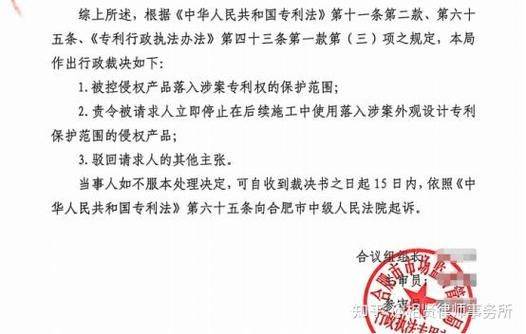
(x) facilitating the expeditious handling of summary cases and disputes. Establishment of a market-focused directory and rapid processing channels such as administrative enforcement, arbitration, mediation, etc., for key areas and links such as electrical platforms, fairs, professional markets, imports and exports. Promote the establishment of an electronics platform for the efficient use of patent evaluation reports to deal quickly with new practical and outward-looking patent-design abuse complaints systems. (c) to direct the regulatory management of websites, remove tort content, block or disconnect links to pirated websites, stop the dissemination of information on torts, and combat the use of copyright litigation for speculative gain。
(xi) strengthening institutions for the rapid protection of intellectual property. The creation of a number of intellectual property protection centres in the dominant industrial cluster, the establishment of rapid case processing and scientific diversion mechanisms, and the provision of quick review, quick determination of powers and quick one-stop dispute resolution. Accelerate the process of patenting, trademarking, authorizing, securing and defending new varieties of plants in priority technical areas. Promote the use of mediation for rapid dispute resolution and efficient access to protection channels and links such as administrative enforcement, judicial protection and arbitration。
V. Sound communication mechanisms for shaping intellectual property rights and protecting the environment of superiority
(xii) greater international cooperation. Active overseas tours, round tables, cooperation and exchanges with relevant countries and organizations to strengthen intellectual property protection. To explore the establishment of thematic fairs at major international fairs and conduct overseas exhibitions of intellectual property protection achievements in china. The full realization of the important role of the intellectual property system in promoting a “one-way path” for joint construction, and support to co-establishment countries in building their capacity to share patent and new plant species reviews. (b) make full use of the various mechanisms for cooperation in multi-bilateral dialogue to enhance cooperation and consultation on intellectual property protection. The development achievements of intellectual property protection in our country have been actively publicized through a combination of international exchange and cooperation platforms。
(xiii) sound communication channels with domestic and foreign rights holders. The exchange of information with national and foreign trade associations, chambers of commerce, social organizations, etc. Has been strengthened through information meetings and business seminars at diplomatic and consular offices in china. Organization of briefings on the protection of intellectual property rights to inform the media and the public at large of important matters and developments in a timely manner, as well as to increase confidence and understanding and respond positively to domestic and foreign rights-holders ' concerns。
(xiv) strengthening overseas advocacy assistance services. Improve the mechanism for the prevention of overseas intellectual property disputes, strengthen the study of major cases, establish a dynamic mechanism for the revision of foreign intellectual property laws and issue timely risk warning reports. Strengthening of the overseas information services platform, development of guidance on overseas intellectual property dispute response and development of a coordinated overseas dispute resolution mechanism. Support to various social organizations in the development of systems for the prevention and control of intellectual property-related risks. Insurance agencies are encouraged to carry out such insurance operations as insurance against tort liability of intellectual property abroad, patent enforcement and patent tort losses. The establishment of a mechanism of expert advisers on human rights abroad effectively promotes equal protection of the legitimate rights and interests of our rights holders abroad。
(xv) sound coordination and access to information mechanisms. Improve coordination mechanisms for foreign law enforcement and increase coordination of efforts to further strengthen foreign intellectual property rights at our diplomatic and consular missions abroad. The establishment of overseas intellectual property watch enterprises and social organizations and information communication mechanisms. Sound mechanisms for communication of information and response to major intellectual property-related disputes. Organization of a survey on the status of the protection of intellectual property rights of our enterprises abroad, as well as a study on the establishment of a national protection assessment mechanism to contribute to the improvement of the protection of the environment of our enterprises ' intellectual property rights abroad。
Vi. Strengthening infrastructure to support intellectual property protection
(xvi) strengthening basic platform building. The establishment of a national data centre on intellectual property and a network for the monitoring of protection information, as well as the strengthening of statistical monitoring of information on registration, approval of notices, dispute resolution, major cases, etc. Establish mechanisms for coordination and information-sharing on intellectual property law enforcement information, increase information integration and improve the level of integrated research and macro-decision-making. Strengthening the building of software and hardware for public service platforms such as advocacy assistance and reporting of complaints, enriching the platform's functionality and enhancing the quality of services for the benefit of the population。

(xvii) strengthening the professional workforce. Encourage greater training of professionals in intellectual property protection at local, sectoral, educational, trade associations and institutes. Strengthening the staffing and professionalization of the intellectual property administration and the judiciary, and establishing effective mechanisms to motivate administrative law enforcement and judicial personnel to ensure stable and orderly communication. (d) to promote the professionalization of intellectual property criminal cases and to improve investigations, arrests, prosecutions, the efficiency of trials and the quality of cases. (d) to promote the rule of law in the administration and protection of intellectual property rights by introducing a comprehensive system of public and corporate lawyers and legal advisers in the relevant administrations and enterprises. The full role of legal services, such as lawyers, in the mediation of intellectual property disputes, representation of cases, legal literacy etc. Establish a system of selection, management and incentives for intellectual property arbitration, conciliation, notarization, social supervision, etc. (b) to strengthen the training of professionals in the field of intellectual property protection and to give full effect to their role in the practice of protecting human rights。
(xviii) increase resources and support. Regional departments need to invest more in intellectual property protection. Encourage areas where the conditions are ripe to do so to take the lead in building pilot demonstration zones for intellectual property protection, leading to several protected highlands. To promote intellectual property administrative enforcement and the modernization and intellectualization of judicial equipment. Enterprises are encouraged to invest more in financing and to raise their capacity and level of self-defence through market-based mutual funds for intellectual property protection。
Vii. Strengthening organizational implementation to ensure implementation of the mandate
(xix) strengthening organizational leadership. (b) strengthening the leadership of the party in the protection of intellectual property rights in general. The parties concerned, in accordance with the division of functions, should study specific policy measures and work together to promote intellectual property protection systems. The national intellectual property agency, in cooperation with the relevant departments, is to continuously improve its working mechanisms, improve coordination and oversight to ensure that the requirements of its work are effectively implemented and that reports are submitted in a timely manner to the party central and state councils。
(xx) follow-up. Local party committees and governments are required to fully implement party central and state council decision-making, enforce territorial responsibility for intellectual property protection, convene periodic party committees or government conferences, study intellectual property protection, strengthen institutional mechanisms, design accompanying measures and fund personnel. Intellectual property protection needs to be integrated into the important agendas of local party committees and the government, and periodic assessments are conducted to ensure that measures are in place。
(xxi) enhanced appraisal. Establishment of a sound appraisal system to integrate ipr protection performance into the performance appraisal and business environment evaluation systems of local party committees and government. Establish an annual survey of social satisfaction in intellectual property protection and an assessment of the level of protection. Improve the reporting and interviewing mechanism and urge party committees at all levels and the government to step up their intellectual property protection efforts。
(xxii) strengthening incentives. In accordance with relevant national provisions, recognition is given to groups and individuals who have made outstanding contributions to intellectual property protection. Governments at all levels are encouraged to take full advantage of existing incentive systems to enhance recognition of intellectual property protection for advanced workers and good social actors. (c) improve incentives for the filing of false reports of violations, increase incentives for whistle-blowers and stimulate public participation and initiative in intellectual property protection。
(xxiii) strengthening advocacy guidance. The various departments of the region need to strengthen public opinion and regularly publicize typical cases of social influence, so that the concept of enhanced protection of intellectual property rights becomes more visible. Strengthening public awareness campaigns, activities such as the protection of intellectual property rights in enterprises, establishments, communities, schools, networks, etc., are constantly raising awareness of intellectual property protection in society in general and in innovation entrepreneurs in particular, and contributing to a new era of intellectual property protection。