


Open knowledge management in an innovative environment was published by science press in july 2019 as an academic and practical monograph on knowledge management and knowledge services. The book was revised by young scholar wang qian on the basis of his doctoral thesis, and another sister published in the same year as cross-border thinking, which is a central expression of his commitment to open cross-cutting integration in the fields of intelligence, library science, economics, philosophy and computers. The book explores the root causes of open knowledge management, the core concept of open knowledge management, by systematically combing and integrating the theoretical foundations of open innovation research, open knowledge research and research on knowledge management models. The openness to knowledge is represented by both a form of knowledge and a mechanism of knowledge governance at different stages of the open-source movement, open access, open education, open knowledge disclosure and open innovation. In recent years, with the financial support of research institutes, universities, libraries, etc., the chinese academy of sciences, professor wang zheng, who is a specialist in the chinese academy of sciences networking information services, has been working on a number of priority projects such as open access, knowledge management, chairing projects funded by the national post-doctoral science fund i, proposing innovative knowledge management models and providing practical guidance for individuals, organizations and societies to build open knowledge networks。
The book builds the theoretical framework and model of open knowledge management. At the practical level, theoretical models have been interpreted and validated through field-based research and case-by-case analyses of knowledge management practices, implementation models for open knowledge management have been further refined, key factors affecting implementation have been analysed and corresponding operational strategies have been provided in a dynamic knowledge environment. M. Gibbons, while drawing on concepts such as “mass economies”, has proposed the pursuit of knowledge expansion gains, needs to address the optimal allocation of knowledge stocks. Traditional approaches to knowledge organization cannot alone support precise knowledge findings on specific topics, and there is a necessary link between an open innovation environment and the development of think tanks. Knowledge openness and knowledge management reflect a strong focus on social responsibility and at this stage can provide directional, scientific and systematic information support for decision-making in government, business and even socio-political economic development. Knowledge management, therefore, carries with it responsibilities and obligations for socio-political, economic and cultural development, requiring targeted decision-making in different areas and events to break the current limitations in the development of the information base. The book consists of nine chapters, three successively edited, with a clear, logical, sound, informative and analytical approach, accompanied by in-depth interviews with knowledge managers in practice areas. Throughout the book, there are five significant revelations:

Innovative construction of a knowledge management model for universities. The doctrine helps to guide higher education institutions in their teaching and teaching work and to develop good managerial staff in the professional field. With the increasing development of science and technology, new media technologies, represented by the internet, are also becoming new communication tools, leading to changes in the functioning of higher education libraries, moving from single-documentation resource building to full-fledged openness. How can this shift be achieved? How can personal knowledge management be developed to explore ways to operate beyond the explicitization of hidden knowledge? These are all subjects worth exploring in tertiary knowledge management. Improved open knowledge management models provide new theoretical and methodological innovations in information management science, computing economics, economics, etc. The development of knowledge management models in an open and innovative environment is important for upgrading the scientific innovation capacity of our universities. This is the basis for improving the quality of academic results, promoting the industrialization of scientific and technological results, improving evaluation systems, enhancing intellectual property protection and creating a culture of knowledge branding。
Optimizing an action strategy for integrating social knowledge management. In the information age, social media services are increasingly used to record, store, transmit and access information, requiring the creation of a new paradigm of socialized learning and social interaction. The construction of a new generation of open knowledge management and service systems requires the reorganization and processing of semantic technologies, information integration, social networking education at the individual, organizational and social levels, using theories such as knowledge management and open innovation, and the design of specific implementation methods based on the characteristics of knowledge management jobs. The task of introducing km into an open social innovation system is, of course, challenging, requiring a rationalization of the inherent logical linkages and differences in km and governance theory, addressing issues such as km models, methods of integrating knowledge resources and knowledge management mechanisms, and a necessary way to build a socialized knowledge team under the km model. To open up its own expertise to the community, to shift to “resource quality optimization”, to truly provide quality public decision-making information advisory services to meet national strategic needs。
Innovation drives business open knowledge management service practices. Corporate collaboration and innovative thinking based on knowledge management in the think tank can facilitate the process of decentralization of knowledge from concentration to concentration, leading to an orderly and efficient system of open and synergistic innovation. In an open innovation environment, knowledge management and governance models are fundamentally different from traditional closed innovations and it is interesting to study them. On the one hand, knowledge-sharing mechanisms based on networked organizations build open innovation models based on knowledge integration. On the other hand, innovation and competitiveness are enhanced through effective integration of knowledge. The book focuses on the relationship between open innovation and open knowledge management, explaining open knowledge phenomena, combining open knowledge concepts with open knowledge supply, open knowledge management and open knowledge governance organically, introducing the “privileged-open” dimensions, removing deep-rooted barriers to high-level openness to knowledge and allowing for the full release of knowledge-driven innovation。
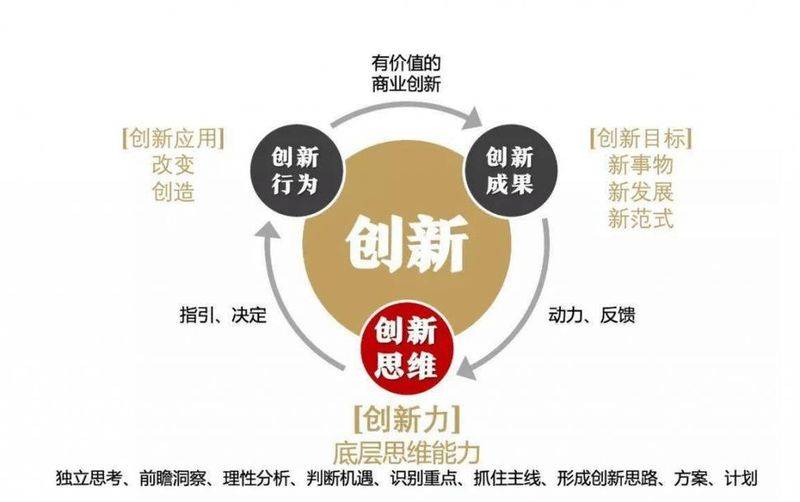
Accelerate the building of a consortium of think tanks in higher education. Building an open and innovative environment and a think tank alliance is a long-term gradual process. As the level of economic development in the country continues to rise and the reform of the higher education system progresses, state support for education has grown, while the rapid development of information technologies, such as the internet, has brought unprecedented opportunities to build the institutions' think tanks. For example, the institute of world economy and political studies of the chinese academy of social sciences shared the resources of the think tank through the establishment of a collaborative portal, which established a national global strategic think tank led by the academy. The think tank organizes and promotes research on global strategic theory and practical issues to provide scientific evidence to governments. Networked think tanks can better integrate quality education resources, achieve comparative advantages and ultimately achieve win-win results. In addition, as an important knowledge-producing organization, the higher education think tanks union has continued to expand its membership, improve its quality and maximize its economies of scale, using a broad-based approach and vision to exchange and cooperate among think tanks, thereby improving the overall level of the knowledge banks of our higher education institutions and meeting national strategic needs. How its role has directly affected the enhancement of the country's overall capacity for innovation, thus determining our ability to successfully meet the challenges of globalization and win the initiative。
The open innovation environment can provide the full support and security for the knowledge management and service development of think tanks, while the resource advantages of the tertiary think tanks, one of the most powerful and dynamic institutions in higher education, provide a sound material basis for the realization of the open innovation environment. The path to the development of tertiary think tanks in an open and innovative environment is based on the concept of “open access” as the basis for intellectual capital advantages; on the other hand, it brings together think tanks to propose a new service model of “coherence - pooling of resources - sharing of knowledge - technology applications - value creation” and to demonstrate by way of example its effectiveness in facilitating the integration and transformation of think tanks' resources。
Effectively improve the availability of knowledge resources across borders. Open knowledge management models provide a new knowledge governance perspective, making knowledge dynamic and enabling new technologies and models to successfully cross borders into knowledge consumption. In this process, there are interactions and games between knowledge producers and consumers: on the one hand, knowledge producers acquire hidden knowledge through knowledge-sharing behaviour, and, on the other, consumers evaluate it and then buy it and share it. Among them, knowledge producers are the subjects of knowledge sharing, while knowledge consumers are the carriers of knowledge use. Because of the virtual nature of the knowledge market, knowledge-sharing practitioners often incur additional costs to reap additional benefits, thus affecting the efficiency of the use of knowledge. In order to increase the value of the use of knowledge and achieve effective knowledge production, it is necessary to design a reasonable incentive mechanism for knowledge holders to work towards transforming hidden knowledge into visible knowledge, while also stimulating knowledge consumers to actively engage in knowledge creation activities. Based on this, the interpretation of the availability of knowledge resources should be adaptive and dynamic. It can be seen both as a conceptual model that includes a willingness to know knowledge needs, a sense of knowledge utility and the use of knowledge in three dimensions, and as the two main motivations of knowledge-sharing practitioners based on social exchange theories - - meeting demand and promoting development; or from a life-cycle perspective of knowledge products, further research on the role of knowledge sharing in the level of awareness of users。
In conclusion, the book is a theoretical, empirical work that addresses knowledge management and service dilemmas, using knowledge as a vehicle to break the original shape and boundaries of knowledge and to construct a system for managing the flow of knowledge in an open environment, with far-reaching theoretical insights and practical innovations. On the one hand, new models of knowledge management derive from different types of open innovation, combining academic, technological and market-based innovation depths. On the other hand, knowledge managers can use this book to explore the knowledge flow path of “hidden intellectualization, outwarding and networking of knowledge transfer”, to create a conceptual model of collaborative innovation in knowledge management based on knowledge integration, to create regional innovation centres centred on academic communities, academic or professional fields, high-school think tanks, collaborative interaction, resource sharing, mutual learning, and common development, and to create a four-pronged platform for integrated research and development services in government + business + university + scientific institutions, to facilitate the transformation of knowledge outcomes in industry and science and technology。
(yang tao, postgraduate programme in social history, fujian university



