Electrical engineering training and electronics applications for electricians
Abstract: training in electrical engineering is a much-needed part of the curriculum of higher education institutions today。
Our practical engineering education is still weak in some areas, leading to electrical engineering training
Access to electronics training for electricians enhances the quality of practical engineering education in the country, while at the same time
The characteristics of modern industrial production are well reflected. Electrical engineering training will be modern
The professional, methodological and social capabilities of electro-chemicals are of considerable importance
Status. In the face of this situation, the country's leading universities are actively exploring how to adapt to me
The path of practical engineering education in national contexts. This paper will provide training in electrical engineering and electrical electronics
The application was explored。
Keywords: practical training in electronic technology production for electrical engineers
In advanced engineering education systems in countries like europe and the united states, they teach electrical engineering training
An important foundation, the basic principles of post-world war ii engineering education in the united states require that education be based on:
Teaching must be integrated with practical teaching; science-led engineering training should be used; workers
Educational content and experimental content must be kept up to date and must fully reflect modernization
Status and needs of industry. And in my country, electrical engineering training has become a priority for higher education today
Practical teaching elements that need to be strengthened。
1 status of electrical engineering training in the country and targets for training construction
Training in electrical engineering is an important part of improving students ' practical skills. Electrical engineering training
Practice to prepare students for widespread application of advanced engineering technologies at home and abroad
Practical applications of facilities and experimental devices and practical maintenance management capabilities. The point of teaching electrical engineering in higher education is to make it work
Live in an environment of engineering practice that allows students to gain visual control of electrical engineering
Basic requirements of an important link and the process of operation。
Key elements of electrical engineering training include: general knowledge of safe electricity, basic electrical electronics
Technical knowledge and practical operational skills. And we can divide electrical engineering training into major ones
Three levels: first level: the basic level, the requirement for students should be preliminary objects
Knowledge of science and electronic circuits; second level: integrated level, where teaching aims to demand
After learning, students should have a certain knowledge of electronic circuits and electric tractors; innovation level, yes
Students are asked to complete prescribed or self-designed innovative projects based on prior hands-on training。
As an industrial student, apart from solid practical skills and professional theoretical knowledge
In addition, students should have practical skills in electronic and electrical applications and familiarity with modernity
Material processing. Electronics and electrical engineering training to train students in electrical and electronics
Integrated skills, and schools should strengthen their training in this area in order to meet the future needs of students
The need for practical skills at work serves the purpose of learning。
2. Current status of the teaching of electronics in electricians
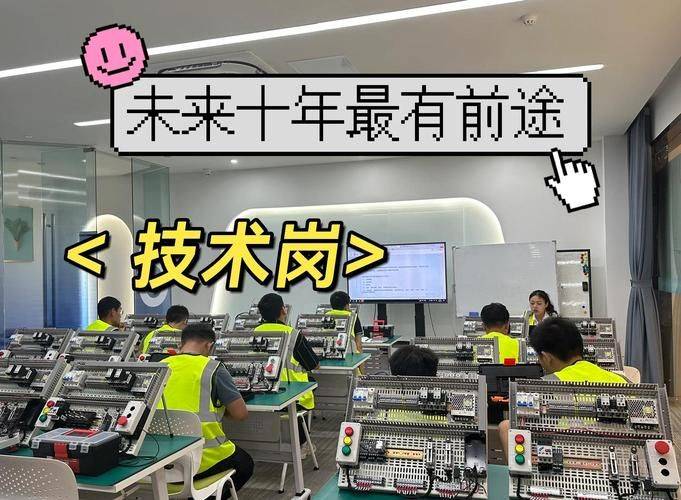
Electrotechnologies and electronics technologies are being developed with rapid development
Extensive applications. In modern society, electronics technology is closely linked to all new technologies,
Therefore, the technical and non-electric disciplines of higher education schools have a very important course in electronics for electricians,
At the same time, electrical electronics have become an important part of electrical electronics disciplines. As a very practical course, electrical electronics practice is not just that students understand and master. Rice
It's an essential part of the knowledge process, and it also develops students' ability to observe
Power, ability to think, methods of learning and spirit of exploration, and employment for future work of students fight
Next good foundation。
Electrical electronics is the basic rule for studying electrical and electronic technology, and analytical methods
And applied basic courses. It should be basic, applied and advanced, electrical and electronic
The foundation of technology means that it studies basic concepts, basic patterns and basics of electrical electronics
Application methods. Applied means that students in the non-electricity sector are retrained in electronics
Appliance. Advanced is the ability to track and reflect modern electronics
Recent developments and trends in the development of arts and electrical technology. On the basis of all these characteristics, the electrician electronics
The teaching of arts introduces new requirements: (1) electronics for electricians should be the future of non-electricians
Basic knowledge about electricity; basics for follow-up professional courses; also for them
This is the first time i have been able to learn, innovate, study and broaden the base. (2) e-technologies for electricians
To be practical, to focus on skills training, to require students to be able to relate theoretically to reality,
This enables students to develop a comprehensive capacity to analyse and solve practical problems. (3) system and internalization of the curriculum
Be able to evolve and evolve with the actual needs of teaching; the development of electrical and electronic technologies
Ditto。
3. Ways and means and content of teaching electronics in the electronics industry
3. 1 the course on electronics for electricians includes three main components: first, basic knowledge and analysis of the circuit
M: includes direct-flow circuits, single-stage communication circuits, three-phase communication circuits, transient process of circuits, etc.;
The second is electrical and control components: basic knowledge of magnetic circuits, exchange of wire circuits, voltage
Structure and operation of the device, isotrometer motor, relay, contact control system, programmable
Sequence controllers, etc.; three are electronic components: digital electronics and analog electronics,
Digital electronics technologies include triggers, combination logic circuits, logical portal circuits, etc.; analogue electronics
Technologies include amplification circuits, semiconductors, direct current steady voltage power, integrated computing magnification circuits
Wait。
In determining the contents of the e-technologies course, social and methodological capabilities will be used
The development of strength and professional competence is seen as equally important. Of which social capacity
These include ethics, solidarity, communication coordination, etc. The main elements of methodological capacity are:
Capacity to independently learn about new technologies, ability to analyse, solve practical problems, assessment and conclusion
Fruit capacity. The main elements of professional capacity are: installation of circuits, commissioning capacity, mapping of circuits
Capabilities, of course, are also innovative。
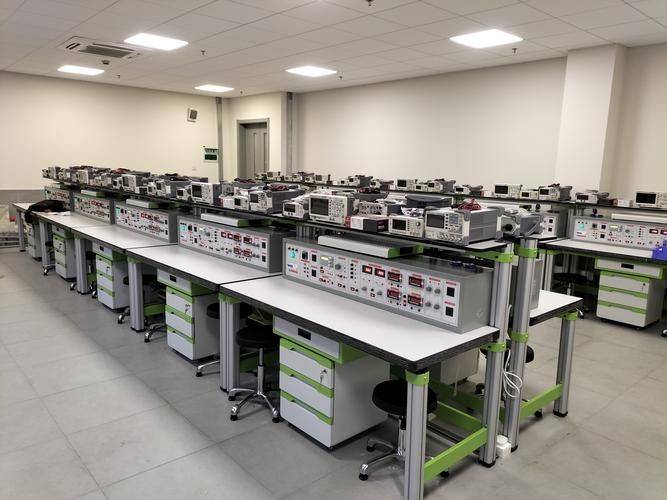
3. 2 three levels of e-learning for electricians
In the electronics course, teachers are asked here to pay attention to these three
Different levels of issues:
First of all,
The content of basic practical training should be strengthened. Here's the thing to stress, key
Practical teaching cannot be considered a second class of basic theory teaching, ignoring his presence
The key role of theoretical knowledge in the process of conversion to technical skills. Basic hands-on training is an essential condition in the process of developing people with extremely strong applications. In fact, ma
Instruction is the training camp that really determines whether a student is fit for society. Students are able to practice
The process concretizes abstract theoretical knowledge through practice. Knowledge gained in theoretical teaching
It's only through physical training that true internalization becomes the basic skill of the students themselves
Yes。
Second, emphasis should be placed on the practice of engineering applications and design in teaching. Skills training
And mastery should be a gradual process, which requires students to be trained in practice
Independent innovation that requires students to be able to combine with the real needs of society
Integrated abilities of individual students in engineering practice. Therefore, teachers should leave students alone in teaching
Completion of hands-on training design and engineering applications. Such a research-based learning system can make it work
The teaching has moved away from the traditional experimental model of teaching. This requires more than just hands-on instruction
Students need to design concrete and detailed practical steps before hands-on training, and mentors need to be available to students
Designed to optimize and improve and will pre-empt possible errors in the operation
Excluded。
Thirdly, it is necessary to promote and encourage open hands-on teaching among teachers. Teachers should be active
Encourage students to establish after-school scientific interest groups to promote collaboration with students in the teaching process
The approach to learning also provides students with greater opportunities to engage in after-school science and technology activities。
It is not just limited to limited classes. Of course, mentors can guide
Students engage in a variety of inventions and lead students in various national e-designs
The contests, the technology competitions, and the development of the personality of the outstanding students on these platforms。
3. 3 improved hands-on course system for electronics experiments in electricians
3. 3. 1 targeted and practical training highlighted
The purpose of the practical training course in electronics is to enable students to study
The final behavior that should be achieved after the end is the ultimate purpose of the entire teaching activity
Educational effects. So we get students to learn clearly and accurately before we start teaching
The goals are of great importance. Every experimental hands-on project, it's all about..
It is a teaching focus that cannot be ignored. The teachers have to carefully design each of the practical training objectives,
To enable students to complete their studies through experimental hands-on training by providing them with clear objectives contents
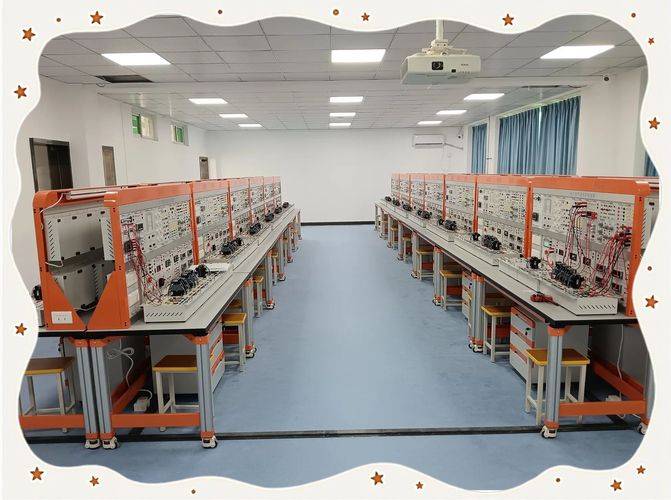
This enables students to acquire the basics of each experiment and practice。
3. 3. 2 change of mindset, curriculum system based on real needs
Traditional teaching is generally based on the theoretical framework of teaching materials for electrical and electronics
All right. The strength of this approach is to be able to be inclusive in teaching, and to focus on
The continuity of knowledge systems focuses on the integrity of teaching. But that's how it works
The big drawback is that there's no focus on which experiment is being taught to them
Future work is closely linked to what they must have. Therefore, for existing classes
Reform of the system is imperative. In the process of reform, we have to change our minds and build them
A curriculum system based on the concept of real needs。
4. Teaching methods for training in electronic and electrical engineering
Practical training in electrical and electronic engineering is divided into analytical testing experiments; design experiments; integrated experiments; and process operational training. The hands-on course on electronic and electrical engineering requires a project-based teaching model that
The products produced by each project should be simple, generic, etc.; at the same time
Requires that practical training courses in electronic and electrical engineering be highly visual and enable abstract theory
It is practical and easy to understand. In the course of teaching, students have to experience it first hand
Process, measure the parts, analyse the physical amount, design, make, assemble, detect final formation control
Every step of the device, by these practical means, allows students to pass in their training
Direct access to knowledge, skills and “understand” and “know”。
Principles to be followed in training in electronic and electrical engineering
Due to the growing size of modern engineering systems and the increasing number of disciplines involved, electronics
The principles to be followed in electrical engineering training have therefore evolved in the direction of multidisciplinary integration. Therefore..
Training in electronic and electrical engineering should be guided by the following principles:
(1) electronic and electrical engineering training includes modern subjects in the course design
Various aspects of electronic and electrical engineering technology, in which students are required to perform a large amount of electrical integration
Joint hands-on training to enable students to learn about electronic and electrical engineering of the system and to improve learn
The engineering skills of students are practical training different from theoretical specialization courses and general experimental courses classes
Cheng。
(2) the content, function, structure and modalities of training in electronic and electrical engineering shall be kept up to date, yes
With the development of contemporary science and technology and industrial production, it is important to integrate industrial production closely
International。
(iii) training projects, including practical training in electronics, electrical assembly and training response
Focus on integrated elements such as detection, debugging, control, design, production, exercise and
To improve the practical skills of students and develop their innovative abilities and spirit。
(4) the training centre for electronic and electrical engineering shall also be established as a level playing field for students in science and technology
The station is the main base for extra-curricular science and technology activities and skills competitions for students。