


In his address to the symposium on cultural heritage development, the secretary-general of xi stated that “the first task of a firm cultural confidence is to build on the great historical and contemporary practices of the chinese nation, to learn from china's experience and to raise the chinese experience to chinese theory, neither blind to the various dogma nor replicating foreign theory, and to achieve spiritual autonomy”. Archaeological work is an important exercise in the presentation and construction of the history of the chinese nation and the treasures of chinese civilization. Since the beginning of the new era, with the impetus and concern of the central party centered on comrade xi, archaeological work has seen unprecedented development, prosperity and new breakthroughs in the search for the unknown, revealing roots, with a vivid interpretation of “million-year human history, 10,000-year cultural history, 5,000-year civilization”. The party's 20th 3rd plenum stated that “cultural self-confidence must be strengthened” and that “the traditional culture of excellence of china must be inherited”. At the new starting point, china's autonomous knowledge system of archaeology should be accelerated, and efforts should be made to build chinese identity, chinese style, chinese aerobic archaeology, and to contribute to the development of cultural prosperity, cultural power and modern civilization of the chinese nation. The construction of china's autonomous knowledge system of archaeology must be based on china's vision of time, creative transformation and innovative development based on china's excellent traditional culture, with a strong theoretical, systemic and subjective focus, and the building of key points。
I. Enhancing the treatment
The idea of “shigu's self-image”, “repair for old age” is at the heart of traditional chinese history. From sema's “tune-day change” to wang's “tun-day” history, chinese historians have used the term “continue” as a tool for the management of squire, in order to find a realistic vision of the dynamic and declining historical patterns and to work towards the realization of the world's ideals. China's archaeology is a modern extension of traditional chinese history. It is a novelty born in the context of the new cultural movement. It is an urgent pioneer in removing obstacles to the creation of a scientific past in china. Thus, chinese archaeology has never been the “scientific man” of shinzhou, from the “historical revolution” to the “new testaments of history”, from the era of “exploring the culture of our country and changing the historical agenda” to the academic ideal of “orientalism in science in china”, from the pursuit of “the beginning of chinese culture” to “six decades of a dream”, “true the history of the country, writing a follow-up”, and the process of modernization of chinese archaeology and chinese civilization, as well as the survival and development of recent chinese salvation plans, are deeply intertwined. Archaeology is like a drop of water under the sun, reflecting the glory of 5,000 years of chinese civilization, and is filled with the bitterness of the quest for the glory of civilization and the strength of the nation。
Culture is a matter of national identity and national transport, and the continuity of culture and the continuity of civilization is a necessary option for china's archaeology to integrate into the construction of powerful nations and for national renewal. In the early days of the new china, chinese archaeologists were committed to building archaeological work as “the cause of the people”. The chinese archaeology founder, su byung-kyu, said, “if we want to keep ourselves in a state of backwardness forever, if we want to give birth to a new set of things learned from the west, and if we want to be a highly cultural nation that continues to contribute to the civilized life of humankind, like our forefathers, we need to preserve this precious legacy of our ancestors and learn from it”. In the years since then, archaeology has considered in depth how to “modernly use” and, at the beginning of the reform and opening up, has explicitly proposed “the establishment of a new chinese system of archaeology” through which the origins and development of chinese culture, the formation and development of the chinese nation, the formation and development of a united multi-ethnic nation and its restoration to china's history as a skeletal system。
The generalization and in-depth elaboration of the chinese-style modernization theory is one of the 20 major theoretical innovations of the party and a major new result of scientific socialism. General secretary xi said in depth, “china-style modernization has broken the myth of `modernization = westernization'” and “if china is not a 5,000-year-old civilization, what is the chinese character?” if it's not chinese, how can we be as successful as we are today?" the new era of building an autonomous knowledge system for archaeology in china must clearly emphasize the “cultural-political” nature of china's archaeology, constantly enhancing the self-consciousness of the subjects of chinese archaeology theory innovation, abandoning the simple transposition of western disciplines, closely focusing on the new cultural mission of building the modern civilization of the chinese nation, and exploring the way in which the chinese civilization community has evolved in search of its spiritual roots and in view of its pioneers. A new paradigm of the theory of civilization in the search for “what is china” and in the promotion of “the melting of the present” must be seen in the construction of theoretical systems such as genes, the dynamic mechanisms for the evolution of civilization, the historical process of the integration of civilizations, and the forms of communication of civilizations。
Ii. Strengthening the mandate
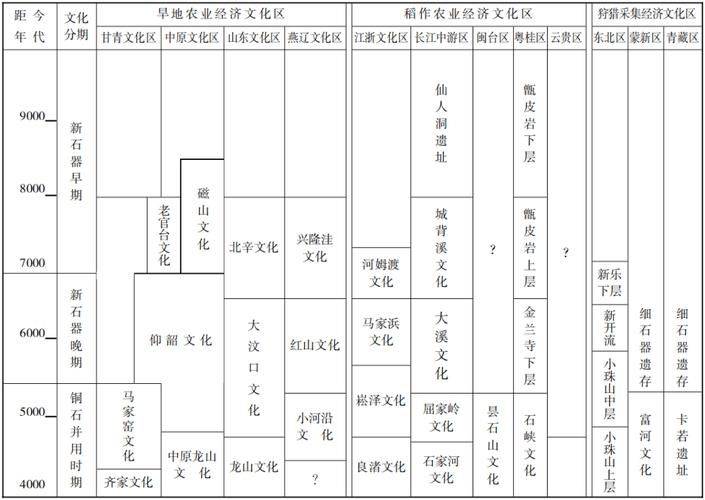
According to general secretary xi, archaeology is an important cultural undertaking and a socio-political endeavour. Archaeology, which is aimed at “trouble change”, is good at studying the “change” and “normality” of the history of human civilization from the perspective of history, and can gain historical inspiration for the formation of a community of human destiny from the dynamic evolution of different types of civilization and the exchange of diverse civilizations, which is the key to archaeology becoming a “big” discipline. The “largeness” of the discipline is not the size of the subject, but the scope of its pattern, and the fact that it is always the size of the nation. Although archaeology is still relatively small in scope, archaeology is “big” because it has a major cultural and political mission and because it has always been the “big man of the nation” and the development of the discipline has always been closely linked to the destiny of the nation。
In theory, archaeology should be accompanied by “dual evidence” from earth-producing materials and ancient literature, thereby re-establishing the ancient history of science, but it was once popular in archaeology to “reconstruction” of ancient history, without the historical records of major civilizational values. In particular, there has been an increasing trend in recent years of empirical winds, with certain studies in the name of “science”, “evidence” and values neutrality and historical nihilism, which are highly misleading and misleading, not only do not contribute to the in-depth elucidation of the rich chinese civilization, good chinese story, but also actually do much to understand and harm china's more than 5,000-year-old history of civilization, thus having a huge impact on historical and cultural confidence. For example, in the case of the ancient chinese emperor wong, some have ignored centuries of historical construction and systematic research by recent scholars, and have simply classified myths as a myth that has not only shrunk the history of 5,000 years of civilization, but has also ignored and eradicated the very essence of chinese summer civilization. As in the case of daae and the summers, which were at least written from the west week, the historical history, with the exception of a few ultra-suspicious ancient scholars, has always been regarded as a history of faith, but, because of the overemphasis placed on the importance of the material at that time for “evidence history”, the question of whether or not the summers became an extremely questionable “academic” question, amounting to a century-old civilization。
At the opening session of the fifth international congress of the international union of confucianism, which commemorated the 2565th anniversary of confucius' birth, general secretary xi stressed that “the chinese communist party are marxists, adheres to marxist science, adheres to and develops chinese socialism, but that the chinese communist party is not a historical and cultural nihilist”. The construction of china's autonomous knowledge system of archaeology requires a deeper understanding of its scientific nature as a “cultural politics”, a deeper appreciation of the need and urgency of the “changes of the past and the emergence of ideas” and a constant awareness of the struggles in the historical and cultural fields, a response to the various distortions of the history of the chinese nation, and a strong support for the promotion of the chinese culture of excellence and cultural self-confidence. In keeping with the unity of political and intellectual rationality, and with solid academic achievements, china's historical story is being told, and efforts are being made to move beyond the “gold and thin” academic landscape, to promote the academic ideals and practices of “combining the ancients” and “know the ancients”, to actively engage in the construction of national cultural industries, to reveal deeply and accurately the inner structure of the american and deep cultural genes unique to chinese civilization, to build a more basic, deep and lasting cultural self-confidence, and to truly assume the vocation and discipline of the “two greats” and “the greats of the nation”。
Iii. Accelerating paradigm shift
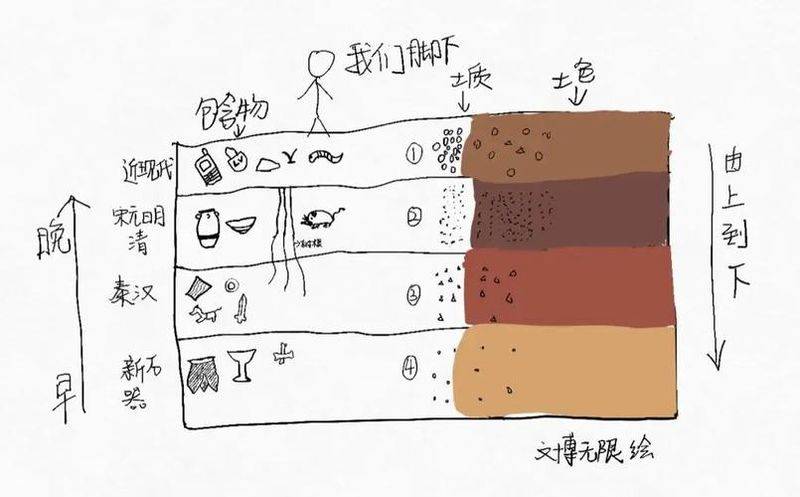
Archaeology is a discipline of human civilization through ancient physical memory. Chinese civilization is brilliant and ancient cultural heritage extremely rich, a valuable resource and unique advantage of chinese archaeology in building an autonomous knowledge system. As early as the 1930s, chinese archaeologists proposed to write a new business history using material from the ruins, and to complete such famous works as " anyang " . Since the establishment of the new china, chinese archaeologists have basically mapped the spectrograph framework of prehistoric chinese culture and the evolution of physical culture, laying a solid foundation for building china's autonomous knowledge system of archaeology。
Overall, however, chinese archaeology is lagging behind in the construction of knowledge systems compared with the major archaeological discoveries that have come to the fore for almost a century. There are two main reasons for this: on the one hand, the long-standing accumulation of archaeological materials has become an unacceptable task for archaeologists, and the vast majority of archaeologists are routinely engaged in the routine processing of large amounts of material from the ground, and even if their lifetime strength is “poor”, it is difficult to really and effectively sort out what has been discovered in the fields, and archaeology has become to a considerable extent an archaeological “materialology”. On the other hand, the vast majority of soil-producing materials are the most common pottery, stone tools, animal bones, etc., which are typical “wordless books”, and have congenital limitations on the construction of knowledge systems compared to literature. How to “magic” corruption requires both effective research methods and the right theoretical guidance. Otherwise, more excavating material is nothing more than a piece of “material” that will not improve the history of history, much less an organic knowledge system。
The secretary-general of xi has made it clear that the study and elaboration of the monuments and sites of the earth will be carried out in order to give a clearer and more comprehensive picture of the origins and development of our civilization and its vital contribution to humanity. It is necessary to incorporate the latest historical research findings and to refine parts of our ancient history in a timely manner so as to give a complete and accurate account of our ancient history and to better perform its role as a human being. A generation has a mission and a generation of academics. If, at the initial stage of the development of disciplines, china's archaeology has as its primary task the accumulation of materials; then, after centuries of development, the focus of the disciplines must shift to new areas of archaeological writing and the interpretation of civilizations, contributing to the building of modern chinese civilization through the construction of autonomous knowledge systems。
Building an autonomous knowledge system for archaeology in china, archaeology should move as soon as possible from “description” to “writing”, from a focus on accumulation of materials to a study of interpretation, from discovery to writing of history. In the past, under the umbrella of materialistic research, it was easy to develop an academic culture of “discovery heroism” and “description” as “research”. The knowledge system, which is designed to be academically reprocessed and theoretically elevated on the basis of informative materials, must follow the excellent tradition of chinese history of “discretion” and promote the academic quest of china's archaeology to “visibility” in order to truly construct the academic, academic and linguistic systems of chinese archaeology in the new era. Building an autonomous knowledge system for archaeology in china in the new era, essentially to “spoke in” good civilized stories, chinese stories, and simply “extension of material” is not enough. Archaeologists should take the initiative to move away from the old idea that “historic is history” and move from “searching for something” to “story telling by hard-to-speakers” through the academicization of political discourse and the popularization of academic discourse, ultimately reaching the goals of a historical and cultural person。
Iv. Shaping theoretical breakthroughs
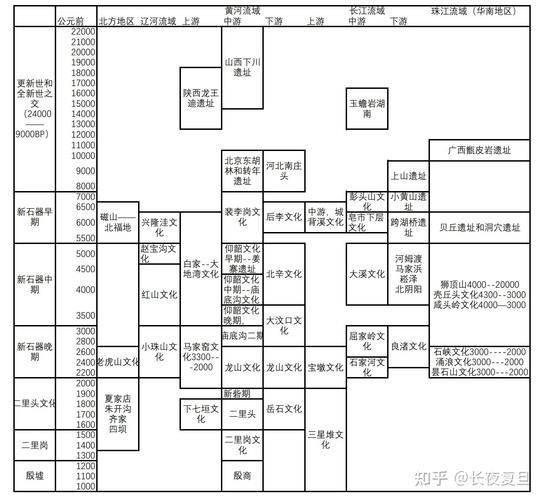
More than a hundred years ago, when modern archaeology first entered china, the academic community proposed “a scientific approach to the investigation, preservation and study of past human relics and relics”, reflecting an invaluable theoretical and methodological consciousness. The modern archaeology methods, represented by geology and typology, have taken root and bear fruit in china, with classic examples of modern archaeology methods, such as gravel excavations, triformation of the hatooka and research into the vagaries of the chicken pavilion, opening up the river of modern archaeology。
For more than a century, china's main achievement in archaeology was most evident in the birth of the archaeological “chinese school” guided by marxism. After difficult exploration, chinese scholars have learned that the future direction of china's archaeology should be “the creation of a marxist chinese archaeology with an ethnic style and style,” combining rich archaeological practices, using the conscious use of marxist theoretical methods to transform china's archaeology methods, systematically proposing the theory of the type of archaeological cultural zone and the origin of civilization to form the theory of the road to development, and becoming an example of an innovative theoretical approach to disciplines guided by marxist chineseization。
The secretary-general, xi jinping, at the symposium on cultural heritage and development, highlighted five salient features of the chinese civilization, indulging in the significance of the “two combinations” and giving the strong voice of the time to “take on a new cultural mission”. The new mission calls for new practice, which breeds new theory. China's modernity is deeply rooted in china's excellent traditional culture, drawing on all the best achievements of human civilization, representing the direction in which human civilization progresses, and presenting a new picture of the modern model of the west, which is an entirely new form of human civilization. China's autonomous knowledge system of archaeology must be built on party innovation, building on the rich foundations of chinese civilization and the great historical practices of the chinese nation, collating chinese materials, drawing on china's experience, telling the story of china, and working to create innovations based on archaeology's “china school” to create a linguistic and theoretical system that highlights the charisma of modern chinese civilization. In particular, the fundamental question of the compatibility and integration of the chinese civilization's genetic and cultural spirit with marxism must be thoroughly examined from archaeological material, the persistence of china's civilization, its self-empowerment, its renewed civilizational resilience, and the civilizational character of openness, platitude, harmony, and esteem for the chinese nation, which has revealed the foundations of marxism's civilization on the ground, explained the internal dynamics of china's transformational marxism's progressive development, and deeply demonstrated the historical momentum of china's great renaissance。
Building an autonomous knowledge system for archaeology in china, using the "explaining of the old state with a new life" as an academic guide, consolidating the deep genes of the chinese civilization, extracting the spiritual kernel of chinese culture, renewing the chinese nation's spiritual veins, turning china's archaeology into a university of hong, which has immersed in the heart of the world, demonstrated the culture of civilization, promoted the culture of excellence, and helped to rejuvenate the nation, providing rich cultural resources and solid academic support for building the modern civilization of the chinese nation。



