China has taken strong action to further increase the protection of intellectual property and accelerate the development of a system of intellectual property protection. At the same time, after more than three months of waiting, the restructured national intellectual property authority has further clarified its mandate。
At a press conference organized by the new office of the secretary-general, shin long rain revealed that china would use the patent law as an opportunity to accelerate the establishment of a punitive compensation system for infringement of intellectual property rights and significantly increase the cost of violations; and to speed up the establishment of more accessible, efficient and low-cost channels for the defence of rights. China has now established 19 intellectual property protection centres, and this year it will expand its scope and improve its layout。
This information also confirms what the president, xi jinping, said in his opening speech at the annual meeting of the asian forum 2018: this year, china will re-establish the national intellectual property agency, improve its enforcement efforts, raise the cost of its violations significantly and maximize its legal deterrent。
The state council's institutional reform programme, adopted in march of this year, included the re-establishment of the national intellectual property authority, which is managed by the general directorate of market supervision. According to shin, the national intellectual property agency is currently being deployed at the central level to advance reform efforts in a systematic and disciplined manner。
The first financial reporter was informed by several members of the national intellectual property agency, which is close to the reorganization, that it is a separate state agency, and that the administrative level remains at the level of the deputy minister and is managed by the general directorate of market supervision. It is still in place and will be relocated to the larger office area of chu xin-hyang in changping, beijing。
According to one of them to the first financial journalist, “the national intellectual property authority will play a greater role in the future, and the intellectual property industry will become more regulated and less domesticated, since it was predisposed to be detached (the phenomenon) because it involved multiple ministries”
Another said that, in any case, it was now widely recognized that intellectual property rights were important and high-value-added items, weapons of enterprise competitiveness — a great step forward, but that china still had a long way to go to use good rules to turn them into wealth and competitiveness。
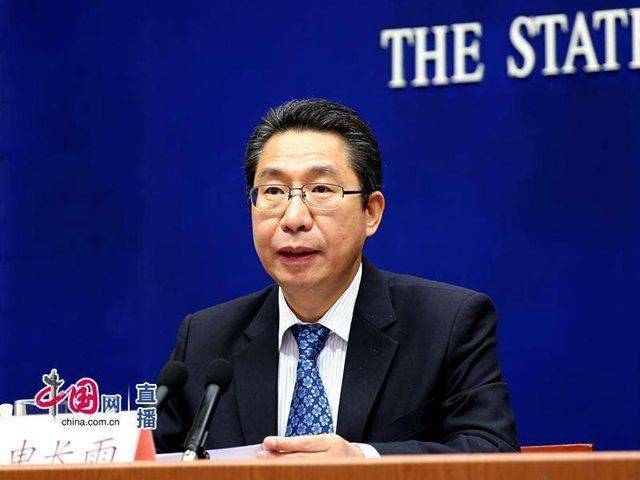
The director-general of the national intellectual property authority, shin chang yu, revealed at a press conference on 24 december that china would use the law on patents as an opportunity to accelerate the establishment of a punitive compensation system for infringement of intellectual property rights and significantly increase the cost of violations。
Integration of patent and trademark regulation
The transformational upgrading of enterprises is measured mainly by three dimensions: science and technology (reflected in patents), culture (reflected in books, copyrights for visual works) and branding (reflected in trademarks). The current round of state council institutional reforms, launched in march this year, consolidated intellectual property and trademark regulation under the reconstituted national intellectual property agency。
In contrast to the “bottom-up” of foreign intellectual property regimes, china was formed “top-down” according to one practitioner to the first financial journalist. In order to become a member of the world trade organization (wto), the patent office of the chinese institute of science and technology was transformed into the intellectual property office of the deputy minister, but the copyright office and the trademarks were incorporated into the national press and publications administration and the national general administration of commerce and industry, respectively。
At the above-mentioned press conference, shin long rain stated that this institutional reform would contribute vertically to the modernization of the intellectual property governance system and its capacity to create, apply, protect, manage and service the entire chain of intellectual property; and horizontally to the combined effects of patents, trademarks, geographical indications of origin, which would better support innovation-driven development and greater openness。
He said that the functions of the restructured national intellectual property agency included, first, organizing the implementation of the national intellectual property strategy, in particular strengthening the creation, protection and application of intellectual property rights; secondly, working on the protection of intellectual property rights, advancing the system of intellectual property protection and guiding the administrative enforcement of trademarks and patents; and thirdly, registering patents, trademarks, geographical indications of origin and administrative decisions。
The analysis of a number of industry experts, including the senior advisor of the ange law firm, ho kei, suggests that 20 years ago, china’s intellectual property system was established in direct connection with trade policy, and that china’s development now faces a number of broader issues, such as employment, innovation, and environmental protection。
On the one hand, the major trend emerging from current international negotiations is to strengthen the protection of intellectual property rights, including the pharmaceutical and music industries, which, if a country does not keep up, will shift from that country to other, more protected markets; on the other hand, china has the largest number of trademarks, patents, and dissertations in the world, but the quality needs to be improved. Stronger intellectual property protection is also needed to move from a big leap to a strong one。
With regard to the intellectual property regime, it was often difficult to reach consensus between developing and developed countries when the topic was discussed internationally. Developing countries believe that intellectual property rights raise the threshold for technology diffusion, as they often need to use new technologies very quickly and efficiently in the development process to increase productivity, and that excessive intellectual property protection can put developing countries at a disadvantage in development. In fact, either the united kingdom, germany, japan or the united states have followed the same path of imitation and innovation, and positions have changed with development。
It is argued that future regulation in the area of intellectual property may be further integrated. Ideally, internalization of patents, trademarks and copyrights would be combined into a sub-ministerial unit, which would be centrally administered by the ministry of commerce. In his view, patents and trademarks were, in the final analysis, international issues and could not be regulated at the domestic level alone。
Significant increase in the cost of violations
In the face of recent disputes over intellectual property rights (iprs) between china and the united states on various occasions, it has been argued that the results of the so-called “301 survey” in the united states have failed to see or ignore the objective fact that china is strengthening the protection of intellectual property rights. Over the years, china's intellectual property environment, particularly its intellectual property rights, has witnessed significant progress in protecting the environment。
According to shin long rain, in 2017, china's foreign intellectual property usage charges had reached $28. 6 billion, with a deficit of over $20 billion. Of these, payments for the use of intellectual property in the united states increased by 14 per cent over the same period。
Shin also stated that china had further amended its anti-improper competition law last year to strengthen the protection of trade secrets, and that us intellectual property authorities had stated that china's intellectual property rights protected the environment at the forefront of middle-income countries and were increasingly selected as a key to non-china inter-firm patent litigation because litigants felt that they would be treated fairly in china。
It has also been repeatedly emphasized that the fundamental principle of intellectual property protection in china is the equal and equal protection of intellectual property rights of domestic and foreign enterprises. China adheres to this principle in respect of both domestic and foreign enterprises, private and state enterprises, large and small enterprises, and intellectual property rights of enterprises and individuals。
Over the past month, the chinese government's position on intellectual property issues has been expressed at a high level。
On 26 march, prime minister li keqiang of the state council, in a meeting in beijing with foreign representatives attending the china development high-level forum's 2018 annual meeting, stressed that “china's manufacturing 2025” was advanced in an open environment, with no distinction between domestic and foreign investment enterprises. We will not impose a transfer of technology on foreign enterprises and will further enhance intellectual property protection and severely combat abuses。
On 20 april, at the launch of the national intellectual property awareness week in 2018, councillor wang yong stressed that this institutional reform should be used as an opportunity to accelerate intellectual property reform and development and to establish a full chain of intellectual property creation, application, protection, management and services. Increased intellectual property protection on a continuous basis, strengthened law enforcement, significantly increased costs of violations and continuously optimized innovation and business environments。
It is a matter of concern that xi, in his speech in boven, referred to “a significant increase in the cost of violating the law and the full realization of the legal deterrent”。
In response to this statement, shin long rain indicated that comprehensive enforcement of patent trademarks would be actively guided to better combat all types of abuse; that the amendment of the patent act would provide an opportunity to speed up the establishment of a system of punitive compensation for abuse; that the establishment of intellectual property protection centres would be used as a tool to accelerate the establishment of more expeditious, efficient and cost-effective channels for advocacy; and that international cooperation on intellectual property would be deepened to promote more inclusive, balanced and effective international rules on intellectual property rights and to create a favourable international environment for chinese enterprises to “go out”。
With regard to the official increase in the cost of the violation, li ning, a partner in the law firm of kim zhengda, said to the first financial journalist that this involved a cap on compensation, which was calculated on the basis of the loss of the owner of the patent, trademarks, copyrights, etc., and, if not calculated, on the discretion of the judge, which had been increased once in previous years。
The trademarks act was amended in 2012 to increase the statutory compensation to $3 million, the highest in the current law, and the revised patents act was published in 2015 with an award of $100,000 to $5 million. In addition, the revision of the copyright act has not yet been scheduled and is therefore worth $500,000 under the current law。
It is clear that these amounts are somewhat out of date and do not really inspire innovation for companies with large volumes of intellectual property rights represented by china。
The vice president of china, song liuping, has repeatedly stated in public forums that the chinese judicial system has, on average, paid a price of $80,000 per patent, which seriously affects the real value of the patent, and that he expects hundreds of millions of dollars of litigation to appear in the country. He had also stated that no country in history had been abandoned for strictly protecting intellectual property rights, and that the more strictly protecting intellectual property rights, the more it could promote social innovation and the higher levels of economic development。
It was added that the deterrent effect of the law lay not only in the level of compensation but also in the legal environment and the legal awareness of entrepreneurs. The key to developing legal thinking and resolving problems through the rule of law was the long way to go in china。
In the area of the rule of law, china had stepped up its efforts to enforce the law. In addition to the adoption of the anti-improper competition act, as amended by the 30th meeting of the standing committee of the national people's congress, the law on patents, the regulation on patent agents, etc., made substantial progress. The revision of the copyright act, the defence patents ordinance, etc. Is being actively pursued. A guide to promoting antimonopoly enforcement in the area of intellectual property rights will be published as soon as possible and will deepen research into new areas and intellectual property protection systems for new business innovations。