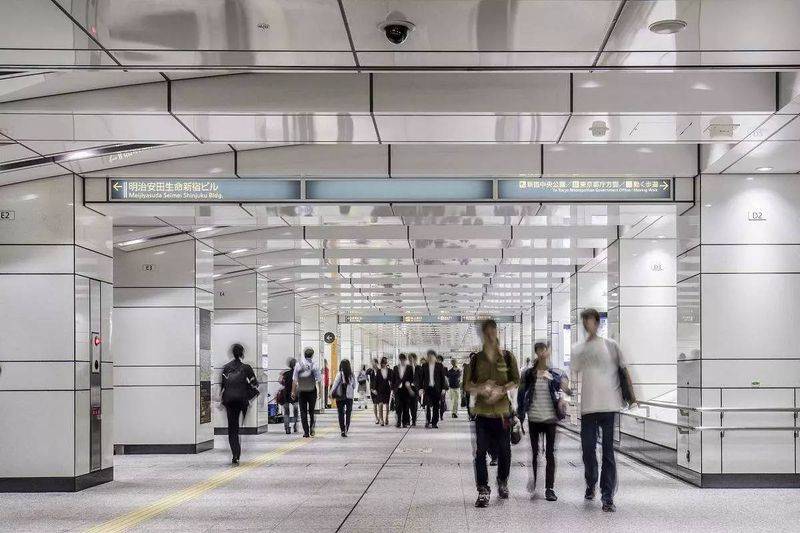
“there is a balance of dynamic change and mutual satisfaction between the spatial scales of complex coexistence and the diverse human senses.”
- consumer psychology
The shaping of space is a historical process, and the development of vertical dimensions has become a new direction and subject as we expand our land horizontally, with advances in science and technology and research. Rapid urban expansion poses problems: population density, congestion, environmental pollution, impacts and constraints on sustainable urban development. As a result, underground space has become an important area for urban space resource development and the rational use of urban underground space has become a sign of urban commercial maturity. This is a step-by-step process of establishing business patterns from point to line, from line to surface, from top to bottom. The ancients say, “a day in a day, a year underground”, and if this were to create an imagination of a brain hole, in our usual thinking, in an underground space that represents the meaning of mystery, once the wheel of business begins to turn, it will certainly be a huge revolution。
In terms of spatial development, underground commerce is an important factor in increasing the commercial maturity of cities and an important link in the formation of “stereobusiness”. The practice of modern urban construction tells us that the scientific, orderly and rational development of underground commerce at the rapid pace of urban development, where land resources are increasingly scarce, is an effective way of removing urban development constraints and a new concept of urban development that is holistic and integrated。
The initial commercialization of underground space originated from the use of basements, bomb shelters, street crossings, the early form of which was the opening of shops on both sides of the tunnel, and the absorption of urban functions from changes in the simple commercial nature of the tunnel. In the later stages of evolution, transport, culture, services, etc. Were gradually added together to form an increasingly full underground commercial space. When the two-dimensional space on the ground is already in the middle of the earth, we put our eyes under the ground and excavated the treasure。
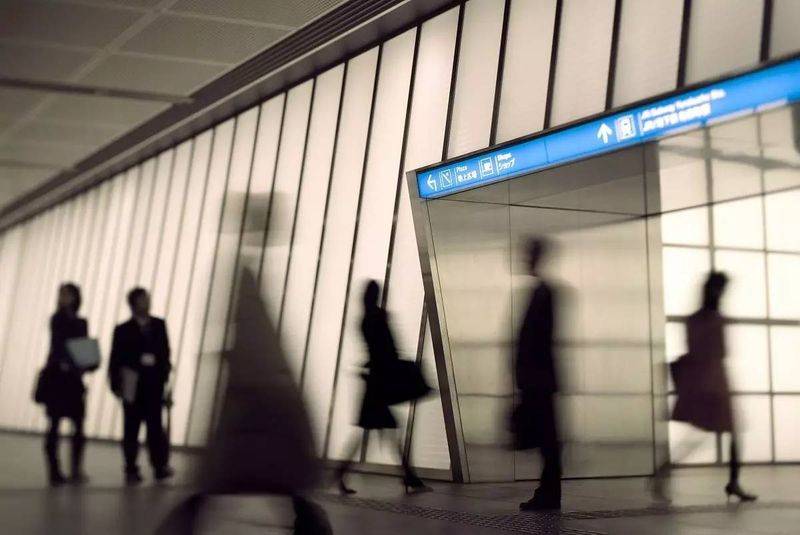
However, underground space itself is closed and difficult to integrate with the natural environment. If it were to be the basis of business, it was necessary to pay close attention to human behaviour, psychology and the creation of a building space that met both the functional requirements and the spiritual needs and aesthetic needs of people, which was also a problem for us. The construction of underground shopping centres has important attributes, with the main focus on the flow of people: access to transport factors such as subway stations; the integration of diverse business practices such as catering, leisure, supermarkets, etc.; and the expression of features such as the creation of thematic businesses. Across the world's successful underground shopping malls, we can see a few doors。
Japan
Osaka underground shopping centre
Japan, where space utilization is extremely high, has been a pioneer in underground commerce. An underground orbital transport model for global learning has been created, with commercial companionships with japanese-style details that are highly desirable and humane. The government of japan has proposed that “one japan should become ten japan”. In addition to the fertile upper valleys, there is a much more spectacular underground life。
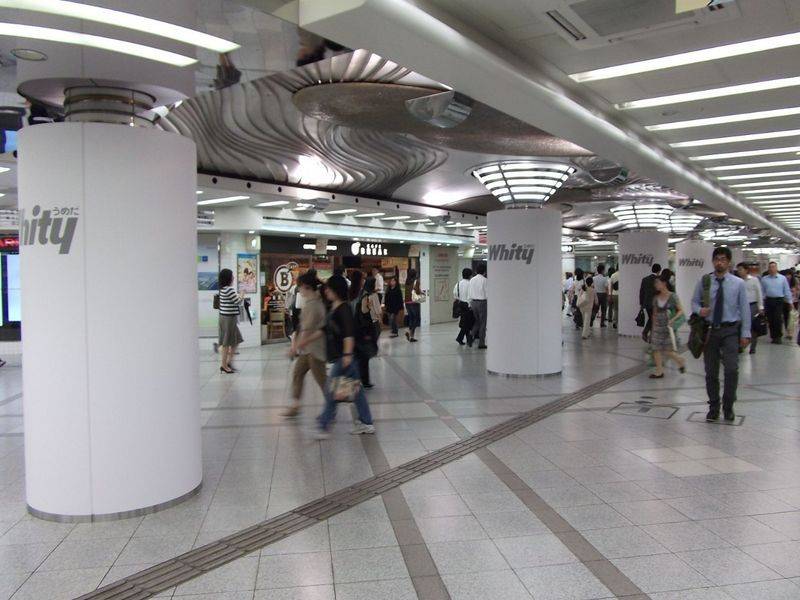
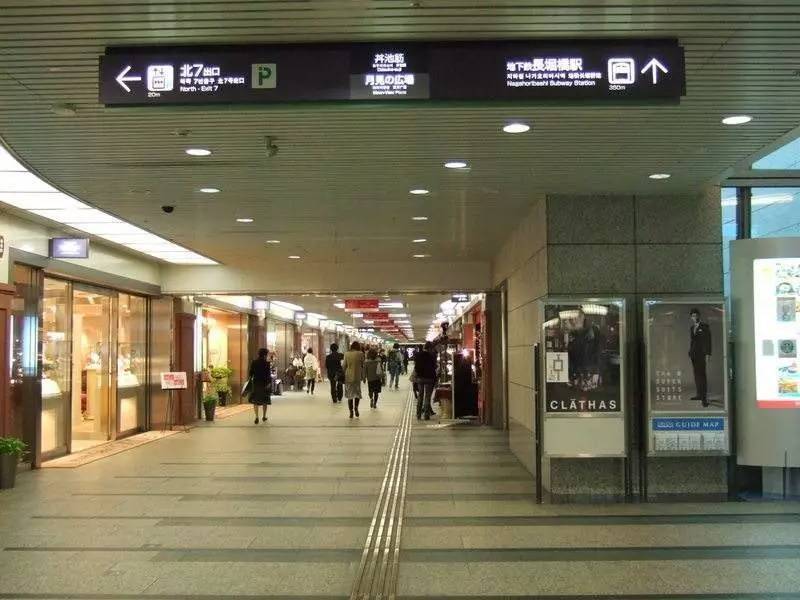
Japan's underground business street has two main features: timeliness and convenience, and the longest history. The first underground business street in the world was born in japan, and it was created in 1957 as osaka underground street. In 1963, osaka was able to construct meida underground street and the longest underground street in the country at that time, rainbow underground commercial street. The total area of rainbow street is nearly 40,000 square metres, with four squares, nearly 400 shops and restaurants, bars, coffee shops, etc。
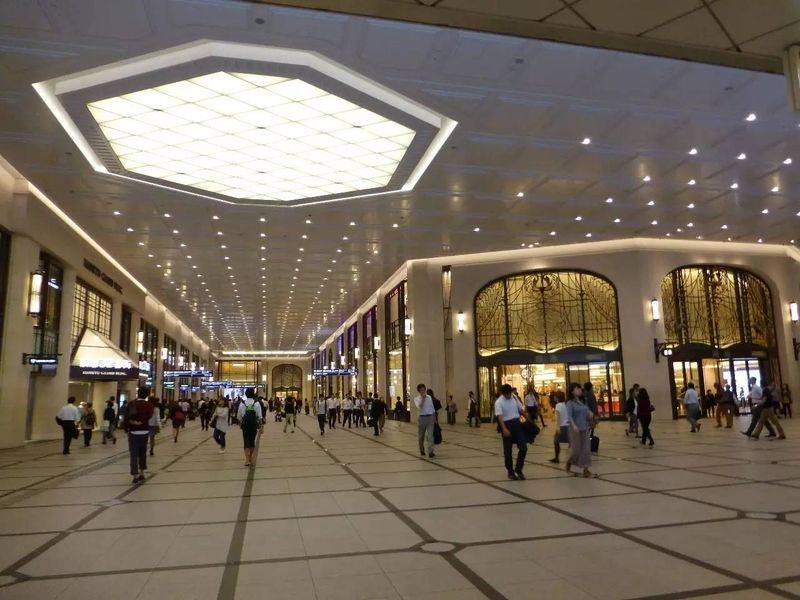
The total area of osaka's long underground street is 82,000 square metres, with up to four floors, one of which is a shopping mall with a commercial, catering and pedestrian walkways, with more than 100 shops and specialized areas such as food, clothing and fashion. The second and third floors are garages with more than 1,000 spaces. The four layers are a transposition system with a depth of up to 50 metres. It is also hoped that the future transportation hub will be built as an underground business complex that combines subways。
Canada
Toronto center
The eton centre also relies on a well-developed metro network to bring together the flow of people, whether imported or exported. It is a vast multi-purpose metropolis city with two important subway stations in toronto: the queen and dundas stations are built in a combination of ground and underground structures, with a total area of 370,000 square metres。
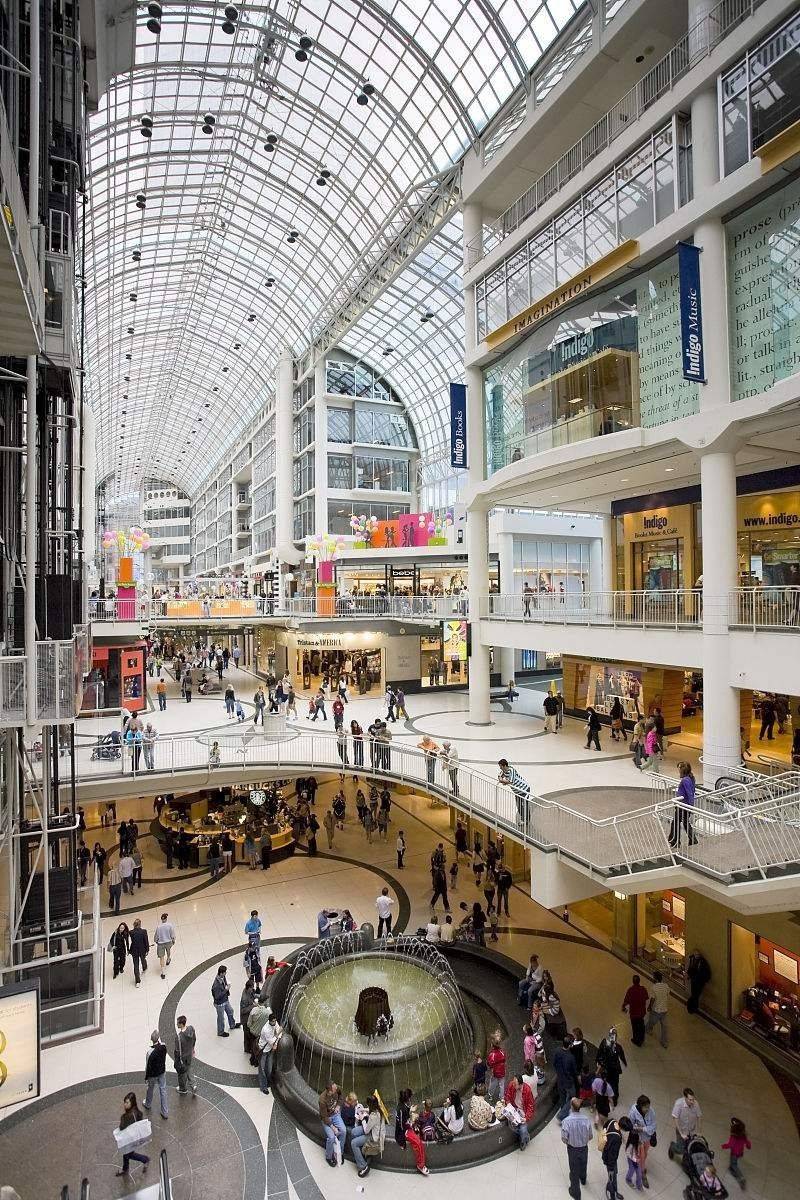
The whole shopping mall is designed for the natural atmosphere, with a tight dynamic stream that enriches the view of consumers in the shopping process. It includes two large department stores, namely, sears and bay, with over 300 shops, restaurants and various entertainment sites. Its predecessor was a grocery store in 1869, which, after decades of development, became the largest chain in toronto。
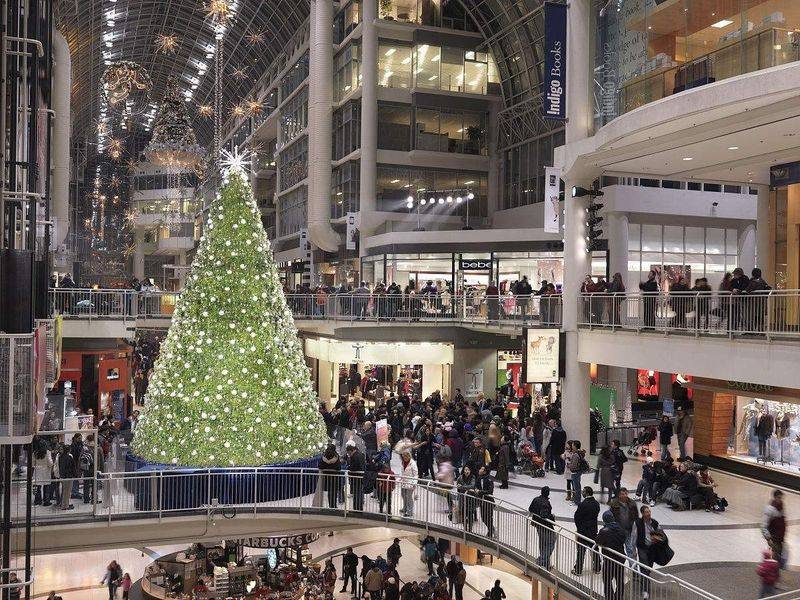
Internal viewing elevators, escalators, pickles, skybridges, fountains, and a large number of sighting plants, even in the air, are suffocating models. Many visitors are attracted not only to branded goods here, but also to a variety of architectures, even using it as a tourist attraction to take photographs。
Canada
Réso, montreal
Several of the data from this underground shopping centre are striking: it covers 4 million square metres, connects 10 subway stations, 2 bus terminals, 1,200 offices, 200 restaurants, 40 banks, 40 cinemas, 2 large shopping malls, nearly 2,000 shops, 3 large exhibition buildings and other entertainment venues. The olympic park, the bell center, the montreal railway station, the art square, etc. Are covered by the perimeter。
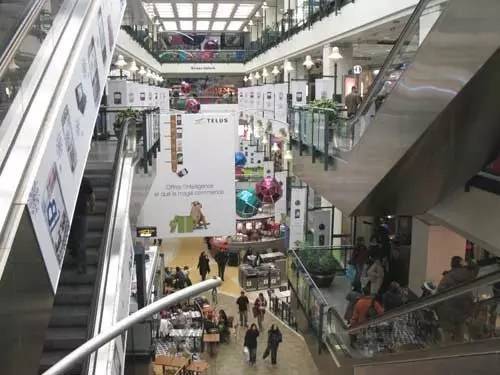
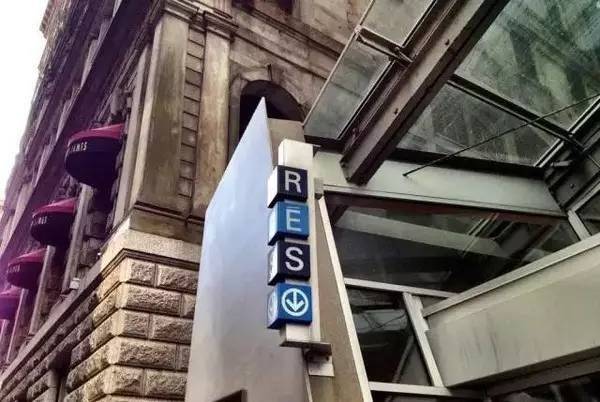
Natural factors have also been introduced in the design, with various kinds of flowers and trees in the corridors through which people pass, and with electric light. There are various benches for people to rest in a vibrant tree. At the same time, there are up to 200 imports and exports, with a daily flow of about 500,000 people. The connection to the subway has eased traffic problems and, in addition to the extraordinary winter weather conditions in montreal, has created a place for people to go。
The development of underground shopping centres continues to face multiple challenges in breaking the physical space resource bottlenecks. It was analysed that the more mature the market, the more scarce the space of value and the greater the value of underground commercial exploitation. However, this should not be an adjunct to the above-ground space, where underground shopping centres can be built on the principle of specificity in several ways:
1. Closely connected to the easily staggered transport system:
Most of the selections are at the core of business or administrative cultural centres. From the point of view of traffic, it was chosen that the proximity of municipal traffic, such as those along underground pedestrian routes, along the entry and exit points of the subway station, depended on intensive movement of people to bring in crowds. Moreover, cities with more extreme weather conditions appear to be more likely to operate successfully under the influence of natural conditions。
2. Underground and above ground form a complete environment of experience:
The forms of integration can be divided into two categories: underground shopping centres, combined with a market on the ground, and shared passenger flows, where more business opportunities are available. The second is the integration of underground shopping centre development with urban landscapes, such as the subterranean city leisure green place square, and the underground development of shopping centres, which are emerging models as people focus on urban landscapes。
3. Reasonable commercial positioning and operation projects:
Discrepancies with ground commerce are key to what underground shopping centres can focus on. An underground shopping centre in montreal, for example, has a large number of restaurants because of its vast size, where people have more options。
Space environment and architectural design:
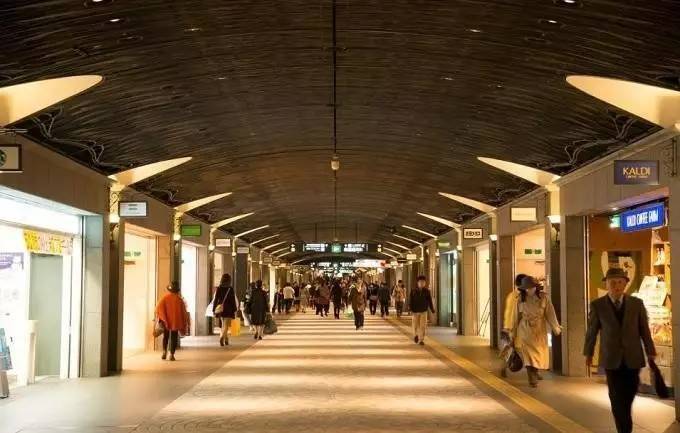
(1) lighting and ventilation are often key to design, and the sequestered characteristics of the subterranean itself rely on adequate light and ventilation design to break people's sense of depression。
(2) producing problems require even more energy than business on the ground. People-oriented is geared towards attention to the overlap between the ground and the ground. Access and movement lines need to reflect a broad business layout and to connect easily to the traffic entrance in order to give a smooth shopping experience。
5. Safety assurance and comfort construction:
Strictly defined safety measures for protection are an important basis, and technical measures can be added to avoid adverse reactions. Building on day-to-day operations, more natural “respiratory” construction and human details can be added to hardware. For example, light, water and plants are used to plant and to increase seating and leisure facilities。