It is a three-disk machine, and the failure is reflected in the fact that many previously airable discs cannot now be released and the sound of a “single” is on board。
It is open and placed in an original new disk test machine, which can be played normally until the end, but it is observed that the noise is high, and it is observed that the skin is constantly moving in a small range on the slide. Once the disk is activated, the observation starts with a “twirl” in the loop, then the skin moves forward with a “twirl” gear slip, and the automatic stop in a few seconds, all operations fail。
The machine should have no major problems, based on the fact that part of the disk can be shown from the beginning to the end. Several possible causes of failure are estimated: 1. Rf signals are weak; 2. Rsd system is dysfunctional. First wash the bald head, no. Even though there was a slight improvement, the failure was not eliminated. When the analysis is properly aired, there is a constant back-to-back movement of skinheads, which is estimated to be higher. The rf amplification and server control process is cxa1782bq, the digital signal processing is cxd2500bq (some of the machines are cxd2540bq), and there is no dialable on the entire circuit board. Check the various barrier elements of the servine, and no problems are detected (see the attached graph for the routing). Figure r06 determines the multiplier gain, r07, r10 determines the gain from the slide drive, and changes in the barrier value can change the gain. After several experiments, r07 (18k) and r10 (82k) were finally found to have shifted their positions and the malfunctions disappeared. This should not be analysed as an error in the assembly of the components, looking at multiple circuit maps, as is the case with the electrical resistance values, and what causes the malpractice and hopes that the manufacturer will provide a clear response。
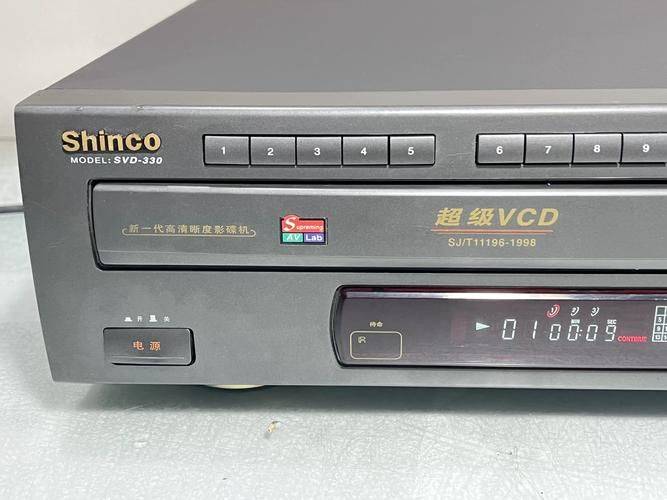
Several new section 330 vcd machines were faultless。
All were found to have been unscreened because of the absence of 22v steady voltage voltage, and the results were detected as damage to r346 and vd309 in the middle of the steady voltage circuit. It was noted that a non-facility machine had been borrowed to check the cause of the malfunction because several machines had been damaged in the same mechanical devices. R346 and vd309 were found to be operating at high temperatures and were analysed to be inappropriately selected design parameters, resulting in excessive temperature rises and vulnerability to damage. The following two methods of improvement were used by the author:
1. Due to the high-power requirements of the steady-pressure tube, which is not readily available, the three-barrel-pressure circuit was used to replace it and r346 was increased from 100 to 200 times. Moderate pressure tubes can be replaced by a general 0. 5w pressure tube, or by a combination of a few steady tubes to obtain a 22v stable voltage, with a general medium power triode。
R346 has been increased from 100 to approximately 500 times, and can be used normally without access to the pressure pipe, except for a slightly dark screen。
The same type of circuit machine is also subject to the above method of trouble management. If a peer encounters this type of non-facing machine, it is handled as described above, which will effectively reduce the failure rate and extend the display lifetime。
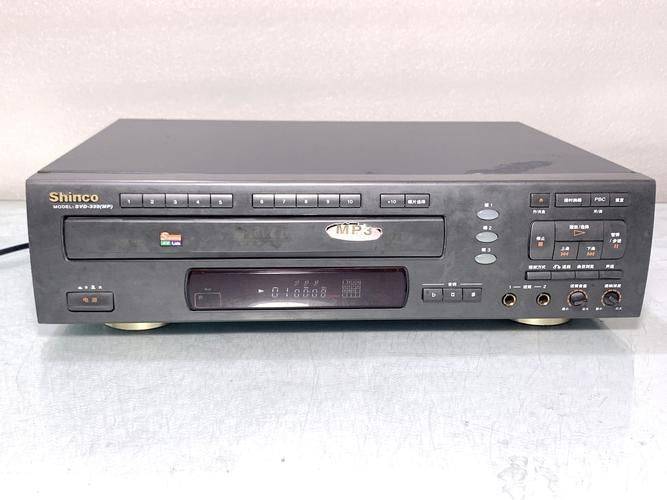
The new section vcd-330 vcd fail-check (3), with example 1 〗 on the switch, press the entry and exit box key to show open, but the tray does not reach out or read the disk。
Based on the phenomenon of failure, the areas where possible malfunctions are analysed are: 1. Outboxes and drive circuits; 2. Whether the driver command for microprocessor u1 output has reached the relevant circuit. Because the screens were normal at the time the box keys were pressed, which meant that the cpu was generally normal, the focus was on checking the box's electrical sets and driving circuits. The inspection found that the 10, {23} foot voltage of ba6395 was significantly different from the normal voltage 2. 5v, with only 0. 9v, indicating that the drive block ba6395 was not working properly. These abnormal voltage feet are shown to be related to the output end of cxa1782bq{48} foot vc(2. 5v) with a trial break of {48} foot, and 2. 5v voltage returning to normal, indicating that {48} foot peripheral circuits have run-over problems. C33, c32, c73, to check for electrical failure or short circuits. When c73 was disconnected, the 2. 5v voltage returned to normal, and c73 was removed, and it was found that the leak value was 1. 5 k, precisely because of its severe failure. Once replaced, the failure was eliminated。
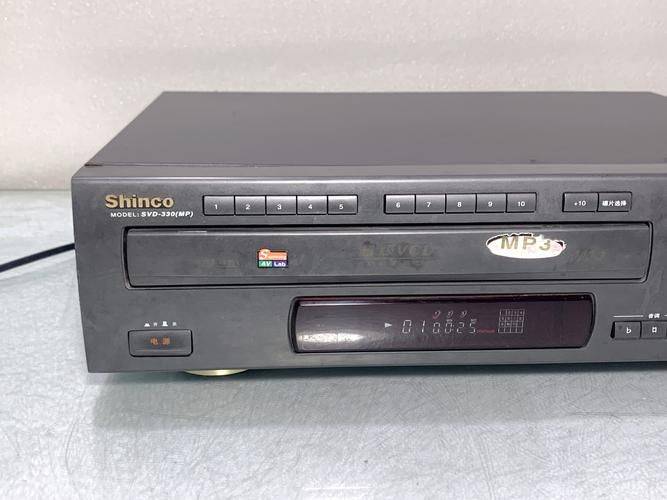
Example 2 is open, access boxes are normal, screen displays are normal, but disks cannot be read。
The main axle is not turned and is then shown to have no disk。
Checking the cxa1782bq{25} footfok signal with a universal watch and finding no high-level output during the focus, indicates that the microprocessor u1 and cxd2540 did not receive the signal, so the main axle is not turned. The reasons for the analysis may be: 1. Cxa1782bq external element damage; 2. Cxa1782bq internal fok damage to form circuits; 3. Laser head damage. Inspection of peripheral elements; test calibration of electrical resistance on the head of the laser to increase the light power of the laser tube, which is ineffective; test replacement of laser head and troubleshooting。