Development experience
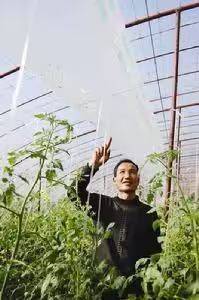
Plastic shed
The expansion from beijing to tianjin, shenyang and the north east, taihara and other places in 1957 was welcomed. In 1958, the country was able to produce its own agricultural polyethylene film, and the production of vegetables covered by the shed was widespread. In the mid-60s, the huts were shaped into arches, about 1 metre tall and 1. 5-2. 0 metres wide, and are thus called small arches. As small sheds were not suitable for application in cold areas in the north-east, in 1966 the outskirts of changchun city first converted the small arch shed into square sheds two metres high. However, due to poor snow resistance, several retrofitting trials have resulted in the creation of an acre of arch sheds some 2 metres high and 15 metres wide. In 1970, it was extended to the north. Three consecutive conferences on "national scientific collaboration for the production of plastic vegetables" were held in 1975, 1976 and 1978. The construction of 29 different types of sheds on the outskirts of taiwon in 1976 provided extensive experience in the construction of shed structures and the scale of construction. In 1978, shed production was expanded throughout the south, reaching 100,000 acres nationwide. So far, the area of the national shed has remained almost stable at over 100,000 acres. Of these, some 70,000 acres are located in the provinces and cities of the arid zone in the north of the country. It is expected that during the "75th" period, the area under the shed will grow to around 200,000 acres. The material covered in the shed is plastic sheeting. It is suitable for large-scale coverage because it is of low quality, has good temperature protection through light, is more plastic and is inexpensive. It's easy to build and shape because of the ease with which it can be used. It's easy to build and shape. It's easy to build in situ, less investment in construction and more economically efficient. Producers are welcome to be able to withstand natural disasters, cold and warm, drought and floods, early cultivation, delayed cultivation and long-term crop life, with the aim of pre-maturity, later maturity and increased productivity. As a result, the dry zone in the north of my country is growing rapidly。
The use of the shed is still under development. In particular, it plays an important role in combating the effects of low-temperature droughts and wind and sand hazards, especially in high-cold, sandy and arid areas. Plastic sheds have been built around the world to develop agricultural production, with 10-20 hectares in japan in the late 1970s. The area of almerrili, spain, covers 315 square kilometres and is an arid area, covering 120 square kilometres and the largest in the world, in order to develop vegetable production。
Structure
The sheds consist of skeletons made of bamboo poles, concrete poles, light steel tubes or pipes, pillars, poles, arch poles and pressure poles, covered with plastic sheeting, and turned into circulatory. Plastic sheds generally cover an area of 1-3 acres and are easily managed. However, extensive coverage of multiple sheds is available. Owing to the high density of the shed, which can be protected against cold with straw curtains, and internal cold with multilayered film, the temperature in the shed is mainly from solar radiation. The main production season is spring, summer and autumn. Areas with winter temperatures above 15°c can grow cold-resistant crops or use stoves for temporary warming. Because they are larger in size than medium-sized or small sheds and are different from greenhouses, they are referred to as large huts. In the dry zone in the north of the country, the spring and cold are deep in the thaw and the snow and snow, often with a wide range and a high height of the arch. Houses are built in various forms. One of them is in the form of an arch and a ridge. High 2. 2 - 2. 6 m, width (wideness) 10 - 15 m, length 45 - 66 m, area approximately 660 m2 and easy to manage production. Or a ridge-shaped hut. The size of a single building is between 4 and 12 metres, each with an area of approximately 1 acre, followed by two to five acres or 10 acres or dozens of acres. The large areas covered by the sheds are large, fully land-used, with high temperatures, stable temperatures and strong buffers, but poor ventilation often results in high temperatures, high humidity hazards or conditions that cause disease in the sheds and is poorly managed. So it's not appropriate to have too many connections, not too far. In order to improve temperature protection against cold, to increase the temperature at night in the sheds and to reduce thermal radiation at night, multilayered film cover is used. Many layers of coverage cover one or more layers of thin film inside the shed, which is commonly referred to as the second curtain. During the day, two layers of curtains are turned to light, and at night the cover is strictly warm. The dichotomy between the second layer of curtains and the sheeting film is typically 30-50 cm. In addition to two curtains, the shed may cover small arches and membranes, etc., multi-layered polyethylene film with 0. 1 mm thickness, or silver gray reflecting film with 0. 06 mm thickness and 0. 015 mm thick polyethylene membrane. The heat loss is reduced by % of the type of heat shielding project in table 4-2-1 sheds, as shown in table 4-2-1. The use of multilayered membranes has also had a better effect, as shown in table 4-2-2: the temperature effect of the multilayered table 4-2 layers the temperature averaged the minimum temperature of 10 cm the average ground temperature at the date the three layers of the single layer of the three layers the three layers of the single layer the same layer averaged the temperature of 10 cm the average temperature of the temperature the three layers of the three layers of the one layer the same layer the protection facilities are currently being used at a much wider scale, as follows: vegetables such as guacamole, fruit, beans, etc., can be grown with high scaffolding. In general, 20 to 40 days are harvested earlier than in the open and can be extended for approximately 25 days after autumn. With the development and continuous innovation of industry and agriculture, new types of huts and cover patterns will also emerge. The sheds currently being used, depending on the material used for their construction, can be divided into hybrid structures for a variety of materials, including bamboo structures, steel structures and bamboo, steel and cement components. As a result of the rapid development of the sheds, there is now a domestic assembly shed for thin-wall steel pipes. It is produced by factories in accordance with standard specifications, and is accompanied by supply and use units. The sheds were produced with specifications of 5. 4 metres, 6 metres, 8 metres and 10 metres across, with an altitude of 2. 4 metres, 2. 6 metres, 2. 8 metres and 3. 0 metres. This shed structure, with certain specifications, is reasonable, durable, easy to handle and easy to convert. It is the only more expensive structure that is currently being promoted. There are, however, a number of problems in the development process, such as inadequate structures, lack of specifications, lack of easy extraction, more materials and low-quality construction, which often result in accidents such as the deformation of sheds, collapses and runaways。
Overwrite materials
There are the following types of material covered by the shed:
1 general membrane: for polyethylene or polyvinyl chloride, 0. 1 mm thick, non-color-transparent. The useful life is about half a year。
Multifunctional long-life membrane: a suitable amount of anti-aging chemical and surface active agent is added to polyethylene blowers, with a useful life twice as long as the normal membrane and night shed temperature of 1-2°c above other materials. And the membranes are not easy to get dripping, and the cover is good。
3. Grasses are covered, grassed: made from straw and textile, with good temperature protection, and at night。
4- polyethylene with high hair bubbles: is a white, multi-foam plastic flounder, 1 m wide, 0. 4-0. 5 cm thick, voltage light, temperature protection close to grass。
5. No swirling. It is a fabric which is long and unweaved. Black and white, with different density and thickness, with common specifications of 50 g/?, often used as a sunnet in addition to temperature protection。
6 sunshade: a plastic wire web. Both black and silver gray are commonly used, and there are several density specifications, with different luminous rates. It is mainly used to protect the sun from rain in the summer and can also be used for winter temperature protection coverage。
Places built in big sheds
Places of choice for sun, wind, dry, well drained and without soil infectious diseases。
Plastic film maintenance
Mechanized damage to the tectonic membrane should be avoided as much as possible, especially in the case of bamboo-mounted huts, and the prominent parts of the surface of the frame should be either razed or covered with old cloth before the diaphragm. When the spring is fixed, an old newspaper should be attached to the card slot. Care should also be taken to avoid long-term contact with old and new films in order to avoid accelerating the ageing of new films. Be careful when ventilating. Frozen or exposed membranes contribute to aging, and steel pipes are exposed to the sun in the summer and the temperature rises to 60-70°c, thereby accelerating the ageing and fragmentation of the membrane. In the course of membrane use, it is inevitable to have a broken hole and to be filled with adhesives or tape in a timely manner. Ii. Environmental characteristics and regulation, with plastic sheeting coverings, create a special small climate that is relatively closed and distinct from the open. Vegetables must be grown in such a way that the environment in the shed is characterized and that the conditions for the growth and development of vegetables must be regulated in such a way that quality production is achieved。
Performance characteristics