And the wheelsmith
There are hundreds of families who do not promote education, and the doctrine of the children is mainly based on simple ideas and books to spread the future. But jung-ja was opposed to reading and claimed, through the fabler, that all the writings in the book were terrible
In the outer part of the sons of the sons of the sons, the way of heaven, it is devoted to the relationship between heaven and humanity. The last two paragraphs are devoted to reading。
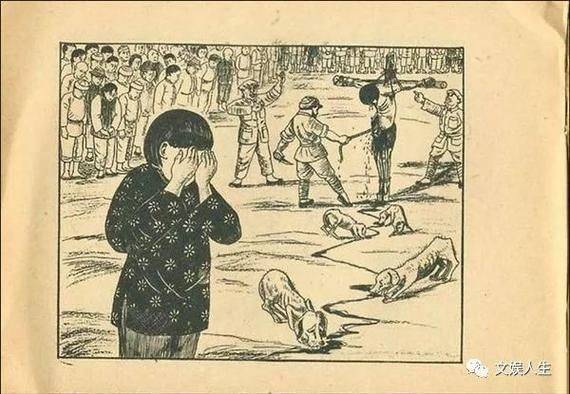
The article begins with the following: "the world follows the path, believing that it is written in a book, so read it." actually, it's just words. Words are valuable and valuable; they are something that is hard to convey. The author thus concludes: “the knower speaks neither knows.” — those who truly know “the word” speak and cannot say that they do not necessarily understand “the word”. That's what i'm talking about。
The author then goes on to say the following:
He's studying in court. "what is the word of the saint?" he said, "i have read, and the wheel is in order! If you say so, then die." he said, "i also see the matter in my eyes." and the wheel, and the zoe, lo! It is not firm, but the disease is bitter. And there is no doubt in their hearts, nor in their mouths, but there are few. I cannot speak for my son, nor can i accept his son, who is an old man of 70 years. Neither the ancients nor the ancients shall die, but the readings of the kings and the evil of the ancients
Wrecks: tradesmen who make wheels whose names are flat. Chuí screech: hammers and chisels are carpentry tools. Bad: bad. Say, ‘speak, reason.’ chee and dys: quick and slow. Gin and bitter: here is the smooth and the mean. These two sentences refer to the experience of the wheel, which is difficult to understand today. One said that when the wheel was cut, the wheel was fixed on the side of the axis. When the movement is slow, the axe slips and the wheel is hard to determine; when the movement is fast, the axe cuts too deep, and it stagnates. It was also explained that this referred to the drilling of holes on the rims, and that perforation (“swidth”) was easy, but not strong; and that small holes (“disease”) were thin and difficult to insert. Number: here's experience, magic. A: a message, a lesson. Inheritance: inheritance, experience。
Zhisheng was studying in the hall, and a trader was flattened, cutting the wheels under the hall. But he lay down his hammer, and cut it, and entered the room, and said to the king: "what is it that you read?" qilong said: all the words of the saints. He said, "is the saint still there?" qi qi said, "no more." and he said: so what thou hast read is an evil of the ancients! Qiqiang is unhappy: how can a craftsman talk nonsense when he is alone? You're right, you're wrong, you're dead
He said, "i've learned from the work of the bottom of my hand, cutting off the wheel, moving slowly, and the axe slips across the wheel, and it's hard; it's fast, it's too deep, it's too slow." only if it's slow or slow can it work. I can't say it, but it's amazing. I can't pass it on to my son. I can't get it from him. So i'm 70 years old, and i'm cutting the wheel, and no one can replace me. Likewise, the ancients died and their unspoken wisdom was buried together; and i think what you read is nothing but a part of what the ancients can say
What's qi yuan's answer? It's not in the fable. He's probably in favor of being rounded. However, the result of the rounding was incomplete. Some of the world's perceptions of humankind can be summed up and taught by words. Some skill groups, on the other hand, need to be mastered through continuous practice and experience, namely, so-called “climate”. On that basis, however, it was concluded that the rationale in the book was so flawed that it was at least incomplete。
Exaggerating and ignoring logic and discussing issues are extreme problems that are common not only in the house of representatives but also in the books of the sons. - maybe it's called the "fat of the ancients"。