The issue of “inducing insurance coverage” is one of the most affected areas, 41. 5 per cent
Insurance can be divided into various types, including health insurance, accident insurance, enterprise insurance, travel insurance, household financial insurance, etc。
With the development of insurance, the excessive pursuit of business by insurance companies or personnel at this stage has also led to a variety of malformations, resulting in a large number of complaints, for example, from operators who, in order to improve their insurance performance, induce older persons to take out insurance, such as the poor attitude of their services, such as false corporate propaganda or insufficient publicity to create misunderstandings
These are the mines on the way to buy insurance, and how can consumers avoid “triping”
In 2021, the superintendency issued a circular on the special management of internet insurance disorders, which launched the special management of internet insurance disorders, requiring the insurance agency to complete the priority inspection by 30 september. Priority management issues include misleading sales, forced and induced sales, poor business practices and user information security。
This issue analyses data on 39,000 complaints, which can be divided by type into six dimensions, namely, inducing insurance, service attitudes, contractual issues, telephone harassment, false propaganda, settlement of disputes, etc。
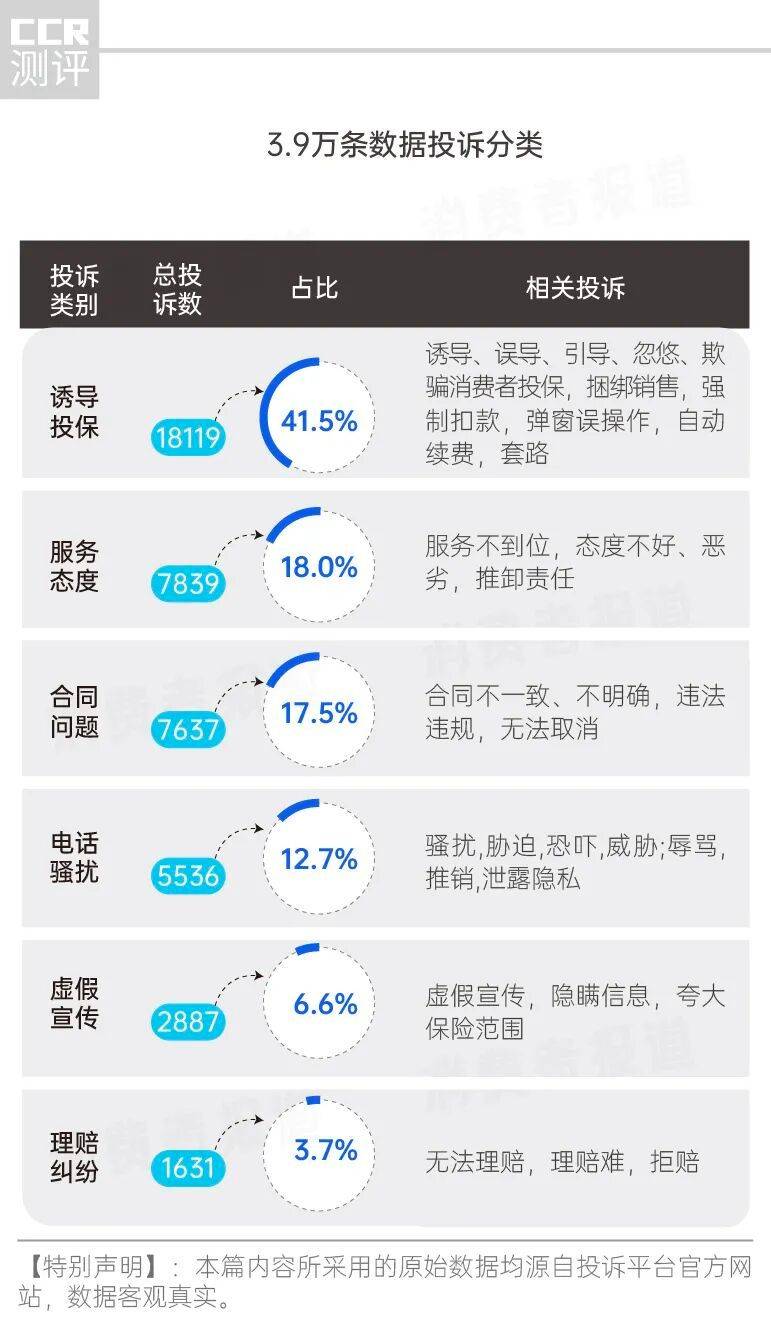
Of these, the most serious problem is in inducing insurance coverage, with 18119 complaints, or 41. 5 per cent of the total。
Inducing insurance includes inducement, misleading, seducing consumers to buy insurance, or binding sales, compulsory deductions, or improper operation of consumer windows, and taking insurance without consumer knowledge。
In addition, many consumers, when using aps, often see the pop-up of bullet windows or links, with sales such as “first month contribution” “first month contribution” “first month contribution” and “first month premium” and “preferential” insurance available online. These sales are in fact misleading and can affect serious consumer decisions about insurance consumption。
Looks cheap. Consumers don't get premiums. They actually cut their annual dues. After the first month's contribution of $0. 1 or $0. 3 the remaining premium is spread over the next 11 months. Zero down payment, among other things, gives the insured the illusion of preferential access to insurance, which amounts to false propaganda, deception of the policyholder and violation of the fundamental rights of consumers to know and to fair trade。
In august 2021, consumer report also published an internet-based insurance intermediary platform that triggered a collective consumer complaint on suspicion of “setbacks” and where consumers were subjected to “setbacks” for advertising windows and “insures” by accident, in scenes such as swipe charge, swirling and sharing bicycles, rental of recharging beverages, parking lot sweeps。
In addition to inducing insurance coverage, there are more complaints about service attitudes and contractual issues. Service attitudes, with 7839 complaints, or 18. 0 per cent, followed by contractual issues, with 7637 complaints, or 17. 5 per cent。
Attitudes include inadequate services, poor attitudes, poor attitudes, responsibilities, peddling, etc. Contractual issues include inconsistent contracts, uncertainty, inability of consumers to cancel insurance, compulsory deductions, etc。
When consumers purchase insurance, they carefully read the terms and sign them, so as to avoid the mined areas。
Tycon has the highest number of insurance complaints, over 10,000
Insurance, by definition, is a safeguard risk, which reduces post-risk losses that may or will eventually be faced。
Although consumers have a need to buy insurance, the generality of insurance consumption is not yet in place, leading to a certain degree to the dissipation of many insurance sales and to the proliferation of service slots。
The data on more than 34,000 complaints shows that the highest number of complaints were made in the areas of thai health and safety insurance, with the total number of complaints being as high as 10,000, or 30 per cent。
The number of complaints was higher, followed by china people's insurance, public security insurance, sunshine insurance, pacific insurance, etc., and 1,000-5000 complaints。
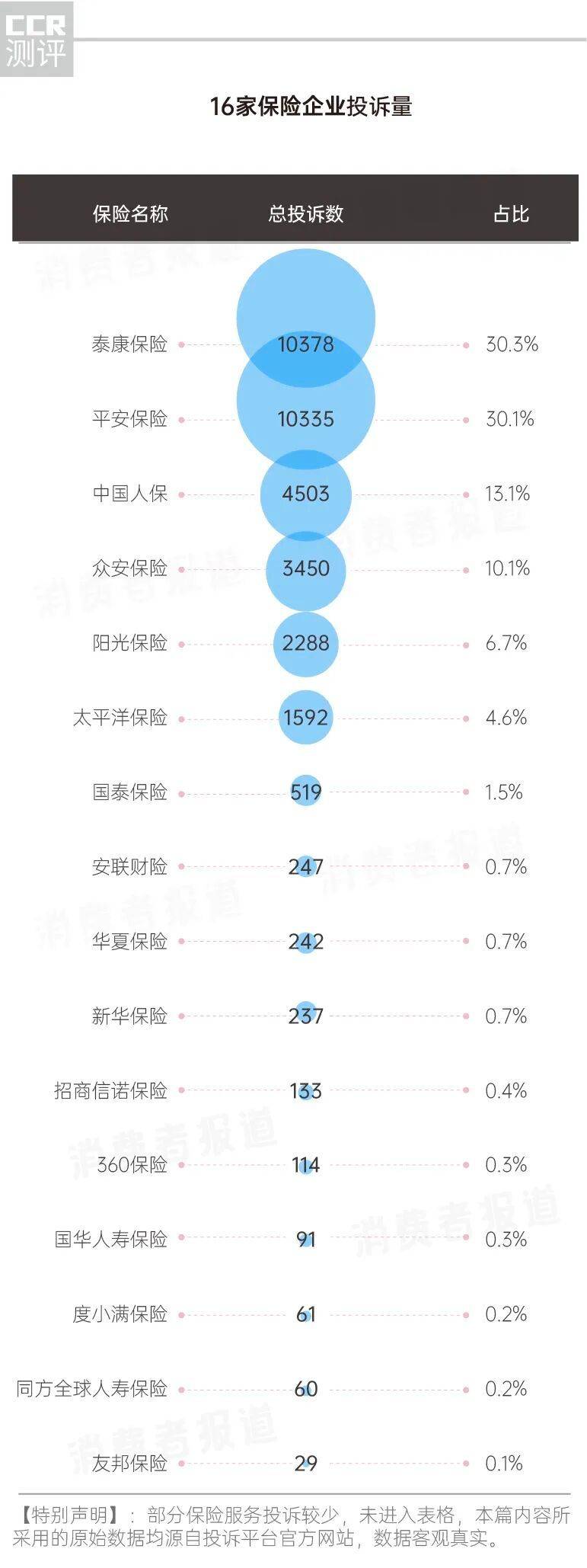
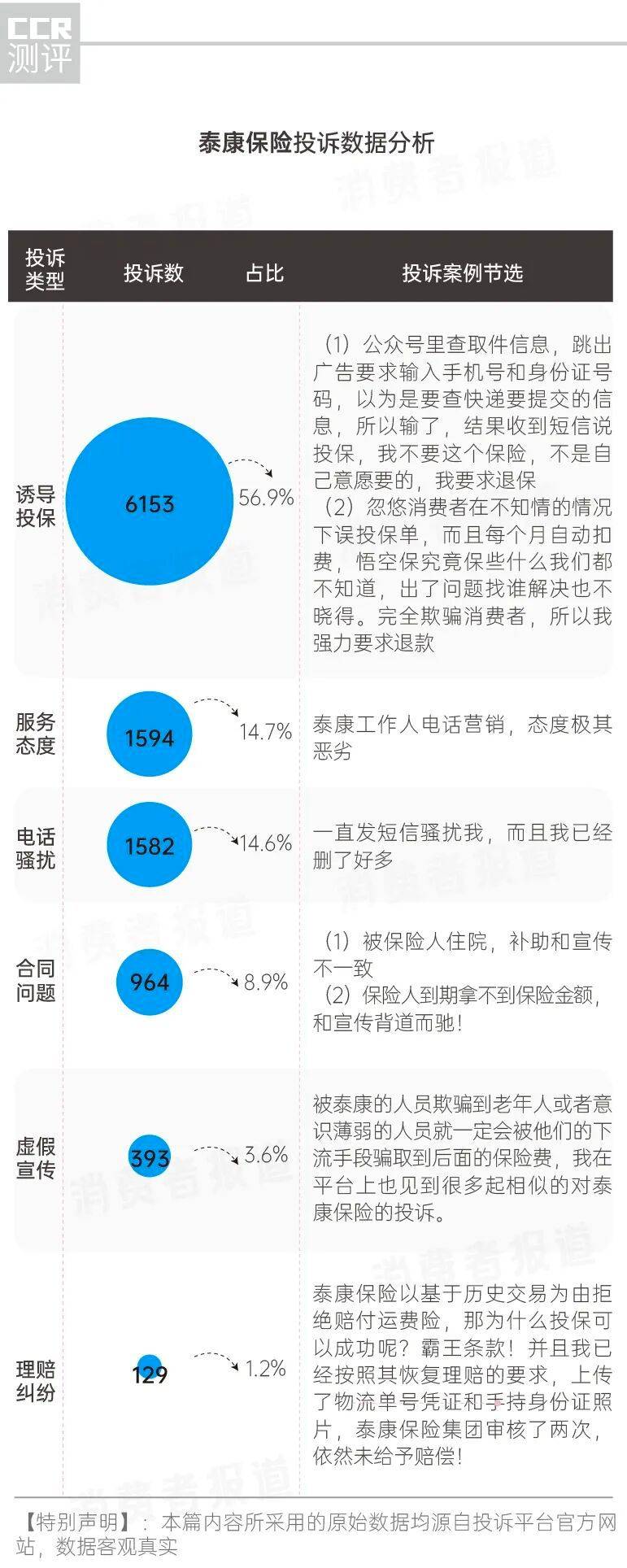
In the case of the tecon insurance insurance, which has the highest number of induced and more serious complaints, nearly 6,000 of the more than 10,000 complaints, or 56. 9 per cent
Ticcon's incentive insurance focused on the use of other ap registrations or filtering to steal information, and thus on consumer negligence, for example, some consumers threw up “i cleaned a shared tram yesterday, and then paid for it when i arrived at my destination, and then suddenly came back and said that i had been successful in “riding a yellow car and jumping out that information, which was thought to be personal certification of a yellow car and not a rogue insurance company. In doing so, the business became increasingly discredited “i have never been insured, and for no reason i sent a text message saying i was insured successfully” “i printed the information on the school's self-help printer, filled in personal information at the time of registration, and a few minutes later i received a successful text from the thai life insurance”. Such complaints are numerous and uninformed “insured”, which is truly inexcusable and annoying。
The second and third most of the thai insurance complaints are service attitudes and telephone harassment, with over 1,500 complaints, some of which are considered by consumers to be “calling themselves, tough, bad, hard, and hard to send insurance policies, withholding fees”, “calling customers to withdraw, general, and not dealing with” “insurers' avoidance problems, so to speak about the importance of avoiding, but repeatedly talking about the app itself, without any explanation of the course of business, and with no explanation for the failure to do so, dealing with the problems, very poor attitudes, etc。
Another example is safe insurance, which induces the largest number of complaints, 33. 9 per cent, and nearly 4800 complaints, involving the inducement of consumers, who are insured without knowledge。
Consumer report recommendations
The insurance industry has been quick to complain of problems in the distribution services of the insurance industry on the one hand, and the growing consumer awareness of rights on the other, which is magnified through the power of the internet on the other。
From an industry perspective, it is hoped that insurance enterprises will increasingly focus on consumer purchasing experiences, that quality of service and business integrity will become important considerations in insurance services, that sales will be more legitimate in compliance, that they will avoid situations of inducement, harassment and confusion in the industry, and that regulators will be advised to vigorously combat situations such as “set-backs” that induce insurance, false propaganda, etc., and that china's insurance industry will be put on track。
From the consumer's perspective, insurance is increasingly a risk-averse strategy, which consumers are assigned to purchase as household assets. How should insurance be bought
In consultation with several insurance brokers, this publication makes the following recommendations:
(1) take note of the contract terms. The terms of the contract should not be subject to the publicity terminology of the sales personnel。
(2) each stage of life faces different risks and financial needs. Serious illness or medical insurance can be purchased if there is a fear of poverty and loss of income; if there is a fear of accident or death, such as accident or life insurance。
(3) first, the family pillar is guaranteed, and again, other family members. It is important to consider how families can survive when the family's economic pillar is down, for example by purchasing an additional periodic life insurance policy for those responsible for the family's economic income, and by using low-cost leverage to prevent disruption of economic resources before retirement。
(4) prejudice, then the child. Adults are the main source of family income and if they fall, there will be no financial security。
(5) insurance for financial attributes requires caution at this stage. It's first to make sure you're safe, and then you'll have to look after your money! Buying a bunch of financial insurance, accident insurance, medical insurance, and serious illness insurance, but not one, is the reverse of the present and the opposite. It is pure advice that insurance is insured, that money is paid for, and after all, that what is free is the most expensive that is hidden。