I. Maple-basket tree-forming
Maple trees are rich in wildness, with many basins being made in the mountains to dig for old stakes or young trees, new branches being long and soft, and stylish into multi-form basin views, often of a straight-dry, tilted, dry, dry and bushy nature, mainly made with trims, supported by trims, large leaves that are not suitable for clouds or clouds, and often trim their leaves into high-coherent, trim natural forms, after frost, reds their beads, fresh and attractive。
Ii. Maple basin plantation and use
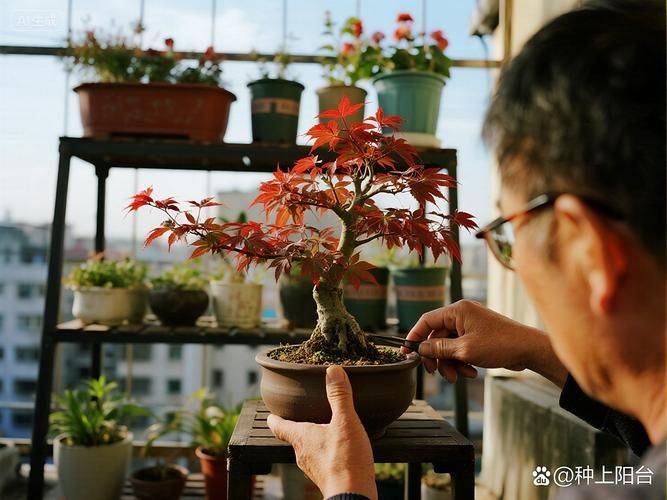
1. Cultivation: maple trees should be grown in the 2nd to 3rd month before the spring gestation, with cuttings and roots before planting, with half of the old soil removed, new soil replaced and rotting bean cakes placed at the bottom of the basin as base fat. Maple-skinned, fertile and humid soil, which is poorly grown in small areas, can be grown using two thirds of the decayed soil and one third of the sand mixed。
Batteries: most of the leaves of maple trees become red by green after the deep autumn frost, so be careful not to use a red, green, two-coloured purple sand basin or pottery pottery. The jungle maple view can be used to process the basin into a high, low-lying, natural mountain field, using the han baiyu or marble shallow basins, and the life of the basin will be further enhanced by the placement of a few tortoise or england stones in the appropriate part of the basin, with a few characters or animal slabs。
Iii. Management of maple basin conservation
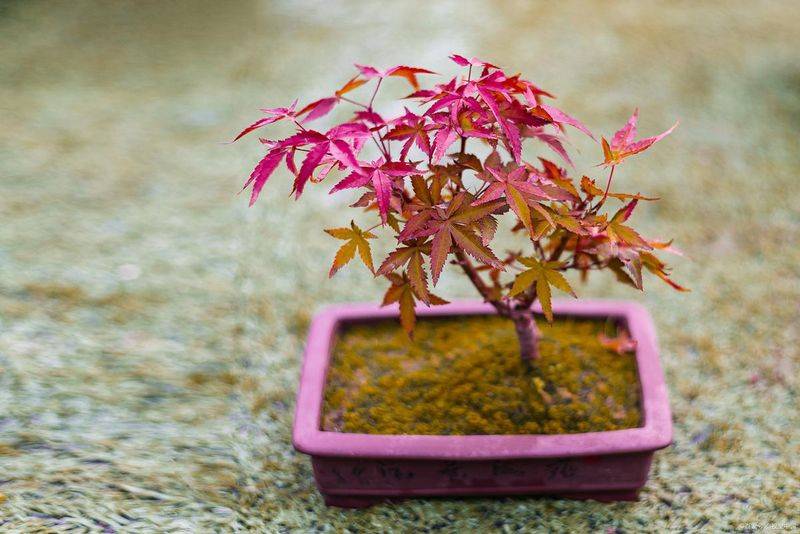
1 places: the glacial and cool environment of the maple tree, with its fear of intense sunlight, should be preserved under the shades or other trees, such as under strong light or on the balcony, where there are frequent focal leaves. Placing a maple basin in an indoor setting should not exceed one week due to poor indoor ventilation or be detrimental to growth. Maple basin landscapes should be moved into cryogenic rooms in the north during the winter, and in the south, it should be safe to climb through the winter in the backwind-to-light soil。
Watering: maple leaves are large, water evaporates rapidly, water is regularly poured during the growing season, heat is often spilled on the ground and the climate is kept wet. Winter maple enters hibernation and does not water the pelvis wet。
3 fertilizers: prior to the sprouts of spring maples and during leaves, organic fertilizers should be applied separately, but not in the rain, but in august and september, respectively, and during hibernation。
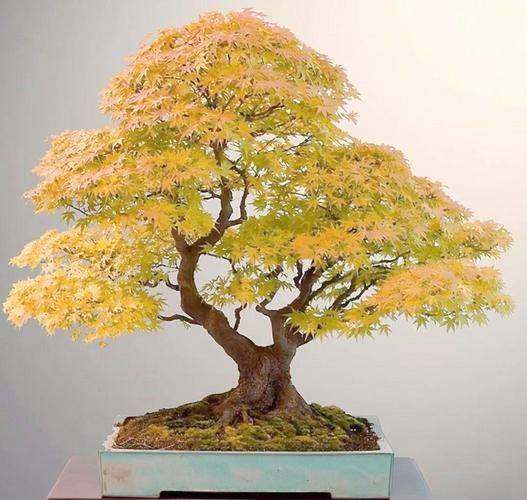
4. Orthopaedics: maple trees are strong, trunks grow new sprouts, and non-necessary sprouts and overtly branches should be removed immediately. This not only saves nutrition, but also contributes to ventilation and light. The best sighting period for maple trees is when the new leaves begin to spread, when the leaves are removed at the end of the summer, and the thin liquid fertilizers that rot once, will grow in about 20 days, increasing the optimal viewing period。
Prevention of diseases: lignite and powder diseases are common in maple trees, which are sprayed with more than 50 per cent of the filamentable powder 800 to 1,000 times the fluid, 1 in 10 to 15 days and 2 to 3 in a row. The pests are mainly yellow stings, bare-shoulder buffaloes. The prevention of yellow euphoria is usually concentrated in the early autumn and early springs in a combination of cropland digging and eradication, or in the early stages of larvae spraying 50 per cent of the larvae emeralds with 1,000 times the liquid. A bare-shoulder buffalo can kill 50% of the eggs and the larvae that have not yet been mutilated into wood. The larvae of the pine cream, 150 times the fluid spray tree cadre, has a better effect by cutting and burning seriously hazardous larvae from the base, or by pouring 40 per cent of the fruit cream 100 to 200 times into the cavity, then clogged the hole with dirt。