Location of fish pools
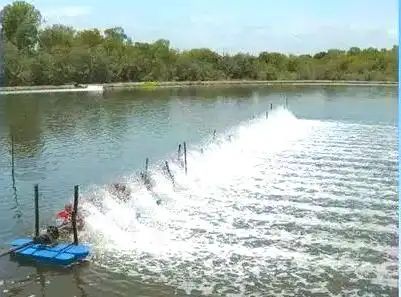
The location of fish pools is crucial, and priority should be given to areas with sufficient and good water quality, while ensuring accessibility to transport and electricity. Such sites not only facilitate water injection and drainage, but also effectively facilitate the transport and marketing of species, feed and fish。
Water and water quality management
The pond should have a stable and high-quality water source to support daily fresh water injections. As a result of high-density fish breeding and large amounts of baiting, soluble oxygen levels in pond water bodies are often difficult to meet, leading to deterioration in water quality, which in turn leads to fish floats and even mass deaths. While oxygenizers can temporarily mitigate the floating problem, they cannot fundamentally improve water quality and their long-term use is detrimental to fish growth。
The ideal pond water source is a non-polluting river, lake water, which not only has high soluble oxygen, but also has good water quality and is well suited to fish growth. Thus, when selecting the location of fish pools, priority should be given to near natural waters such as rivers and lakes。
While well water can also be used as a source of fish breeding, its temperature and soluble oxygen is relatively low. When used, water temperature and soluble oxygen can be increased by extending the channels through which well water flows or by setting up a tan pool. At the same time, the installation of water boards at the entrance points, which allow water to be splattered and then re-enter the pond, can also effectively increase water temperature and soluble oxygen levels。
Of particular caution is the fact that waste water released from factories and mines may contain substances harmful to fish. Prior to their use, they must be carefully analysed and tested to ensure their safety。
3. Area considerations
The size of the pond where fish are fed is a key factor. Large-scale ponds provide vast areas of activity for fish, while wind power can also effectively increase soluble oxygen levels and facilitate the mixing of upper and lower ponds, thus improving the soluble oxygen conditions in the lower water. In addition, large bodies of water usually mean more stable water quality and are not susceptible to mutation, hence the term “broad water for big fish”。
However, there are challenges in oversized ponds. It is difficult to distribute the bait evenly, and water quality control becomes more difficult. During summer fishing, the sorting process became cumbersome and prone to fatal fish accidents because of the potential for excessive fish catch. At the same time, large-scale ponds are even more difficult to manage and are subject to large winds, which can easily form waves to destroy ponds。
Although large fish pools of about 30 acres can achieve high yields, this size is not common in practice. On the other hand, small fish pools (e. G., between 2 and 3 acres) can also yield high yields, but the relatively unstable water environment and the large number of embankments actually reduce the amount of water available。
Taking all these factors into account, the pond area is generally considered to be the most suitable at the current level of management of fish for consumption. Such a scale would meet both the demand for fish growth and the management and maintenance of pond ecology。
4. Water depth considerations
Deep water depth and water storage in ponds where fish are fed are two essential factors. A well-deep pond not only contributes to increased nutrients and hence production, but also ensures the stability of water quality and creates favourable conditions for fish growth. As the saying goes, “one inch of water, one inch of fish”, is precisely the close relationship between water depth and fish production。
In the case of ponds in river-free communities, fish production varies significantly from one deep pond to another. With the increase in water depths, there has been a significant increase in the consumption and net production of grassfish, cyanide, platinum and platinum per unit area. At the same time, the average depth of the ponds (1. 7 m ~ 2. 5 m) is 51% and 56% higher than the shallow ponds (1. 2 m ~ 1. 5 m) on the snails, larvae and weed。
However, the depth of the pond is not as deep as possible. Over-deep water bodies may result in inadequate lighting conditions in the lower water layer, thus affecting soluble oxygen levels. The decomposition of organic matter can consume significant amounts of oxygen, which can easily lead to frequent oxygen deficiency in the lower water. This undoubtedly poses a great challenge to the survival and growth of fish stocks. Therefore, it has been proven that the water level of the cuisine should be between 2. 0 m and 2. 5 m to ensure healthy fish growth。
5 - land considerations
In the ponds where carp fish are raised, the frontier soil is the best option, with the clay being the second best, while the sand is relatively poor. After 1 to 2 years of farming, the bottom of a fish pool accumulates a large quantity of bait, fish dung and biological bodies, mixing them with mud and creating thick sludges that change the original soil properties。
However, excessive sludge can also cause problems. The organic matter contained therein consumes significant amounts of oxygen during oxidation, resulting in oxygen deficiency. In addition, anaerobic fermentation of organic matter in anaerobic environments produces harmful substances such as ammonia and hydrogen sulfide, which seriously affect fish survival and growth。
Therefore, it is important to ensure that 5 cm thick sludge is kept on the bottom of the pool at the start of a species rearing. This not only helps to replenish nutrients in water, but also effectively maintains and regulates water fertilization and provides a good growth environment for fish。
6 the shape of the pond and the surrounding environment
The best option is a rectangular fish pool with a long east-west, north-south width. This pool design minimizes the shade of the pool, while at the same time prolonging the sunlight time on the surface, thereby promoting photoco-cooperation in the phytoplankton. In addition, under the usual south-east and south-west winds in the summer, the surface is prone to wave formation, which in turn promotes natural aerobics in the pool and reduces the phenomenon of fish fluctuations due to lack of oxygen. The long width of the rectangular fish pools is appropriate at 5:3 and not only is visually more beautiful, but it also optimizes the management of rearing and networking operations, while at the same time facilitating the rational flow of the water from the pools when it is filled. The ponds should be kept open and avoid large trees and houses blocking the flow of sunlight and wind。
7 bottom shape
The bottom design of fish pools is equally important, and it can usually be divided into three types. The first is the bottom of the “basket” pool, which is characterized by shallowness and central depth around it and is shaped like the bottom of the iron pan. Such designs require the digging of ditches when drained by dry ponds, while the extraction of sludge during fishing and fish transport is quite difficult and therefore requires adaptation。
Second, the bottom of the “slash” pool is flat and tilts towards the water vent. While this design is relatively easy in terms of drainage and fishing, the removal of sludge remains difficult。
Finally, the bottom of the “turtleback” pool is high in the middle and the surroundings are low, forming a shallow trough that is deepest on the slope. This design allows fish and water to be concentrated at the deepest concentration at the end of the year, and drainage fishing becomes simple and efficient, while transport distances are reduced. In addition, the pond mud is mainly deposited inside the sink, and the excess sludge is easily removed and can be removed from the pond as soon as it is repaired, reducing labour intensity. This structure also makes it difficult for fish to escape from the bottom of the net, thus significantly increasing the rate of low-level fish catch。
8 pond adaptation
Good pond conditions are one of the key factors in achieving high-yield, high-quality and efficient fisheries output. At present, there are clear requirements for high-yielding and stable fish pools, not only in terms of their shape and size, but also in terms of their drainage systems, sludge management and flight prevention facilities. Through rational pond modifications, we can create an environment more suitable for fish growth, thereby increasing the overall efficiency of fisheries。
1 the pond should be modest in size and be contained in approximately 10 acres, thus ensuring both the operational space and management of fish. Two depths are also critical, usually at about 2. 5 metres, which can meet the requirements of fish growth. The water and water quality of the ponds must be good, and drainage systems must be accessible to ensure that the water quality is clean and clean. The four ponds should be well shaped, and the embankments should be sufficiently high and wide to withstand large water and drought and to sustain drought and floods。
In addition, the ideal bottom shape of the pool is a "back tortoise" or "slash tortoise " , which not only facilitates rearing management but also provides a certain area for green feed cultivation. If existing fish pools do not meet the above criteria, adaptation is required. In this process, measures such as the expansion of ponds, the deepening of shallow ponds, the transformation of dead water into live water, low and high heights, and the widening of the ponds should be taken in line with the above criteria。
9. Cleaning of ponds
After a one-year fish rearing cycle, the bottom of the pond deposits a large amount of sludge, usually about 10 cm per year. Therefore, after fishing in the dry ponds, the sludge around the bottom of the pool should be excavated and piled on the embankment and its slopes. After a minor drying, the sludge was taped and immediately planted in green feed crops such as black wheat grass or green vegetables. This has not only improved pond conditions and increased water storage, but also provided high-quality fertilizers for feed cultivation. At the same time, solid slope protection of grasslands can be effective in mitigating the risk of collapse of slopes and embankments。
Upon completion of the clean-up, the drugs should be used for the treatment of the ponds, which are operated in the same way as the ponds of the fish nursery ponds. New water should be injected into the species only once the effects of the drug have completely disappeared, and new water should be injected using a net filter to prevent wild fish entering the pool。
10. Water quality characteristics and adaptation of saline fish pools
In addition to the above-mentioned freshwater-skinned fish pools, saline lands are widely distributed in the north-east, north-east, north-west and coastal estuaries of the country. These lands are often not suitable for crop growth or even grass, but can be adapted for fish farming in ponds. After many years of fish farming, these lands can be completely or substantially diluted and, if needed, converted back to agricultural land. At present, the development of pond fish farming using salin lands has become an important tool for the transformation of salin lands in the country。
In coastal areas affected by seawater, the water ion is dominated by cl. In arid and less rain-fed areas, rivers have a high salinity of more than 1,000 mg/l and up to 7,000 mg/l. When the salinity of water exceeds 300 mg/l ~500 mg/l, the ratio of ion will change, especially hco3 - decrease, while that of cl - or so42 - will increase. Although so42 is not toxic in itself, it may be reduced to hydrogen sulphide, which is toxic to fish, in an environment of oxygen deficiency and high organic matter。
11. Mixing and rearing techniques in pond fish
In china, the core technique for fish farming in ponds is to mix and reasonably manage species of different habits, diets and even species of different sizes in the same pond. For example, gills and gills live in the upper and lower layers of the water, while grassfish and gills live in the bottom of the water. By combining these different species of fish in the same pond, it not only increases the consumption of a unit area, but also makes full use of the bait resources in the pond, generating mutually beneficial relationships, while preventing the eutrophication of water bodies and improving the production conditions of the pond. In addition, the mixing of the same species of fish with different specifications allows for the production of large-species fish at the same time as food fish, thus reducing the demand for ponds for fish breeding and expanding the area of fish breeding。
The production of fish from ponds will increase as long as the water is suitable, the water quality is good, the proportion of mixed fish and the specification of the species to be fed is appropriate, the bait quality is high and sufficient, and the stocking is carefully managed。
12. Science-based nutrition strategies
Fish farming with feed ponds is usually the main target of edible fish. At the same time, in order to make more efficient use of water bodies and the biological baits in them and to improve water quality, filtration fish are associated with 80 per cent of edible fish and 20 per cent of filtration fish. In particular, the ratio of gills to gills is generally within 4-5:1。
It is worth noting that grassfish are often not associated with grassfish in ponds where carp or mackerel are the dominant fish because of their high predatory capacity and their relative timidity. Similarly, it is not appropriate to mix grassfish with carp in ponds where fish are mainly fish-fed. After the main food-eating fish has been domesticated and has a good predatory capacity, it is then released。
The determination of nutrients requires a combination of factors such as the conditions of the pond, the level of management, expected production, specifications and delivery specifications。
Comprehensive preventive measures
Because fish live in water, their onset is often undetectable and it is difficult to treat drugs. In actual production, only external drugs — spraying — and internal drugs — are used to combat them by adding them to feed. However, treatment of internal drugs cannot be implemented when fish are so seriously ill that they cannot be eaten. It is therefore particularly important to prevent the occurrence of diseases in the farming process, and we should adhere to the principle of the primacy of prevention and the complementarity of treatment, combining prevention with treatment。
Clean ponds and disinfection
A: clean pond
During winter dry ponds, the silt in the ponds must be completely removed and the sun must be used to kill potential pathogens. In addition, drugs such as lime and bleach can be used to further clear ponds to ensure the total eradication of insects, eggs and pathogens in ponds。
B: sterilization
Sterilization measures are divided into water and fish disinfection。
Fish sterilisation: before a fish enters the pond, aaesthesia must be performed to ensure the health of the fish. In addition, during farming, local water bodies in the vicinity of the food can be sterilised by placing them around the food, with a certain concentration of drugs, so that they can be sterilized as fish enter the food field。
Sterilization of water bodies: this is an important measure to prevent bacterial and surface parasitic diseases of fish. Common drugs include lime, bleaching powder, seagen, copper sulphate and sulphate iron amalgams and trichlorfon. These drugs can effectively prevent and control multiple diseases in fish。
2) periodic application of micro-ecological agents
Following the introduction of micro-ecological agents, it should be ensured that the use of excretion products is avoided for the next 5-7 days in order to ensure their optimal performance. Micro-ecological agents can contribute to rapid oxidation of organic matter in sludge, thus effectively inhibiting the growth and reproduction of harmful bacteria。
3) rational use of oxygenizers
At noon in the middle of the sunday, the oxygenizer is activated for 1-2 hours to stir up the bottom water of the harmful substance at the bottom of the pond by exposure, while the upper oxygen-rich water is introduced into the bottom. This will not only accelerate the oxidation of submersible organisms, but will also effectively reduce the levels of harmful substances such as nitrogen and nitrite in water bodies, thereby reducing chemical oxygen consumption at the submersible。
3. Regular pond patrols
To keep a close eye on the growth of fish, we need to patrol ponds in the morning, middle and late hours of the day. By observing the food intake and activities of fish, we can make a preliminary assessment of their health. Detailed observations of changes in water bodies, water quality and water colour are also essential。
4. Reasonable fertilization
Fertilization is a key measure in fish farming. Bottom fertilizers are predominantly organic, while fertilizer is used mainly in pursuit of fertilizers. We usually go after fat every half month, with nitrogen fats choosing urea, etc., and phosphorus fats using calcium phosphate. Fertilisation is controlled at 5-10 kg/acre per application and is required to be fully dissolved and distributed equally to the pool。
For edible fish, which are fed primarily by particulate feed, nitrogen fertilizer in ponds is often not readily available, so the application of phosphorus fertilizer is even more important in pursuit of fattening to supplement the phosphorus deficiency in water bodies. When using phosphorus fertilizers, we need to be careful to choose the morning of the sun and to spray it after full dissolution to ensure timely utilization of the phytoplankton. At the same time, fertilizer should be avoided before, after and after the use of lime or when the water is mixed with water from the pond, so as not to affect fertility。
The ultimate objective of fertilization is to provide phytoplankton with adequate nutrition and to promote its growth and reproduction. This not only helps to regulate the quality of water, maintaining the water body's “mass, tenderness, life and comfort”, but also provides a wealth of bait for the argon and ensures that the pool has a high oxygen capacity。