The chinese people are well known as the “state of courtesy”. Civilization is the most basic moral code of conduct and the expression of the quality of civilization of contemporary pupils. We're going to be a civilised pupil. The junior editor is here with you to learn about civil decency in elementary school。
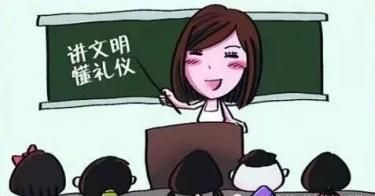
1. Called protocol
Teachers and elders must be referred to with respect and manners and friends。
(1) parents may not be named by their parents, let alone in uncivilized words, but in precise terms, such as father, grandmother, teacher, uncle, etc。
(2) students may call each other by their own name, but may not be referred to in rude terms such as “hello” and “hey”. No nicknames, no nicknames。
2. Greetings
Greetings to the parents and elders, with different greetings in time, place, festivals:
(1) good morning to grandpa, grandma, dad, mom
(2) good night to grandpa, grandma, dad, mom
Parents come home from work: daddy and mommy are back
(4) birthday: happy birthday to the elders, good health
(5) new year: happy new year to mom and dad
(6) when daddy and mom went out, they said, "peace be to daddy and mom and good luck!"
When dad and mom came home, they said, "hey, mom and dad are back。
(8) when i left: tell my family i went out. Walking further away, tell the family that i will take care of myself and call or text the family at my destination。
(9) when they return home, they shall greet their parents and elders。
3. Table protocol
(i) at home
1. First step for the elders。
When the elders get the chopsticks, they get the chopsticks themselves。
Eat and drink soup with a small mouth, shut up and chew, and chew slowly and make as little noise as possible。
At dinner, take chopsticks and bowls。
Five, no bowling, no pickles。
6. Others feed themselves and say “thank you”. When you don't need it, say, "thank you, i really don't need it."
7. Offering food to elders。
After eating, say, "take your time."。
9 - dinner is served to help parents pack their dishes and wash the table。
(ii) at school:
1. Enter the restaurant in an orderly manner without running。
2. Sit in the designated seat, with two legs set together, with two legs set flat, with a natural position and a straight back。
When eating, hold a spoon in one hand, hold a bowl in one hand. Don't knock on the pot. Be quiet and civilized。
4. Food, food and soup (except in exceptional cases); no food, no choice。
5. At the end of the meal, the bench shall be placed neatly under the table。
4. Hospitality
1. Guests visit in advance and clean the room. A warm reception should be provided to help parents to sit down and leave after delivery of tea, and “good-bye” should be given to the guests when the parents send them. If the parents are not at home, the guests are received as their owners。
2. Visits by fellow students and friends of their own should be greeted with enthusiasm, and their first visits should be presented to parents on a case-by-case basis, and the best seats should then be given to guests, using tea, fruits, books, etc。
3. Friends of parents who bring children to visit should play with them or tell them stories, read with them, listen to music and watch television。
At the time of the meal, a fellow student or friend should be invited to dinner at his own initiative and, if the guest has stated that he has already eaten, make arrangements for a friend to sit and find some books or magazines to read to him and then eat。
5. Teachers should be treated with the same enthusiasm and dignity as their elders。
Senders are sent outside the door and are welcome to come back next time。
Five, hospitality
1. Visits to the homes of relatives and friends must be punctual, organized and, as far as possible, small gifts to show respect for the master。
2. In the homes of relatives and friends, the air cannot speak out, but speak out about civilization。
3. The master's household cannot be used at will without the permission of the master, and even best friends should greet and obtain the consent of the master。
4. If you eat at the home of the owner, you must be careful about your manners, you cannot enter the table first, you cannot move the food first。
5 when i say goodbye, i should like to say thank you, such as “we are so happy today” and “welcome to my house”。
Six, wear protocol
(1) to wear a regular school uniform, as required, and not to wear a fancy dress, the junior shall wear a red scarf。
(2) full and simple, with no vests, slippers, walking on the campus and entering the classroom。
(3) classes are open and shoes are removed. Instead of pursuing brand-name shoes, it's better to have balls or flat soles。
(4) no necklaces, earrings, rings, bracelets, bracelets, etc。
(5) no fat powder, no eyebrows, no tattoos, no long nails and no nail polish。
(6) hair cutting as required, no dyeing, no hotting。
7. Walking manners
1. Walking with a strong chest, looking forward, with a natural swing of the shoulder arm, a moderate pace, taboo, shaking or twisting。
Up and down the stairs and across the stairs are to be slow right and not to be on the rails. Access to classrooms, offices, premises, etc. Follows the designated route, is not crowded and access to the functional rooms is slow and does not affect others。
3. To greet each other, greet each other and not to lose sight of them; to talk, to the side of the road or to the corner, not to stand in the road or in crowded places。
4. Pedestrian comity, offering to give way to the elders, and to disabled and needy persons。
5. Ask someone about the road and say hello in polite language, such as “sorry to bother you”, “question”, etc., and ask for appropriate names, such as “grandfather”, “aunt aunt”, “uncle”, etc., and then ask for directions; after the answer, say, “thank you!” if a stranger asks for directions, he should answer seriously and carefully, he does not know, and he should say, “i'm sorry, i don't know, ask someone else again.”
You're a good teacher
(1) when he says hello, he says “goodbye to him”
(2) the teacher is to be allowed to go first, to enter the school door and to meet the teacher up and down the stairs
(3) entering the office by knocking on the door and not simply looking through the teacher's things; opening the teacher's computer without self-interest
(4) when talking to a teacher, stand up and give the teacher a seat。
(v) following their teachings (including the concubine, the meal, the road)
(6) be good to the parents, be kind to their families and help them share the household tasks within their means。
Attendance
1. To speak with a fellow student in a sincere and modest manner, in a balanced manner, and to listen to his or her fellow student, to look directly at his or her fellow student and not easily interrupt others。
2. Inter-student relations shall be conducted in mandarin and in polite language. Ask your classmates a question before asking them in humble words such as “please ask”, “i'm sorry”, “i'm sorry to bother you”, “i'm asking you a question”, etc。
3. Respect your fellow students and refrain from naming them insultingly or calling them insultingly, and not saying things that upset and shame others。
4. Supporting one another and helping students in difficulty. Choose the right way to point out sincerely the students' shortcomings or confirm their strengths。
5. Students of both sexes respect and care for each other and do not bully each other。
6. Borrowing from students requires their consent. Special care should be taken for the students, and restitution should be made on time, with an apology and compensation as soon as it is lost。
7. Do not talk short in front of or behind the students, do not make fun of them。
8. Illustratively, there is a great deal of magnanimity for the wrongs or offenses of students. Apologize when you're in the way。
9. Be credible and promise to do everything in their power to do without violating the rules of the school。
Ten, raise the flag
1. Orderly access and exit, generally in school uniform, as required。
2. Stand up and remain silent. Don't look back。
3. Attendance (teams)。
4. Listen carefully to the flag。
Five: sing the national anthem with seriousness and a loud voice。
11. Assembly rites
1. When assembled, arrive well in advance, and enter the meeting promptly, in a fast, quiet, all-round and ready at the assigned location。
2. To listen to the report, to remain silent, sit on the right side, talk and walk。
3. No snacks at the meeting and no fruit and paper scraps。
4. At the end of the report or performance, give a round of applause; the beauty of the show is moderate; the beauty of the event is not glorified, the whistle is not whistled and the noise is not loud。
5. When a student takes the floor, he or she bows to the leadership of the podium and to his or her classmates in the field. Thanks were extended。
6. When the award is presented, the award shall be presented with a smile and a bow to the awardee, followed by a certificate (certificate, prize) with both hands and a tribute to the awardee。
7. Meetings and performances do not leave the scene without permission; after the performance, the actor leaves the scene in an orderly manner。
8. There are indeed exceptional circumstances that require leaving the premises with the teacher's consent。