Today, 4 march, the supreme people's court issued a judicial interpretation of the new code of criminal procedure, which became effective on 1 march this year. In comparison with the 2012 judicial interpretation of the code of criminal procedure, the new judicial interpretation added the words “trial of guilty pleas”, “acquiring proceedings”, “trial proceedings in absentia”。
Vice-president of the supreme people's court, li xie ping: the promulgation of the interpretation of the new penal code is of great importance to the people's courts in carrying out their judicial duties properly and strictly in accordance with the procedure established by law, regulating the conduct of cases, guaranteeing the right to litigation, ensuring the correct and effective implementation of the amended code of criminal procedure, and achieving the organic harmonization of the punishment of crimes and the guarantee of human rights。
Recorded and recorded questioning as evidence
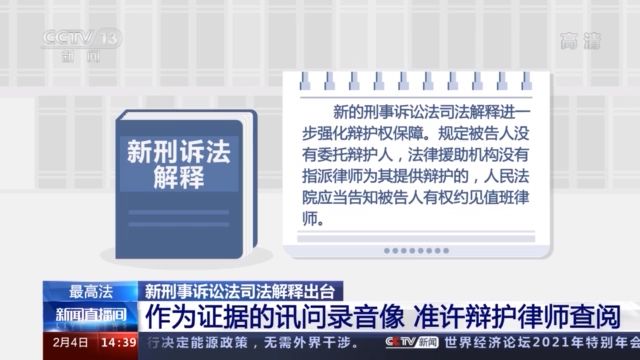
The judicial interpretation of the new code of criminal procedure further strengthens the guarantees of the right to defence. The people's court shall inform the accused of his right to an appointment with a duty lawyer if the defendant has not appointed a lawyer to defend him。
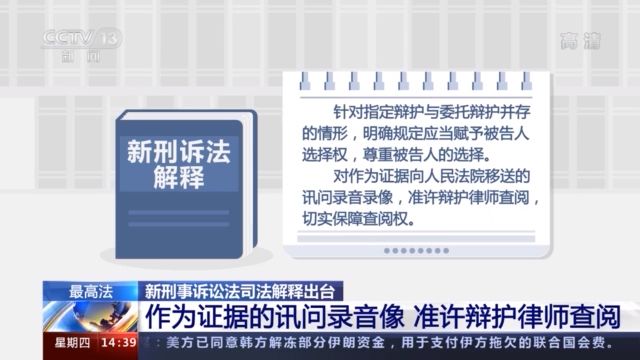
(b) in cases where the assigned defence coexists with the assigned defence, it is clear that the accused should be given the option to respect his or her choice
Access to audio and video recordings of interrogations transferred as evidence to the people's court is granted to defence counsel and is effectively guaranteed。
Co-indictments may be tried jointly
At the same time, the judicial interpretation of the new code of criminal procedure reaffirms the general principle of co-execution, requiring that the division of cases should be subject to guarantees of the quality and efficiency of the proceedings, and emphasizing that the division of cases must not affect the exercise of procedural rights such as the right of the person concerned to testify。
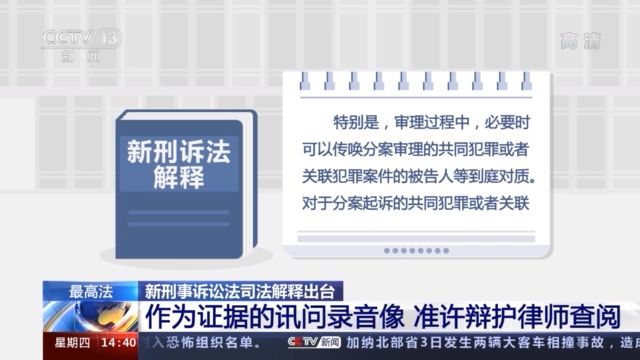
In particular, in the course of a trial, the accused may be summoned, if necessary, for joint or related crimes before a court. In the case of joint or related offences prosecuted in a separate case, the people's court considered that joint proceedings were more conducive to establishing the facts of the case, guaranteeing the right to litigate, and establishing an accurate conviction and sentence, and could be considered in parallel。
Ask a minor victim and a witness
The judicial interpretation of the new code of criminal procedure, issued on this occasion, regulates the circumstances of a minor victim of sexual assault or violence. At the same time, legal practice regulates issues that are difficult to identify by the legal representative of the respondent unit。
The judicial interpretation of the new code of criminal procedure implements the conceptual and institutional requirements of the newly amended law on the protection of minors, the law on the prevention of juvenile delinquency。
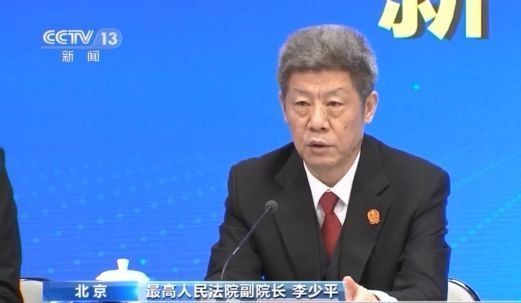
Li xiaoping, vice-president of the supreme people's court: provides for the consideration of cases of sexual abuse or violence against minors. In questioning juvenile victims and witnesses, measures such as simultaneous audio and video recording should be taken as far as possible, and the necessary psychological intervention, financial assistance, legal assistance, placement in schools and other protective measures should be strengthened, in cooperation with the authorities concerned. At the same time, in order to effectively implement the relevant provisions of the code of criminal procedure, the statements of minors who are specifically questioned and whose legal representatives or suitable adults are not present shall be excluded by law。
Moderate broadening of the scope of representation determination
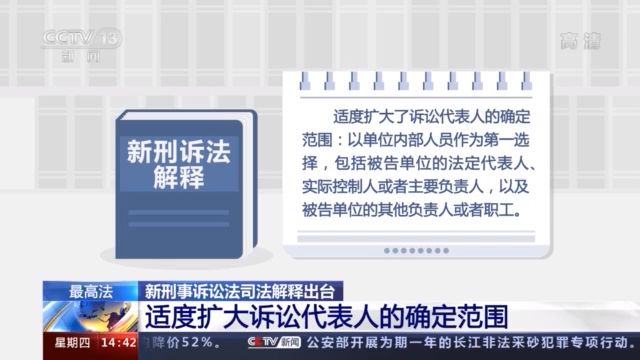
(a) the interpretation of the new code of criminal procedure moderately broadens the scope of the determination of the representative of the suit: the first choice is made by the internal representative of the unit, including the legal representative of the unit of the defendant, the person in charge of the actual control or principal, as well as other officials or employees of the unit of the defendant
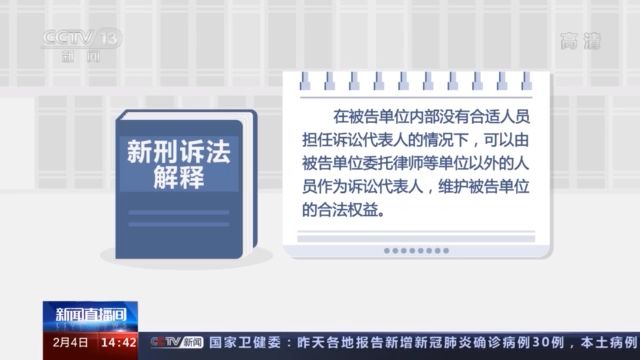
In the absence of suitable representation within the respondent unit, persons other than the respondent unit may act as legal representatives for the defence unit。
We're all sitting in second instance
The current judicial interpretation of the new code of criminal procedure provides for a stay of trial in all cases, and for the transfer of evidence during the trial: if the absence of evidence leads to doubts as to the relevant facts, the court shall base its determination on the principle of favouring the accused。
The current judicial interpretation of the new code of criminal procedure makes it clear that all cases are heard on a stay of death. The people's court of the second instance shall hear all appeals from defendants sentenced to death, including those whose death sentences have been suspended for a period of two years. The people's court of the second instance shall hear all appeals from defendants who have been sentenced to death immediately and whose death sentences have been suspended for a period of two years. The people's court of the second instance shall also hear cases from other co-defendants。
Failure to transfer evidence leads to suspicion
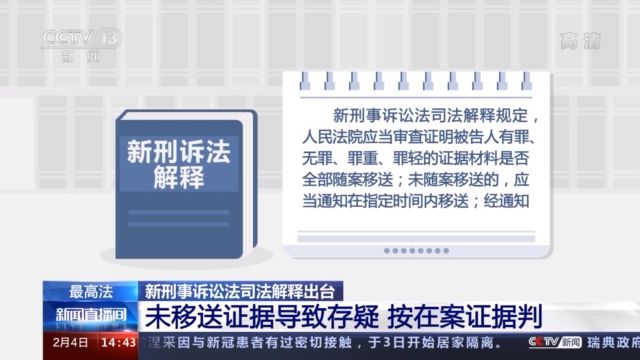
The judicial interpretation of the new code of criminal procedure provides that the people's court shall examine whether all the evidentiary material proving the guilt, innocence, gravity and severity of the case of the accused is accompanied by the transfer of the case; if the case is not accompanied by the transfer, the transfer shall be notified within the specified time; and if the transfer is not made, the people's court shall determine the facts of the case on the basis of the evidence in the case。
Failure to comply with the transfer is subject to remand
The judicial interpretation of this new code of criminal procedure clearly addresses the increasing number of criminal cases involving the disposal, review and enforcement of property in practice。

Li xiaoping, vice-president of the supreme people's court: the judicial interpretation of the new code of criminal procedure provides for the examination, at the stage of the filing of the case, of whether the property in question has been transferred and specified the status of ownership, as well as the availability of evidentiary material proving that the property in question was the proceeds of an offence or that other property in question was subject to recovery in accordance with the law; in individual cases, it is provided that the property found during the second trial may be remanded back to the people's court of the original trial and dealt with by the people's court of the original trial in accordance with the law; upon the entry into force of the judgement, the property in question shall be dealt with separately by the people's court of the original trial in accordance with the law。