


Legal nature of intellectual property rights
What is an intellectual property right? What is its legal nature? This recognition is the premise and basis upon which we identify violations of intellectual property rights and hold them accountable。
Intellectual property rights have long been incorporated into the civil law system, as part of which they have the dual attributes of property and personal rights, the content and characteristics of which are distinct from property rights and claims. According to the traditional doctrine of property rights, property rights are often created on the premise that they have a certain space, that they are at the disposal of human beings and that they meet certain material and spiritual needs, expressed in movable and immovable property, in tangible “matters” and invisible objects that are objectively present, such as electricity. Claims arise on the premise that intangible “acts” exist by act or omission. Intellectual property, on the other hand, is created on the premise of physical “knowledge” in the form of creative intellectual outcomes and business labels. It is a civil exclusive right granted or recognized by legal norms to regulate the attribution and use of intangibles arising in literary and artistic, scientific research and business activities. It is essentially a legally recognized monopoly on the proper commercial application of the intellectual output enjoyed by the rights holder, a private right with civil rights attributes. This attribute exists objectively and is not altered by the subjective will of the human person. The social relations it reflects and regulates are property relations between citizens and legal persons who are equal subjects and possess the essence of civil rights. The occurrence and protection of intellectual property rights apply to all fundamental principles and civil norms of civil law, such as civil subjects, objects, legal facts, civil legal acts, etc. If civil norms and institutions are removed from the basic principles of civil law, the intellectual property regime will be completely irrelevant and cannot exist. Thus, the spirit and system of civil law determine the face of intellectual property, intellectual property law and civil law are the relationship between lex specialis and general law, and intellectual property is essentially a civil right and a special civil right。
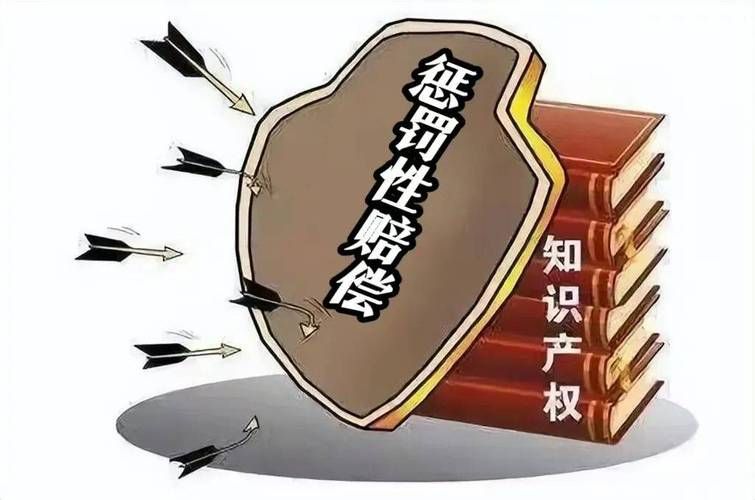
Identification of intellectual property rights violations
While intellectual property is subject to intangible “knowledge”, the identification of intellectual property violations is difficult in judicial practice and is highly controversial in theoretical circles. The determination of a tort is an important basis for the civil liability of the defendant and for what kind of civil liability, and is one of the key elements of the intellectual property tort liability. In the case of the people's court, it is the judge who, through civil proceedings, confirms legally validly the alleged acts committed by the accused, by means of the original evidence, the examination of the evidence and the judgement of the accused in the hearing。
In the view of the authors, the following factors should be examined in the light of the provisions of intellectual property law and in the context of each case:

1. Examination of the validity of the rights violated. A review of the validity of a right is the first work that a judge should do after a case of infringement of an intellectual property right, reflecting a statutory review of an intellectual property right, since only legitimate rights are rights protected by law. An examination of whether an act is a violation of intellectual property rights begins with a review of the validity of that right. For example, the examination of the legality of the content of copyright, the validity of patent rights during the period of protection, the legality of trademark rights at the time of the violation, etc. In practice, such reviews are simple and simple, so that they can be carried out in a manner that is entirely acceptable to the judges themselves. For example, our copyright law provides for the principle that prohibited works are not protected by law, and in cases of copyright infringement, where the content of the work is prohibited, the defendant often does not raise such a defence, as the defendant may be held liable for the lack of support for the plaintiff's application once it has been established that the work is prohibited, so that both of the original defendants may avoid the issue and it is difficult to accurately identify the entire legal relationship if the judge does not take the form of a proactive review; similarly, in other types of intellectual property infringement proceedings, such as patent rights, trademark rights, etc., the judge is required to review the validity of the right on his own initiative。
In addition to examining the validity of the plaintiff's rights, the lawfulness of the object or source of the act complained of also falls within the scope of the review. First, intellectual property is a civil right, and the right holder may freely exercise his or her legitimate rights within the limits of the law. The right holder may either exercise his or her own rights or cede all or part of the right to another person by means of authorization, transfer or inheritance, while others may put the right in the production and exchange areas for the benefit. If the defendant can prove that an act has been committed with a right of lawful origin, it cannot be considered as a violation under both jurisprudence and intellectual property law. Secondly, there are rights other than the subjective will of the right holder, in addition to the exercise of rights by the subjective will of the right holder. In particular, intellectual property rights (iprs), as an intellectual product, contribute greatly to the development of social productivity. If rights-holders consider it in their own interest to monopolize or not disclose the results in an absolute manner in order to obtain more profits, it will be detrimental to the progress of society. As a result, the law also imposes a number of limitations on intellectual property rights, mainly as regards restrictions on the “reasonable use” of copyrights, statutory licences, compulsory licences, prior application of patents, temporary transit, non-profit licensing, etc. At the same time, it should be noted that there are no such limitations on trademark rights. If the acts committed by the accused are acts provided for by law, they may also be regarded as acts in which the right has a legal source and not as violations。
2. To examine whether the object or conduct complained of is identical or similar to the constituent elements of the plaintiff's rights. In cases of intellectual property abuse, judges usually compare the alleged torts or acts with the subjects of the plaintiff's rights before making identical or similar judgements, while technical comparisons of more complex works of writing, torts of works of fine art, and higher-tech violations of patent rights, of trade secrets and of the right to design integrated circuit charting are generally made by experts or professional expert bodies. Make a similar judgment. When the constituent elements of the two situations are identical, it is good to judge the violation in the same way. But in only partially the same cases, the judgement is much more difficult. In such a case, it is necessary to separate the same part, to examine whether it is original and whether it can be protected as an independent object of intellectual property and, if the same part is original, to imply that it may constitute an object of intellectual property, and similarly to determine that it is identical and that a tort is established. (2) make similar judgements. Such violations are characterized by the fact that they are not creative in their constituent elements, but by minor changes in the intellectual outcomes of others, with some non-substantive changes, in order to avoid being identical to the intellectual property rights of others and to conceal the intellectual achievements of others. In making this determination, different criteria are applied in different types of cases. In the case of infringement of trademark rights, violation of the name of a well-known product book, encapsulation of packaging, infringement of patent rights on appearance design, violation of business rights, infringement of copyright rights, etc., these types of infringement are generally judged by the standards of the eyes of ordinary people because of the visual character of such products; in the case of infringement of the copyright of software, infringement of inventions or practical new patent rights, violation of the right to design of integrated circuit charting, etc., the criteria of judgement of ordinary professionals should be applied. Because in these cases, the wrongdoer made a non-creative change in some of the elements of the rights of others that were not visible to the general consumer, and the general technical staff of the industry could naturally think that the tort product had the same material effect as the original technology, and if there were no substantive changes between the two, it should be found to be similar and the violation established。
No “fault” is a necessary element for the determination of a violation. In the general doctrine of tort, the perpetrator is at fault and is one of the elements of the tort. As a result of this theory, our patent act of 1992 provides for the principle of good faith use, and the use or sale of patented products that are not known to have been manufactured and sold without licence from the patentee is not considered to be an infringement. Following our accession to wto, the amended patent act, as required by the trips agreement, limits this to the following: “a person who uses or sells, for the purpose of production, a patented product that is not known to have been manufactured and sold without the patentee's licence, or a product obtained directly under the patent method, shall not be liable for proving the lawful origin of the product.” the new trademarks act also provides that: “the sale of a commodity that is not known to violate the right to exclusive use of the registered trademark is not liable if it proves that the commodity was legally acquired by itself and indicates that it was provided”. The foregoing provisions make it clear that our intellectual property legislation distinguishes between the establishment of a violation and responsibility for a violation, which, if committed in violation of the legitimate rights of others, constitutes a violation and is not premised on subjective fault, which is a condition for the assumption of responsibility for a violation and not for the establishment of a violation. This is clearly different from traditional tort theories of civil law, and there is also a risk of confusion in judicial practice, which should be distinguished. The protection of the legitimate rights of the right-holders would be better served without the element of subjective fault. Because it is only when a violation is found to have been committed that there is reason to demand an end to the violation, the violation can be brought to an end in a timely manner and the damage can be prevented from being increased. Since “fault” is not an element, the rule principle of responsibility for violations resulting from the violation cannot be applied uniformly. This will be discussed in detail in the section on the composition of tort liability of intellectual property。
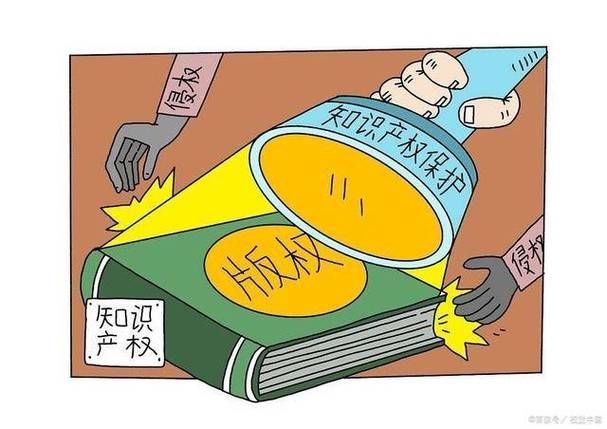
Analysis of constituent elements of tort liability of intellectual property
As noted above, is there a certain connection between the existence of tort liability for intellectual property and the existence of a tort? But they are by no means equivalent concepts, and the occurrence of a violation of intellectual property rights does not necessarily entail tort liability. The composition of tort liability for intellectual property, which is similar to other torts, has elements such as illegality, subjective fault, impairment of facts, causation, etc., but intellectual property rights, as a special civil right, have certain special elements of tort liability。
1. On illegality. The violation of the law refers to the violation of the relevant legal provisions of civil law, intellectual property rights, etc. By the civil subject of responsibility, which poses a specific danger to the intellectual property rights of the owner and to society. The identification of violations of patents, trademarks, copyrights, neighbouring rights is both a theoretical issue of tort law and a matter of judicial practice, relying primarily on the judges, with their extensive judicial experience and knowledge of legal coherence, to judge in specific tort disputes. In the first place, violations of the general principles of civil law and of the provisions of intellectual property law are offences against intellectual property rights, such as unauthorized patenting of others, the use of trademarks registered by others, the performance of works of others and the copying and theft of works of others. Secondly, the identification of a failure to act as an infringement of an intellectual property right should first determine whether the perpetrator had a legal obligation of action, then consider whether the perpetrator had an objective condition of a legal obligation of action and not be considered to have committed an offence if the failure to perform was due to the absence of objective conditions of action. The person who commits an omission is liable only if he or she is able to prevent the infringement but is allowed to do so. If a domestic publisher publishes a foreign writing, it shall register its contract with the foreign copyright transferor at the national copyright office and examine the copyright status of the writing, but its failure to comply with the above-mentioned obligation undermines the rights of the real owner of the copyright and, after examination, the publisher has objective conditions for the fulfilment of that obligation, a situation in which the legally binding obligation but the omission is deemed to be unlawful. Thirdly, in the absence of specific provisions in the law, violations of fundamental principles of law such as the general principles of civil law and intellectual property rights, as well as norms of socialist public life and social good customs, should also be considered offences. Fourthly, in general, it is also unlawful to infringe upon the property rights of others or the personal rights of particular intellectual property rights. However, if it is the right-holder who allows another person to violate his or her rights, such as the author's writing to publish in the name of another person, the act of the perpetrator shall not be an offence, and the copyright administrative authority and the people's court are not required to intervene in such a case。



