Miss, sister, sister, sister, sister, sister, sister, sister, sister, sister, sister
I. The nature of people's defence
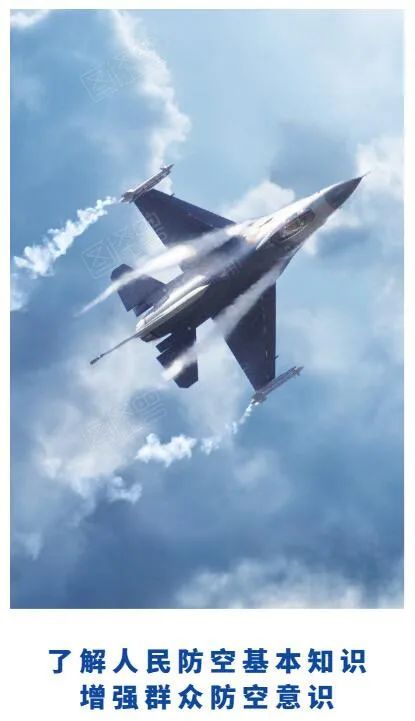
The people's republic of china's law on people's air defence defines people's air defence as measures and actions taken to mobilize and organize the population against enemy air strikes, to eliminate the consequences of air strikes and to protect the lives and property of people. People's air defence is an important component of national defence, an important aspect of national economic and social development, an important element of modern urban construction and a social good for the benefit of the nation. Many abroad combine civilian participation in war-time air defence with civilian disaster relief, known as “civil defence”。
Ii. People's air defence content
The concept of air defence for our people includes two basic elements. The first is the mobilization and organization in peacetime of the relevant preparatory measures and actions taken by the population around the needs of wartime protection, namely the construction of people's air defence. Secondly, the tactical, technical measures and actions taken by the population during the war to defend itself against enemy air strikes, namely the people's air defence struggle, were mobilized and organized. At present, the human defence and defence sector is gradually combining war-time air defence with disaster prevention, mitigation and response in peacetime, actively taking on government-mandated tasks related to natural disasters and public emergencies。
Iii. Guidelines for people's conflict defence building
People's air defence is based on a long-term approach of preparedness, priority-building, peace-building and the principle of coordinated development with economic construction and integration with urban construction。
Iv. Mandate of people's defence
The people's republic of china's law on people's air defence stipulates that the mandate of people's air defence is: “the state, in accordance with its national defence needs, to mobilize and organize the population to take protective measures to prevent and mitigate the effects of air strikes”, “to protect the lives and property of the people and to guarantee the smooth construction of socialist modernization”。
1. Mobilize and organize the population to take protective measures to prevent and mitigate the effects of air strikes. Preparedness for enemy aerial attacks consists mainly of active attack and effective protection. Active strikes are carried out primarily by armed forces, including the military, with the primary aim of intercepting and neutralizing enemy air strike weapons and impeding their effectiveness. Effective protection consists mainly of building people's air defence works, evacuating and sheltering people and goods, implementing light-fire controls and measures such as disguise, fire and ambulance to prevent the effectiveness of enemy air strike weapons and to eliminate the consequences of air strikes in a timely manner, and to prevent and mitigate the impact of air strikes。
2. Protecting the lives and property of people is the fundamental purpose and purpose of our people's air defence. Since its establishment, the state has invested considerable human, material and financial resources in the construction of people's air defence. It has built a large number of people's air defence engineering facilities, communications alerts and mass air defence professional teams. It has increased its air defence awareness campaigns among citizens。
3. Guarantee the smooth implementation of the modernization of socialism. People's air defence is an essential component of defence-building, an important deterrent to the maintenance of peace, to restrain and to slow the outbreak of war, and an integral part of the economic and social development of states. In the new period of history, people's air defence has actively contributed to the modernization of socialism by upholding the principle of coordination with economic construction and integration with urban construction。
V. Measures to protect people from air defence
People's air defence measures consist primarily of two aspects: self-protection measures taken by the population to achieve self-help and self-protection through people's air defence education, familiarity with and mastery of the basic knowledge and skills of people's air defence. Secondly, the government mobilizes and organises collective measures of protection, primarily the construction of people's air defence projects in accordance with the people's air defence requirements, the establishment of sound command, communication and warning systems, the formation of mass air defence professional teams, the preparation of evacuation and shelter of the urban population, the organization of the restoration of production, living order, etc。
Vi. Civilian people's defence rights and obligations
1. The rights of citizens to air defence. All organizations and individuals have the right to people's air defence. These include, inter alia, air evacuations, sheltering, medical care and relief, essential subsistence requirements, people's air defence education and skills training, and the right of individual investors to benefit from preferential policies established by the state or the city for the construction of individual investors。
2. Citizens ' human anti-aircraft obligations. All organizations and individuals must fulfil their people's anti-aircraft obligations in accordance with the law. These include, inter alia, the obligation to participate in people's air defence, to bear the cost of people's air defence, to carry out people's air defence duties, to protect people's air defence installations, to participate in mass air defence organizations, to receive people's air defence education training and to provide mutual assistance。
Vii. Air defence alerts
Air defence alerts are a signal distribution system for reporting enemy air strikes to the population. During times of war, they are called upon to guide the population in the conduct of air strike operations; during normal times, they take into account emergency reporting tasks for flood, earthquake and typhoon preparedness and mitigation。
Viii. Types and identification of air defence alarm signals
In response to the need to combat air strikes, three types of warning signals for air strikes have been established in our country, namely, advance alerts, air strike alerts and the lifting of warnings. The rapid identification of the types of air defence alert signals will enable the effective conduct of air defence operations, the reduction of enemy air strikes and the rapid restoration of social order. In times of sudden-onset disasters and with the approval of the people's governments above county level, air defence alerts can be sounded for disaster prevention and response。
1. Pre-warning: prior notification of imminent air strikes by the enemy and requirement of preparedness for air strikes. The sound signal is set at 36 seconds, stopped at 24 seconds and repeated three times for one cycle of three minutes。
2. Airstrike alerts: indicating that enemy airstrikes are approaching and that the airstrikes are imminent or have already begun, warning of rapid cover-up. The sound signal is set at 6 seconds, stopped at 6 seconds and repeated 15 times for a cycle of 3 minutes。
3. De-alarm: it is clear that the air strike has ended during this phase and the air strike alarm has been lifted. The sound signal is defined as a continuous long sound for three minutes。
Ix. Response to warnings
In general, warnings are issued when there are signs of an air strike; warnings are issued when the air strike is imminent; and warnings are lifted after the air strike. However, air raids may sometimes be issued directly against information-based war conditions。
1. Advance warning response
(1) upon hearing the advance warning, the electrical switch shall be lifted immediately, the gas shall be shut down, the fire shall be extinguished, personal protective equipment and essential items of life shall be taken in order to enter rapidly and in an orderly manner, as required by the designation, location and route of persons, or designated shelter areas。
(2) persons and vehicles in public places shall be subject to the direction of the person concerned and shall promptly go to a designated location to shelter them. Lighting controls should be strictly observed at night。
2. Air strike alert response
When warnings of air strikes are heard, they should be close to human defence work. In the event of an emergency situation where access to human defence works is not possible, the terrain is used for close shelter。
(i) in-house, can be avoided on the ground floor, in the corridors or under the stairs of a concrete building (more than five floors) or in a smaller toilet, stove, etc. Where these conditions do not exist, they can also hide under the table and bed against the wall, avoiding doors, windows and flammable and explosive objects。
(2) in public places, persons in shops, cinemas, stations and docks shall use topographic features to disperse shelter and not panic, crowded or running. They may enter the basement, the subway station or the ground floor of a steel concrete building as close as possible and do not stop at dangerous places such as high-pressure lines, oil depots, etc。
(3) in the open, low-lying areas, by-pass, by-pass, by-ground, etc. Can be quickly dispersed and covered。
X. People's defence projects
People's air defence works are underground structures, short of human defence works, designed to secure the needs of people and goods in time of war, the command of people's air defence and medical assistance. Human defence works included separate underground protective buildings and war basements that could be used for air defence in conjunction with ground buildings。
Xi. Categorization of people's air defence works
1. Command engineering, medical ambulance engineering, air defence specialist engineering, personnel shelter works and ancillary works are classified according to their wartime functions。
2. The formation of tunnels, tunnels and excavations。
Xii. Operational effectiveness and utilization of people's armed abroad equipment
1. War-time effectiveness: protection of persons, goods, equipment against injury and destruction; protection and mobility during war; protection of command, communications, ambulance and production under protective conditions; necessary conditions for urban defence operations。
2. Usage at normal times: the development and use of urban underground spaces can alleviate urban land stress and congestion; cultural entertainment, education, medical care and other services are used to facilitate the productive lives of urban people. At the same time, in accordance with the requirements of the development of the emergency management system for public emergencies, human defence works can normally be used as emergency shelters because of their good protection efficiency and improved facilities。
Xiii. General procedures for the use of wartime human defence works
When warning of an air strike is heard, personnel should quickly enter the human defence works and use natural or clean ventilation. Clean ventilation should be carried out when enemy aircraft are emptied or there are attempts and signs of the use of nuclear, chemical and biological weapons. When an enemy is found to be using nuclear, chemical or biological weapons, the wind machine should be stopped quickly, the wind valves closed and persons prohibited from entering or leaving, and the protective measures should be taken in isolation. Those covered by the project may, if necessary, use air regeneration devices to maintain oxygen levels in indoor space and reduce co2 concentrations. When externally contaminated air concentrations are identified, they can be converted to filter protection. When externally contaminated air concentrations are reduced to permitted concentrations, protective closed facilities can be opened for natural ventilation。
Xiv. Attention to the use of human defence works in wartime
1. Pre-entry operations. (b) prepare to cover the items to be carried within the project, including the storage of non-perishable foods and drinking water in closed storage, medicines commonly used by individuals, flashlights, equipment that can be used for personal anti-virus, personal necessities and documents, and orderly access to the project。
2. Requirements for sheltering in human defence works. Quietly sit down and sleep at designated locations, with minimal activity, to reduce oxygen consumption in the works; the use of open fire is strictly prohibited, so that there is no smoking, less drinking water, food residues and garbage are kept in closed storage, and care is taken to protect public health; in case of accidents such as collapses and leaks in parts of the works, the shelter personnel are required to use the formula or improvised protective equipment for personal protection and to follow instructions, to transfer or isolate in an orderly manner; persons entering after an attack with nuclear, chemical or biological weapons should be washed up and until safety is confirmed through testing before entering the shelter; and the air raid alarm is lifted and the shelterers are not allowed to leave the works without permission, in order to prevent contamination of air and radioactive materials from entering the works. When the alarm is lifted, the work should be evacuated in an orderly manner in order to prevent congestion or trampling。
Xv. Action against nuclear weapons attacks
The range of nuclear weapons attacks, the number of lethal and destructive factors and the length of their duration make it necessary to take effective protective measures in different contexts. The best protection against a nuclear attack is access to human defences, which, if not available, should be followed by appropriate protective action。
1. The action following the discovery of a flash of a nuclear explosion took advantage of the fact that the terrain was immediately hidden from the fireball. Outside: a horizontal heart can fall when larger terrain features, such as earth mounds, ditches, dwarf walls, flower jars, are used. When smaller terrain features can be used to face a heart-to-heart fall, if they are not available, they can be used to use open ground back to the heart-to-heart. The main thrusts of the fall were: the hands cross the chest, the face wraps between the arms as far as possible, closed eyes, closed mouths, holding air and stretching both legs together。
Indoor: the wall shall immediately be lying down at its roots and at the corner of the wall or shall stop in a small room or door frame. They may also fall under tables or under beds near the corner of the wall, but care is taken to avoid collateral damage from the collapse of heavy objects, as well as to avoid doors, windows and flammable, explosive substances, in particular from the impact of flying broken glass。
In public places: in schools, shops, cinemas, stations, docks, etc., people are required to use the terrain for an orderly distribution of cover, not to panic, crowded or running, not to stop at dangerous places near high-voltage power sources, oil depots, dangerous goods warehouses, etc., in order to avoid collateral damage。
2. Upon the passing of the shock wave caused by the nuclear explosion, it shall enter quickly for the protection of human defence and shall rise to the surface of the dust on the body of the reverse wind shaking, evacuate the area as soon as possible and use protective equipment to protect the respiratory tract and the exposed skin。
Xvi. Violations of personal protection laws
In accordance with article 49 of the people's republic of china people's air defence law, the people's air defence authorities of the people's government at the county level and above shall warn the person concerned and order that the violation be corrected within a period of time, and shall impose a fine of up to $5,000 on the individual and a fine of between $10,000 and $50,000 on the unit; if the damage is caused, the damage shall be compensated in accordance with the law:
(i) aggression of people's air defence works
(ii) construction of people's anti-aircraft works not in accordance with relevant national standards of protection and quality
(iii) changes in the structure of the subject matter of a people's air defence project, dismantlement of a people's air defence engineering facility or other methods to endanger the safety and effectiveness of the use of a people's air defence project, contrary to relevant national provisions
(iv) refusal to build on the demolition of people's air defence works
(v) the taking up of frequencies reserved for the communication of people's air defence, the use of sound signals identical to air defence alarms or the unauthorized dismantlement of people's air defence communications and warning equipment facilities
(vi) obstructing the installation of people's air defence communications, warning facilities and refusing to correct them
(vii) waste discharged into people's air defence works。