What is a map of knowledge
Knowledge mapping is a technique for the organization of knowledge using graphic structures, which conveys and stores entities in the real world (e. G. Equipment, processes, malfunctions, parameters) and their semantic relationship in the form of a three-tiered “entity-relationship-entity”. In general terms, knowledge maps are like a “knowledge navigational chart” that not only tells users what “is” but also enables machines to understand “who is related to whom” and “how to relate” and “what is the causal path”。
In the industrial landscape, the knowledge mapping translates scattered isomeric data, such as equipment manuals, process protocols, failure cases, expert experience, into structured and calculable knowledge networks that give machines the cognitive capacity to move from “data management” to “knowledge application”。
Central role of knowledge mapping
In the area of intelligent manufacturing, knowledge mapping plays three main roles:
I'll get to the island
Industrial knowledge, scattered over files, databases, experiences, will be consolidated in modelling and linkages, creating enterprise-level knowledge assets and achieving a life cycle management of knowledge。
Supporting smart reasoning
Based on the structure of the map and semantic relationship, support advanced perceptions such as causal extrapolation, root cause analysis, path discovery, etc. Ren
To ensure that the system is not only “retrievable”, but also more “admissible”。
Enabling ai application
Provide high-quality, interpretable language and knowledge support for ai applications such as industrial megamodels, smart questions and answers, process optimization, trouble diagnosis, and significantly improve the accuracy and impact of models on the ground。
Knowledge mapping practices in the energy industry
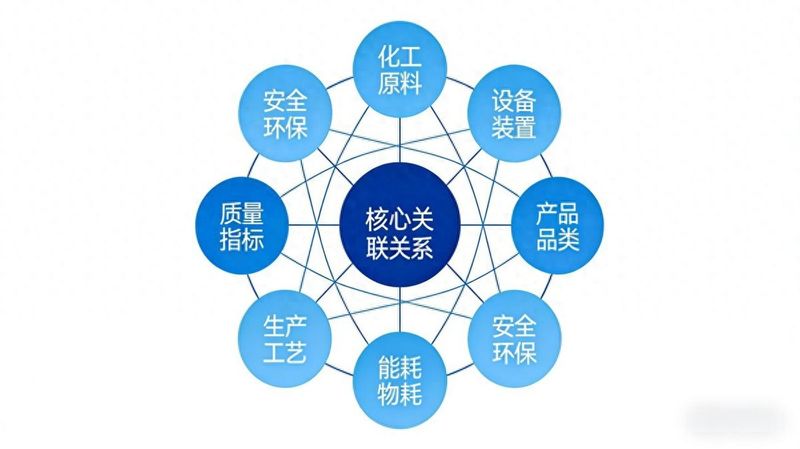
System of knowledge mapping for the energy industry
The general industrial ai platform, upon which the sink industry relies, has built a knowledge mapping system oriented towards industrial intelligence, with the following core elements:
Multi-source knowledge extraction:
Support for structured data: databases, extracting equipment accounts, process parameters, quality records, unstructured text, using technology such as nlp, ocr, failure manuals, protocols, extracting entities (equipment, failure, parameters) and relationships. Visual data: automated extraction and integration of multi-modular industrial knowledge such as video, drawings, etc.
(a) knowledge mapping: an efficient and reliable storage and retrieval of knowledge based on the retrieval enhancement generation (rag) technology, combined with embeding to the quantification and chart database, and the construction of a two-model index of semantic + linkages
Knowledge delineation engine: the built-in map calculation and causal reasoning model supports intelligent applications such as fault cause analysis, process path discovery, equipment linkage warning, etc。
Building on industry's core strengths
(a) deep integration with industrial landscapes: based on a deep understanding of industrial processes such as chemicals, energy and electricity, knowledge mapping is not based on a generic template, but is closer to actual production
Ai model synergy: knowledge mapping is linked to the depths of formulation optimization megamodels, process optimization megamodels, industrial intelligence, etc., to form the closed circle of “knowledge-driven models, model contrivance knowledge”
(c) efficient construction of a combination of human machines: using a construction model of “90 per cent machine + 10 per cent man” to significantly improve the efficiency and quality of the construction of knowledge maps。
Typical application case i: optimization of potassium fertilizer float
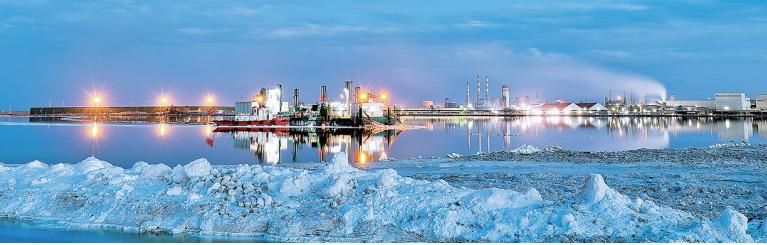
The floating process mechanisms, equipment parameters, historical data, expert experience are constructed into a process knowledge map. When the concentration fluctuates, the system automatically deduces the effect path of changes in concentrations on the volume of additions and produces optimized instructions to achieve precision additions。
Effects: potassium resource recovery rate increased by 3 per cent to 5 per cent, pharmaceutical bill consumption decreased by more than 15 per cent and process reconciliation upgraded from “experience lag” to “ai data driver”。
Case two: a four-foot robot intelligence check at the lifting station
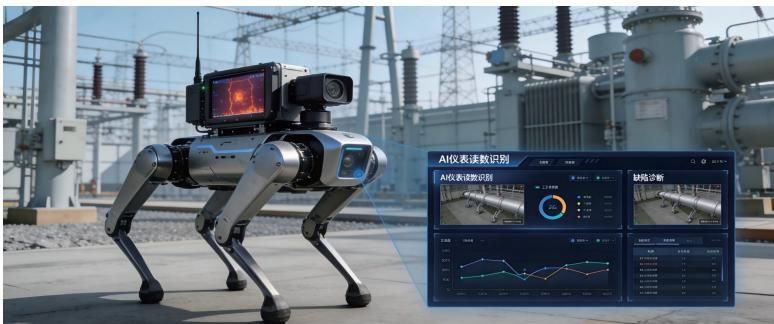
Build equipment knowledge maps, integrate equipment billboards, malfunction mode libraries, inspection protocols. When robots collect images, infrared, acoustic data, they locate the defective nodes through smart questions and answers, and the reasoning engine automatically determines the serious levels and recommends disposal options。
Effects: 100 per cent coverage of inspections, 20 per cent reduction in equipment maintenance costs, pre-diagnosing of failures and avoidance of unplanned shutdowns。
Comparison of efficiency gains
Function module
Traditional approaches
Knowledge mapping enhancement programme
Increased effectiveness
Disorder diagnosis
Expert access manual, empirical judgement
Enter symptoms, automatically deduce root causes and recommend solutions
Average recovery time 50%
Process optimization
Doe experiment error, long cycle
Link historical data, smart recommended optimization range
Quality rate increased by 3-5 percentage points
Smart questions and answers
Manual cross-system retrieval, incomplete information
Natural language question, immediate return link answer
Knowledge acquisition efficiency x 12 times
Concluding remarks
Through knowledge mapping techniques, the sink industry transforms industrial data into a cognisable and debentible intellectual knowledge network, making machines more “understand” not only to “sensitize” the scene but also to “understand” the causes and consequences. From data to knowledge, from retrieval to reasoning, knowledge mapping is becoming the most reliable cognitive base for intelligent manufacturing, providing firm support for the downside efficiency and quality development of enterprises。