Introduction to intellectual property rights and technological innovation
Main elements
Introduction
Relevant concepts
The role of intellectual property rights in technological innovation
Discussion on industry clusters as an example
Conclusions
Introduction:
In today's world, with great advances in science and technology, the role of modern science and technology has been transformed into intellectual property rights, and there is a growing demand for intellectual property protection, and “protection of intellectual property rights is conducive to innovation” seems to have become a consensus in society and academia. Increased protection of intellectual property rights is seen by some scholars as an important reason for the recent significant increase in technology patent applications in china. But in the history of scientific and technological progress in the united states, we can see that it is through imitation and learning of advanced technologies in europe that they catch up with their technology, but also that the imitation of their technology, while causing some damage to the exports of the imitated countries, is, globally, the diffusion of such technology that has accelerated technological progress in the world. It is clear that the centuries-old system of intellectual property protection, which in itself serves as a protection of monopoly rights, has not been born out of birth, and has to some extent limited technological innovation. Whether the protection of intellectual property rights, which is unanimously emphasized in today's society, is itself a path-dependent intergenerational lock-in. To what extent it can explain the evolution of innovation in technology. There are no better mechanisms to replace the system of property rights protection。
Innovation is that, in the economic development theory (1912), kubbit argues that innovation is the introduction of a new combination of factors and conditions of production into the production system, i. E. The creation of a new production function. Innovation can be distinguished between technological and institutional innovation. Technological innovation refers to the business behaviour of human beings to improve their economic well-being through new technologies, and to the whole process of enterprises applying new knowledge, new technologies, new processes, new production methods and business management models to improve product quality, develop new products, provide new services, occupy markets and achieve commercial values for the first time. From an economic perspective, the main driving force of innovation is its own benefits. The driving forces can be divided into two categories: technological innovation driven by monopolistic prospects, and technological innovation undertaken by enterprises in anticipation of monopolistic profits. Second, technological innovation driven by competitive prospects refers to technological innovation undertaken by enterprises out of fear that their current products may lose profits under the conditions of imitation or innovation by competitors。
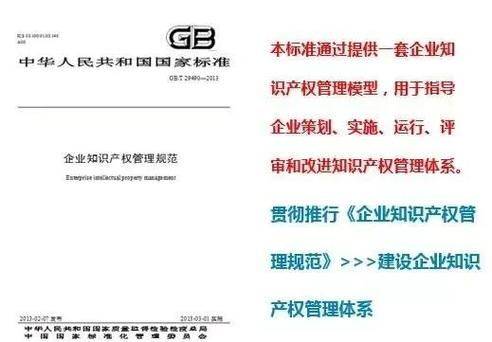
Since innovation requires a large pre-investment of production factors, and marginal production costs of products do not reflect their original costs, intellectual property law has been introduced to protect the financial interests of innovators. The system of intellectual property protection is the legal means of recognizing the ownership of intellectual property rights, providing for protection of intellectual property rights and granting rights to rights holders in the form of laws that give them the benefit of the intellectual results they have created in the scientific and cultural fields, in order to promote intellectual development and human progress. It was introduced as an incentive for society to invest in technological innovation by giving technological innovators monopolistic property rights over the knowledge they create, in order to obtain high monopolistic gains. Intellectual property rights are essentially a monopoly。
1 relevant concepts
Impact of property rights protection on technological innovation
2. 1 intellectual property rights for technological innovation
Robert soro has demonstrated through research that technological change is a major driver of economic growth, but his model views technological change as a given variable, determined by factors other than purely economic forces. Kenneth aro et al. Analysed the relationship between markets and technological change and concluded that the free market does not bring about optimal levels of innovation, and that the underinvestment of the free enterprise economy in innovation and research (as compared to the desired state) is because such investment is risky because its products can only be measured to a limited extent and properly evaluated.”
2. 2 limitations of intellectual property protection
Michele boldrin, in his report " innovations of full competitiveness " , argues that copyrights, patents, etc., and other government-sanctioned rights not only reinforce monopolies, but also cause collateral damage, i. E. The high price and low quality of patented products that impede future innovation, and should reward innovators with a genuine competitive environment rather than through existing monopolization. The report draws several main conclusions: first, that the historical process of technological innovation is best understood in a fully competitive environment where external factors have little influence; second, that the state grants innovators a monopoly power that does not have substantial benefits for natural ecology or society; and third, that, from a social value perspective, the current copyright or intellectual property bill will reward monopolization without stimulating future innovation。
2. 2. 1 protection of property rights does not contribute to the sustainability of technological innovation
(1) monopolies inhibit competition (2) monopolies hinder sustainable innovation
2. 2. 2 excessive costs and scope of property rights protection
(1) time lag (2) reputation (3) capacity for continuous innovation

3 analysis of the role of intellectual property rights in technological innovation, using industry clusters as an example
Industrial clusters are important because of their knowledge spillover effects due to geographical proximity and inter-firm linkages. Such spillover effects can also be considered as free trade in intellectual property under zero transaction costs. From this point of view, intellectual property transactions that do not require protection promote cluster development. From this perspective, the flourishing of industrial clusters is itself a war on intellectual property protection. At the same time, however, as the most dynamic place for technological innovation, industrial clusters themselves rely on the protection of intellectual property rights to create a strong competitive advantage from abroad. Thus, using industry clusters as an example, the spillover effect of their knowledge is seen as free trade in intellectual property rights without protection。
2. 1 methodology
It is assumed that there are three enterprises in the cluster, that both enterprise 1 and enterprise 2 are innovative and large-scale, and that enterprise 3 is a small enterprise with imitation capability and a complement to the cluster. And business is a rational person that takes into account its own best interests。
For enterprises, innovation is primarily concerned with its cost and how benefits are measured。
Earnings 1= = short-term excess due to reputation + time lag due to innovation breaking profits + the continuous ability to innovate developed by innovation – the loss of gains from imitation + the gains from imitation of others
Proceed 2 = profit from imitation of other businesses
Assuming 1 > 2 > cost of 1 enterprise innovation
Business games in clusters without intellectual property protection
It is clear that for enterprises, even in the absence of property rights protection, they will continue to invest in innovation, and that the presence of business 3 has led to the imitation of business innovation leading to increased competition among firms within the community, thereby enhancing the incentives for innovation。
When protected by intellectual property rights, firstly, firms are excluded; secondly, firms that have the capacity to innovate have a monopoly on their innovation outcomes, while monopolies bring their own high returns with high social returns, leading to a decline in the overall welfare of society and, at the same time, to an increase in the cost of innovation because of the lack of sharing of technology; and thirdly, because firms can derive long-term benefits from this monopoly, their innovation in new technologies is less dynamic, leaving firms in clusters less innovative。

The development of the italian and german tile industries is just a reflection of the contribution of property rights protection to local technology levels。
The early development of the italian tile industry was mostly concentrated in the town of sassuol, where the concentration of local tile manufacturers was extremely high, creating industrial clusters. Businesses struggled to get a little bit more technical, design and so on. As a result of geographical proximity and local inflexibility in intellectual property protection, any innovation in products and processes can be transmitted as soon as it occurs, other enterprises will have access to information on innovation, usually within two days, and replicas will be launched within months. Therefore, enterprises that seek to be technically leading must keep up with improvements. Similarly, well-known enterprises in the design of their appearance are required to update their design at regular intervals in order to maintain leadership. In germany, due to insufficient concentration of tile enterprises, they do not form industrial clusters, and their knowledge diffusion effects are not significant, making them more dependent on one innovation and less motivated to sustain innovation. This is considered to be an important reason for the great disparity in the development of the tile industry。
Thus, in such cases, market economies themselves can compensate for the cost of innovation, while the protection of intellectual property rights can hinder technological innovation。
Assumptions 2 > 1 > cost of enterprise innovation
In this case, the small size of the enterprise and its own lack of innovative capacity only leads to a race between the two sides. Because of the co-location of enterprises in the cluster, the games between the two can be considered endless and repetitive, and the consideration of their long-term interests can lead to cooperation, long-term trust and cooperation and the creation of collaborative games. So both sides will continue to innovate to maximize their own benefits. Thus, in such cases, even without property rights protection, innovation will continue for enterprises in clusters. Protection of intellectual property rights can also result in the harm caused by monopolies. Moreover, as innovative firms continue to develop, their brand reputations will be further enhanced; on the other hand, autonomous and sustained innovation capacity will be strengthened, allowing firms themselves to have strong knowledge-development capabilities and economies of scale. This will eventually crowd out the enterprise。
Scenario 3
Such innovations may occur in the form of substantial factor inputs, with longer return cycles and limited markets, such as in the pharmaceutical industry. Thus, the existence of enterprise 3 can have a serious impact on the earnings of innovative enterprises and result in losses for them. In this case, the result of the game is that enterprises in the region do not innovate, but rather maintain their original production. However, the lack of innovation in the cluster as a whole will ultimately lead to the loss of competitiveness and the consequent decline of the cluster。
In such cases, therefore, there is a need to stimulate innovation in enterprises. While property rights protection can achieve this, the inherent weakness is bound to be a suboptimal solution. If public funds could be introduced to compensate enterprises for technological innovation and return to scenario 1, this would be the best option for clusters. Moreover, such compensation, while encouraging innovative enterprise development, enhances the impact of their own brands and enhances their ability to innovate on a sustainable basis, thus ultimately crowding out firms。
Summary
As can be seen from the analysis, under scenario 1, intellectual property protection is not required, and under fully competitive conditions, markets can provide sufficient incentives for innovative firms. In scenario 2, in societies outside clusters, limitations in the flow of information can lead to asymmetries in information, which can easily lead to moral hazard, thus undermining the formation of cooperative games. In scenario 3, in addition to facing the ethical risk of scenario 2, there are negative returns from the presence of imitations. Thus, the protection of existing intellectual property rights is efficient, but not optimal, for both scenarios. In the case of scenario 1, there would be negative benefits. Therefore, changing information asymmetries through enterprise cluster development, further eliminating the distribution of innovative benefits through integration or introducing compensation mechanisms as an alternative to property rights protection to encourage innovation may be a better option。