Main publicly listed companies in the industry: new zealand (603889), heated petrochemicals (600346), eastern shin (000301), zhelican film industry (601599), landscape petrochemicals (000703), orient basilong (601339), fashion fashion (00242), phoenix textiles (600493), golden eagle shares (600232), chinese sank (600156), carhin silk (00204), butterfly industries (603073), hua wing (600448), etc
Core data for this paper: size of the textile industry; pattern of textile competition; prospects for textile development
Industry profile
1. Definitions
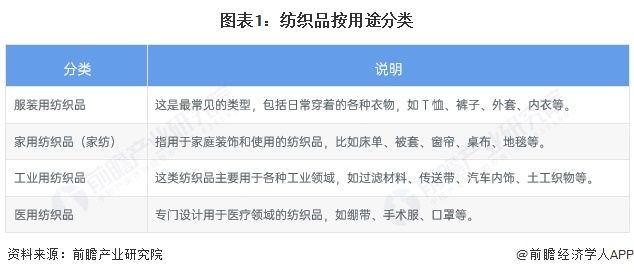
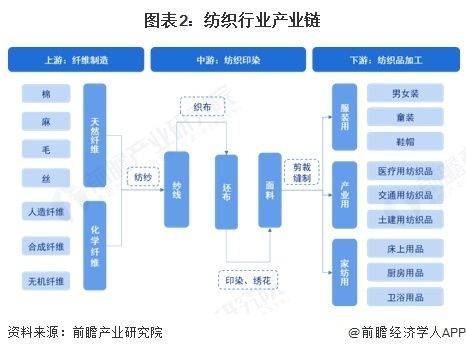
The textile industry is an industry involving the transformation of natural or artificial fibres into finished products through a series of processes. These processes include spinning, weaving, dyeing and the manufacture of final products. Textiles are widely used in various fields, such as clothing, home decoration, industrial use, etc. The textile industry is an industrial field that specializes in natural and chemical fibres, producing yarns, wires, tapes, fabrics and printed products。
Textiles by purpose can be classified as clothing textiles, domestic textiles, industrial textiles and medical textiles。
2. Industrial chain profiling: high market segment, large number of participants
In terms of upstream of the textile chain, the textile chain consists mainly of the manufacture of raw materials such as natural fibres and chemical fibres; midway through the chain, yarns are woven into fabrics and then processed into fabrics through processes such as printing and embroidery, which, after cutting and sewing, are widely used in downstream areas to meet different needs; and at the three ends of the downstream industry, clothing, domestic textiles and industrial textiles。
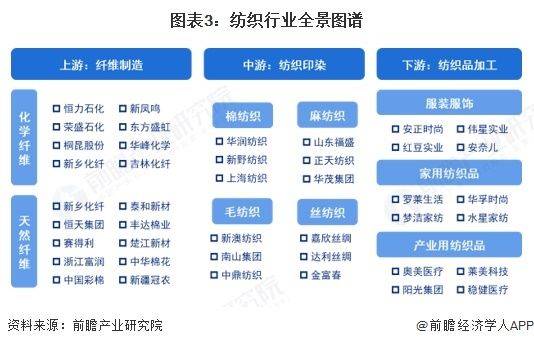
The suppliers of raw materials and formulations upstream of the textile industry chain are, inter alia, hesitating petrochemicals, bountiful petrochemicals, gillin fibres, chinese cotton, new rural fibres and the toyota industry. Middle-stream enterprises in the textile industry are mainly those with luxurious textiles, zinwa textiles, moo group and carin silk. The main suppliers of garments in the textile industry below the chain, such as regular fashion, red beans, etc.; domestic textile suppliers, such as mercury, fashion, etc.; and industrial textiles, such as omei, health care, etc。
3. The industrial development process: moving from the inception of the system to high-quality development
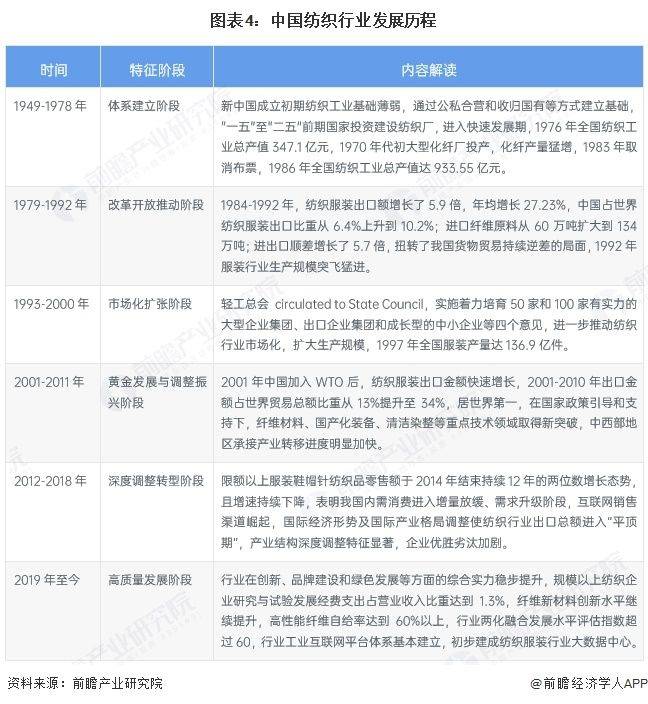
China's textile industry, which dates back to the qingxia ocean movement, has since developed in the “golden age” of civil time, but has been severely affected by the war in the last three or four decades; since the establishment of the new china in 1949, the textile industry has undergone dramatic changes, with the country being divided into six stages: in 1949-1978, china completed a comprehensive textile industry system; in 1979-1992, reforms and opening-up contributed to the rapid development of the textile sector; the textile sector gradually became marketable and expanded in 1993-2000; the development of the textile sector in 2001-2011 was followed by the accession to wto; in 2012-2018, the sector entered a profoundly adjusted transition; from 2019 to date, the industry has continued to develop in the direction of innovation, green and intelligent. From a country with a textile shortage, china has grown to become the world's largest textile producer, consumer and exporter, and has been rising in innovation, brand-building and green development。
4. Industrial policy direction: accelerating high-end industrialization in the textile sector
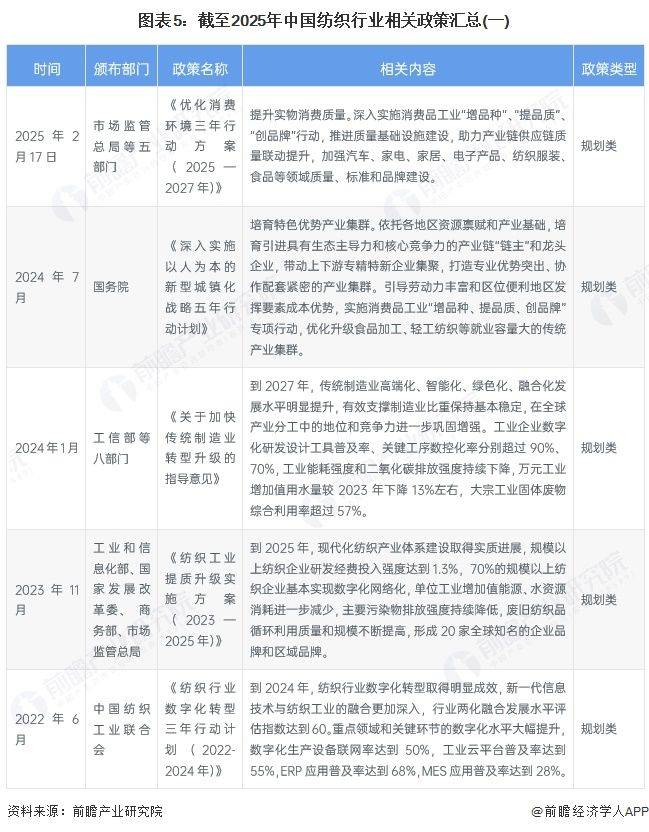
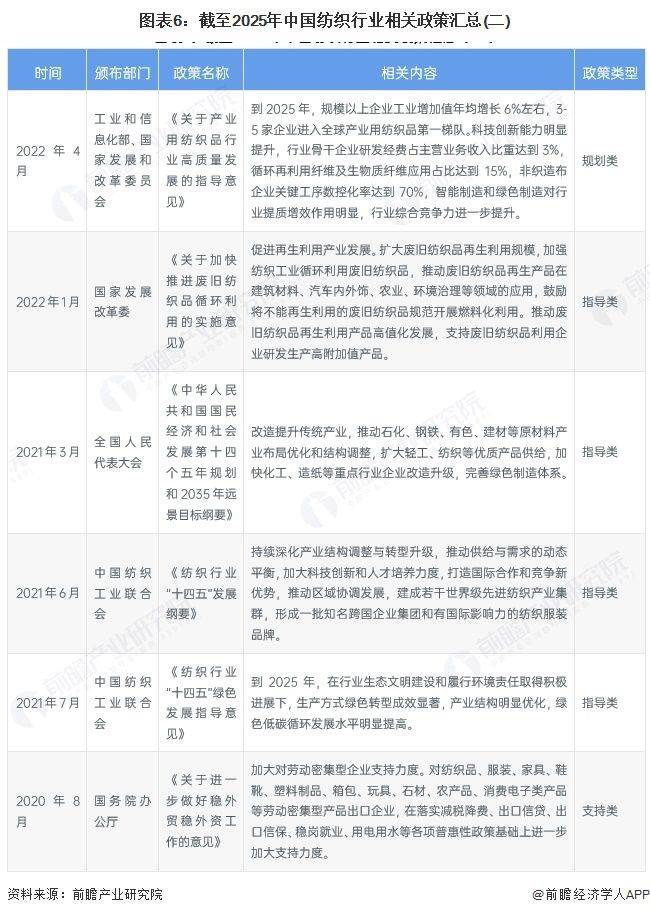
In recent years, the state has put in place policies such as the three-year plan of action for the digital transformation of the textile industry (2022-2024) and the programme for the implementation of the upgrading of the textile industry (2023-2025), which provide sound macro-environmental and policy support for the development of the textile industry, contribute to the rapid and healthy development of the industrial chain, accelerate progress towards the high end of the global value chain, play an important role in consolidating the status of “textile power” and achieve the objectives of “manufacturing strong” and “quality strong”. The policies are as follows:
Current state of industry development
1. Changes in corporate income fluctuations in the textile industry
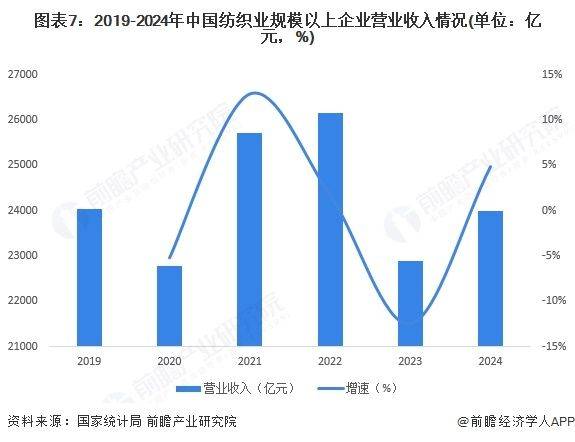
In terms of the size of the domestic textile industry and above, the fluctuations in the operating income of enterprises above the scale of the textile industry in china in recent years have declined in 2020, owing to the impact of the epidemic, and again in 2023, owing to the depressed domestic demand; according to the national statistical office, in 2024, there were 23,988. 8 billion yuan in the operating income of textile enterprises above the size (excluding garments and fibres), an increase of 4. 8 per cent over the previous year, and the scale of operations was restored。
2. The completion of investment in fixed assets in the textile and clothing industries has increased over the same period
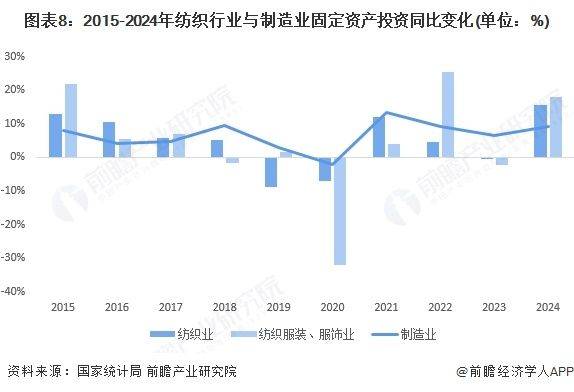
In recent years, our textile enterprises have advanced further in their transformation and have actively implemented the requirements of a large-scale equipment upgrading policy, leading to a steady expansion of high-end, intelligent and greening inputs. In 2024, the completion of fixed asset investments (excluding farmers) in the textile and clothing industries increased by 15. 6 per cent and 18 per cent, respectively, faster than in the previous year, by 16 and 20. 2 percentage points, respectively, and faster than in manufacturing。
3. The number of enterprises in the textile industry shows a downward trend
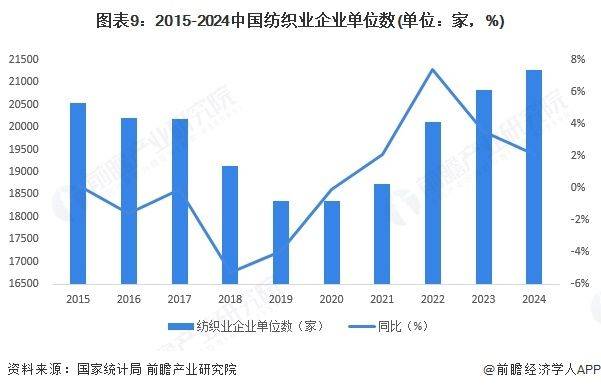
According to statistics from the national statistical office, the number of enterprises in the textile industry in china showed a trend of first-down and later-up fluctuations in 2015-2024. In december 2020, the number of chinese textile enterprises stood at 18344, the lowest in recent years. In 2021-2024, the number of enterprises rose steadily, and as of december 2024 the national statistical office had recorded 21,263 enterprises in the textile industry, an increase of 2. 12 per cent over the previous year. With the growth in the number of enterprises, china's supply capacity in the textile sector is expected to grow steadily。
Industry competition patterns
1. Competition ladders: there is a wide gap between the revenues of listed enterprises
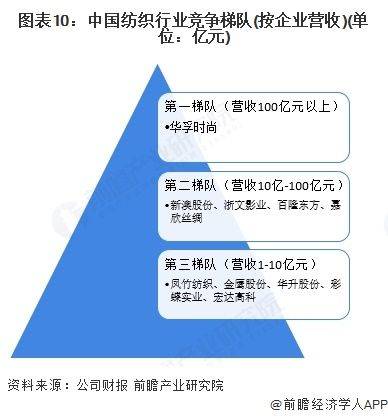
In terms of the size of the textile business, more than $10 billion of enterprises have a bouquet of fashion, etc., and enterprises between $1 billion and $10 billion have shares in austro-austro-austro, the zhejiang film industry, the basilong east and the kachin silk industry, and enterprises between $1-1 billion have a bouquet of textiles, gold eagle shares, huaseng shares, butterflies and hondak。
2. Industry concentration: low industry concentration
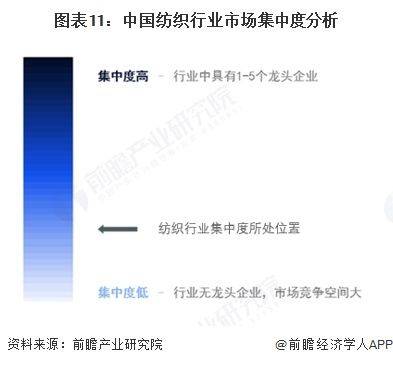
In terms of breakdown, the cotton textile sector is dominated by enterprises such as weibridge entrepreneurship, tianxi international, fashion fashion and the orient; the textile sector is dominated by enterprises such as golden eagles, wah lifts and kinda holdings; the textile sector is dominated by enterprises such as new australia, chinese textiles and xinhua; the silk textile sector is dominated by enterprises such as carhin silk, dalit silk and kim fu-chun; and the textile industry is dominated by butterflies, hondarka and taihua. Our textile industry is rich in subdivisions and has a larger number of enterprises. Taken together, the market concentration of the chinese textile industry is low。
Industry development prospects and trends projections
The chinese textile industry is at a critical stage in its transition from “large to full” to “strong and resilient”. In the short term, industries need to address the challenges of low-end overcapacity and high environmental costs, but in the long run, technological innovation and policy support have given impetus to high-quality development. Greening and intellectualization will reshape industrial ecology and drive resource efficiency and lower carbon emissions; consumer upgrading will drive product innovation, functional fabric and sustainable fashion to become growth engines; and internationalization will enhance risk resistance through diversified market openings and branding. In the future, the industry will develop a new pattern based on science and technology, built on domestic demand markets and extended through global cooperation, gradually moving from traditional manufacturing to high-end services, from cost to value competition, and becoming the global leader in textile upgrading。
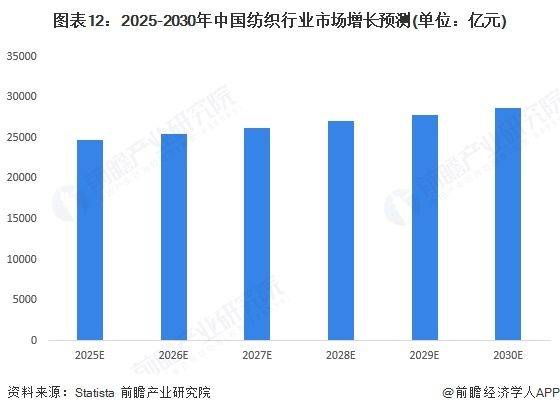
According to statista, china's textile market output is projected to grow at a compound annual rate of 3. 02 per cent in 2025-2029. This projection reflects a relatively stable and sustainable stage of growth in china's textile sector after many years of rapid growth. With the upgrading of domestic consumption, technological innovation and policy support, china's textile industry is moving from its traditional scale to quality improvement. In the forward-looking initial accounting, it is expected that by 2030, the chinese textile market will be 28,67. 6 billion yuan. This expansion in market size has benefited not only from large domestic consumer groups and rising consumer demand, but also from the transformation of the textile sector itself. The production efficiency and product quality of the textile sector have improved significantly, driven by greening and intellectualization, thus meeting market demand for high-end textiles。
More research and analysis in this sector is provided in the analysis of the in-depth research and strategic investment strategy for the development of global and china textile materials industry at the prosperous industrial research institute
At the same time, the institute provides solutions such as research on new industrial tracks, investment feasibility studies, industrial planning, park planning, industrial recruitment, industry mapping, industry big data, intelligent recruitment systems, certification of industry status, ipo advice/raiserability, specialized new giant declaration, and 15th plan. To reproduce references to this article, please indicate the source of the information (institute of forward industry)。
More in-depth industry analysis is available (app for forward-looking economists) and can also interact with 500+ economists/senior industry researchers. More business data, business information, and business development are available in [catatops], with the most cost-effective business search platform。