In junior high school languages, it is possible to keep the basic scores steady by rewriting the ancient poems, the cross-referenced template, and the textual material。
But high school language is typically understood as king. Modern reading, writing and poetry, with no fixed standard answers, are flexible and varied, even though the entire text is so sophisticated that it does not understand the logic of the text, does not analyse the subject and does not solve the problem。
The language of the high school is a logical one:
The basics are not rereaded blindly; they are only accurate in the memory of incorrect words, scripts, ancient poems, cultural commons, precise calculus, and do not fail; they reject the dead-reading puzzle; they learn to comb through the structure of articles, analyze the logic of the person, capture the core theme and master the idea of “touch the question”; and they refuse to stack the material, with a focus on setting, structure, thinking skills, so that the material serves the point of view, rather than being used in hard-reading。
In short, the lower secondary languages are remembered and the upper secondary languages are understood and expressed。
Ii. Mathematics: abandoning the theme, scratching the theme + logic + error loop
In junior high school, mathematics is simple and single, with the vast majority of subjects being subject to a fixed set, much more brushed and defunct, so that examinations can be applied directly and with a high tolerance for errors。
Mathematics in upper secondary schools is a serious area of loss for countless students, the central reason being to follow the method of “brushing back steps” in lower secondary schools. The high-school math literacy points are highly relevant, combining multiple chapters, and the problem is very different。
Mathematics in high school is the logical way to score:

No number of brushes, no quality of brushes. Each of these issues focuses on taking points of view, delineating the logic of the subject, learning how to solve the problem, rather than learning the answer to the question; creating a complete contours of the error, categorizing the type of error, distinguishing between “basic holes, blindness of thinking, arithmetical errors” and reinforcing it in a targeted manner; and combing the knowledge framework of the chapters, bridging the links between the points of knowledge, forming a complete knowledge system and dealing with the complex problem。
Mathematics in junior high school is based on “doing well” and mathematics in high school is based on “thinking well”. There is no logic, and it is futile to do so。
Iii. English: give up the dead word and grab "speech + word + expression"
It is the habit of many children to learn english: to take a word and die with a hard back, to carry dozens of words every day, but still cannot read, write or write, and often lose points。
In junior high school english, the vocabulary is small, simple and straightforward, keeping in mind words and fixed phrases, so that the subject can be read and answered. However, the high school english vocabulary is very large and difficult to read, and the considerations focus on the interpretation of the language and the use of grammar, and the isolation of the word is the least effective way of learning. Many words are individually understood and are simply not understood in long, difficult terms。
High school english is the correct logic:
The words are written in the context, combined with the text, the reading of the true subject memory vocabulary, and they are used in words, combinations, resolution, and not only in chinese; the emphasis is on long sentences, breaking down sentence structures, using grammatical logic and solving problems of reading incomprehensibleness and translation; and the accumulation of high-frequency, altruistic links, which are used to make text scores and reject chinese english stacking。
English spelling reserve for junior high school, english spelling skills for high school。
Iv. Physico/chemical/biological: waiver formula rereading, scratching "theory + derivation + scene"
Low-level science and chemical knowledge, mostly qualitative knowledge points, can easily be scored with back formulas, back concepts, back-temporal findings, with little need for complex logic。
High schools completely subvert this logic, and all formulas, concepts, experiments are focused on principles and reasoning. Many students are familiar with all physical formulas, chemical equations and biological knowledge points, and the central problem is that they do not understand the principles。
The high school examination does not directly examine formulae, recapitulate concepts, all of which combine real scenes, experimental variations and integrated applications. A dead-end formula, with one scene and one condition, is completely invalid。
High school's the right logic:
Physical feeding formula extrapolation process, stress analysis, motion modelling, mastering of problem resolution models of different types, flexible adaptation to variable topics; chemically decorative material properties, reaction principles, constant patterns, irreversible equations, learning to extrapolate response according to pattern; biologically reject mechanical endorsements, combing knowledge point logical frameworks, distinguishing between easy-to-mix concepts and flexible responses in combination with the dry landscape。
At the core of the points: understanding the principles, moving, applying, and hard-to-hearing can only get harder and harder。
History/political/geographical: abandoning sentence-by-word recitation and capturing "framework + keyword + thinking"
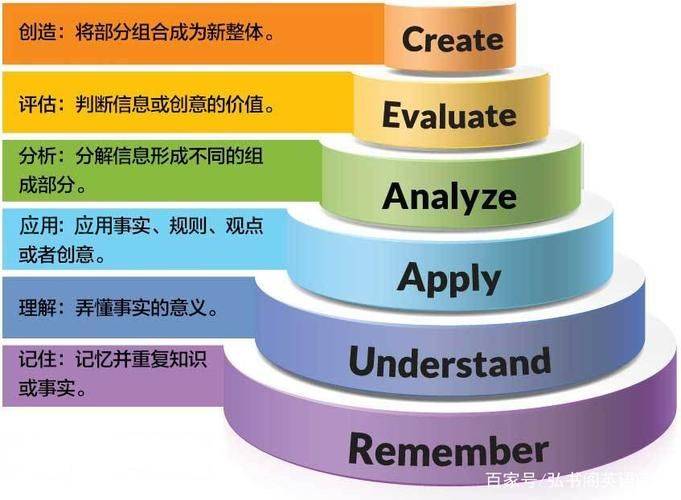
Many parents and students are caught in the wrong zone: the back. This is true in junior high schools, where knowledge is clear, where the examination directly corresponds to the words of the textbook, with a full back, a good memory and a high score。
But high school is a science of pure logic, pure thought and pure application. There are virtually no words written in the original language of the textbooks, all of which are material analysis, a combination of current policy and a comprehensive reading. Even if the textbooks are so ripe, they do not combine materials, do not decompose problems and do not analyse them from multiple angles, they still fail to score high marks。
High school's the right logic:
Establish a complete knowledge framework, with time lines, knowledge point modules, logical system combo content instead of word-to-word recitation; core memory keywords, core views, question-and-answer angles, with flexible expansion of examination materials without using dead language; foster thinking, learn to analyse problems from multiple angles, connect to the hot spots of time, and fit the logic of response。
Secondary school mastery, high knowledge integration and thinking。
At the end
The difference between primary and secondary school: the junior high school is the stock test, which is how much you remember; the upper secondary school is the incremental exam, which is how much you use and how much you think。
In high school, it is important to stop the habit of “deadly endorsed, unprovoked” lower secondary school. A little less mechanical memory, a little more in-depth thinking; a little less ineffective effort, a little more precision. In keeping with the logic of scoring in the various subjects of high school, children's performance can rise steadily and move beyond the dilemma of lack of progress。