How to classify knowledge, reflecting a world view, and how to classify knowledge and disciplines from time immemorial
Classification of individuals (21)
There has been a desire to be a web-based platform for categorizing content by knowledge tree and label, gathering information, sorting resources and discussing it. I've made a classification..
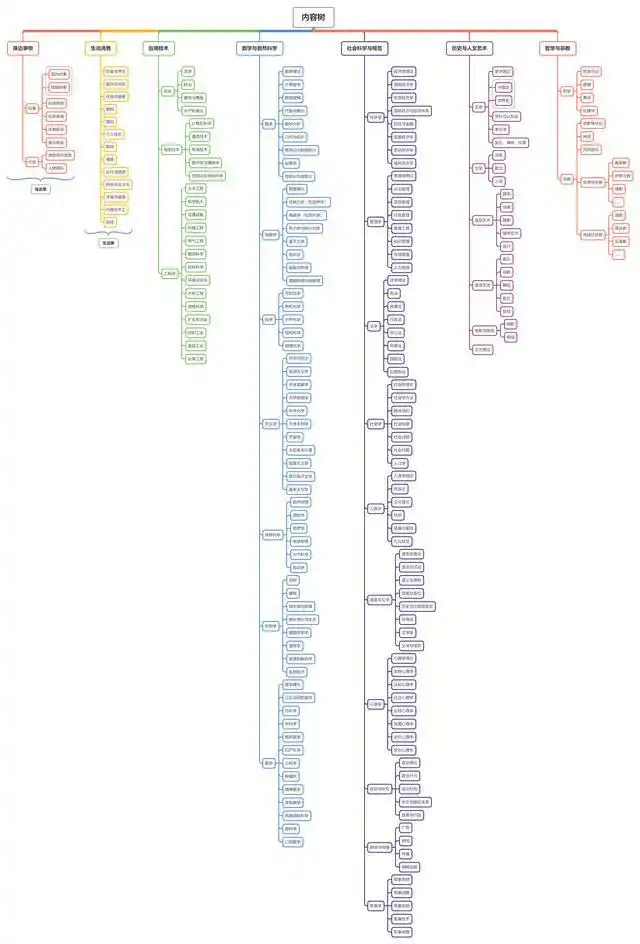
Because of the classification of websites, the classification of disciplines is based on the central chart classification and the cataloguing of major encyclopaedias in china, rather than seeking new markers, and the level of the catalogue is essentially within level 4。
The above pattern is based mainly on the classification of disciplines from the second half of the twentieth century to the present, and in human history, as knowledge changes in the world, the way knowledge is classified is constantly changing, and this change of perception is felt through the classification of books and encyclopedias。
China
Liu yiu's "seven slights"
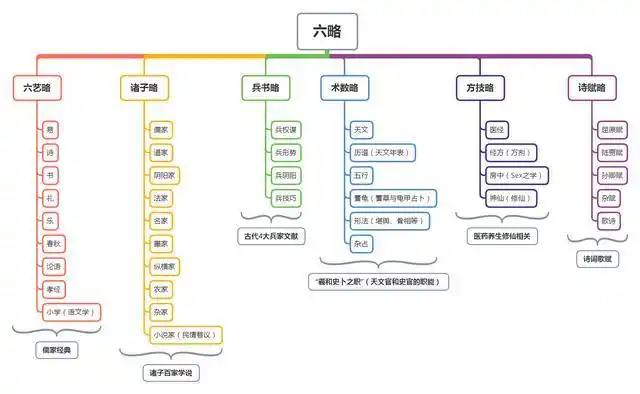
In the three years of hebei (26 b. C.), dr. Luo guangcheng was ordered to prepare the collections of the palace's books, which were compiled in the diaries, and divided into six categories and 38 subcategories. After liu's death, liu's son liu qian was compiled as “seven series”, of which the synopsis is a brief history of ancient academic practice, and therefore, although known as “seven synopsis”, the collection was divided into six categories, each of them—
Wei
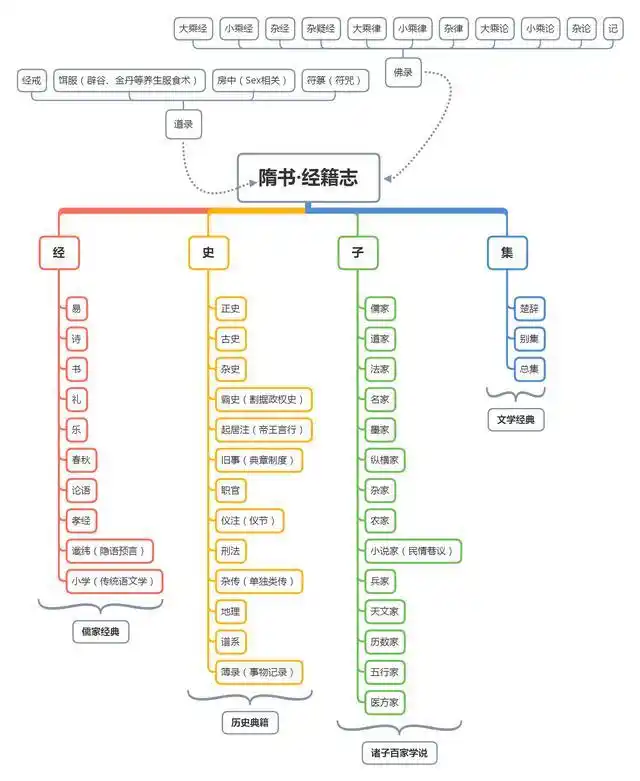
After a brief history of ancient book-making purposes in china, it evolved into four categories of law. Wei zheng's books and books are published in four volumes, 3127 copies, 36708 volumes, divided into four major groups, 40 sub-categories, and non-official buddhist books and transcripts. It marks the formation of four parts of the whole set of historical patterns, specifically -
"the book of four books", 18th century
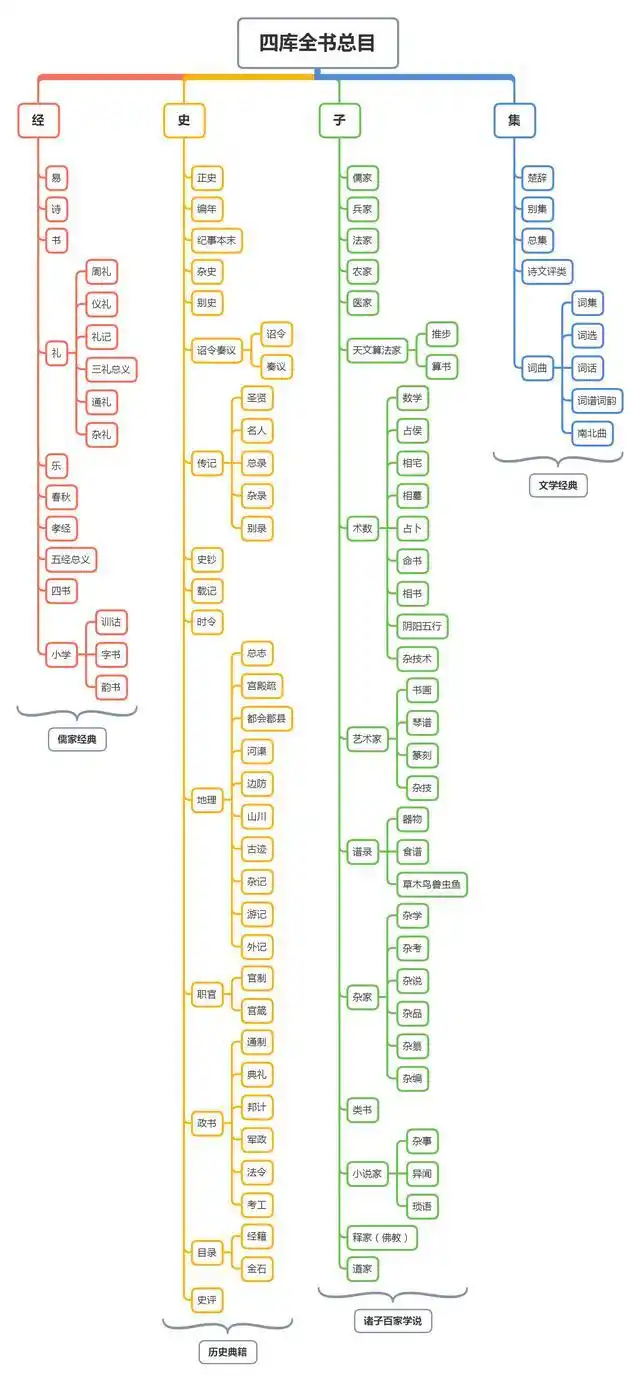
In china, the classification of the four branches of the historic collection follows a millennium and is the most common and authoritative book classification in ancient times. The quartet's general book of four books, which marks the perfect and mature form of four categories of law -
The book collection of the ancients, 18th century
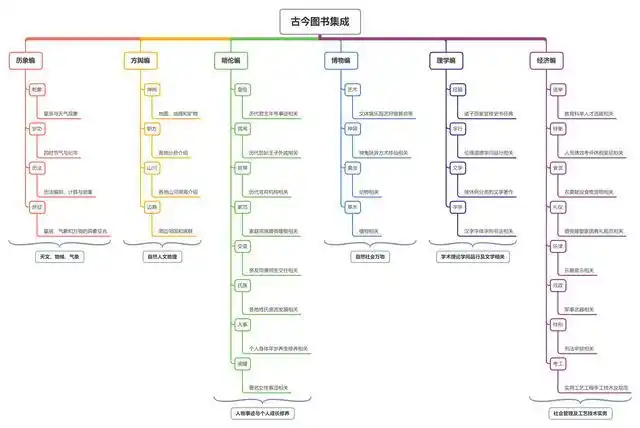
The collection of ancient books, compiled by chen guanglai, the scholar, is the largest and most informative type of book (toolbook) in chinese history. The book " books of the ages " consists of 10,000 volumes, or about 160 million words, 40 volumes of catalogues alone, containing an all-encompassing encyclopedia, divided into 6 books, 32 books, 6109 books, as shown below:
Liang kai-chul, 19th century
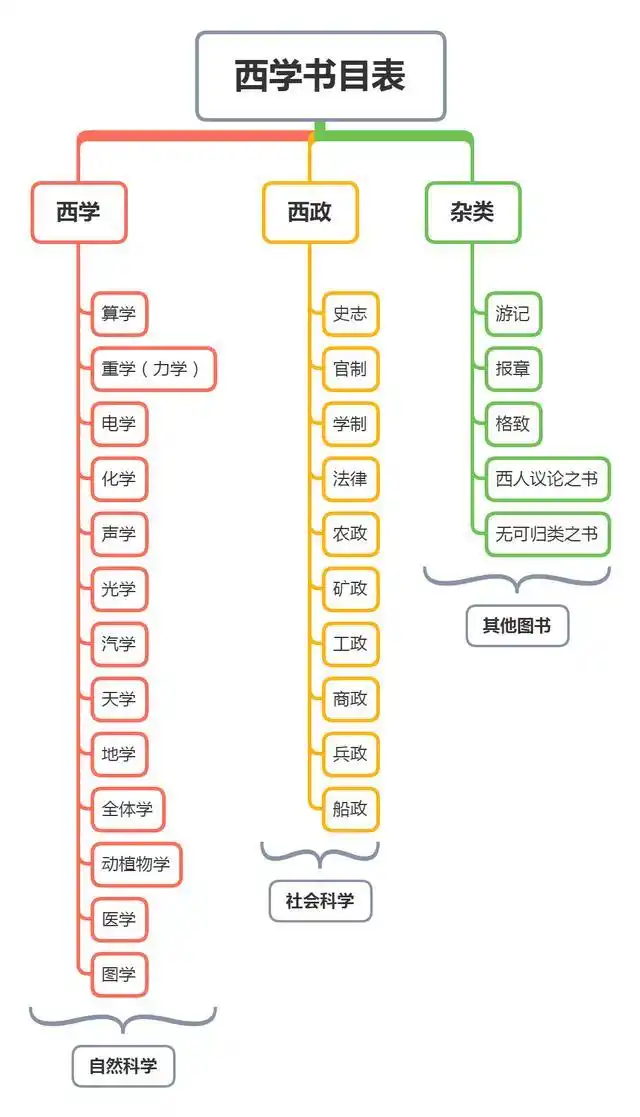
At the end of the year, in order to publicize the translation of western books, a leading scholar, liang kai cai, produced the western bibliography, which divides books into three categories: western, western, and miscellaneous, breaking down the traditional four parts of the historic collection, specifically -
Europe and the islamic world
The classification of books and knowledge in europe and in the islamic world can be traced back to the library of alexandria in carimacos, and to aristotle's intellectual theory。
Aristotle's science, 4th century bc
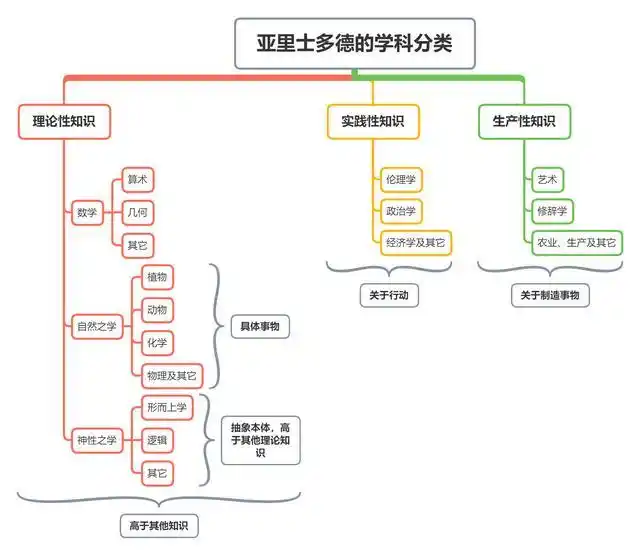
According to aristotle, “all ideas are either practical, productive or theoretical”. The division of knowledge into production (poetry), theory and practice, as shown in the figure -
"scientific statistics" by farabi, 10th century
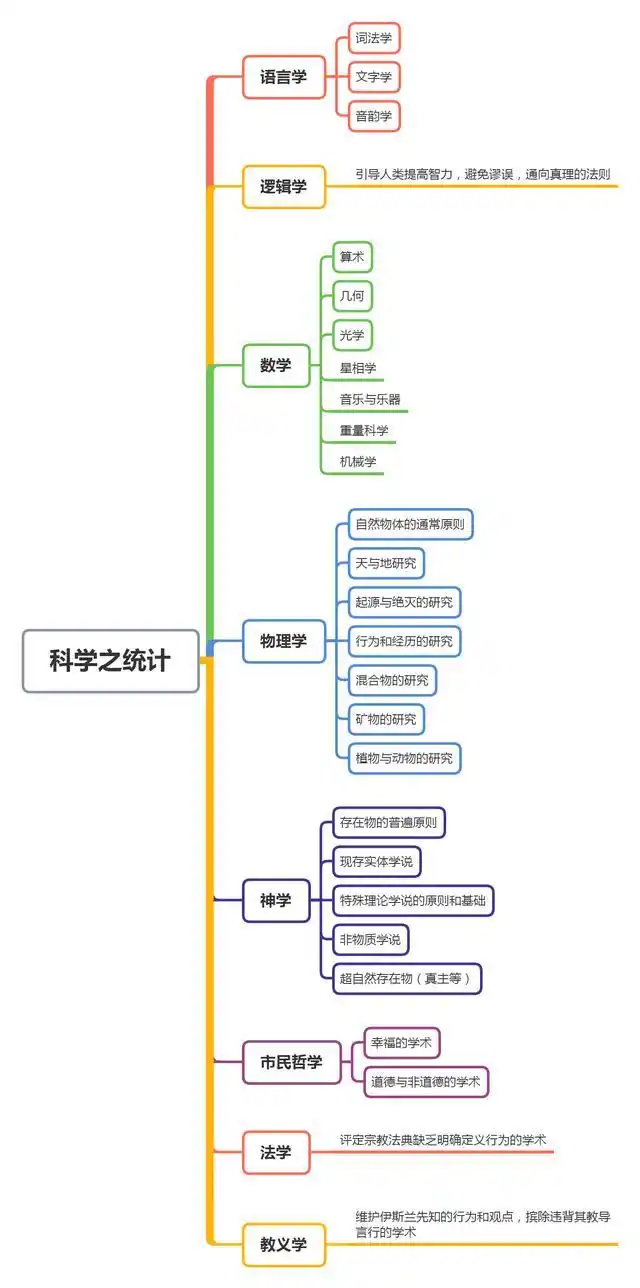
Al-farabi, 872-950, a leading scholar of the kara khan dynasty in central asia, considers philosophy as the sum of knowledge, and divides it initially into theoretical and practical (civilian) philosophy, which corresponds roughly to today's philosophy and natural sciences, and to social sciences in general. In its book statistics of science, farabi proposes the following classification:
Kitābal-fihrist, al-nadim, 10th century
Ibn al-nadim (932-995) is a bookkeeper and biographer in baghdad. He has prepared a bibliography of about 2,000 authors, 10,000 books, which is considered to be the first comprehensive bibliography in the broader west. Kitābal-fihrist collects ancient books from india to rome, and lists them with their styles, chapters and syntheses for retrieval, broadly classified as -
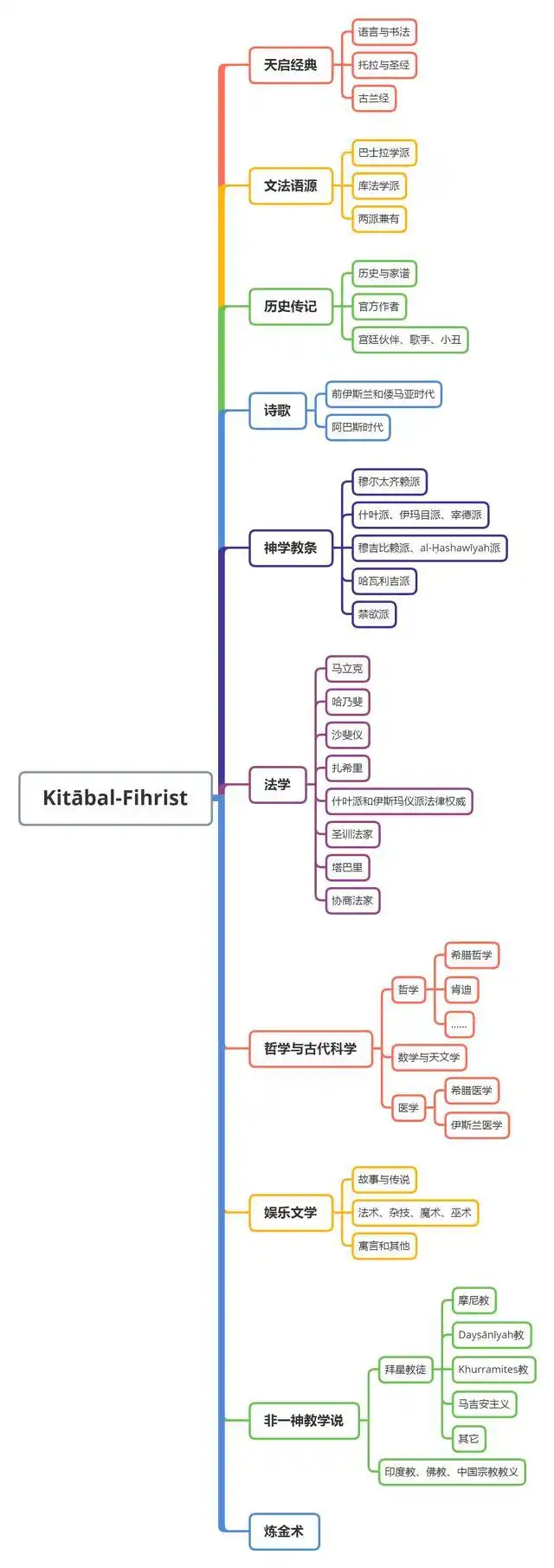
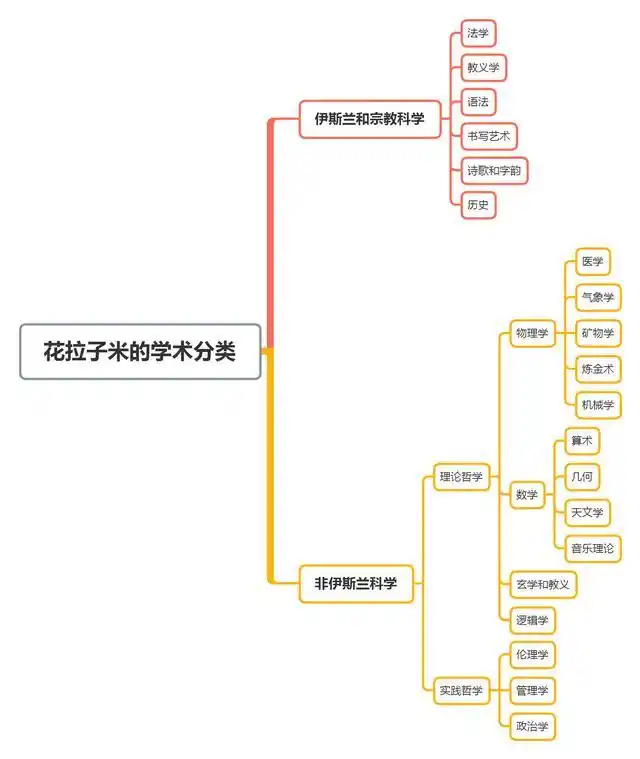
The academic classification of fragrance, the 10th century
Faraby's classification was adopted by later scholars like ibna, with minor variations. Another discipline is from abu abdullah al-khwarizmi. - 997, not the one who created the algebra. He believes that academic knowledge is not only knowledge of things, but also of god and god's inspiration, and that it is the wealth of special people
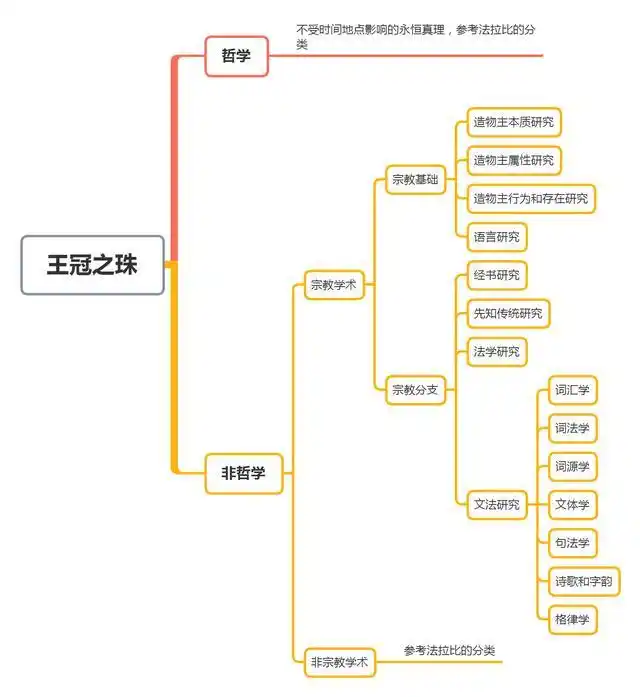
The crown jewel of shiraz, the 11th century
Another classification of the islamic world was created by kutbuddin shirazi, 1236-1311, among others. In " the pearl of the crown " , shiraz divided academic studies into philosophical and non-philosophical categories, believing that philosophy is an eternal truth independent of time and place, and that non-philosophical is affected by time, geography, ethnic group, and can be divided into religious and non-religious -
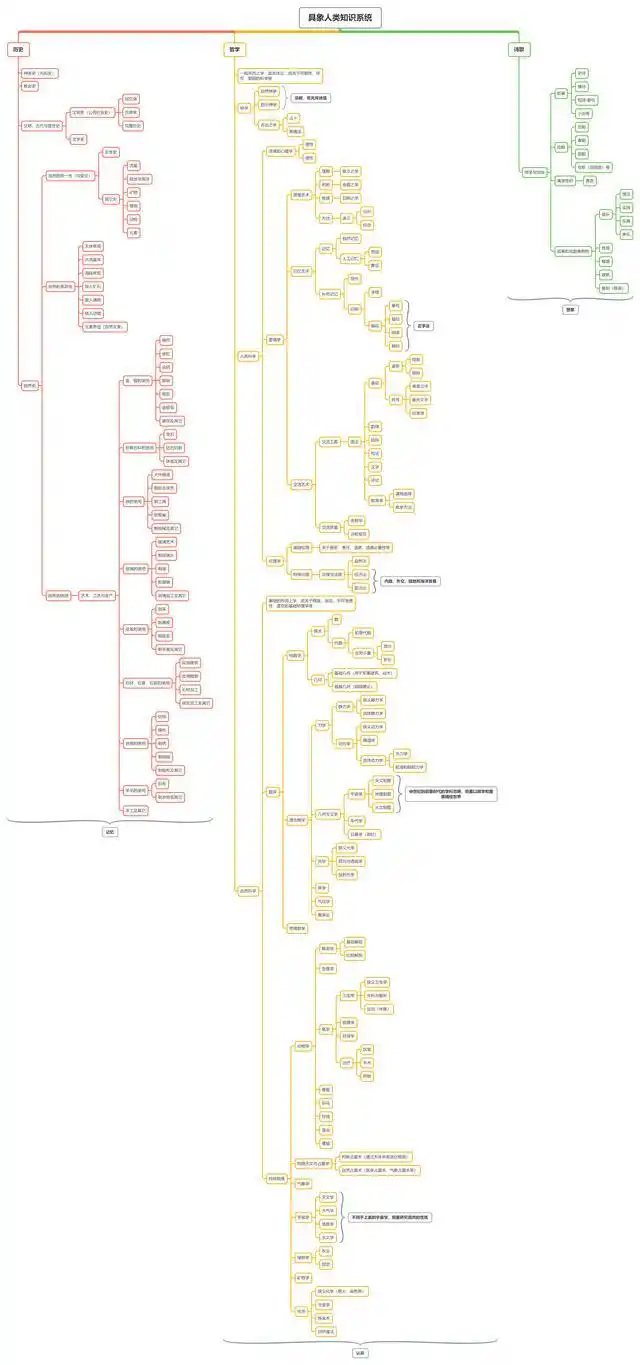
The tree of knowledge, deedro and darrenbel, 18th century
The 18th century encyclopedia encyclopedia was developed by the encyclopedia deedro and darrenbel as a comprehensive knowledge map called "système figuré des co"The following is a breakdown of human knowledge into the three fields of memory/history, reason/philosophism, imagination/poetry (which can be traced back to the british thinker francis bacon) -
Recent modern book classification
The paris bookmaker classification, created in 1842 by jacques charles brunet, is considered the first modern book classification. The paris bookkeeper classification classifies books into five categories: theology, law, science and art, history, and american literature. Today, the usual book classifications include the dewey decalogue classification, the general decalogue classification and the library classification of the united states congress. If you're lazy, you can just extract wiki's description。
Dewey decimal classification
Written and published by melway dewey, united states library specialist, 1876. Initially, the classification was only described in a four-page repertoire, but was expanded to 23 major revisions, most recently completed in 2011. The classification is more widely used in small libraries. The 10 main categories include -
000 - total category
100 - philosophy and psychology
200 - religion
300 - social sciences
400 - languages
500 - natural sciences
600 - applied science
700 - art
800 - literature
History and geography
Universal decimal classification
At the end of the nineteenth century, the belgian bibliologist paul otlet and henri la fontaine developed this classification on the basis of the dewey decalogue classification. This classification, consisting of numbers and special symbols, is widely used worldwide. Classification includes -
0 total
1 philosophy, psychology
2. Religion, theology
3 sociology, politics, economy, law, education, anthropology
Not available (specifically added by library)
5 natural subjects, mathematics
6 practical subjects, medicine, technology, business economics, computers
7 arts, handicrafts, music, competition, sports
8 linguistics, literature
9 geography, biology, history
Library of coI'm not sure if i'm going to do this
The book classification system used by the library of the united states congress was first introduced in the late nineteenth to early twentieth centuries. It is now used by a number of libraries at universities in europe and the united states, using 21 of the 26 english letters as classification codes. Large groups are -
A - general category
B. Philosophy, psychology, religion
C - history and related scientific generals
D - world history
E-american history
F - local history of former british, dutch, french america and latin america
G - geography, anthropology, leisure
H - social sciences
J - political science
K - law
L - education
M - music
N - arts
P - languages and literature
Q - science
R - medical
S - agriculture
T - technology
U - military science
V - naval science
Z - bibliography, library science