Annex to chapter vi
Chapter i general provisions
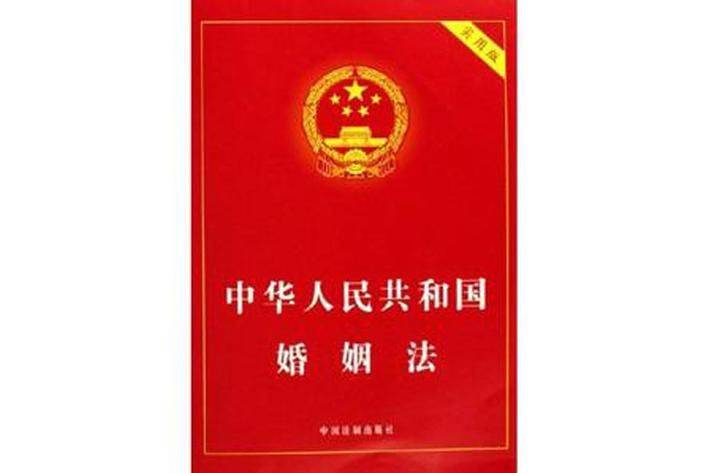
Article 1 this act is the basic norm of marital and family relations。
Article 2. A marriage regime of freedom of marriage, monogamy and equality between men and women。
Protect the legitimate rights and interests of women, children and the elderly。
Family planning。
Article 3 prohibits contracting, buying and selling marriages and other interference with the freedom of marriage. Marriage is prohibited for the purpose of obtaining property。
Bigamy is prohibited. Persons with a spouse are prohibited from living with others. Domestic violence is prohibited. Abuse and abandonment among family members is prohibited。
Article 4 - spouses shall be faithful and respectful of each other; family members shall respect and love each other, assist each other and preserve equal, harmonious and civilized marital and family relations。
Chapter ii marriage
Article 5 - the marriage must be entered into with the complete will of both the man and the woman, and neither of them may compel the other or interfere with any third party。
The age of marriage may not be earlier than 22 years for men or 20 years for women. Late marriage and childbearing should be encouraged。
Article 7 marriage is prohibited if:
(i) direct blood relatives and relatives within three generations
(ii) illnesses medically considered not to be marriageable。
Article 8 requires that both spouses must register their marriage in person at the marriage registry office. In accordance with the provisions of this act, they are registered and issued with a marriage certificate. A marriage certificate is obtained to establish a marital relationship. If a marriage is not registered, it shall be registered on a supplementary basis。
Article 9 after a marriage is registered, the woman can be a member of the family of the man and the man can be a member of the family of the woman。
Article 10 a marriage is null and void if:
(i) bigamy
(ii) relative relations prohibiting marriage
(iii) the illness which is medically considered to be undesirable before marriage and which has not been cured after marriage
(iv) under the legal age of marriage。
Article 11 the coerced party may apply to the marriage registration authority or the people's court for annulment of the marriage if the marriage is coerced. The request of the coerced party for annulment of the marriage shall be made within one year of the registration of the marriage. A request for annulment of a marriage by a person whose personal liberty has been unlawfully restricted shall be made within one year of the date of restoration of personal liberty。
Article 12. A marriage that is null and void or has been annulled is null and void from the outset. The persons concerned have no rights and duties of husband and wife. Property acquired during cohabitation is dealt with by agreement of the parties; in the event of a failure of agreement, the people's court decides on the basis of the principle of taking care of the non-faulting party. The treatment of property that is null and void as a result of bigamy shall not infringe upon the property rights and interests of the parties to a legal marriage. In the case of children born to a person concerned, the provisions of this act relating to parents and children shall apply。
Chapter iii family relations
Article 13 - equal status of spouses in the family。
Article 14. The right of both spouses to use their own names。
Article 15. Both spouses have the freedom to engage in production, work, study and social activities, and one party may not restrict or interfere with the other。
Article 16 obligation of both spouses to practice family planning。
Article 17. The following property acquired by the husband and wife during marriage shall be jointly owned:
(i) wages, bonuses
(ii) the proceeds of production and operation
(iii) proceeds of intellectual property rights
(d) property derived from succession or gift, except as provided for in article 18, paragraph 3, of this law
(v) other property which shall be jointly owned。
Spouses have equal rights to dispose of jointly owned property。
Article 18 property of one of the spouses shall be the property of:
(i) the property of one of the parties before marriage
(ii) the costs of medical care, living allowances for persons with disabilities, etc., received by a party as a result of bodily injury
(iii) property determined in a will or gift contract as belonging only to the husband or wife
(iv) for the exclusive use of one party
(v) other property to which a party is entitled。
Article 19 the spouses may agree that property acquired during marriage and property acquired prior to marriage shall be owned, jointly owned or partly owned. The agreement should be in writing. In the absence of an agreement or if the agreement is not clear, the provisions of articles 17 and 18 of this law shall apply。
The agreement between the spouses on property acquired during the marriage and on property acquired prior to marriage is binding on both parties。
An agreement between the husband and the wife on the property acquired during the marriage shall be owned by each of them, and the husband or wife shall enter into a foreign debt, if the third person is aware of the agreement, and the property of the husband or wife shall be paid off。
Article 20. Spouses have a duty to support each other。
If one party fails to perform a maintenance obligation, the party in need of maintenance has the right to claim payment of maintenance from the other party。
Article 21 obligation of parents to maintain and educate their children; obligation of children to support their parents。
Where parents fail to fulfil their maintenance obligations, children who are minors or cannot live independently have the right to claim maintenance from their parents。
If the child fails to fulfil his or her maintenance obligations, the parent who is unable to work or who is in difficulty has the right to claim maintenance from the child。
Infant drowning, abandonment and other acts of infanticide are prohibited。
Article 22 children may take the family name of their father or mother。
Article 23 has the right and duty to protect and educate minor children. Parents are obliged to assume civil liability for damage caused by minor children to the state, collectives or others。
Article 24: spouses have the right to inherit from each other。
Parents and children have the right to inherit from each other。
Article 25 children born out of wedlock have the same rights as children born in wedlock, which no one may harm or discriminate against。
The biological father or mother of a child born out of wedlock shall bear the child's maintenance and education until the child can live independently。
Article 26: the state protects legal adoption relationships. The rights and duties of adoptive parents and adoptive children shall be governed by the provisions of this law concerning relations between parents and children。
Rights and obligations between the adoptive child and the biological parent are eliminated by the establishment of an adoption relationship。
Article 27 shall not be abusive or discriminatory between stepparents and stepchildren。
The rights and obligations between stepfathers and stepmothers and their dependent children shall be governed by the provisions of this law concerning relations between parents and children。
Article 28: a capable grandparent, a grandparent, is obliged to maintain a minor grandchild or a grandchild whose parents have died or whose parents are unable to provide for him. (b) the obligation to provide for the children of able-bodied grandchildren, grandchildren, grandparents whose children are deceased or whose children are unable to provide for them。
Article 29: an able-bodied brother or sister has a maintenance obligation in respect of a minor brother or sister whose parents have died or whose parents are unable to support him or her. An able brother or sister who is raised by a brother or sister has a duty to support a brother or sister who is incapable of working and has no means of subsistence。
Article 30 children shall respect the marital rights of their parents and shall not interfere in their remarriage and in their post-marriage lives. The child's maintenance obligations to the parents are not terminated by a change in the parents ' marital relationship。
Chapter iv divorce
Article 31 a divorce is granted if both men and women divorce voluntarily. Both parties must apply for divorce at the marriage registry office. The marriage registration authorities issue divorce certificates when they find that the parties are indeed willing and that the issues of children and property have been adequately dealt with。
Article 32. A divorce requested by a man or a woman may be settled by the competent authority or brought directly before the people's court。
The people's court hears cases of divorce, which must be mediated; if the relationship has broken down and the conciliation is invalid, the divorce shall be granted。
Divorce shall be granted if the conciliation is invalid:
(i) if the person is in union with another person
(ii) domestic violence or abuse or abandonment of family members
(iii) the persistence of harmful practices such as gambling and drug addiction
(iv) after two years of separation due to emotional disharmony
(v) other circumstances that lead to the breakdown of spousal relationships。
Divorce shall be granted if one of the parties is declared missing and the other party files a divorce suit。
Article 33 the spouse of a military soldier who is currently in active service requires the military's consent, except in cases of serious fault on the part of the military。
Article 34 a woman may not file for divorce during pregnancy, within one year after delivery or six months after termination of pregnancy. Unless the divorce is requested by the woman or the people's court deems it necessary to entertain the request for divorce。
Article 35: after a divorce, a man and a woman who voluntarily resume the couple's relationship must register their marriage with the marriage registry office。
Article 36 relationships between parents and children shall not be dissolved by divorce of parents. After divorce, the child remains a child of both parents, whether the father or mother is in direct custody。
Upon divorce, parents have the right and duty to maintain and educate their children。
After divorce, the child during the breastfeeding period is raised by the nursing mother. The decision of the people's court shall be based on the rights and interests of the child and on the specific circumstances of the parties in the event of a dispute between the two parties over maintenance。
After a divorce, a child who is raised by one of the parties shall be liable for one or all of the necessary maintenance and educational expenses, the amount and duration of such expenses shall be agreed between the parties; in the event of failure of an agreement, the people's court shall decide。
An agreement or judgement concerning the maintenance and education of the child shall not prevent the child from making, if necessary, a reasonable request to either parent to exceed the original amount of the agreement or sentence。
Article 38 a parent who does not bring up a child directly after divorce has the right to visit the child and the other parent has the duty of assistance。
The manner and time of exercising the right of access are agreed upon by the parties; in the absence of such agreement, the people's court decides。
The right of access shall be suspended by the people's court in accordance with law if the father or mother visits the child, which is detrimental to the child's physical and mental health; the right of access shall be restored when the cause of the suspension has disappeared。
Article 39 in the event of divorce, the joint property of the spouses is dealt with by mutual agreement; in the event of failure of such agreement, the people's court shall decide in accordance with the principle of taking care of the rights and interests of the children and the woman, depending on the circumstances of the property。
The rights and interests of the husband or wife in the contracting of family land shall be protected by law。
Article 40. In case of divorce, the spouses have the right to claim compensation from the other spouse, who, in writing, agrees that the property acquired during the marriage shall be owned by each other and that one of them has a greater obligation to raise children, care for the elderly and assist the other in his or her work。
Article 41 in the event of divorce, the debt which was originally owed to the couple for living together shall be repaid jointly. If the common property is not settled, or if the property is owned by each other, it shall be settled by mutual agreement; if the agreement is not reached, it shall be decided by the people's court。
Article 42. In the event of divorce, if one of the parties is in difficult circumstances, the other party shall give appropriate assistance from his or her personal property, such as his or her home. The modalities are agreed upon by the parties; in the event of failure of the agreement, the people's court decides。