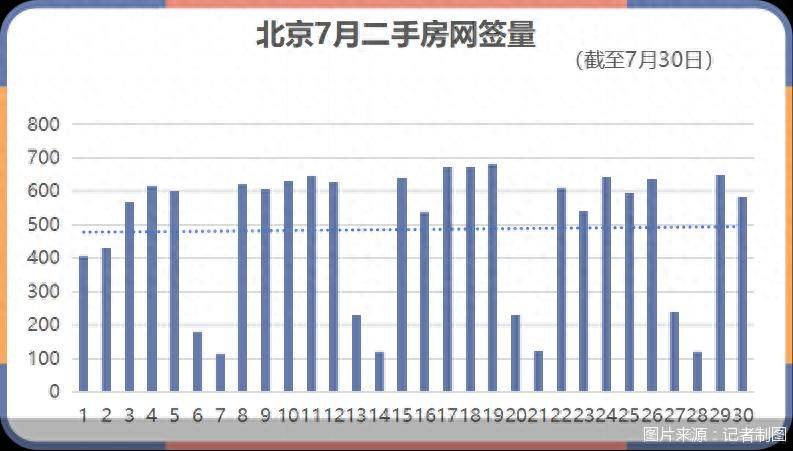
The new deal has allowed the second-hand room known as the “building-market barometer” to begin to rise steadily. According to beijing journalist statistics, as of 30 july, there were 14577 second-hand room network signatures in beijing for five consecutive months, representing almost 500 units per day in the recent past and almost 15,000 sets per month, a 16-month increase. According to inside the head agency, the second-hand house in beijing has been “validized” in the past month. Industry judges that if this trend continues, the stability of second-hand homes will be replaced and the effectiveness of policy combinations will be further expanded。
Not bad
In accordance with traditional practice, after the march “yen spring” each year, there is an inertial decline in the sale of buildings, but this year the market for second-hand houses in beijing is somewhat different: from a trend point of view, since march this year, the second-hand houses in beijing have remained relatively high at more than 13,000 units per month. By june and july, second-hand rooms in beijing had stabilized at around 15,000 units per month。
In particular, the july season is not bad. As at 30 july, 1457 second-hand house-marks were registered in beijing in july, with a five-month stop on the line of honour, which, on the basis of an average of close to 500 in the recent past, exceeded the almost fixed set of 15,000 units throughout the month, a rise of 16 months. One of the most obvious contrasts was that in july 2023, there were only 9,718 second-hand house nets in beijing, falling within 10,000 units。
According to xu, vice-director of research at the institute, the second-hand house is known as the “building city barometer”, which provides an overview of the temperature of the beijing building through netting data. The market is very cold when the netting is less than 8,000 a month. When the netting reaches 12,000 units per month, i. E., the vanquished balance line, it means that the market is relatively smooth and suitable for rational trading between buyers and sellers. More than 15,000 units per month are considered to be the threshold for upward market trends。
Xu leap forwards that the continued dynamism of market transactions has had a positive effect on steady expectations, that future declines in housing prices are expected to continue to narrow, that short-term increases in housing prices are not expected to be sufficient and that longer trading cycles are given to home buyers。
According to zhang daewei, the chief analyst of china's real estate, the central factor in the recent marked increase in the number of second-hand residential network signatures in beijing is the expectation of a “5/17” new deal. “despite the landing policy in beijing on 26 june, there are already expectations for down payment and lower interest rates in the market, and in this case the exchange of second-hand rooms in beijing began in the second half of may and remained stable and high.”
Price steady
In fact, prior to the policy restructuring of 26 june, beijing had issued a number of municipal optimization policies. Beijing journalist statistics show that since september 2023, nine improvements have been made to the beijing building since then, such as the “no mortgage” implemented in september 2023, the release of the “two-limit” in february 2024, and the possibility of acquiring five additional houses at the end of april 2024。
In terms of spatial distribution, the second-quarter deal in beijing went through a process of “first-in-first-in-first-out”. Beijing, “4. 30,” optimized the five-ring purchase limit, allowing households to acquire additional five-round housing units to reach the limit, so that during the first half of april and july, the temperature of trading in the new five-seat urban development zone was relatively high and the peripheral share increased. Starting in july, with the steady operation of the replacement chain, the trade heat in the outer zone began to flow to the inner ring。
Corresponding to changes in space structures, the second-hand chamber structure in beijing is characterized by a “two-headed”. Since july, the total price of second-hand houses in beijing has been raised by 1. 7 percentage points compared with june, when the total price of low and high-priced houses has been increased。
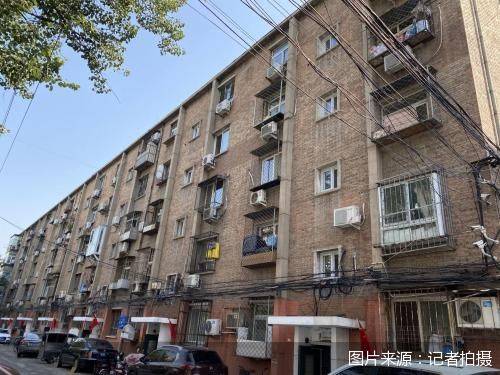
The low season of second-hand houses is not only manifested in trade, but is characterized by “stable prices” over the past month, according to inside the head agency。
According to beijing chainers data, the price of second-hand housing in beijing has generally been stable since the second quarter, with market prices increasing by around 0. 5 per cent in june and the average value of second-hand houses in beijing by 0. 4 per cent in july (as of 24 july). Price increases are mainly due to changes in the trading structure and are more stable in terms of comparable housing prices. This is mainly due to the reversal of new clients and new housing sources, and the fact that supply-demand relations, while still biased towards buyers, are more balanced than in the first quarter, contributing to relatively smooth prices. As a result, the average exchange price for second-hand housing has remained stable for four months, starting in april, with average monthly fluctuations of less than 1 per cent。
Behind the stable price stance is related to the positive release effects of policies, to the construction of floors of housing prices and, more importantly, to the restoration of market confidence by buyers. The lowering of the house purchase threshold and the reduction in the monthly repayment amount have effectively eased the pressure on buyers to purchase the house, eased the mood for waiting and significantly increased willingness to buy the house。
We're down by 20,000 in total
The second-hand room has risen steadily, and the two most obvious changes from the current beijing market feedback are the gradual reduction of bargaining space and the decrease in the second-hand room listings. The diminishing bargaining space meant that the expectations of the seller and the buyer for the price were coming closer, which was characteristic of the market's bottom. The apparent decrease in the number of second-hand house listings is a sign of renewed market confidence。
“the overall roll volume has been reduced by about 20,000 sets, the first of its kind in september 2023.” according to zhang dawei, the overall number of second-hand rooms dropped from 172,000 at the end of april this year to about 155,000 now, and the decrease in the number represents a significant reduction in market runs。
According to past experience, as long as the second-hand room in beijing is “emerged”, the market for new houses will be hot. The market for second-hand houses is so hot that it's likely to feed back to the market. A recent survey by beijing business press also found that, in the 30 days since the new deal, the number of new arrivals in beijing has increased significantly compared to the pre-new deal period, and that some popular projects have continued to grow by more than 40 per cent。
“for the time being, beijing's regulatory policy is gradually shifting from universal, comprehensive down payment and interest rates to precision regulation.” the chief analyst of the joint venture, guo yi, stated that the demand for new housing markets was mobilized through “old-for-news” and the incentives for housing companies to compete for land through adjustments to land rules. From the source point of view, the market for land, new and second-hand houses will be more active in the future in terms of the overall flow and circulation of land, new and second-hand houses, and a virtuous cycle of housing and investment consumption。
The beijing journalist, wang xiao ho, li xian