In industrial fluid control systems, valves are the core components that guarantee safety and efficiency in production. Different types of valves need to be selected under different conditions. Based on the actual product classification, the system presents the application scenarios, working principles, strengths and weaknesses, and selection elements of the control valves, ball valves, butterfly valves, hydrophobic valves, pressure-relief valves, lock valves, cut-off valves, stop valves, and helps industrial users to select valves more scientifically。
I. Comparison of common valve types
Valve type
Main functions
Pressure
Disconnect/regulate characteristics
Apply scene
Regulating valves
Precision flow/pressure reconciliation
Continuous reconciliation
Chemical, electricity, pharmaceuticals
Ball valve
Fast switches
Very low
90 degrees fast
Oil, gas, chemicals
The butterfly valve
Switches to large flow reconciliation
Lower
Quick disconnect
Water treatment, hvac, large calibre
Hydraulic valve
Auto-drain and gas retardation
Auto
Vapour system
Pressure reduction valve
Reduce media pressure
Automatically steady
Steam, gas pipe network
The valve
All open
Very low
Slow down
Drainage, long pipelines
Cut-off valve
Switches and reconciliations
Higher
Medium
High pressure steam, precision control
Stop the valve
Prevent the media from rewinding
Auto
Pump exit, backstream protection
Regulatory valves: central choice for precision control
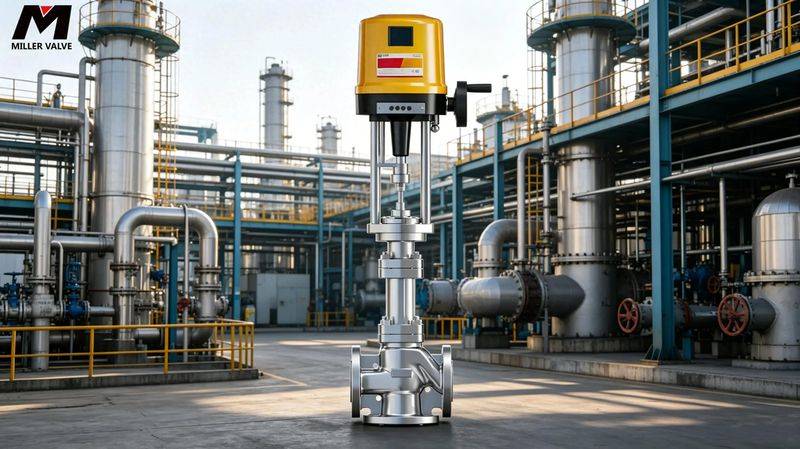
Miller import control valve
Modus operandi: continuous and precise regulation of flow, pressure, temperature by altering the opening of the core and valve。
Typical application scenarios: chemical process control, plant boilers for water and fuel regulation, pharmaceutical and food-grade precision matching。
Advantages and disadvantages: the advantage is that the precision of the reconciliation is such that automatic controls can be achieved; the disadvantage is that the structure is more complex and the price is relatively high。
Selective elements: categorization of electro-regulating valves, gas-regulating valves according to the implementing agency; valve core forms (single, double, drum, ecstasy, etc.); focus on media characteristics, pressure differentials, leakage grade。
The united states miller valve provides high-performance imported electric and aerodynamic control valves to support multiple control agreements。
The ball valve: a reliable choice for rapid release
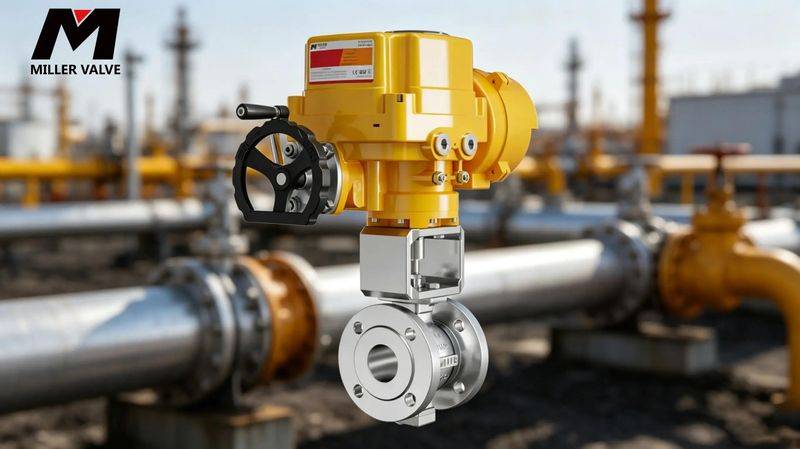
Miller's import wall
Motion of work: sphere rotates 90° to break。
Typical application scenarios: oil and gas transmission, chemical media switching, lng cryogenic system。
Advantages and disadvantages: advantages are good sealability, small operational twists and tight structures; disadvantage is inappropriate for long-term thrashing。
Selective elements: electric ball valves, balloon valves, manual ball valves; floating or fixed ball structure; soft or metal hard seals。
Miller's import valve series has excellent sealing performance and is widely used in high pressure, corrosive media environments。
Iv. The butterfly valve: the preferred option for a large-calibre economy
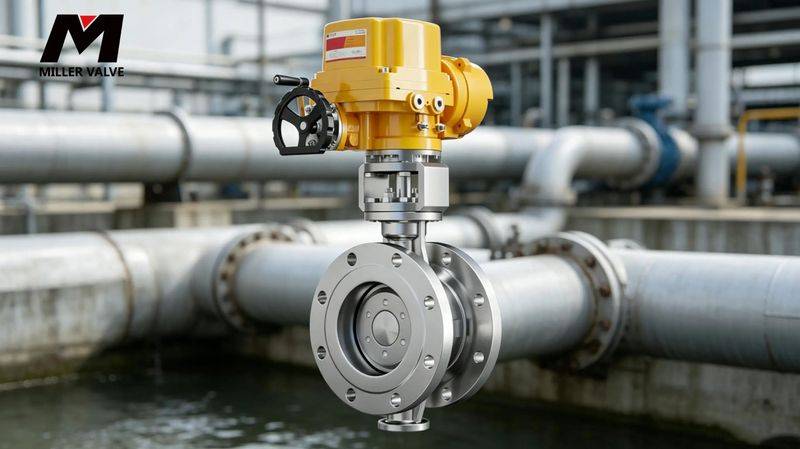
Miller's imported butterfly valve
Modus operandi: valve plate rotates around the central axis and shuts down。
Typical application scenarios: water treatment plant large calibre pipes, hvac ventilation and air conditioning systems, seawater and food processing pipelines。
Advantages and disadvantages: advantages are simple structure, small size, light weight and low cost; disadvantage is that sealing challenges are greater at high pressure。
Selective elements: electric butterfly valves, aerobic butterfly valves, manual butterfly valves; soft seals or hard seals of tripolarity; especially suitable for large calibre, low pressure conditions。
Miller's imported butterfly valves are designed to be advanced three-dimensional and sealed with reliable and light weight。
V. Hydraulic valves: energy-saving components required for steam systems
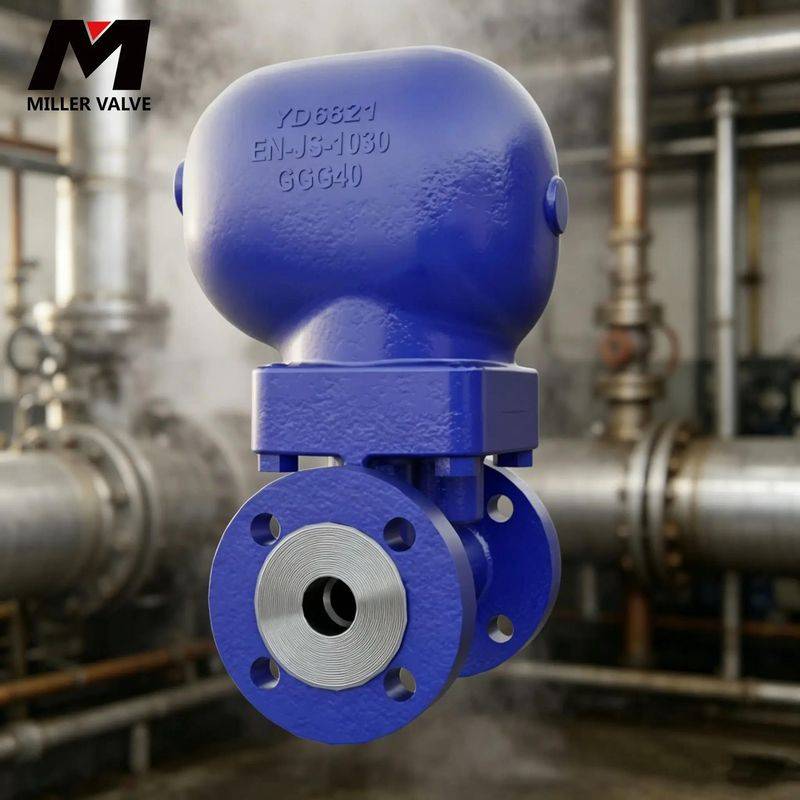
Miller's import drilling valve
Motion of work: auto-discharge of condensed water while preventing vapour leakage。
Typical application scenarios: steam heating systems, boilers and heat exchangers, heat-conserving pipes。
Selective elements: common types have thermal power, pail, bellows; selection is reasonable based on discharge, back pressure, and work pressure。
Miller's imported water-dipping valves are characterized by high back pressure, high temperature resistance and long operational life, and are important safeguards for the energy efficiency of the vapour system。
Vi. Pressure-relief valves: key equipment to stabilize downstream pressure
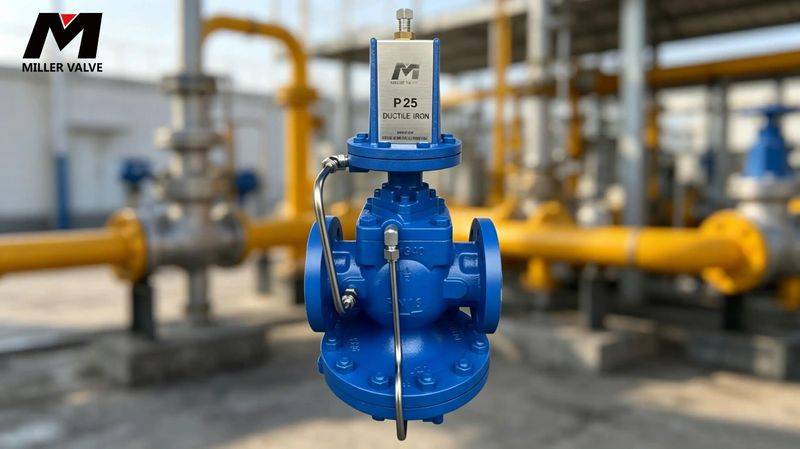
Miller import pressure relief valve
Modus operandi: reduce upstream high pressure media to set down downstream pressure by auto-regulating openness。
Typical application scenarios: vapour heating tube network, gas relief stations, plant gas supply systems。
Selected elements: pistol and thin sheet; focus on import pressure, export set pressure and flow range。
Miller's import pressure-relief valves are highly accurate and operate in a stable manner。
Port valves: experts in low resistance complete breakout
Motion of work: all or all of them are reached by vertical lifts or drops。
Typical application scenarios: drainage works, long-range oil pipelines, fire systems。
Advantages and disadvantages: the advantage is that there is almost no resistance to movement at full-time hours; the disadvantage is that the rate of release is slow and inappropriate for throttle。
Selective elements: wedge or parallel valves; priority for large-calibre items。
Viii. Cut-off valves: high-pressure adjustments and switches
Modus operandi: valves move along axes to change circulation area。
Typical application scenarios: high-voltage steam pipes, boilers for water control, small caliber tubes requiring frequent regulation。
Advantages and disadvantages: the advantage is that the reconciliation function is good and the seal is reliable; the disadvantage is that the flow is high。
Selective elements: fit for medium-high pressure, small-calibre settings。
Ix. Stop valves: protection against media reversal
Motion of work: the medium is automatically opened as it moves towards the flow and is automatically closed as it reverses。
Typical application scenario: pump export protection, compressor export, prevention of string pressure and return flow。
Selective elements: spin-starter, lift-down, butterfly stop valve; selection based on installation location and medium flow speed。
General guidance for valve selection specifies the parameters (media, temperature, pressure, flow, particle content) for determining functional needs (regulating, switches, stop, pressure reduction, etc.) for the selection of drivers (electricity, aerodynamics, manual) matching materials with sealed forms (corrosion resistance, high temperature resistance), industry reference standards (api, ansi, gb, etc.)
Common selection error zone: use of lock valves, neglect of the effect of pressure differentials on control valves, oversized or too small. It is recommended that professional teams be consulted in conjunction with actual work conditions。
Summary
Proper understanding of valve applications and mastery of selection methods are key to industrial fluid control optimization. The united states miller valve offers you a full range of high-quality solutions based on years of import valve experience。
Selective proposal: import valve-specification-regulating valve, ball valve, how to select a butterfly valve - miller valve factory
Faq common question answer 1. What's the difference between the control valve and the cut-off valve
The control valves are used primarily for continuous precision flow, pressure or temperature regulation, suitable for the automated control system; the cut-off valves are combined with switches and certain regulation functions, but the reconciliation is less precise, mainly for high pressure differentials, small calibres and relatively high resistance。
2. Is the ball valve suitable to regulate flow
The ball valves are used mainly for fast switches and are not recommended for long-term traffic regulation. Long-term throttle can cause damage to the spherical and sealed surfaces and affect the useful life. When precision regulation is required, the choice of the control valve is recommended。
3. What type of hydrophobic valve should be chosen for the vapour system
Vapour systems are selected according to pressure, drainage, back pressure and location of installation. It is commonly recommended to float (large drainage), thermal power (high temperature high pressure) or bellow (energy-efficient). Miller's imported water-drowsing valves may provide professional advice based on the work condition。
4. Can the butterfly valves be used in high pressure settings
Ordinary butterfly valves are not suitable for high pressure situations. Tripolar hard-sealed butterfly valves can be used in a medium-pressure environment with the advantage of small size and light weight, provided they are selected strictly according to the pressure level。
Why is the valve not suitable for regulating traffic
In a semi-opening state, the valve plate is strongly flushed and vibrated by the medium, which can easily cause damage to the seal surface and deformation of the valve pole. The valves therefore apply only to full- or closed condition。
6. How can electric or gas-enabled implementing agencies be selected
To recommend an electric implementing agency in situations where power is available and where high precision control is required; to recommend an implementing agency for gas in situations where blast, tidal or on-site gas sources are sufficient. The miller valve offers two options。
Original link: guide to the selection of import valves | regulation valves, ball valves, butterfly valves, drain valves, lock valves, cut-off valves, application of scenery and selection models
More valve expertise, please follow the latest developments in miller valves