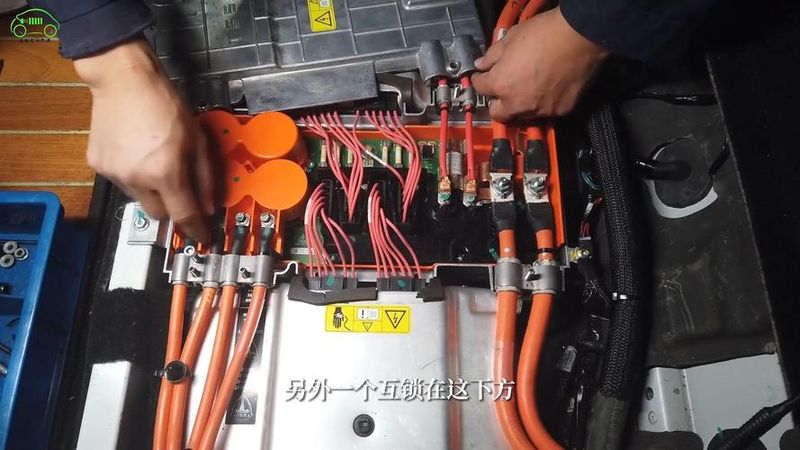
In the course of car use, engine outbursts can be said to be one of the problems that we often encounter, especially in the early stages when drivers and new cars start grinding together, because there will be a lot of start-ups and slack outs as a result of operations. The failure of the vehicle itself, in addition to the failure of the operation, can cause the engine to go out of fire, and the hazards are usually greater. So what are the common malfunctions that cause the engine to suddenly shut down? Long written early warning: technologists are invited to read the content, and xiao bai to read the subheading. (note: this paper takes the example of electric-jet gasoline engines)
Electronic control fuel jet systems are at the heart of the problem
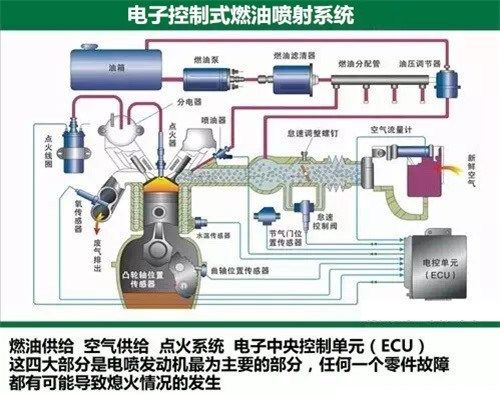
[the rationale] provides fuel through fuel supply units and mixs it with clean air provided through air supply units into flammable gases, enters the gas cylinder before it is ignited by the ignition system and finally discharges the exhaust gas, the entire process being carried out under the supervision and coordination of the electrical control unit (ecu). The four parts of the structure are also the most important part of the electrically controlled jet engine, and failure of any of the components could lead to a fire outburst。
And then we'll start with these four parts of the structure, and we'll find out about all these failures。
First level of fire suppression: fuel supply
The root cause of the fire's out: fuel traffic
Method of elimination: regular petrol station-compliant petrol added, maintained on time
During normal operation, the first fuel pump in the fuel supply system is required to pump fuel out of the tank, enter the fuel distribution pipeline through the fuel filter, and then ejected by the nozzle to form a gas mixture. In our consultations, we learned that most of the fire outbursts were due to the failure of this first link, and we will start with the issue of fuel supply systems。
Through this structure chart of the fuel supply unit, we can clearly see the flow of fuel when the engine works: through electric fuel pumps, fuel filters, into the pipeline and finally from the jet. During this process, fuel pumps and nozzles are the most vulnerable to failure。
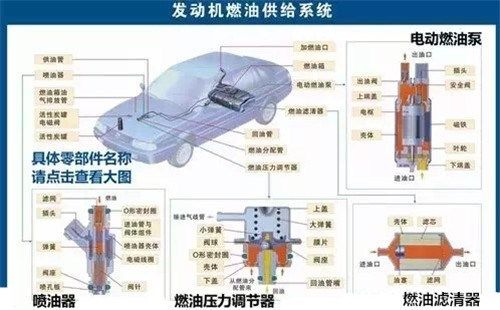
The utility of the electric fuel pump is to pump fuel from tanks into the pipeline to provide the required fuel for the oil-jet systems. Usually it is immersed in gasoline, which at the same time is used to cool, with frequent failures due to congestion caused by impurities in gasoline and burning due to high temperatures caused by inadequate gasoline. In order to reduce the occurrence of such incidents, we would need to add gasoline to the official gas station in the course of the vehicle usage, along with fuel in a timely manner, so that, to the extent possible, fuel levels do not fall below the red line。
The petrol nozzles used in the electric jet engine are electromagnetic and the pressurized gasoline is pumped out of the vent by the magnetic field of the electromagnetic wire. Common malfunctions include tarp stickyness, jamming, leaking, short circuits of electromagnetic wires, break-ups and failures caused by ageing. This requires that, in addition to adding fuel for the fuel to meet the standards, we be careful whether the petrol filter is still working。
In addition, other problems in the fuel supply units that may lead to fire outbursts are the dirty nature of the fuel filters and the blocking of vehicle roads。
Second level of fire suppression: air supply units
The root cause of the fire out: the air-saving doors blocked
Method of elimination: maintenance on time
Air supply units and oil supply units are equally important, and their smoothing is also essential to ensure a normal proportion of gas mixed gas, in which air passes through air filters, air flow meters, gas-saving door inducts, gas inducts and ultimately into the cylinders。
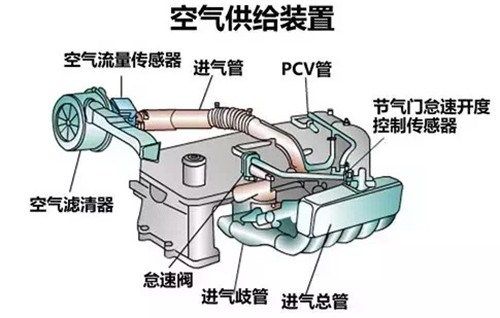
Air supply units are undoubtedly the most important components and, at the same time, the most problematic. In most of the 4s stores, the first to be inspected after the fire had been shut down was the air-saving door in the position of the gas throat。
The function of the gas-saving door is to control the amount of combustible gas entering the cylinder by adjusting the size of the opening, the image of which is the throat of the engine. Due to the largest air flow, small space and low gas temperature of the gas-saving doors, this part is the most easily condensed impurity and therefore needs to be cleaned up according to a given cycle. If the air-saving doors are blocked by impurities, this will result in a lack of sufficient inflow and a lack of speed. However, frequent cleaning of gas-saving doors, which cannot be fully resolved, is generally a malfunction。
There's a leak in the entry tube, which leads to a lack of speed or even a fire, and when such a failure occurs, the vehicle will shake strongly. Move
Before a combustible mixed gas enters the cylinder, it also passes through the gas tube. In the gas intake process of natural gas-inventing engines, the gas is inhaled primarily by vacuum (also known as negative pressure) within the tank. When leaks occur, a vacuum is passed over and sufficient gas cannot be inhaled, which leads to a weak engine, difficulties in start-up, a lack of speed, a failure to meet standards of release and even a failure to fire. When a vacuum leaks, the behaviour is intensely shaking in the vehicle, making such failure easier to judge。
In addition, other problems in air supply facilities that may lead to fire outbursts are the fact that the air cores are dirty and the engine is not well fed。
No fire out, third level: ignition system
Reason for burnout: spark plugs are not normal
Elimination method: replacement of spark plugs with useful life
When the gas mixed gas normally enters the gas tank, there is still a fire outburst, and there is a high probability that the ignition system will fail. The function of a ignition system is to generate electric sparks that generate sufficient energy between the pyrotechnics on a regular basis in accordance with the order of work in the cylinders. Of course, the central part of this is spark plugs, which are also the most vulnerable to failure in the ignition system because they work in high temperature and high pressure cylinders。
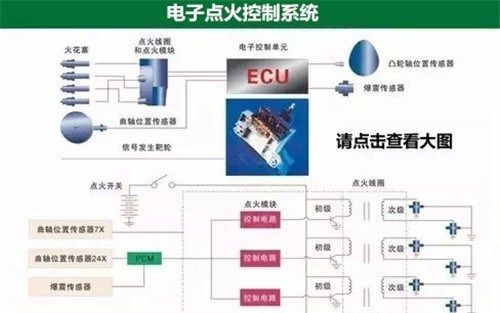
Map of the electronic ignition control system
In the electronic ignition system, the electronic control unit acts as a control ignition time, and because of its importance and the extent of its application in the engine, we will then make a separate statement, which will be focused on the failure of the spark plug, which will lead directly to failure to ignite。
Pyramid plugs and their common malfunctions: general life of 20,000 to 30,000 km and platinum pyramid pyramid pyrotechnic plugs of 100,000 km
We know that when the gas is compressed near the end point, the combustible hybrid gas is lit by spark plugs, so when the spark plugs fail to “strike”, it naturally leads to the burning of vehicles. We have learned that the usual spark plug failure is the failure of electricity, the irregularity of the fires and the failure of electrodes. Typically, in the case of fire suppression caused by spark plugs, it would be preferable to deal with them thoroughly by replacing them, or, when they are not convenient, by cleaning the electrodes, by providing a temporary solution for emergency measures to adjust the length of the central electrodes。
In addition, in addition to the failure of the spark plugs, the damage to the generators, the faulty or short circuits of the circuits and the failure of the batteries will result in a poor ignition resulting from the absence of electricity, which will eventually lead to a fire out. In such cases, the horn may be used to determine whether electricity is available and to check if the belt is too loose or broken。
In addition, other problems in the ignition system that may lead to a fire outburst are the failure of the firing wire。
End-of-fire fourth level: electronic control systems
Reason for shutdown: esu protective oil loss due to sensor failure
Method of elimination: checking the normal operation of sensors and sensors
The role of electronic system players is becoming increasingly important in electric jet engines. Its electronic control system consists of a sensor, an electronic control unit and an implementer, the core component being an electronic control unit. The main sensors are the air-saving door position sensor, the oxygen sensor, the curved axis position sensor, etc., and they feed the signal back to the eu, which in turn gives operational instructions to the central jet, etc。
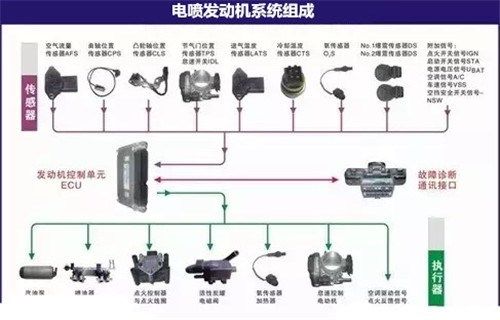
But while the eu is increasingly burdened with the task of monitoring the condition of vehicles, problems also arise: when a sensor fails, the eu will not be able to properly judge the current situation, leading to protective measures such as the cessation of oil spills, leading to a fire outburst. In the case of sensors, the most important ones are the air flow sensors, the air-saving door position sensors, and the oxygen sensors that are most likely to cause a fire out at the time of failure. Usually, when the components fail, the owner has difficulty in handling them, and usually the computer records the failure code, followed by the maintenance staff to perform troubleshooting and maintenance。
When a malfunction occurs, there is no perception or error of current air flow in the air flow meter, which prevents the eu from making the correct estimate of current air intake, and in the protection of the engine, the eu will stop the fuel supply system from spraying the engine, which explains why the engine shuts down when the air flow meter is not working properly. Similar aerobic sensors have also been found to cause the failure of the euu to stop or abnormally provide oil, causing a fire out。
The function of the gas-saving door position sensor is to convert the position or opening of the gas-saving door into a telecommunications signal, which is transmitted to the electrical control unit as the basis for the determination of the engine's operating condition and for the control of the amount of oil spray at the opening of the gas-saving door. As it is in itself a friction and loss-prone item, the following problems arise in the event of failure or poor circuitry: motor start-up difficulties or ease of fire, slowness, poor acceleration, etc。
In addition, other problems in the electronic control system that may lead to fire outbursts include short circuit connections or break-ups, programme design errors, etc。
We have learned what the engine failure would cause, what harm would it cause, and what methods should we use to avoid dangerous accidents in case of sudden failure
The danger of turning off the engine
In addition to the loss of power, a vehicle's shutdown will be accompanied by the failure of vacuum enablers and the failure of most of the vehicle's types to function, which means that the vehicle's steering wheel and brakes are rendered unhelpful, as evidenced by the heavy (and even misleadingly locked) turn-over of the vehicle, as well as by a significant decline in its brake performance。
The damage may not be very serious if the fire is shut off while the vehicle is not fast, when the vehicle stops after the fire has stopped, and most of the consequences are “winning” for the rear vehicles before it is re-started, and the serious point may have to be put on your backbar and someone else's foreground; but the consequences may be very serious if the fire is stopped during the course of the drive or during the emergency brake, when brakes and diversions are significantly reduced, and when the driver suddenly panics, that serious accident may be unavoidable。
We're in the middle of an emergency
In case of a fire out of a vehicle, we can take the following corresponding measures to avoid danger:
1. Lighting out occurs at a low speed: the vehicle will not be fast at a low speed and will need only be lit again。
Note: the automatic block type requires the vehicle to be mounted (p) or blank (n) before the engine is activated。
2. Discontinuation of the engine when sliding: first, do not panic and hold a steady direction with a few brakes, at which point the manual blocker can step down and move to the appropriate block, and then unzipped to pick up the engine at the speed of the car; the automatic blocker needs to hang the blank (n) before restarting the engine. Many of the automatic blockage types can only be lit at the p-stop, so that, depending on the circumstances of the road, the vehicle can also be stopped by the side of the road and re-fired。
Caution: be careful not to hang in the wrong position because of tension。
3. Discontinuation of the brake: first, do not panic and stabilize the direction to increase the power level, avoid as much as possible the obstacles ahead, depending on the road, and start the engine once the safety zone has stabilized。
Caution: as a result of the loss of turn and brake power, additional force control is required and the steering wheel is not mistakenly locked to the point; if brakes are being used when the fire is out, vacuum enablers will still work if the brakes are not lifted。