The date trees, which are the tree species of the country's special economy, are of ecological and economic value and are widely grown throughout the country. They are important cash crops that contribute to the development of rural industries and boost the incomes of farmers. The disease, which is a very devastating systematic infestation in the production of date-trees, commonly known as the “tree-trees” “split disease”, results in a sharp decline in the yield and quality of date-trees, and in the death of the whole plant within three to four years. It also spreads rapidly within the date-plant, causing the collapse of large areas of date-palms and causing serious economic damage to date-farmers. An in-depth analysis of the causes of date-magnosis and the development of scientifically effective integrated prevention and treatment measures are essential to ensure the healthy and sustainable development of the date-tree industry。
I. Causes of date-magnosis
(i) pathological factors
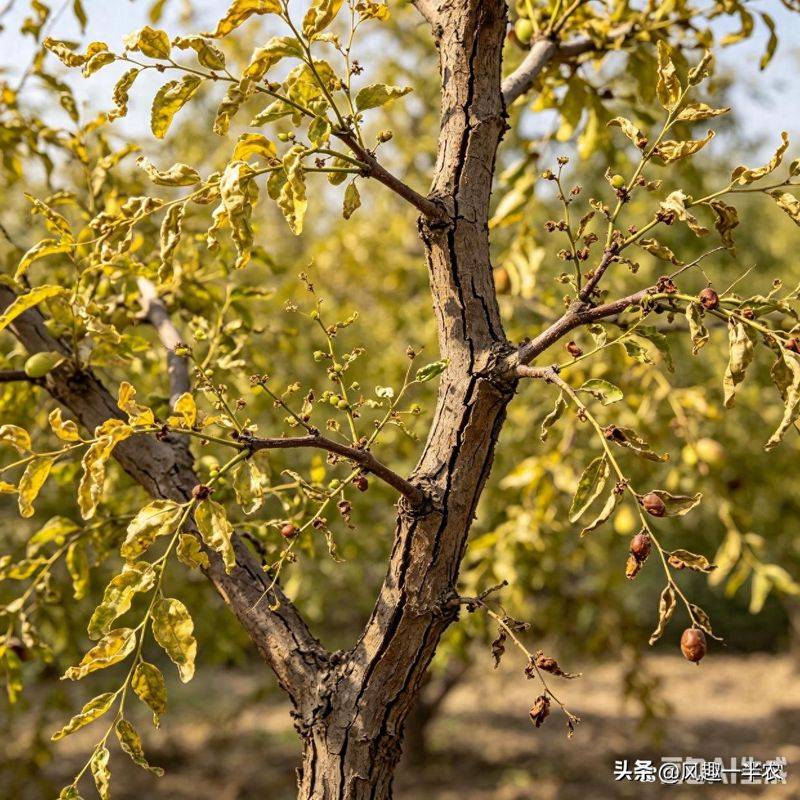
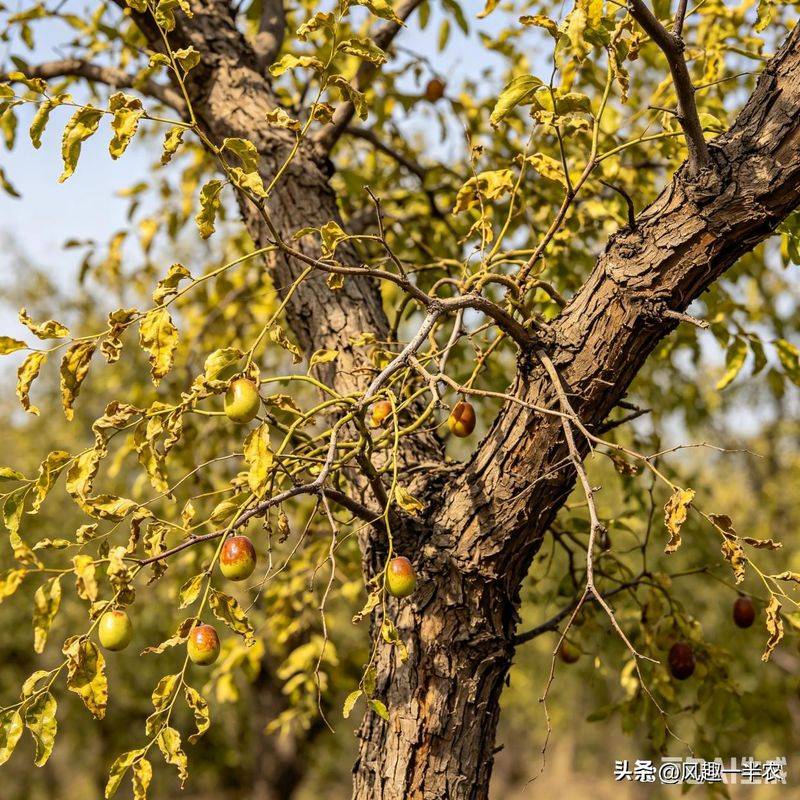
The pathogen of the date-psychopathosis is the date-psychopathogen, a type of non-cell-walled original nucleus that is born within the sifting cells of plants, small in size and simple in structure and unobservable in the eyes. The pathogen is growing in the date tree, spreading through the scaffolding tissue to all parts of the plant, disrupting the normal physical metabolism, nutrient transport and growth function of the tree, disrupting the hormonal balance of the plant and causing typical pathologies such as leaf-croping, peanut regraft, etc., which are the core causes of date madness. The properties of the implants, which are sensitive to tetracyclic antibiotics and insensitive to penicillin-type drugs, also provide a basis for subsequent drug control。
(ii) means of dissemination
1. Media insect transmission: under natural conditions, the most important mode of transmission of date-psychiasis is insect transmission, and china has a key vector of transmission in the form of haze and diaphragm. When sapling on a sick date tree, the plant is inhaled into the body, and the pathogen is transferred to a healthy date tree for food once it has grown in the tree, and the plant is injected into a healthy pelvis by mouthpiece to complete its transmission. The ability of the leaf to eject and the rate of reproduction directly affect the spread of date-to-date madness, and the high-temperature dry environment is conducive to leaf-to-leaf activity, which can significantly accelerate the spread of the disease。
2. Non-sexual reproduction: the main means of transmission for people with date-psychiatry are the non-sexual reproduction methods such as date-palming and root-spreading. In the event of the selection of the remnant, sprouts or sprouts with the mother strain, as well as the use of the lumber with the disease, and the transfer of the root seed of the disease, the pathogen is transmitted directly to the new plant with reproductive material, leading to the birth of the new date seed. This mode of transmission is highly subtle, with no visible symptoms in the early stages of cultivation, and is highly susceptible to neglect as a new source of disease in dates。
3. Cross-dispersion of roots: in the soil of date-palms, the trees adjacent to the date are staggered, in contact with each other, and the ploughing bodies within the seedlings of the disease can be transmitted to the healthy plant, through the tissue of decorative tissues connected to the root line, thus spreading to the whole plant, resulting in the occurrence of the disease of the date-plant. This mode of transmission is more common in dense date-planting, soil-heavy and dense plots。
(iii) plantation management and environmental incentives
1. Cultivation management has been characterized by a chronic lack of scientific stewardship, single and preferential application of fertilizers, neglect of the application of organic and micronutrient fertilizers, resulting in soil sheeting, reduction of fertility, weakening of date trees and a significant reduction in resistance to diseases; late trimping, over-breeding of branches and poor ventilation conditions in the garden, creating an enabling environment for leaf scavengers and disease infestation; incomplete cleaning of field branches, strains and leaves, long-term residuals of pathogens in the park, and persistent infatuation of healthy plants。
2. Different varieties are resistant to disease: there are significant differences in the resistance of different dates to date-related madness, with traditional master varieties such as golden date and mother-to-child dates susceptible to disease, while some of the acid-to-tree varieties and the winter-tree hybrids are more resistant to disease. The blind cultivation of susceptible varieties in production and the lack of targeted protection measures can increase the incidence and spread of date-magnosis。
3. Unsatisfactory environmental conditions: arid, poorly drained, salinized plots of soil, impaired growth and development of date trees, weakness of trees and vulnerability to pathogens; climatic anomalies, such as continued high spring temperatures and high humidity of summer and autumn rains, which are conducive to the incubation and reproduction of vector leaves, as well as accelerating the growth and spread of the plant in date trees and increasing the probability of disease。
Ii. Integrated measures for the prevention and treatment of the disease
The prevention and control of date-based madness is based on the principles of “preventive, integrated, probative and probative”, based on a combination of agricultural, physical, chemical and biological prevention, cutting the transmission route from the source, increasing the position of the tree, controlling the pathogen and achieving comprehensive prevention and control。
(i) source control, fostering disease-free trees
1. Strict quarantine of trees: the establishment of a sound system of quarantine of trees, the prohibition of the transfer of trees, ears and berylliums from areas where there has been a resurgence of date disease, and the elimination of the flow of disease-bearing materials to new dates. In the case of imported trees and ears, pathogen detection is carried out using dapi fluorescent dye technology and pcr technology to ensure replant and use without disease。
2. Cultivation of anti-toxic trees: selection of disease-resistant acid-tree varieties, high-quality winter-tree varieties as mackerel wood, selection of healthy non-pathological mother to collect ears, development of a combination of heat-treatment techniques using stalk tissues, and breeding of detoxified dates. The nursery is far from the old dates, sanctuaries, trees, oil pines, etc., so as to avoid infection during the nursery period and to protect the health of the date seeder from the source。
(ii) agriculture prevention and treatment to enhance tree resistance
1. Strengthening management of soil fertilizing water: improving soil fertilization, increasing the application of decomposed organic fertilizers, agricultural fertilizers, a reasonable mix of nitrogen, phosphorus, potassium and iron, zinc and boron, avoiding the application of nitrogen fertilization, increasing soil fertility and nurturing robust trees. During the rainy season, drains are dug in a timely manner to avoid the accumulation of water in the gardens and to prevent the decay of the roots; during the dry season, the irrigation is duly irrigated, the date tree is provided with normal water supply and the plant is more resistant to disease。
2. Scientific shearing and clearing of gardens: rationally trimped date trees, obscured branches, long branches, thin branches, improved ventilation in the gardens and damaged the breeding environment of the leaves. Every winter, the garden is completely cleaned up of its branches, leaves, fruit, seedlings, which are brought out of the park for burning or deep burial, reducing the residual disease in the garden; the growth season is regularly visited to detect the early disease and to remove it from the plant at any time。
3. Reasonable control of loads: based on the age and direction of the date tree, scientific fruiting, rational control of the amount of the result, avoidance of the weakening of the tree due to the excessive hanging of the date tree, reduction of resistance to disease, and achievement of a stable balance between production and conservation of the tree。
(iii) physical and biological control to reduce vector insects
Physical control: use of foliage for lighting, use of vermin lamps, cedars, entrapment to reduce insect density in date gardens; pre-cubation of spring foliages, removal of old beaks from date trees, destruction of insect eggs to winter sites and reduction of the resource base。
Biological control: protection and use of leaf-based natural enemies, such as wedges, grasshoppers and parasitic bees, to achieve natural control of leaf-based herds by creating an environment suitable for natural enemies to survive in the field; priority is given to biological-based pesticides, reducing the harm of chemical pesticides to natural enemies and building an ecological control system。
(iv) chemical control, precision control of disease
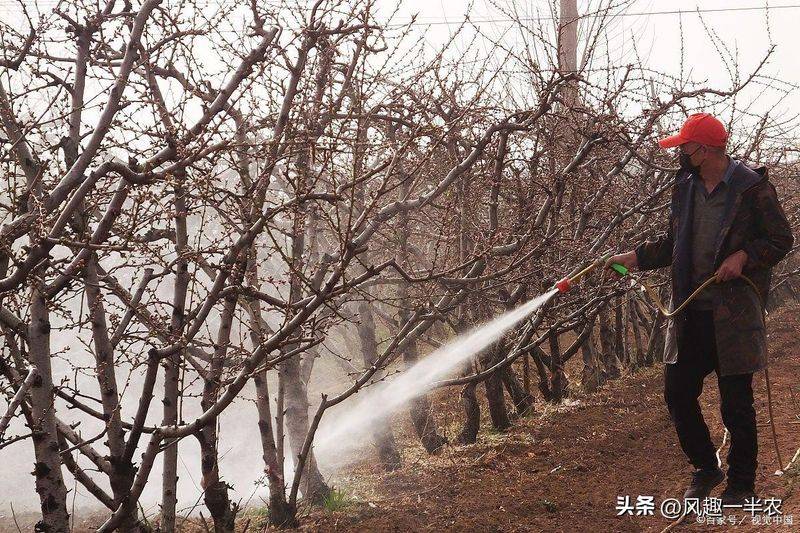
1. Vector insect agent control: the critical period of foliage control, during which the spring date tree sprouts, before flowering and after flowering, is sprayed separately to prevent insect infestation. An alternative formulation, such as 10 per cent aphid humid powder 3,000 times the fluid, 20 per cent aphid suspension, 80 per cent dichlorvos emulsion 2,000 times the fluid, is applied equally throughout the garden, with a focus on the inside of the tree canopy, the stem and the surrounding weed. • co-ordinated pharmaceutical control of the plant in the park, in the case of sauna and the plant in the form of leaves, so as to eliminate the source of the insect。
2. Patient treatment: in the case of lightly ill date trees, the treatment is carried out in the form of tree-dry pharmacists during spring germs or fall tree fluids. In the stem borehole, 0. 1 per cent of tetracyclic and thiocin pharmacological fluids are injected to control the growth of the plant according to the thick volume of the trunk; 0. 2 per cent of the iron chlorinated solution can also be sprayed to mitigate the eutrophic symptoms and delay the development of the disease。
(v) complete elimination of disease strains and eradication of the spread of pathogens
In the case of date trees with severe and no healing value, the trees are removed in a timely and thorough manner, so as to clean up the whole root system and avoid the residual root system with its roots. Patient tree pits can be sterilized with lime and, in the short term, the replanting of date trees can be avoided, and other crops can be replaced; when replanting the tree trees, the non-septic detoxification seedling must be chosen to prevent re-infection. A single disease has been detected, which needs to be completely removed from the base of the branch, and a microbicide has been painted to prevent the spread of the pathogen。
Concluding remarks
The occurrence and prevalence of date-psychiatry is the result of a combination of factors, including pathogens, vectors, plant management, environmental conditions, and so on. It is difficult to achieve the desired results with a single response. Production should be based on the cultivation of disease-free trees and intensive management of cultivation, with the cut-off route at its core, with the protection of medicinal control and the clean-up of strains, the continuous upgrading of date tree positions and the precision of control vector insects and pathogens. At the same time, day-to-day inspections of date-palms are being strengthened to ensure early detection and prevention, to minimize the damage caused by date-palm madness, to ensure the steady development of the date-tree industry and to help increase the productivity of date-farmers。
In the field of prevention and treatment, the programme needs to be adapted flexibly to local climatic conditions, date gardening patterns and the incidence of disease, so that it can be adapted and applied with precision, while training in date-farming techniques is strengthened, scientific prevention and control is disseminated, field management is upgraded, the incidence of date-bearing madness is fundamentally curbed and the production of date-planting industries is boosted。