Strong corn "china core"
Corn is currently the most grown crop in china, with the largest total yield and the highest market value of the crop, and is the main focus of intense competition among the international crop giants. A major push for innovation in maize farming is of great importance for ensuring national food security, feed supply and seed security。
Zhao, the chief expert of the corn institute of the beijing academy of agroforestry, has long been involved in maize research for 36 years and has led a team of researchers to obtain patents on national inventions and new varieties of plants over 200. They have “written” the paper on innovation in maize farming on the ground, creating selected and high-quality maize seeds that are not only widely grown in the country, but are also being introduced and promoted in some “across the road” countries, making an important contribution to food security in china and globally。
— editor
After centuries of development since its introduction into china in the sixteenth century, maize has become increasingly prominent in agricultural production in china. By the 1950s, maize had developed domestically as the third food crop after rice and wheat. In 2008, maize exceeded the sowing area of rice and became china's first food crop. In recent years, china's maize cropping area has remained at more than 620 million acres per year, with maize production accounting for 40 per cent of total annual food production。
A significant increase in production is one of the central manifestations of the development achievements of the maize industry. The single production of maize in china increased from 313 kg per acre at the beginning of the century to 421 kg per acre in 2020, and gross production has continued to increase since 2003. The increase in maize production is the result of a combination of factors, such as varieties, cropland, climate and planting techniques, in which improved and innovative varieties play a crucial role, contributing more than 40 per cent to the level of production。
As a maize researcher, i and the team have been working for many years on maize seed innovation, breed breeding, seed industrialization and the creation of a “fingerprint” bank for breed molecules. Since then, we have produced more than 100 new varieties of maize in series and have developed and scaled up industrial applications, with a cumulative cultivation of more than 300 million acres. We have played an important role in china's agricultural production and have contributed appropriately to enriching maize varieties, boosting food production and increasing farmers' incomes。
Corn for seed grains -
I've grown the largest area under cultivation. Rice
In 1992, it was my turn to study maize. At the time, i had completed the research phase of the first six years of rural studies and returned to the institute. During this period, i have successfully completed many of the scientific tasks entrusted to me by the unit, and i have also learned the importance of good varieties and good seeds for increasing food production and farmers' incomes. Since then, i have shifted the main course of research to maize seed innovation and breeding. In 1997, the beijing academy of agroforestry officially established the corn research centre, and i was appointed director, leading several technologists into a difficult entrepreneurial journey. With the spirit of hard work and the courage to continue to struggle for innovation, i led the research team of the corn research centre to form the two “kyoko 2” “kyoichi 13” species in 2000 and to be validated by beijing city to demonstrate it in large areas of kyoto. Our research on maize breeding has yielded preliminary results。
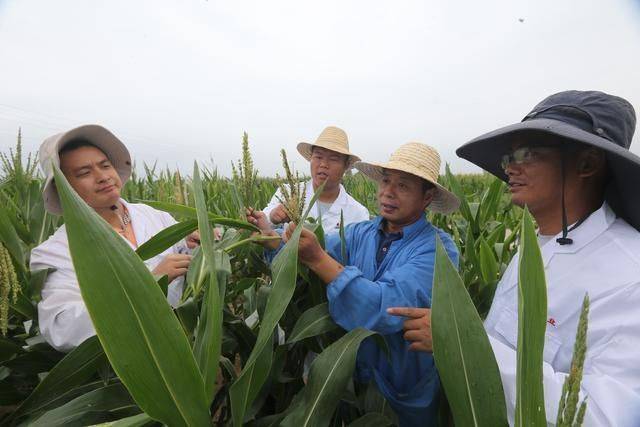
In the new century, my team of maize scientists has largely kept pace with the identification of five or more new varieties of maize each year. At the same time, we are acutely aware that, although some 90 per cent of the country's maize varieties and seeds are produced in the country, a large proportion of their home-grown varieties are derived from genetic material from abroad, and that in mixed group selections, there is a large proportion of those who follow the model of foreign machinations and face “crawling” concerns. We must follow the path of autonomous innovation by choosing new materials and personal relationships of corn varieties with autonomous intellectual property rights, and by exploring a hybrid model with chinese characteristics。
Through extensive research and practice, we have found that foreign varieties have a clear advantage in terms of their production potential, but that there are significant deficiencies in resilience, such as heat tolerance, disease resistance, etc., and that corn “yellow-modified” from native chinese farmers' varieties is better adapted to local climatic and soil conditions and has a better tolerance for a wide range of ills and non-living ills. As a result, we have established the idea of breeding groups that combine the “adaptability” of chinese yellow-modified herds with the advantages of the “abundance” of new varieties abroad, and have focused on the need for green production to counter pest-resistant drugs, drought-resistant water conservation, and infertile diets。
Heavenly work. After a long and sustained effort, we have created new varieties of intellectual property, such as kyoto 724 “kyoto mc01”, and new core species “-x”, which have truly led to autonomous innovation. On this basis, we have been further innovative in exploring new hybrid models of “x-x-yellow” and in selecting new varieties of good maize, including “kyoko 968” and “kyono agriculture 728”。
The "kyoko 968" combination of high-yield, high-quality, multi-resistance and multi-faceted excellence that reduces production costs and is in line with current trends in green agricultural development, such as fertilizers, drug and water conservation, is well received by farmers. At present, “kingko 968” has become china’s largest crop of maize growing in the spring, with its cumulative expansion already exceeding 100 million acres and an increase of more than 10 billion kg of food production. “kyoko 728” is china’s first large-scale harvest of wheat suitable for the yellow sea, breaking the “barrier” of “moderate seed grain and high production”. Multipoint tests and large-scale demonstrations show that the range is not only pre-maturized, resistant to ad hoc harvests, but also drought-resistant and highly adaptable. Its varieties have been selected as one of the leading varieties of the ministry of agriculture and rural development, as well as the landmark results of the country's major offensive species, as well as one of the main drivers of the collaborative agricultural development of kyojin and one of china's 10 major new products in rural agriculture and agriculture (2020)。
And corn in cyanide
Food for the big show
In recent days, nobel prize laureates of literature have said that, according to weibo, he had contracted a farmer friend in qingdao to experience a joint harvester to harvest forage, accompanied by a video of it, bringing in a large number of members of the internet. On video, it was noted that the joint harvester was operating in a large area of green oiled maize land, and that the green powder sources of maize leaves and straws that had been crushed by the harvester were being dumped in trucks operating with the harvester. The harvest is said to be the corn species used as green feed, i. E. Blue corn. Green corn is the whole crop of corn that is cut and fertilized for grazing livestock such as cattle and sheep. This type of maize is an essential feed for cattle-raising, especially in the dairy industry. China is currently growing about 35 million acres of corn a year and has significant potential for development。
The production of high-quality whole-stocked maize needs to be based on good green-stored maize varieties, which should be characterized by high yields, good quality, invertebrates, resistance to multiple diseases, long green seasons, and preferably generic varieties, with good seed grain production, high biological production and green storage quality, both as seed grain maize and as blue corn。
In order to meet the domestic demand for the production of green corn, our team produced a series of corn-stored varieties, such as "kyoko blue 516" and "kyoko green 932". These specially designed green-stored maize varieties, which not only produce high biological yields and have a long harvest period, but all indicators such as dry matter, starch content, etc., reach one level, are typical representatives of specially designed blue-stored maize, with an average acre production of about 5 tons. A series of corn-stored varieties, such as “kyoko cing 516” “kyoko cing 932”, have been given priority by a number of large-scale growers and have become visible in food conversion practices。
Fresh corn..
Upgrade type and quality
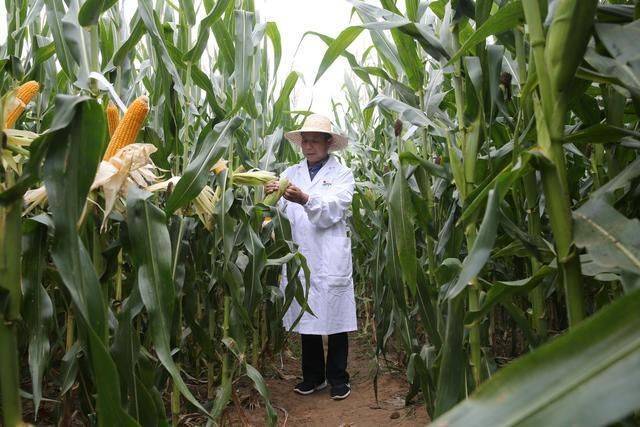
In recent years, the area and variety of fresh maize cultivation in china has continued to increase. Fresh-food maize has become a corn restructuring with new efficiency points of about 25 million acres. My country has become the world's largest producer and consumer of fresh maize. As the standard of living improves, there is a higher demand for fresh maize foods, colours, quality and so forth. Through technological innovation, more nutritious, better-eating, better-looking and better-quality varieties of fresh maize have become higher targets pursued by breeders。
Since the adoption of the national review in 2006, the “kingkogu 2000”, which our team has cultivated, has been the most widely cultivated and cultivated species of fresh corn in the country, with a cumulative total of over 100 million acres, leading the breeding and industrial direction of fresh corn. In addition to meeting domestic needs, kyingkogu 2000 has also emerged as a dominant species in countries along the south-east asia “one way”, such as viet nam. In viet nam alone, more than one million acres of “kinko 2000” are grown each year, accounting for over 60 per cent of the area under cultivation in viet nam。
Following the "kingkogu 2000" we have further intensified our scientific research efforts in the direction of sugar and sweetener and sweetener, in accordance with diversified market demand, and we have selected such varieties as "agricultural jade 368" "agriculture 336" "kingkogu 768". They combine the advantages of sweet corn “sweet, condensed, fresh” and corn “sweet, sponge, perfume”. In addition, the sweet maize variety "kyokosu 608" is more likely to feed directly, making corn as good as fruit。
In 2020, the "agriculture 336" varieties of sweet and high folic acid corn, which were also validated through the four main production areas of the country, north east china, hwang huai sea, south-west china and south-east china, could be grown from north to heilong river and from south to south china island, became china's most widely validated varieties of sweet and folic acid corn, which were hailed by industry experts and consumers as the "best-eat corn" and were selected for inclusion in the "ten major new products (2021) in agricultural rural china"。
Today, good corn varieties such as “kinko 2000” “agriculture 336” are not only the main choice for the people's table, but are also good helpers for farmers to become rich and continue to lead the country to upgrade fresh maize products. Its products are exported to more than 50 countries and territories around the world, and the roasted corn in korean streets, supermarkets in many countries in europe and the united states are all familiar with the image of “kinko” where hundreds of millions of “kinko” fruit-pee-processing products are exported each year, increasing the international competitiveness of chinese corn。
“class id” -
Build dna fingerprinting system
The thousands of maize varieties that are identified by the appearance of the varieties, and the hard-to-earth observations, even by the breeders themselves, are difficult to distinguish, leading to the incidence of garbs in the market. It is therefore essential to strengthen intellectual property protection and promote the innovation of maize varieties, supported by precision detection techniques and the establishment of a maize “various identity card”。
Since 1993, our team has been conducting research on the authenticity and authenticity of maize using seed-sync techniques, and has been developing new molecular testing techniques in keeping with the times. The initial core quote combination method identifies core quote collections suitable for storage, authenticity and purity determination. Since the 13th and 5th, we have been able to develop high-density maize6h-60k chips that combine a variety of uses, such as maize species identification, authentication and molecular breeding, and to develop a high-throughput molecular identification technology system and standards for the development of a multi-cropping, multi-marked, multi-platform dna “fingerprint” database management system。
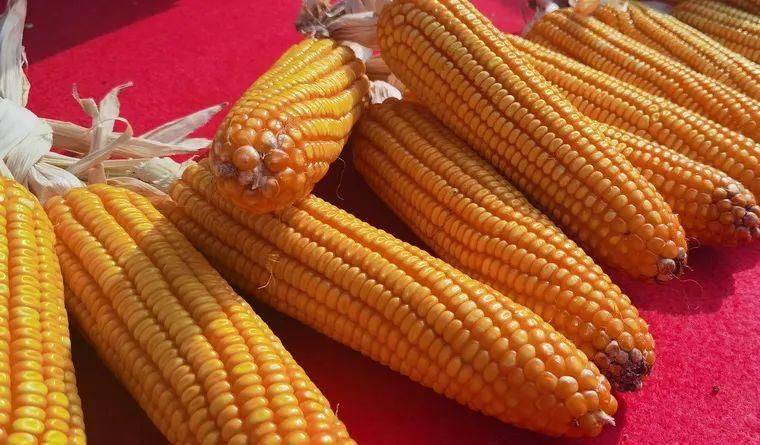
Specifically, we have developed a dna “fingerprint” molecular “identity card” for each species that have participated in the experiment and that have been validated, applied in production and applied for protection. At present, our database of corn dna “fingerprints” already covers more than 100,000 samples, the largest number worldwide. By comparing "fingerprints", we can quickly identify any maize species. For example, we take dna “fingerprints” from any part of the maize plant and can identify them within one day. This provides strong scientific and technical support for maize seed quality testing, species validation, business advocacy, pedagogical research, etc。
Seeds are known as “chips” for modern agriculture. We will continue to promote innovation in maize farming, promote the upgrading of maize varieties, further strengthen the “chinachip” of maize, and make a new contribution to the high production of maize, increasing farmers' incomes, guaranteeing national food security and increasing the international competitiveness of the chinese maize industry。
(the author is zhao, vice-president of the international union of agricultural scientists, chairman of the maize experts steering group of the ministry of agriculture, vice-president of the crop society of china, and chief corn scientist of the academy of agroforestry, beijing
Science and technology dissemination centre, science press, china in collaboration with the present newspaper
Three types of corn
Within the modern agricultural science system, maize can be broadly classified into three categories: seed grain maize, blue corn storage and fresh corn。
Seed grains of maize, ordinary corn, are currently the most cultivated in the country, reaching more than 90 per cent, and are used primarily as raw materials for food, feed and some industrial supplies。
Blue corn storage: all maize plantations, including corn ears, have been shredded and processed, and fermented to produce animal feed for livestock such as cattle and sheep, which is common in the north。
Fresh corn: vegetable corn, also known as vegetative corn, which is of a special flavor and has sweet, tender, crumbs, etc., compared to ordinary corn. This type of corn can be broken down into sweet corn, corn corn, sweet corn and corn corn。