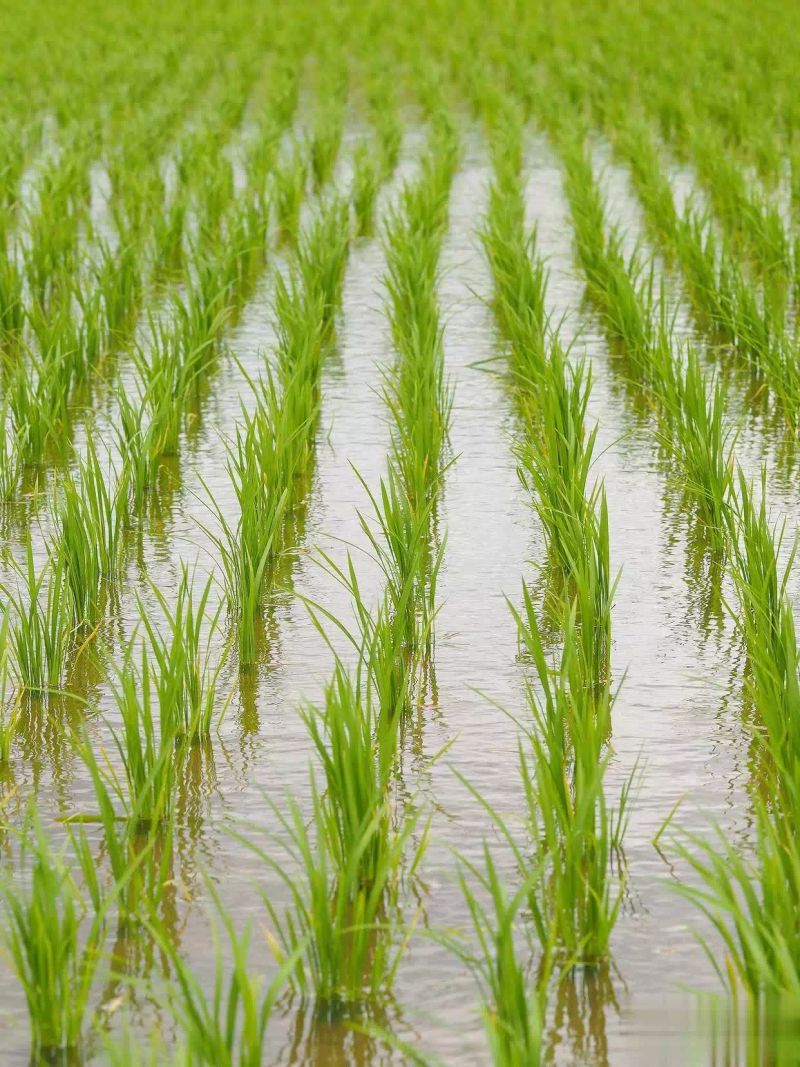
Wide and narrow strains are one of the core models of green, high-quality and efficient cultivation of rice, compared to the traditional long-distance planting model, which optimizes field group structures, improves ventilation, reduces field humidity and effectively reduces the occurrence of high-prevalence diseases, such as rice plagues and tattoos, while increasing the utilization of rice light energy, promoting root system growth and, ultimately, the production of acreage, within the framework of a stable total of basic seedlings. A large number of field practices have shown that broad and narrow cultivation patterns do not apply to all rice varieties, and that the characteristics of the varieties, their anti-reversible properties, their fertility, their ability to divide and so forth have a direct impact on their effectiveness. When varieties are not chosen properly, not only do they fail to take advantage of the model, but there may also be problems of under-grouping, low yield rates and a fall in production. Therefore, the requirement for the adaptation of varieties with clear and narrow cultivation patterns is key to ensuring that the cultivation technique works。
The core advantage of broad and narrow plant cultivation is the expansion of ventilation and the scaling up of individuals. The logic of cultivation is that it relies on good monolithic light efficiency and robust capacity to bridge the gap of reduced local community density with wider distances, and on a single high-yielding lead to high production of entire fields. Based on this core principle, the cultivation model has the most basic and central requirements for the strain structure of rice varieties. The rice varieties that fit the pattern need to have a compact and well-stretched strain, typical of a thick tubing, even distribution of the nostrils, straight-up of the leaves, and a faulty layer of leaves。
Leaf formation is a key indicator, and loose cape-type varieties are absolutely not suitable for broad and narrow-band cultivation. These varieties, which are wide, soft and downward, spread thinly and spread thinly, raise the problem of fratricular shades and silts, which not only do not improve the ventilation environment, but also lead to insufficient light, heavy humidity and pests on the ground. The compact varieties of straight narrow leaves, which do not overlap and are not perfunctory, are fully open to field ventilating light after long distances have been widened, and the central and lower leaves receive adequate light, with a significant increase in the utilization of the luminous area, while the field air flows smoothly and effectively reducing the disease base. At the same time, the strains must be strong, short-lived, and highly resistant. The growth space for single plants under the broad narrow strain model is larger, root systems are more developed horizontally and vertically, and plant biomass increases significantly, with late-stage slurries prone to inverting and loss of yields if the varieties are thin and resilient。
Second, broad and narrow-stamping patterns impose strict requirements on the division of varieties and on the ability to form ears. The traditional intensive planting model relies on high-density basic seedlings to guarantee effective sibling numbers, with lower requirements for the ability to divide varieties, and even weak fractioned varieties can be stabilized through dense planting. However, the size of the broad and narrow-stamp model is increasing, the number of caves is decreasing, and the overall base number of basic seedlings is slightly lower。
Appropriate varieties need to be characterized as “premature splits, medium-term stratification, high post-spilling”, with an effective rate of over 80 per cent. The use of broad and narrow-band cultivation, which is less divided and has a low oscillation rate, directly results in an insufficient number of effective ears per unit of area, highlighting the small size of the population, and overall production remains low even when the number of single oscillations is higher. In the case of medium-sized, symmetrical varieties, there has been a significant reduction in the number of non-functional fractions in a loosely growing environment, the concentration of nutrients for effective fractions, an increase in the degree of symmetrical alignment, a reduction in the number of empty granules, and a perfect combination of narrow planting targets for “sprouts, slender ears, freshness”. It is important to note that over-drive varieties are not suitable, and that such varieties produce large amounts of inefficiency in a liberal environment, consume field nutrients and cause field depression, contrary to their original purpose。
Thirdly, resistance to disease is a necessary condition for broad and narrow plant varieties. While this pattern of cultivation can reduce the incidence of diseases in the field as a whole, it is more dynamic and biomass-rich on a single plant, more nutrient-consumption, heavy slurries and more complex resistance to varieties. First, varieties need to have a good resistance to vilification, rice curricular disease and rice plague, increasing monogamousness and, when the varieties are less resistant to disease and endemic strains occur, while the field is well ventilated, the spread of single strains is faster, affecting overall production. Second, high-temperature resistance, low-temperature tolerance, wide field temperature differentials and more visible changes in ventilation are required, and when the spiky season encounters extreme temperatures, the anti-resilient varieties are subject to reduced pollen activity and lower yields. At the same time, the resistance of varieties to early decay is particularly critical, with large monolithic and long-duration slurry cycles, and the potential for a model increase in production is not realized when the root of the species is rapidly declining at the end of its life cycle, with a high risk of early loss of functional leaves, inadequate slurry and a heavy fall in thousands of grains。
Fourthly, the fertility characteristics of the varieties need to be adapted to the pattern of cultivation and local climatic conditions. Rice is grown in broad and narrow strains, where single nutrients are more adequate for long periods of time, and solubility is slower, with overall fertility periods extending by two to five days compared to dense planting patterns. It is therefore not appropriate to select late-cut varieties with long reproductive periods, otherwise there will be late maturation, greenness, cold frosts, resulting in inadequate slurries and reduced rice quality, which will also affect the cultivation of late crops。
The best-fitting varieties are medium- and medium- and early-literate, which have a moderate reproductive age and, in a loosely cultivated environment, can make full use of light-temperature resources to achieve nutritional and reproductive growth, as well as maturity, production and rice quality. The growth cycle of very early and mature varieties is short, and the potential for monoculture to increase production is limited, and even if the planting environment is optimized, it will be difficult to achieve a substantial increase in production and to realize the value of the broad and narrow strain model。
In addition to this, the product-rich characteristics of the variety need to match the pattern. The core gains of the broad and narrow-band model are not only productive but also qualitative. Appropriate varieties need to be characterized by thousands of grains of stable, high yield and good rice quality. Optimizing the single growing environment, high-quality varieties will experience a significant reduction in whiteness and white particle rates, with higher whole-meteor rates and a better sense of rice mouth; and low-quality varieties will be prone to high-quality prices owing to different levels of seed plume and mixed rice content when the single strain is too large。
In actual planting production, it is also necessary to identify the types of varieties that are not suitable for the broad and narrow-stamp model: loosely-spreaded, poorly-drived and intolerant varieties, poorly divided varieties, those that rely on densely planted ears, those that are too old for childbearing, and those that are less resistant to disease and premature decay. In selecting crops, farmers need to give preference to well-established varieties with compact, medium-sized, high-prevalence, strong resilience and moderate fertility, taking into account local soil fertility, climatic conditions and planting seasons。
In summary, the broad and narrow cultivation model of rice is clearly and strictly selective in its variety and is not a universal planting technique. The effect of this model is a two-way adaptation of good variety characteristics to scientific cultivation patterns. It is only by following the growth characteristics of varieties and matching the appropriate high-quality varieties that the technological advantages of wide and narrow-stretch ventilation, strong roots and the reduction of disease-reducing properties can be maximized, achieving the goal of green, high-quality, high-yielding and efficient rice production and providing technical safeguards for rice size and standardized cultivation。

In the old edition of legend 176, i'll relive the classics and fight with blood

Legendal 1. 76 retrospect -- today 's new server -- hot air