This post is part of a series of essay competitions for the 100th house, #scientificscientific。
It is a controversial subject to classify garbage, and sometimes to us who have not been able to access it, we wonder about the attribution of some garbage, such as dry batteries。
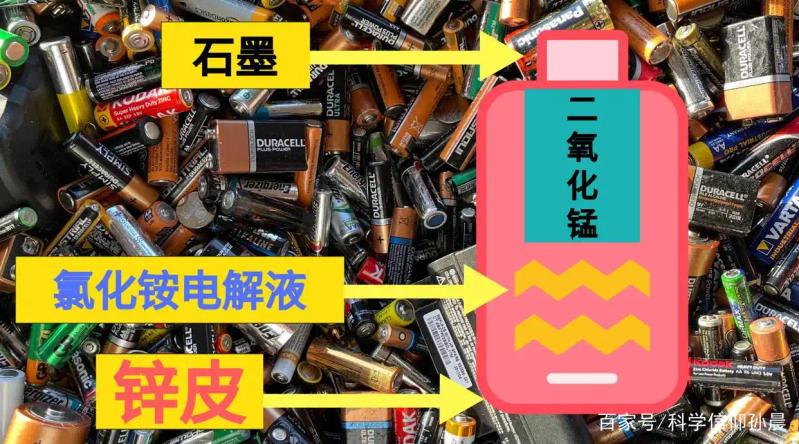
Most batteries are hazardous waste, such as buttons, charging batteries, nickel cadmium batteries and aluminium-acid batteries used in cars, while the only dispute is dry batteries, and what are dry batteries? Dry batteries are the most common batteries around us, like those installed in home remotes. The structure and rationale of dry batteries also have to start from the point of view of whether the dry batteries are harmful. The most common dry batteries are manganese zinc batteries, which are named for positive and negative reaction substances of manganese dioxide and zinc, respectively. The structure of the manganese zinc cell is simple in that it is a graphite substance in the positive convection, a layer of manganese dioxide outside of the graphite, and other than manganese dioxide, which is presented in slurry paste form, i. E. Electrolytic fluids, the material of which is ammonium chloride。
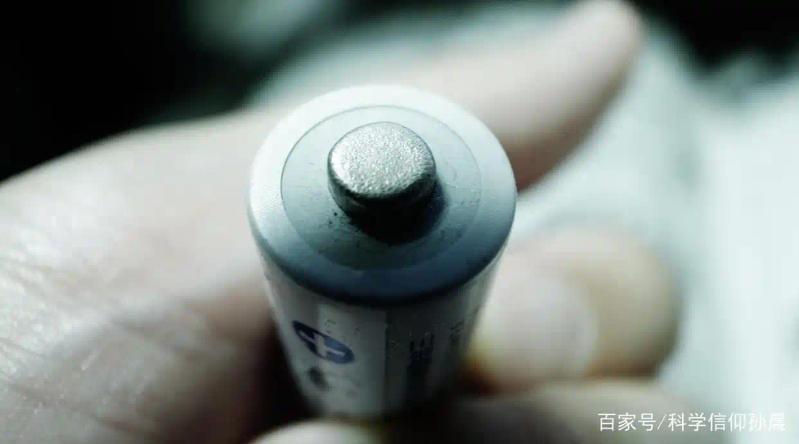
The outermost layer of the manganese zinc battery is the shell of the battery, which is made of zinc, so the skin of the battery is called zinc。
Dry batteries are active in graphite, but in fact graphite is not part of the reaction, which is reflected in manganese dioxide wrapped in graphite, so the positive polar substance of dry batteries is manganese dioxide, while the negative polar substance is the shell of the battery, i. E. Zinc. When we connect an electrical device to the positive-negative pole of the battery, it works。
How is the current generated? In fact, the negative pole zinc produces zinc ions and electronics due to ionizing, and electronics travel to the positive pole using electrical connections, and the current is generated. At this point, as a result of the ionizing relationship, ammonium chloride electrolyte will release hydrogen ion during the ionizing process, so that manganese dioxide plus electron plus hydrogen ion generates manganese trioxide and water, which is the complete chemical reaction process within the dry cell。
Those who have used dry batteries are aware that there may be “flow soup” when the batteries are used long enough because zinc is continuously consumed during the dry cell reaction, and if the batteries are used long enough and zinc is overconsumption, the shell becomes leaky, and the electrolytic fluid consisting of ammonium chloride is released。
It can be seen that the amount of power in dry batteries actually depends on the consumption of zinc, the more zinc is consumed and the lower the voltage, the slower the battery becomes. So, is dry batteries harmful? Zinc appears to be a bit harmful because of the presence of zinc in dry batteries, which is a substance that is hazardous to soil, water and even air. Zinc entering the soil can cause the soil to lose activity and discourage crop growth, while zinc entering the water threatens the life of aquatic organisms. However, zinc content in waste dry batteries is limited, and the reason why dry batteries are actually included in hazardous waste is another reason. Let's look at the structure of dry batteries. Is it really okay that zinc is a chemically active metal that has direct contact with ammonium chloride electrolyte
Direct contact between zinc and ammonium chloride electrolyte is certainly problematic, because zinc is ionizing to zinc ion and electrons, while ammonium chloride is ionizing to hydrogen ion, hydrogen ion plus electron becomes hydrogen gas, and batteries are a completely closed structure, and if hydrogen is generated in the interior, they will eventually explode。
In order to address this problem, zinc cannot be directly exposed to ammonium chloride electrolyte, so a layer of mercury is to be added to the surface of zinc to isolate it from ammonium chloride. With mercury, it is natural to say that dry batteries are certainly hazardous waste. Mercury is a substance that is extremely hazardous to the human nervous system and is usually entered through the respiratory system, so any substance containing mercury is undoubtedly hazardous waste. Since dry batteries contain mercury, naturally it should be hazardous waste. Why is it controversial? Because the mercury content in the current dry batteries is very small or even non-existent。
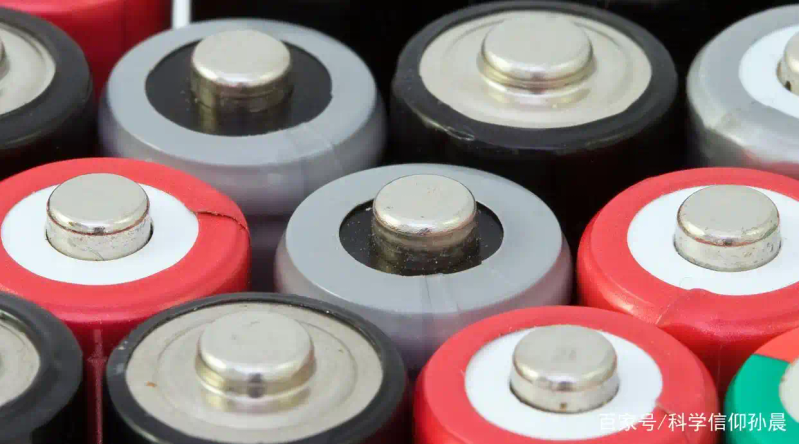
How can the mercury content in dry batteries now be strictly limited and many dry batteries become completely mercury-free
It is simple to say that the conversion of the acid ammonium chloride electrolyte to the alkaline potassium hydroxide electrolyte is not easy for alkaline to react with zinc and therefore does not require protection from mercury, so many alkaline batteries also use “mercury-free” as their point of sale, so mercury-free alkaline batteries are no problem。
Of course, this is simply a question of the classification of dry batteries in terms of their structure and rationale, whereas in practice, different countries and regions have different provisions on the attribution of dry batteries, and we are still trying to classify the waste according to local regulations. For many people, the sorting of waste may have caused us a lot of trouble, but there is always a process of adaptation, a little effort, a huge environmental gain for the planet, for future generations and for ourselves。