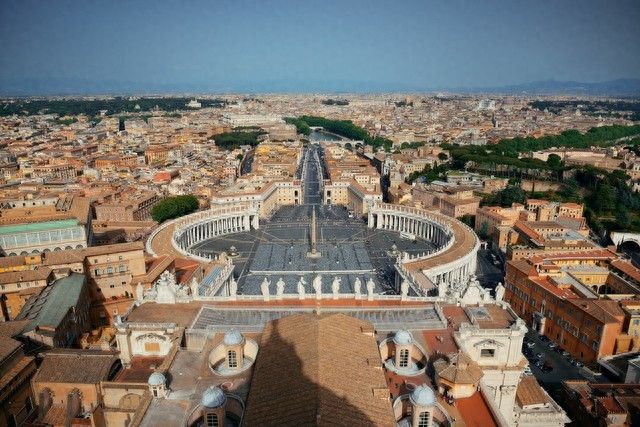
Vatican city is one of the most important places for pious catholics, but not for christians。
All squares are rectangular, but not all rectangulars are squares; so is the distinction between catholic and christian. All catholics are christians, but not all christians consider themselves catholic。
Although 1. 3 billion catholics make up the majority of the world's nearly 2. 4 billion christian population, several other christian denominations have unique personal beliefs, festivals and religious practices, slightly different from the catholic church. These groups are called christians because they all believe that christ (jesus of nazareth) is the promised messiah。
However, catholics and other christians disagree on the various interpretations of the inscriptions of god in the bible. It continues to read down how the christian faith has evolved into different denominations and how roman catholics differ from other christians。
Brief history of christianity
All christianity is based on the teachings of the jewish religious leader jesus christ, who is believed to live in israel and palestine in the first century a. D。
After jesus had been crucified and so-called resurrected, his followers formed an early christian group that began to spread the new testament and their unique interpretation of the words of god. As religions spread worldwide, these individual beliefs evolved over time through different historical, cultural and political climates。
When christianity was seen as a rebellion against the status quo, it was often ridiculed or persecuted, but an increasing number of converts from different communities forced any opponents to accept this new dominant religion。
However, even in this relatively young system of faith, there are some who are opposed to how best to spread god's words。
Two decisive moments explain today's many christian denominations: the first major event was the great division of 1054 and the second was the protestant reform that began in 1517。
The great divide of 1054
In the eleventh century, christianity was divided into two main centres of power: the greek-speaking eastern constantinople and the latin-speaking western rome. Although 1054 marked the formal break-up of the two groups, they had been arguing for more than six centuries after the collapse of the roman empire and the subsequent partition of christian land。
In addition to regional and political differences, these groups often argue about how the christian church works best. The orthodox church, for example, allowed their clerics to marry, while catholic priests believed in the sacred order of their celibacy。
Another major point of theological argument is that the orthodox church (do not confuse itself with eastern catholics) is strongly opposed to the nihian scriptures practised in catholic worship. This teaching holds the holy spirit from the father (god) and the son (jesus christ), not directly from god。
Although these differences appear to be redundant, they have provoked enough hatred in centuries-old exchanges and culminated in an attack on constantinople in 1204 during the fourth crusade. This war resulted in the death of thousands of orthodox christians and laid the foundation for the continued division between roman catholic and orthodox churches。
Religious reform
The 16th century europe witnessed the next critical moment in christian history, now known as religious reform. The campaign was not initiated by the orthodox church, but by the leaders of future protestant churches, such as martin luther and john calvin, who opposed the widespread corruption of the christian church。
The protestant faith originated from the original liberal marketing of the roman catholic church and the celibacy of the clergy, as well as the outright dissent of the catholic concept of purgatory and hell。
By openly rejecting these recognized principles of catholic worship, the new christian church has triggered debate, war and the formation of various christian denominations that have a unique view of how best to interpret the words of god in the bible。
Overall, sola sThe concept of criptura (latin, favored by god through the bible) remains the basic philosophy of all protestant churches。
Roman catholic history
While this relationship will eventually deteriorate, much of the influence of roman catholicism is due to the conversion of the 4th-century roman emperor constantine, making it one of the most influential religions in the world today。
Shortly after this major turning point, roman catholics became members of the roman empire from an oppressed, marginalized group of infidels and fanatics。
With the demise of the roman empire, the roman catholic church held a great deal of political and cultural authority, shaping european society for much of the middle ages. Between the 14th and 17th centuries, new ideas brought about by renaissance and religious reform challenged the roman catholic faith system and led to the formation of different factions under a christian umbrella。
Three points in common between catholics and christians
Although christians and catholics may differ on the details of religious practices and theological interpretations, they can find common ground on certain guiding principles。
1. Catholics and christians believe that christ died to forgive us our sins
Both catholics and christians believed in the original sin concept of the story of the first human adam and eve in the old testament. In genesis, god created the garden of eden, a beautiful paradise of peace that is incalculable, surrounded by a forbidden tree of knowledge。
Eve and adam were deceived by a serpent, and ate the fruit of the tree, and became obsessed with knowledge only god had. God has learned of this tragic mistake, evicting the couple from the unsuspecting garden of immortality, and curseing their descendants working in the wasteland of the world without hope of eternal salvation after death。
In the tradition of catholicism and christianity, god sent his only son, jesus christ, born of the virgin mary. Jesus is usually called the lamb of god, because he is destined to teach his followers before he finally faces his death. The sacrifice of jesus is the promise of god to forgive the sins of the former and symbolizes the opening of the gates of heaven to all believers。
2. Catholic and christian believers believe in eternal salvation
All christian faiths believe that the sacrifice of christ allows the souls of the past, the present and the future to enter heaven after the death of jesus for forgiveness. Protestants and the church of england have reduced the concept of eternal salvation to paradise (forbidance) or hell (the curse)。
3. The reacceptance of christ by christian and catholic faiths
After the death of jesus christ, people believed that he had risen from the dead to heaven. The gospel of the new testament stated that jesus had revealed himself to his closest followers when they were in despair and promised that they would eventually return。
This second arrival is considered the day of judgment and resurrection, because the soul of the righteous will be brought into the new kingdom of god。
Three main differences between catholics and christians
Although catholics agree with other christians on most important issues, there are differences among different groups on specific issues。
These differences usually revolve around the sacred tradition of mass, the sacred order and hierarchy of the catholic church, and the way in which the virgin mary and the respected saints are respected in roman catholic teachings。
1. Trinity: god, jesus christ and the holy spirit
The teachings of the roman catholic church differ from those of almost all non-catholic christians with regard to the holy trinity。
In the roman catholic church, the father (god), the son (jesus christ) and the holy spirit are all incarnations of the same entity, while in the christian faith the triad is usually considered as an individual working for the same mission。
2. Other christian denominations do not believe in the holy order of the pope or the need to respect the holy man
One of the most striking differences between catholic and other christian religious beliefs is the idea of hierarchy. Catholics were more closely guided by the new testament, which contained a paragraph describing how christ had established the church by giving its favorite apostle, peter, the highest authority as the first pope。
Another way of thinking is to see the church as a monarchy. God is king, but the pope is his supreme representative. Then there was a chain of command, from the pope to the cardinal and bishop to the catholic priest who served the congregation。
The opposition christian community believes in greater autonomy and believes that only god and his holy scriptures in the bible can have such authority. By learning and living god's words and his natural laws, other christians see catholic priests as unnecessary to achieve god's grace and eternal salvation。
Another argument is that many christian groups do not respect saints. When catholics worship saints like the mother of jesus, the virgin mary, they ask the saint to respond to their prayers. Other christians respect maria, but do not regard her or other saints as having important authority on earth。
3. The catholic church teaches deformation
Anyone growing up in a catholic family will remember that sunday mass revolves around the mystery of communion, which can be described as the most important sacred tradition of the catholic faith. This roman catholic doctrine stems from the final dinner in the new testament。
At dinner before the death of jesus, when he suddenly declared his bread and wine to be the symbol of christ's body and blood, he was surrounded by his apostles when he was ready to sacrifice willingly to forgive his sins。
In the roman catholic community, it is believed that in every sunday mass, priests turn bread and wine into the body and blood of christ in a deformation ritual. To some extent, the main purpose of catholic mass is to renew and regain gratitude for jesus' sacrifice。
On the contrary, similar ceremonies may take place during sunday mass or holy rites of other christian faiths, but parish members consider bread and wine as symbols rather than true sacred sacrifices。