Since the beginning of the reform and opening up of our country's higher education, which has drawn extensively on the best experiences of developed countries, we have been moving forward in exploring china's unique socialist development model, with remarkable achievements worldwide. These include adherence to the norms of higher education and human development, as well as ongoing innovations in the institutional mechanisms of higher education in response to the times. Today, the internet and information technology are profoundly transforming higher education around the globe, and universities are no longer the universities of the past, with both changes and changes. We also need to think deeply and explore how to adapt。
Change: knowledge is “generally” generating new patterns in universities
The “change” in higher education is reflected mainly in two trends。
One is a university without walls. Today, knowledge has broken the boundaries of time and space and the boundaries between universities, and anyone in any university can learn the best course in the world and gain access to academic resources at the forefront of the world。
The second is universities without teaching materials and without textbooks. Large data, cloud computing, artificial intelligence, block chains, industrial internet, physical networking, rapid advances in 5g technology, deep and cross-cutting development of disciplines such as polytechnics, and traditional teaching materials and textbooks have become increasingly difficult to adapt to technological advances。
In the age of the internet, knowledge has become “general” and invisible universities are having a powerful impact on physical education。
No change: higher education remains unique in the age of the internet
“no change” in higher education is seen in three ways。
The first is that universities can provide a systematic, basic and basic professional education system, which is a holistic process of development。
The second is that the fundamental task of the lycans is carried out by universities through a combination of knowledge transfer, personality education and the education of students as adults, talents, agents, agents and success, a systematic and comprehensive process of growth。
Third, the teaching of defunct and university culture, the fumigation of university spirituality and the development of a combination of qualities within university campuses constitute the unique quality, quality and taste of human development in “physical” universities。
All three aspects are web-based access to resources that cannot be replaced by fragmented, fragmented, knowledge-based “invisible” universities. The development of network resources and new technologies has only significantly expanded the skills-building capacity and channels of development at universities, greatly facilitated and innovatively developed the university-training model and significantly enhanced the university-training function, but it has not changed or replaced its basic responsibilities and functions in the area of human development。
Performance: adaptive approaches to higher education
We must grasp these “changes” and “changes” and make corresponding changes。
One is to move beyond traditional knowledge-based education. In the past, teachers were both directors and actors at universities and in traditional knowledge-based education, while students appeared as “audiences” and were passively educated. We must fundamentally and completely move away from this model of education and implement the “classroom revolution”. Through modern information technology, innovative teaching methods have been reformed to combine online education with online education, classroom teaching with teacher-student interaction, knowledge transfer with students ' own access to resources, self-help learning, and knowledge acceptance with critical thinking training. This class is a dynamic classroom and a stereotonic teaching。
To move beyond the traditional model of education, emphasis must be placed on efforts to move from a teacher-centred to a student-centred approach. Students should be pushed to the podium to motivate autonomous learning. The second is to work towards a shift from teaching to learning. The emphasis on the development of learning methods reflects the organic integration of teaching and learning processes. Thirdly, efforts are being made to move from supply to demand-centred. Designing the teaching process around issues of universality encountered by students in the learning process. Fourth is the shift from input evaluation to output evaluation. Change the traditional way in which teaching is evaluated in terms of the workload of teachers and student assessment, and evaluate the performance of students by evaluating their effectiveness, degree of mastery and quality of learning. The shift from “good teaching” to “good learning” can be achieved by moving forward with “four transformations”, phasing out “water classes” and building “gold classes”。
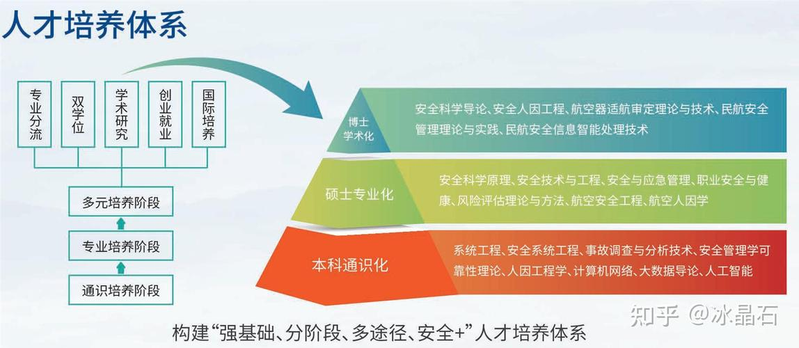
The second is to promote innovative entrepreneurship education. Innovative entrepreneurship education is an important initiative to build and build innovative and practical capacities in service-based countries. Higher education institutions need to vigorously promote professional modernization and “upgrading”, new engineering, new medicine, new agriculture and new literature, and integrate professional education with innovation and innovative entrepreneurship education. At present, most of the country's institutions of higher education are promoting innovative entrepreneurship education and many have set up institutions that are undoubtedly efficient in allocating resources for innovative entrepreneurship education in schools. However, if more is done at the “activity” level and less at the “education” level, it is just an “inter-curricular” “nuntime tea”, which needs to be improved。
To that end, innovative entrepreneurship education must be made an integral part of human talent development and a complete chain of innovative entrepreneurship education must be built. One is to build the curriculum. Full exploitation of innovative entrepreneurship education resources for various specialized courses. The second is to build a training system. Innovative entrepreneurship education is placed in an environment that integrates academic and industrial development, increasing productivity of co-production within and outside universities and providing resources for the incubation and nurturing of high-technology enterprises. The third is to build an incubator. In schools, incubators can be carried out in science and technology parks, specialized laboratories, engineering training centres and so on; outside schools, incubators can be contracted through the establishment of internships in enterprises. The fourth is to build a mentor plus system. Establish a pool of innovative entrepreneurship mentors and a mentoring model combining in-school and out-of-school entrepreneurs to guide innovative entrepreneurship projects. Through the above-mentioned “four systems”, innovative entrepreneurship education is an effective extension of professional education and a complete and organic combination of the two in human development。
Third is towards open education. Knowledge has no borders, and universities have a special function to link their cities to the national and global. This provides a vast space for higher education to develop more effectively the scientific spirit, human literacy, innovation and international vision of students across disciplines, schools and national boundaries。
It is therefore important for universities to take full advantage of this new trend in order to co-build, share and win educational resources between interdisciplinary, cross-school and cross-border universities, interoperable curricula and credits, and explore new models of innovative talent development in an open environment. One is to promote interdisciplinary development. In recognition of the differences in disciplines, the discipline boundaries of talent development are constantly broken, the barriers between the current relatively narrow range of disciplines are removed, and various forms of cross-disciplinary research centres and talent development platforms are set up flexibly to provide a cross-disciplinary culture environment for complex and innovative talent. The second is to promote cross-school development. (c) to develop a system of mutual recognition and co-education, to establish a platform for cooperation in the development of inter-school talent and to promote the exchange and integration of diverse school cultures. Third is the promotion of cross-border culture. (c) to promote the internationalization of the workforce, the internationalization of talent development, the internationalization of academic research, and the internationalization of the school environment by upholding indigenous advantages, world vision and international standards. To expand cooperation with the world's high-level universities, to build a multi-level and comprehensive international cooperation mechanism, to maintain a strong international culture, to broaden international perspectives and to enhance international communication capabilities. Through the “triple”, a multicultural foundation has been laid for the personal and comprehensive growth of students, promoting greater and deeper openness to higher education。
The mastery of “changes” and “changes” and adaptations will enable us to chart our higher education development with greater confidence in the world stage, international coordinates and global landscape and to build a new high ground for higher education in the world。
(by secretary, professor, ph. D. Teacher, qingdao university)
Chinese journal of education, 7th edition, 1804 2019