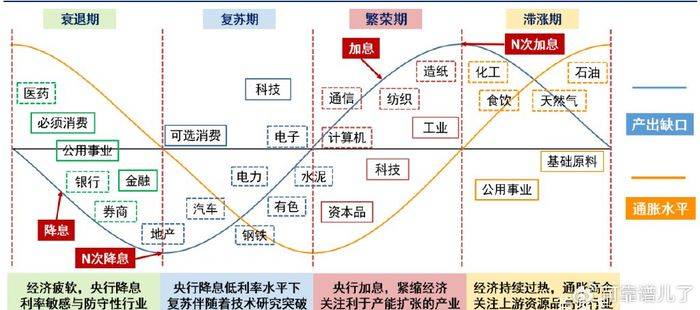
The following is a summary of the pattern of rotation of the concept blocks in the a stock market over time each year, combining the policy cycle, market liquidity and seasonal characteristics of the industry:
- - - - - - - - - - - -
1. January-pre-spring of each year: the main features of high dividends defence and policy preheating: tight market liquidity, rising financial risk avoidance, superseding annual advance disclosure periods. Active plate: high-equity defence plate: low-valued high-value red varieties such as banks, coal, utilities, etc. Consumption and agriculture: the hot season of spring consumption is expected to drive food and drink, household panels, and the agricultural unit is expected to be catalysed by central document i policy. Strategy: a blue chip unit with high performance certainty to avoid high volatility。
- - - - - - - - - - - -
2. Post-spring — two pre-session meetings (approximately mid-february to early march): policy expectations and growth unit rebounds are the main features: improved post-split liquidity, a rebound in market risk and expected policy warming. Active sectors: science and technology and growth unit: an artificial intelligence, semiconductor, new energy, etc. Small and medium-size stock shares: in a liberal liquidity environment, small and medium-sized market value equities are more resilient. Strategy: focus on sectors with clear policy expectations, such as technology, new infrastructure, etc。
- - - - - - - - - - - -
3. After the two meetings - five years ago (mid-march to end-april): the main features of policy fragmentation are the gradual fall of policies, the entry of markets into the certification period and the intensification of sectoral fragmentation. Active sectors: technology and high-end manufacturing: clear directions for policy support, such as the digital economy, robotics, national production substitution, etc. Consumption and finance: if policies emphasize the expansion of domestic demand, consumption (cars, household electricity) and finance (bonders, insurance) sectors may be connected. Risk point: part of the high-value ttechnology unit may be subject to less than expected reversals due to performance。
- - - - - - - - - - - -
4. June-august of each year: performance drivers and key features of the theme game: a semi-annual disclosure period with performance becoming a core driver, superseding mid-year liquidity fluctuations. Active plate: super-expected plate: new energy sources (pv, lithium), medicines (tools, innovative drugs, etc.). Thematic opportunities: the use of electricity peaks in the summer to boost electricity, energy reserves; summer consumption to drive tourism, video. Strategy: avoiding the performance thunder unit and focusing on the subdivisions of the rising landscape。
- - - - - - - - - - - -
Annual september-october: the consumption season and the main feature of the policy layout, the “golden-silver-silver-silver-silver-silver” consumption season, set the four-quarters of the economy. Active sectors: consumption and periodicals unit: traditional hot seasons such as cars, property chains (building materials, homes), food and beverages. Periodical resource items: steel, coloured and possibly phased in with accelerated capital investment expectations. Policy developments: focus on the pre-heating of the central economic work conference, with low-valued blue funding in the medium to long term。
- - - - - - - - - - - -
6. Annual november-december: valuation swaps and defence are the main features: tight funding at the end of the year, increased institutional silos and high dividends defence attributes. Active plates: high dividends and defense plates: low volatility varieties such as banks, coal, utilities, etc. Consumption and medicine: catalytic consumption unit for the 21st and 21st springs; medical board is robust because of policy support (e. G., innovative drugs). Strategy: reducing high-risk positions and setting up industries (e. G. Technology) with clear expectations for the next year。
- - - - - - - - - - - -
Summary and note 1. Policy-led rotation: key policy windows, such as two meetings per year and central economic work sessions, have a significant impact on plate rotation. 2. Liquidity cycle: easier-than-growth, more tight-forward, high-value dividends. 3. Seasons in the industry, such as the consumption season and the start of the capital construction season, need to be judged in the light of industry-specific characteristics. Risk alerts: external shocks (e. G. Global market volatility) and internal policy changes may break historical patterns and require dynamic adjustment strategies。