As foreign traders, trade terms are the basic language of everyday work. The paper consolidates 40 of the most commonly used international trade terms, covering the 2020 core terms, payment modes, modes of transport, documentary terms, etc., to help you access them quickly and accurately。
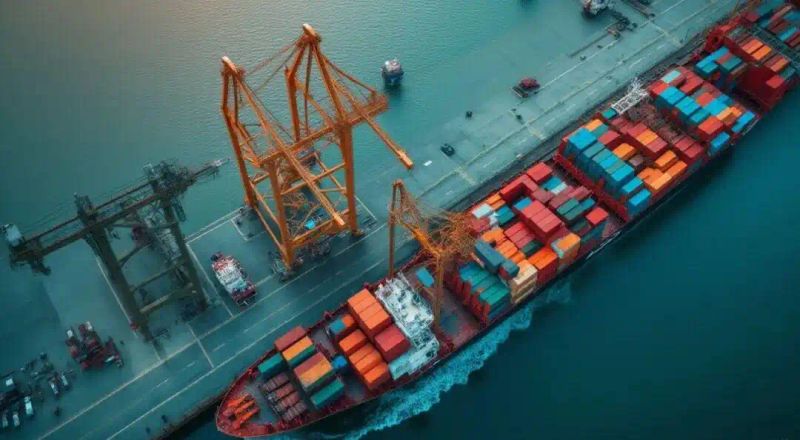
I. Incoterms 2020 core terms (11)
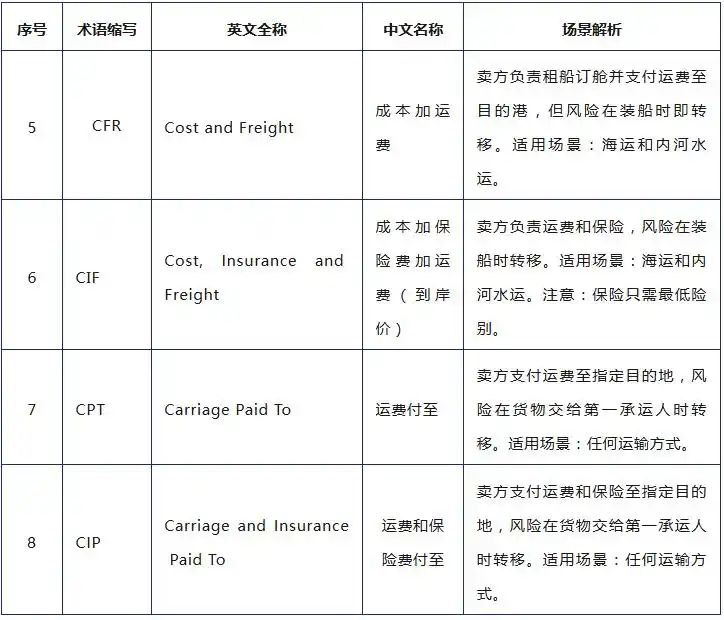
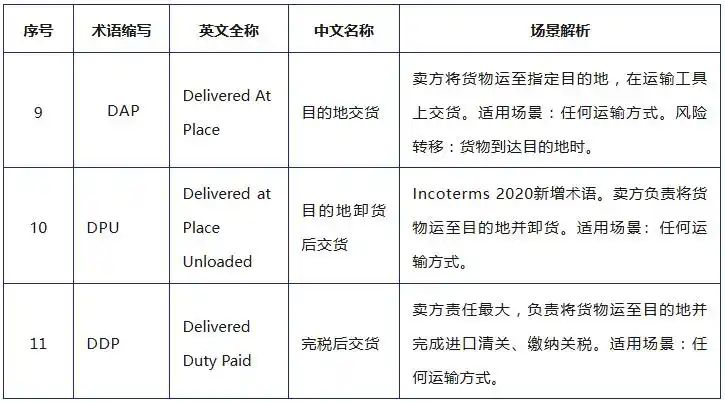
Incoterms are the most basic and important terminological system in international trade, defining the responsibilities, risks and costs of both buyers and sellers。
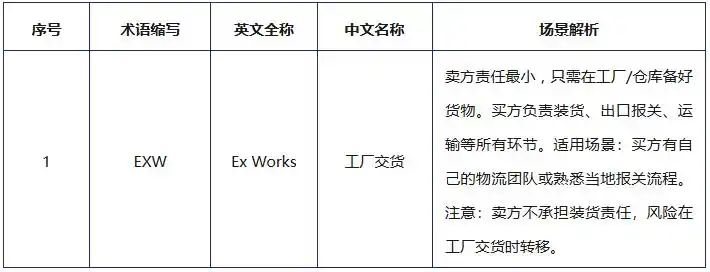
Group e (designation terminology)
Group f (unpaid main freight term)
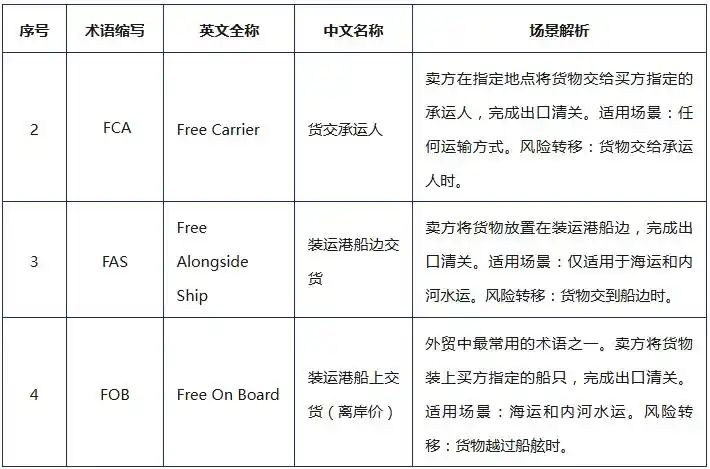
Group c (terms of principal freight paid)
Group d (arrival terminology)
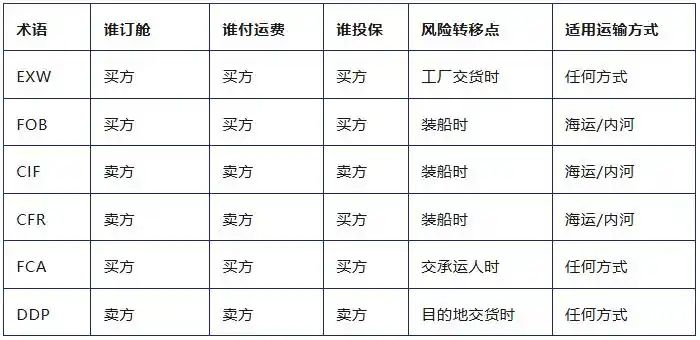
Ii. A comparative survey of commonly used price terms
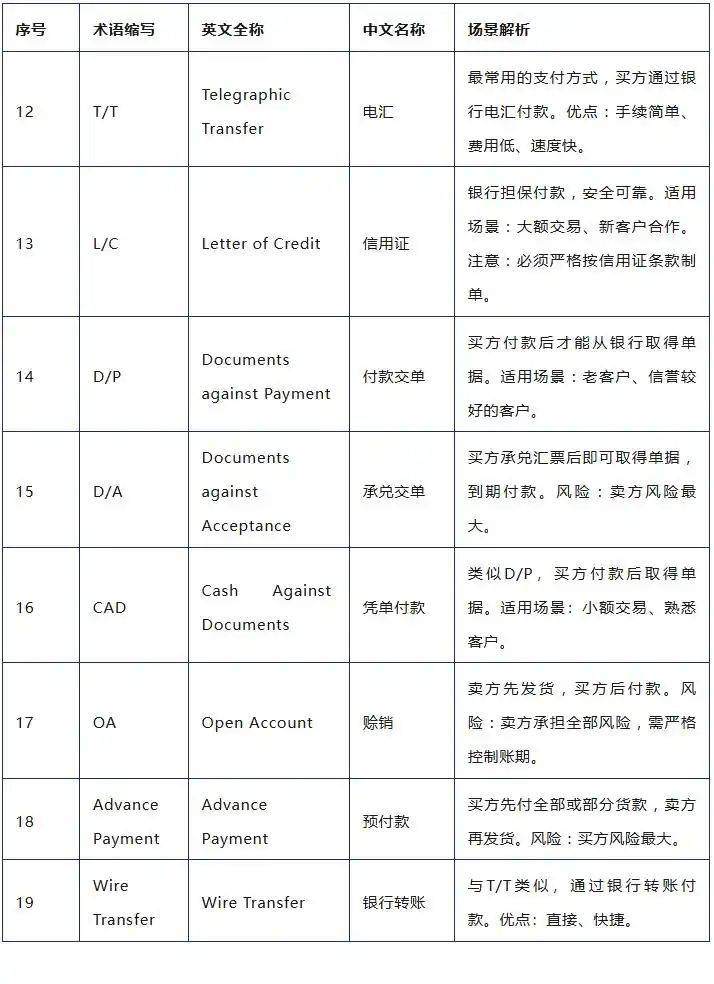
Iii. Terminology of payment modalities (8)
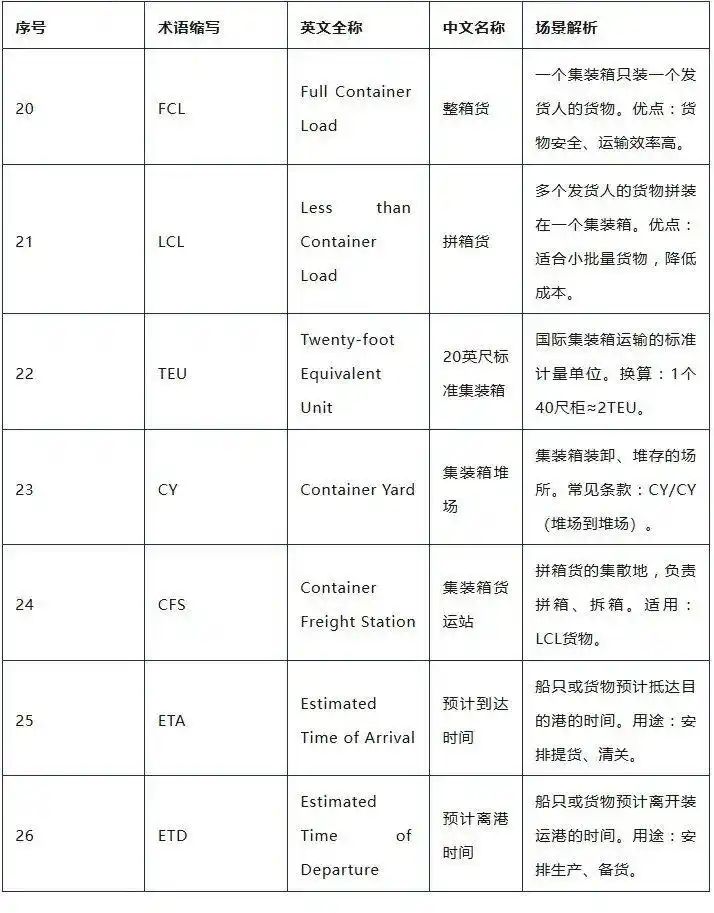
Iv. Terminology of modes of transport (7)
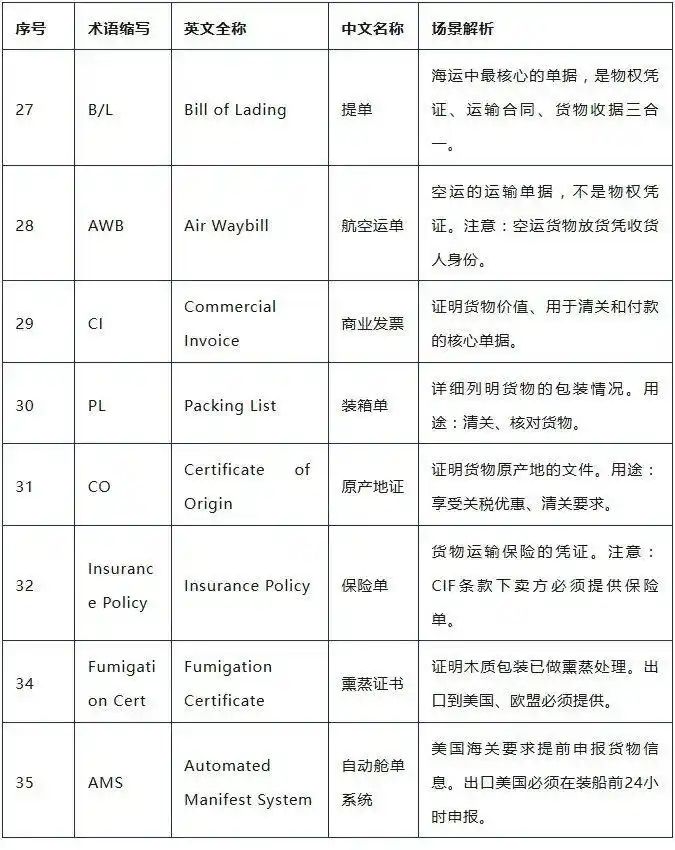
V. Document terminology (9)
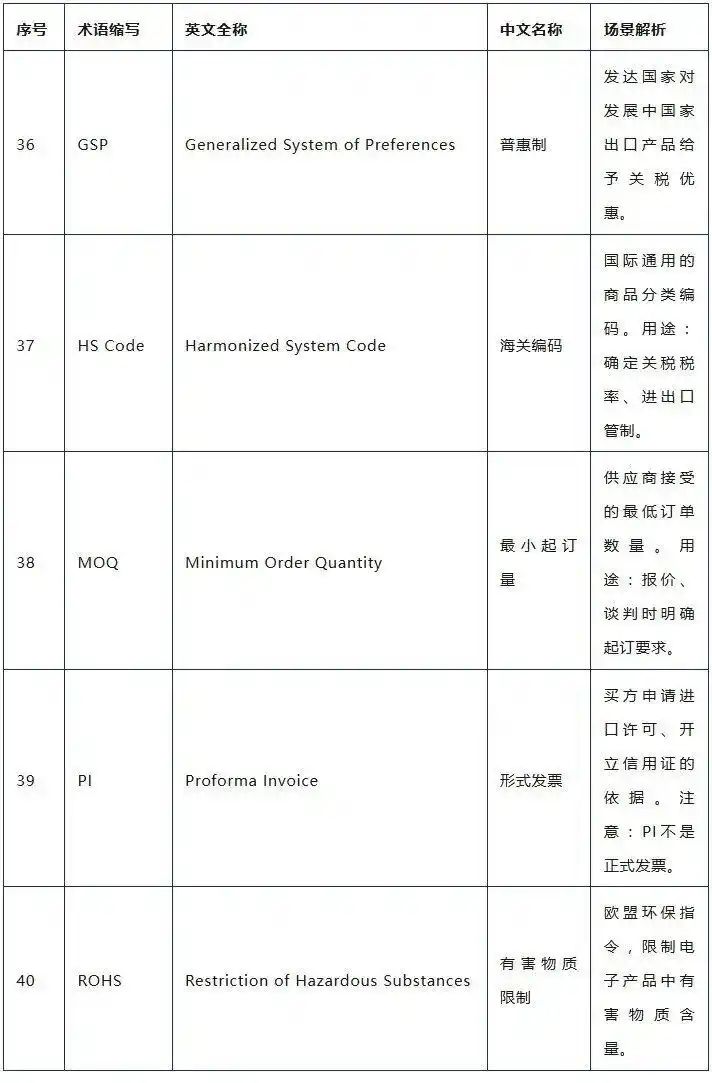
Vi. Other commonly used terms (5)
Vii. Arbitration of wars
Case 1: fob risk transfer cases
Situation: a company exports 300 tons of rice, fob shanghai clause. When loaded on board the ship, the cargo was properly inspected, the rice was immersed in the sea water and the quality was downgraded because of the excessive wave during transport。
Analysis: under the fob clause, the risk after loading the goods has passed to the buyer. Damage to the buyer's goods was due to the insurance company and the seller was not liable。
Revelations: the buyer should be insured in a timely manner and the seller should give notice of loading。
Case 2: notification of cfr loading
Situation: the company exported the gauze under the terms of the cfr, the goods were loaded on 8 january and the operator forgot to notify the buyer. The buyer received notice of the insurance policy, but the insurance company was informed of the ship's death on 9 january and refused to take it。
Analysis: under the cfr clause, the seller was obliged to give timely notice of the loading of the ship, otherwise the buyer could not take timely insurance and the seller bore the loss。
It is a statutory obligation to notify the buyer of the first time after loading the ship。
Viii. Practical recommendations for trade terminology selection
Selection by mode of transport
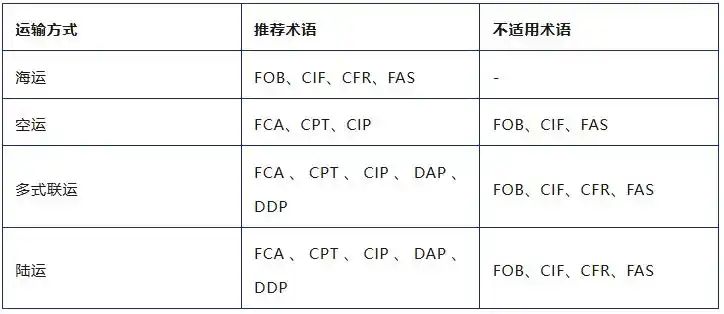
Risk control choice
• seller's minimal risk: exw (subject to buyer's cooperation in loading)
Buyer's risk is minimal: ddp (seller fully liable)
• balancing: fob/cif (risk transfer points are clear and liability lines are clear)
Concluding remarks
Trade terms are the “basic language” of foreign traders, and accurate understanding and application are key to risk reduction and efficiency. Recommendations:
1. Prior to signing of contracts: clear terminology and division of responsibilities
2. In the course of implementation: to operate strictly in accordance with terminology (e. G. Notification of loading, insurance coverage)
3. In case of dispute: resolution on the basis of incoterms 2020
Remember that trade terms are not simple price terms, but a comprehensive agreement on liability, risk, costs. The choice of terms is tantamount to the choice of partners and risk controls。
Disclaimer
If the publication of this twitter public platform indicates the source, the copyright is vested in the original source. Reproduction (video, audio, articles, etc.) is for information dissemination purposes only and for information purposes only. In the case of copyright, please contact this public sign and we will delete it at the first opportunity. This public sign has the final power of interpretation of this declaration。