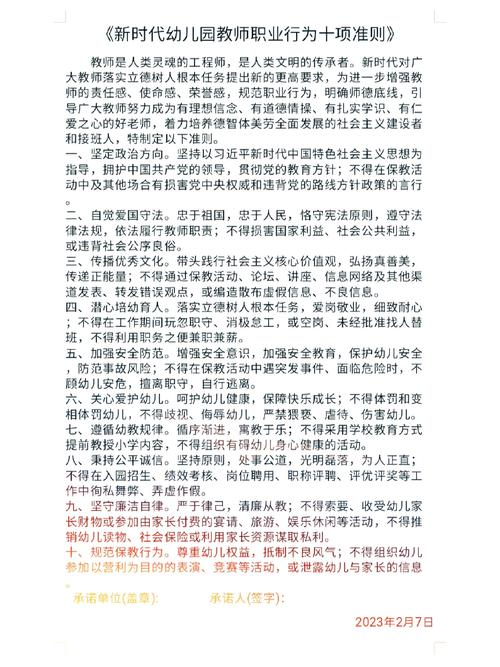
“honors, homages”, which is the primary principle of pedagogy and is the soul of pedagogy. Early childhood teachers communicate daily with their children, parents and people in society, and their dress, manners of speech, hospitality, etc. Reflect their own upbringing and taste and are role models for young children. My park is a provincial civilized unit, and teachers, as a window, should always be attentive to their words and behaviour and guide young children in their daily work with good images and norms of behaviour. The kindergarten then regulates the manner of the kindergarten teacher, so that the kindergarten teacher can be a civilized teacher, build a school of civilization and be of great quality。
I. Embracing instruments — natural harmony, high-tech
1. Hair - without a cape, long hair over a shoulder should be tied or rolled up, hair should not be exaggerated, short hair should not be trimmed and coloured (e. G. Red, blue, yellow, etc.)。
Hand-washing, cutting fingernails without long nails and without colorful nail polish。
3. Faces - white teeth with no taste; eyes kept clean, sunglasses and coloured glasses。
4 cosmetics — everyday makeup is natural and elegant, compatible with colour, free from heavy makeup and free from odoury。
Clothes — soft and generous, easy to move. Non-trapped vests, ultra-short skirts, etc. Are too exposed or transparent。
6. Shoes - no slippers, barefoot and flat soles during shifts。
7. Decoration - without ring, earring and earring and excessive and complex bracing, which should be in accordance with health and safety requirements。
Conduct — natural norms, goodwill and elegance
1. Faces — sincere smiles, demeanour, a sense of kindness, peace and trust, unwittingly masking smiles, smug and blind。
2. Eyes — with a sense of goodness, a desirable scale of movement, a reasonable distribution of visions so that every young child can feel the concern of the teacher and cannot stare at a young child for long。
3. Punctuation — to attend meetings and events on time and to leave early。
4. Sitting position - enter the seat to the left, enter the left, move softly, face the young child in a good position, close his legs together, have integrity on his upper body and put his hands in order。
5. Standing - body up, chest up, shoulders down, legs up, eyes up, hands down or in front of the abdomen。
6. Walking - with integrity on the upper body, steady shoulders, leaning forward with a heavy heart, moderate speed, appropriate pace, soft hands and slow feet, with no room for rowing。
7, crouching - body up, knee up, hip down, feet up, not suddenly down in the walk。
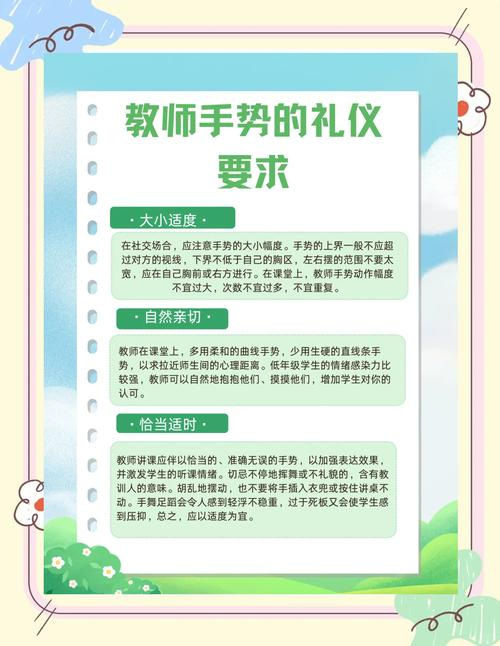
8. Hand gestures — accurate, moderate, natural, rigid, public, scratching, scratching, taking a shift without the arms crossed or the back of the hands。
Languages of civilization — active enthusiasm, civilized courtesy
1. Reception of guests:
Question — hello. Who are you looking for? Can i help you? Can i help you
Passively asked -- oh, i'm sorry. I don't know yet. I can help you。
2. Telephone:
Call — say hi and then introduce yourself, and then we'll talk. Like, "hello! I'm class x teacher. Are you someone's mother?"
Answer the phone - say hi, then introduce yourself, then ask. Like, "hello, mr. X-ray, who are you looking for?"
Put the phone on -- wait for the other person to drop the phone and then hang up。
3. Treatment of young children:
Unintentional negligence — patient consolation, without blaming young children. Like: are you hurt? Be careful next time。
Organization of activities — moderate speech, clear instructions, live language, fun, childization. For example: please take the small chair to the side of the chair with a nice meal。
Interacting between teachers and children — warm, responsive, carefully observed, constantly alerting, evaluating, encouraging appreciation. Like, "you're a good thinker."
Difficulties are encountered - young children are encouraged to be confident and not sarcastic. As follows: "surely you can do it. Try it. Don't worry, i'll help you."。
Deliberate negligence — adherence to positive education and timely resolution. For example, you can't do anything. I'm sure you're a good kid. You won't do this again。
Daily life — caring, caring, trying to reflect motherhood. No sarcasm, no swearing, no reprimanding of young children, no shouting. Like: is it a little uncomfortable? Let me see if my pants are wet。
4. Treatment of parents:
Parents respond to the problem — calmly, let them finish their sentences and take it seriously. As follows: "thank you! Let's get to know." don't worry, we'll talk about it and try to help you。
Conflict between parents - stabilization of parents' moods and separate conversations with parents. Like, "don't worry, something happened to the children in the garden. It's my responsibility. What do you say?"。
The child had an accident — to be honest, to apologize. For example: i'm really sorry, today... If you'd like to watch the kids, if there's anything wrong, do whatever we need to do to get in touch with us。
Parents pick up their children late — proactive and patient. For example: it's okay, you can decide who you want to pick up later。
Parental gifts — polite refusal. For example, we've got your heart, and it's our duty to take care of our children。
Talk to individual parents — peace of mind, art of art. Like: i'm sorry for the delay。
Contact parents - caring, polite. I'm a teacher. I'm not feeling well today. Thank you. I'm in trouble。