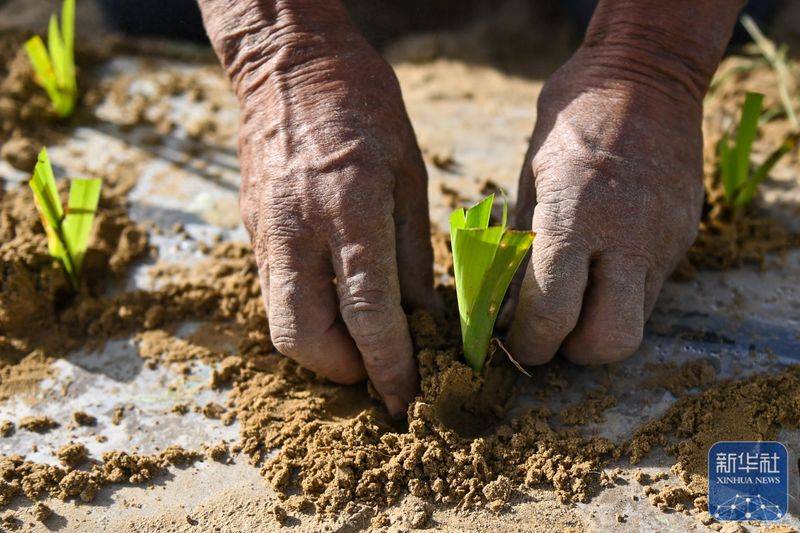
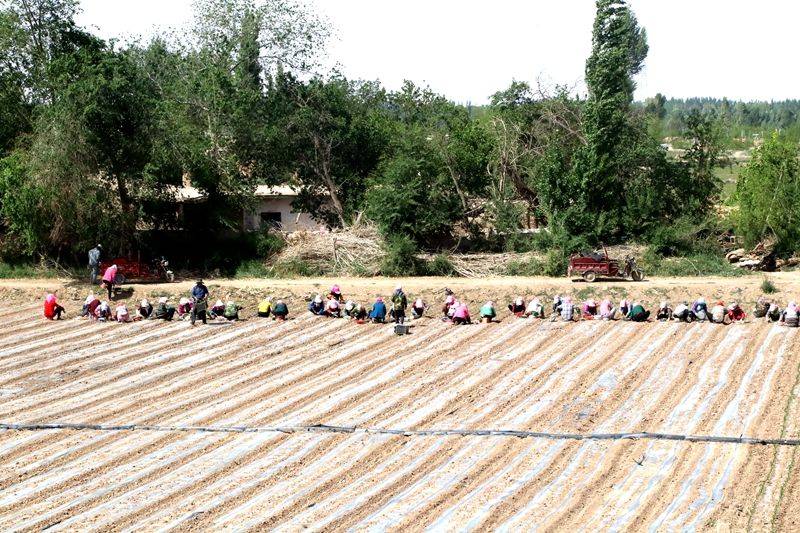
It is a new type of cultured research that requires a very high level of demand for the growing environment and soil, as well as for sunlight, but since it takes about 60 days to grow, from flower to harvest, farmers in wenzhou and hainan are happy to grow because of its short duration, taste and efficiency。
Pick a shed
The choice was to build shelters with high terrain, good drainage and deep earth. Low-lying, poorly drained plots are not suitable for construction. No melon crops have been planted in three years, and jiangxi has chosen rice fields to grow melons。
The huts that grow watermelon generally use a simple bamboo-formula structure, which is better north-south, 4. 5 to 5 metres wide, 25 to 30 metres long and 1. 8 to 1. 9 metres high. The two huts in the same row are 80 to 100 centimetres and the distance between the two rows is 2. 5 to 3 metres. The mackerel used in general is approximately 7 metres long and 5 centimetres wide。
During the construction of the shed, a small hole of about 30 centimetres deep is struck with a steel bar every 50 to 60 centimetres at the same position as the two long edges, drawing the edges of the shed along the lines of the building. It then inserts a piece of bamboo into a small, pre-made hole, the base of the piece is rotated with the top, and the arch poles are firmly tied to the top of the roof, so that the whole shed is integrated, with all arches on the top at the same level. They then placed a lean pole on each side of the shed, then covered it with a sheet of film, crushing the soil on the foot of the shed, tightening the sheet of film and keeping the shed doors on both sides。
We'll open the ditch
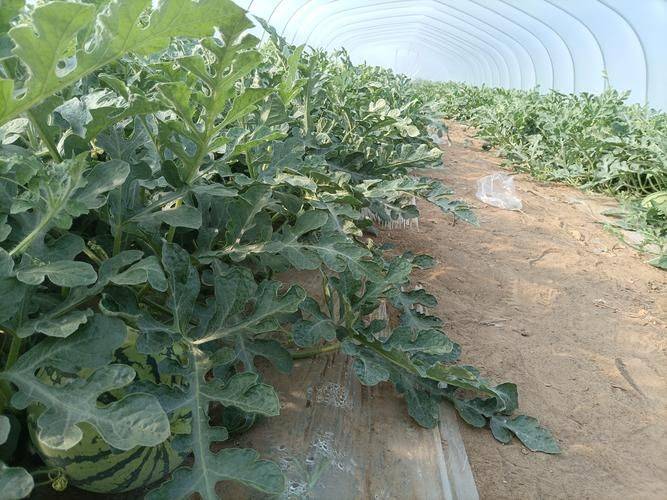
1. Gaps: the drains are built around the sheds, which require a depth of 50 centimetres, a width of 30 to 50 centimetres and a width of 25 centimetres and a depth of 25 to 30 centimetres. It is required that in heavy rain weather, the water in the ditches be drained from the ditches, and that no water accumulation occur, or otherwise the watermelons are likely to rot。
Land improvement: soils and thaws should be thawed when the watermelons are planted in winter. In cases of excessive soil acidity, lime and acidity can be used, usually 100 to 150 kg of lime per acre and then arable land。
3-octus: the water glacial canals are grown up in a total of 4. 5 to 5 metres wide, with a width of approximately 2. 3 metres wide, and each of them has an average of 40 centimetres in the middle and 20 centimetres in the depths。
4 substrate fat: 2,000 kg of fertilized organic fertilizer per acre, 25 kg of phosphorus fattening, 15 kg of potassium sulfate compound fattening, 50 kg of vegetable loafing, fertilizing boron in acre soil with 1. 5 kg of boron sand in acre before planting. The base fertilizer should be applied in the middle of the gutter and then the soil should be covered。
5. Dripping pipes and membranes: the first half of the month is flatted, the drip is covered, the membranes and the membranes are warmed, and temperatures above 15°c are required。
Feeding techniques
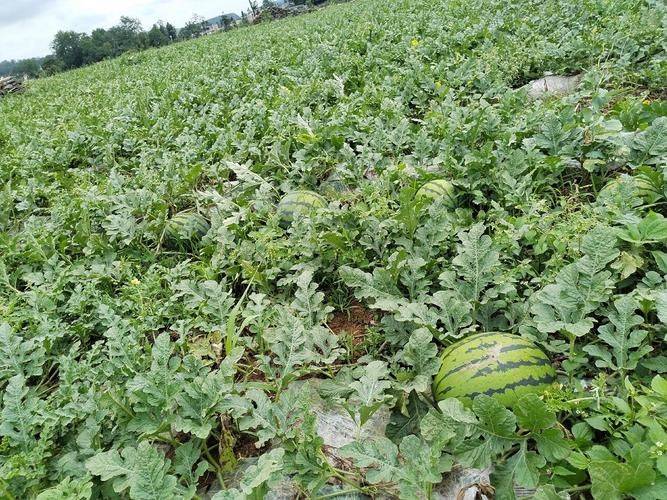
Cultivation is generally carried out in the form of ten membranes, with conditions for planting seedlings using electrothermal heating lines in mid-december and shifting cultivation in mid-february. It would be useful for those without heating equipment to sow seedlings in mid-february and to move in late march。
1. Selection of seedbeds: the seedlings should be carried out in the sheds, and it is advisable to choose fields closer to the growing fields, which are dry, windy, well-lighted and easily drained。
2. Nutritional home-grown: the soil requires laxation, fertility and water conservation, which requires more than one month in advance. Paddy fields that have not grown in melons for more than three years are added to the corroded farmers ' fats, compound fats, phosphate fats and grass-grass ash, etc., which are modulated and covered with membranes. The paddy fields are corroded farmers = 5 times 3 times 2 – with 5 kg of phosphorus and 2 kg of corroded compost in a cubic trophic soil. During mixing, 50% more than 600 times more fungus or 1% of ffl can be disinfected and evenly spilled and dryed。
3. Slender bed preparation: around 400 seedlings per acre. Set up a nursery and make an electric hotbed. The bed is made up of 1. 3 metres wide, the bed is dug to a dent of 5 cm deep, depending on the need, and an old film is laid below the temperature, filled with a 2 cm thick grain cortex, a non-diseased earth floor is painted, and a hotline is prepared to warm itself, with 1,000 watts per 10 m2 bed, thinner in the middle, and slightly dense on both sides. Switching to power, selecting 10 cm x 10 cm specification of plastics to be nourished and then placed on a hotline of seedbeds to cover membrane to keep warm。
4. Drum seeding: one day before seeding, 15 to 30 minutes in hot water at 55°c, mixed with immersion. Or 1% formaldehyde solution treated for 10 minutes, washed with water and immersed for 6-8 hours. The seed surface glue is then washed clean, the seeds are wrapped in wet cloths, and sprung at a temperature of 28°c ~ 32°c, usually 24-30 hours later. The first two days before the seeding are filled with nutrientable subterranean water and electric pre-heat seedbeds that can be planted at temperatures above 25°c. The planting is suitable for the morning of the sun, with the seeds distributed flat, followed by the covering of 0. 5 centimetres of the earth, proper water spilling and covering of the membranes, and a small arch shed to keep it warm。
V. Shrimp management
1 temperature: keep small arch sheds warm before seeding, suitable for 28°c ~ 30°c during the day and 18°c ~ 25°c at night. When 30 per cent of the seedlings are excavated, the trophic cover of the membranes and the small accelerator is exposed. The shed is at about 25°c during the day and 15°c ~ 18°c at night. If the temperature is insufficient during nursery time, electro-heating is used。
2 humidity: the management of soil moisture in seedbeds is based on the principle of drymination and is carried out at noon, depending on the dry and wet nature of the soil, depending on how dry the soil is. The huts should be ventilated as much as possible to reduce humidity and prevent disease from occurring. In the event of the onset of rain and the foliage of the seedlings, proper cover should be provided to the shades of the shades of the sun so that the seedlings can return to normality. Stop watering five to seven days before planting. Smaller and thinly grown seedlings are generally not required to pursue fat, and can use 0. 3 per cent urea and potassium phosphate for external fatting。
3 lights: during the period of seedlings, the light is given to the seedlings, and the small arch film is removed during the day. Artificial light should be used in consecutive rainy days, with 300 watts of incandescent light for every 10 m2。
4 pests and pests control: early spring seedlings can be treated with a combination of diseases such as low-temperature beds and high humidity, and can be treated with drugs such as prick, dalian, and metrovin zinc, in addition to minimizing humidity in the shed. In the event of continuous low-temperature and low-light rain, the pharmacants may be used to dry the soil and sow it in the nursery. Pre-plant spraying of more than 50 per cent of the fungus 600 times the liquid charge。
Prevention of planting
Early ripening in the spring requires a seedling of about 45 to 50 days' age, which is prone to rigidity at low temperatures. In the spring, the sheds are grown early to grow and flourish, requiring proper replanting of one line per plant, with a total of 3 cm to 80 cm and 300 acres. The day before the planting, the nutrients were soaked with water that they were planted in the membranes and laid out the nutrients. Be careful to act lightly, prevent the nutrients from being scattered, plant the water in time, plant the earth's membranes to cover the hole, and build small arch sheds with grass curtains at night to protect the temperature。