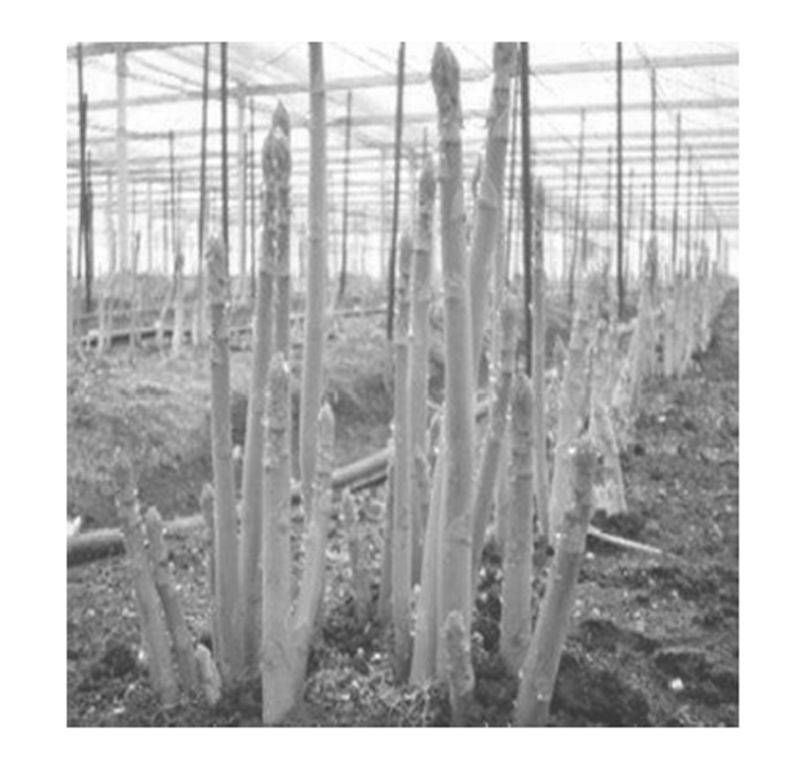
The platinum is one of the larger open-earth vegetable varieties that is grown in the north and the south to feed with its plume, a well-known health vegetable variety. It's called stone street. It's a multi-year grasshopper. Key technologies for platinum cultivation include:
(1) prophylactic techniques
The application of microbial bacterial agents in the seedling matrix, which use precision seedlings using nutrient scabs or burps, both to breed strong seedlings and to protect root systems from damage and to reduce the duration of slow seeding periods, can promote pre-maturity and high productivity。
(2) technology for deep-drive cultivation
It has a long growing age, a large root system, and it expands horizontally each year, opening 40 to 50 centimetres of deep trenches before planting, in which bottom fattening and straw organic matter are applied, and then planting to lay the groundwork for the production of gills。
(3) ground cover technology
To protect weeds and water temperature, two centimetres of crushed wheat or maize straw or black membranes may be used to cover the walk, with water saving, fattening, grass protection, etc。
(4) integrated management techniques for fertilizers
After a month of planting, the water was combined and 10 kg of urea per acre of fertilizers were followed. A total of 45 per cent of the compound weight of three dollars per acre is applied every one month. Fertilizers are applied 15-20 cm away from cylindrium and follow the ditches, which are suitable for 10 cm deep, and are applied to the trenches in a timely manner. Before the spring harvest, 2,000-3000 kg of organic fertilizer per acre, 45% of a compound 50 kg of fertilizer, and 10-15 cm tillage were spread across the line. Three-dollar complex fertilisers were followed up one to two times, approximately 20 kg each, during the mining period. After the harvest, the fall fertilisation was repeated, with organic fertilisation of 2000-3000 kg per acre, 45% of a compound fertilization of 40-50 kg, followed up once in a month. During the long term of its life, it is necessary to water it in time for the fertilizer to melt and to promote the absorption of its roots as soon as possible. The soil is frozen in such a way that winter water can be watered up for safe winters and 10 centimetres to reduce the amount of hollowness in the coming year。
(5) ongoing harvest
In general, about 30 days can be collected in the first year and around 70 days in the second year and beyond. It's 80-95 days old. In the case of mother-and-breeding, two harvests per year can take more than 120 days。
(6) selection of mother
The first year of recovery should determine the number of early spring saps according to the previous year's growth pattern, the number of staggers, the number of staggered males, the number of staggered males, the number of staggered males, the number of staggered males, the number of staggered males, and the number of staggered males, the number of staggered males, the number of staggered males, the number of staggered males, the number of staggered males, the number of staggered males, the number of staggered males, the number of staggered males, and the number of staggered males, the number of staggered males, the number of staggered males, and the number of staggered males, the number of staggered males, and the number of staggered males, according to the previous year's growth. In the second year and beyond, in spring, no mother was left behind, 45 days later, and in each case, three to four were left behind, and after the first half of august, three to four were left for management in the autumn。
(7) plant management techniques
The platinum plant is large, growing at a natural height of up to 2 metres, and the mother is prone to fallback. Measures that should be taken include the rewinding of stand-ups, increased ventilation of side branches and weak branches, and reduced nutrient consumption through the removal of flowers. In addition, 14-point pests, such as worms, aphids, beetling night moths and cotton bellworms, are to be prevented from occurring on a large scale。