


1. What is the origin of international civil defence day
Response: the international day of civil defence was established by the ninth general assembly of the international civil defence organization (ido) in geneva and 1 march of each year is designated world civil defence day。
On 1 march 1972, the international civil defence organization was born as a cross-governmental organization. The world civil defence day was established to enhance public awareness of the mandate of the international civil defence organization: to protect life, property and the environment。
2. In peacetime, do communities and schools conduct emergency evacuation exercises every year, which are costly and ineffective
In peacetime, the office organizes an annual emergency response evacuation exercise for community and school students, which is not only the mandate of the people's air defence act, but also the duty of every citizen. Through emergency response evacuation exercises, the general public is informed and equipped with disaster avoidance skills as an effective means of reducing physical hazards in times of war。
3. How can we raise awareness of the alarm twice a year, five times a year, nine times a year, when some people find it too noisy to know what the alarm is for
A: history is the best textbook, remembering history, remembering the shame of the country, and an inexhaustible element of the rise of a nation. Article 35 of the law on people's air defence clearly states: “the warning test is the legal responsibility of people's governments at all levels above the county level.” the sounding of warnings allows the general public to remember history, to be familiar with its characteristics, and to reduce physical hazards and ensure physical safety in the event of war and disaster。
4. The status and role of people's air defence in the new context
People's air defence is a national priority, a national strategy and a long-term strategy. People's air defence is an essential component of national defence, a national defence and a public good for the benefit of the nation, and is of real and long-term strategic importance for the protection of the lives and property of the nation and its people。
What are the human anti-aircraft obligations to be fulfilled by individuals
A: the obligations of states to provide human air defence to individuals are to participate in people's air defence, to bear the cost of people's air defence, to protect people's air defence facilities, to participate in mass air defence organizations, to receive people's air defence education and to provide mutual assistance. General skills to assist each other in air defence, disaster prevention and care for infirmity and disability; general methods of eliminating early disasters, leaks, etc., as a result of air strikes; correct delivery of people's air defence messages; compliance with and support for the leadership of people's air defence organizations and institutions; and compliance with the attention required for the implementation of people's air defence notices。
6. The distinction between human defence and civil defence
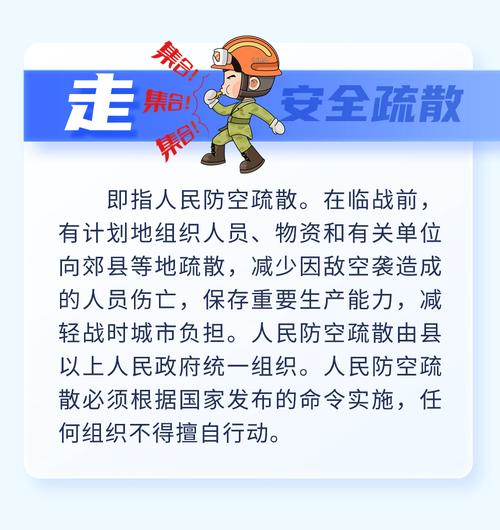
Human security is a short word for people's air defence. Human protection is a system of command and protection designed to effectively protect the lives and property of states and peoples in response to modern warfare and major disaster accidents。
Civil defence is an abbreviation of civil protection and an international term. Civil defence is an activity of the government to mobilize and organize the population, take air strikes, respond to disasters, carry out rescue operations and prevent and mitigate the effects of disasters. The main difference between human defence and civil defence is that human defence is specifically prepared for the fight against air strikes in times of war, with relatively single functions. Civil defence, on the other hand, has not only the characteristics of war-time air defence, but also of routine rescue and disaster prevention and response. In terms of coverage, human defence covers only air defence in time of war, while civil defence covers more than human defence, that is, it covers not only air defence in time of war but also disaster prevention in time. Thus, there are linkages and differences between them。
7. What are the names of human alarm signals
Response: the state provides for advance alerts, air strikes alerts, and the lifting of alarms。
8. How can anti-aircraft warning signals be identified
Response: early warning signal: 36 seconds, 24 seconds, three times a cycle, three minutes; air strike warning signal: six seconds, six seconds, 15 times a cycle, three minutes; de-alert alarm signal; three minutes continuous。
9. How should air defence alarms be sounded
Response: when the advance warning is sounded, prepare personal protective gear, complete all urgently needed items in the personal air defence emergency kit, and identify the location of the human defence works and the evacuation route. Room staff are required to close doors and windows, cut power, extinguish fires, shut down gas, liquefied gas, etc。
The air strike alarms were sounded with personal protective gear and emergency kits and were quickly evacuated or concealed within the human defence works or at pre-selected locations。
When the alarm was lifted, he left the site in an orderly manner to clean up, inspect the facilities and close the doors。
10. What does a communication, radio, television system have to give priority to the transmission and distribution of air defence alert signals in time of war

Response: means that all personnel on duty of a communications system shall have the right to cease immediately, and without delay, the trans-shipment of all telephones, telexes and messages other than air defence command communications, and that air defence alarm signals shall be transmitted without delay by radio and television services upon receipt of such signals。
What is the legal liability for obstructing the installation of people's anti-aircraft communications, warning facilities and refusing to correct them
Response: the people's air defence authorities of the people's governments at the county level and above shall warn the person concerned and order that the violation be corrected for a limited period of time. The penalty may be a fine of up to $5,000 for the individual and a fine of up to $10,000 for the unit and $50,000 for the unit; if the damage is caused, the damages shall be compensated in accordance with the law。
How can people's air defence education be organized
The national people's air defence authority is responsible for organizing the development of the people's air defence education plan, which defines the content of education. People's air defence education for schoolchildren is organized by all levels of education and people's air defence authorities. People's air defence education for personnel of state bodies, social groups and business organizations is organized by the unit in which they work; other people's air defence education is organized by grass-roots people's governments in urban and rural areas。
13. What is a people's air defence evacuation? What level of people's air defence evacuation is organized by the people's government?
A: people's air defence evacuations are effective protective measures taken in wartime to avoid and reduce urban casualties and to preserve life and war potential. It is organized by the people's governments above the county level。
What are the main specific roles of human defence engineering
In time of war, conceal people and goods, protect the lives and property of the people and people of the country, and normally serve economic construction and disaster relief。
What are the main types of human defence works
Response: there are two main categories. The first is an underground protective building built separately to safeguard wartime functions, and the second is a war basement built in conjunction with ground buildings that can be used for air defence。
16. What are human defence works in urban underground spaces and what does it do
Response: human defence works are underground spaces capable of meeting pre-defined protective requirements and closed performances, generally through two person-protected doors, which are used only for normal traffic in associated holes, which are blocked during combat. The current human defence works are mainly in the form of an air defence basement, supported by a tunnel project. In accordance with the policy of human defence regulations, the construction of new civilian buildings on the ground in the city is subject to the required construction of an anti-aircraft basement, which is used for parking, commercial, storage, etc., during periods of war, for human shelter, material reserves, etc., in accordance with the principle of peaceful assembly. The human defence authorities are guided by the principle that the building of the air defence basements should be completed, that the internal space layout should be rationalized, that construction quality monitoring should be improved and that the quality of human defence works should be continuously improved, thereby ensuring the safety of the people's air defence evacuation shelters during the war。
17. Which is the largest human underground project in the country
A: underground work at victory square in dalian, liaoning province, for a total of 148,000 square metres, covering 200,000 people during the war。
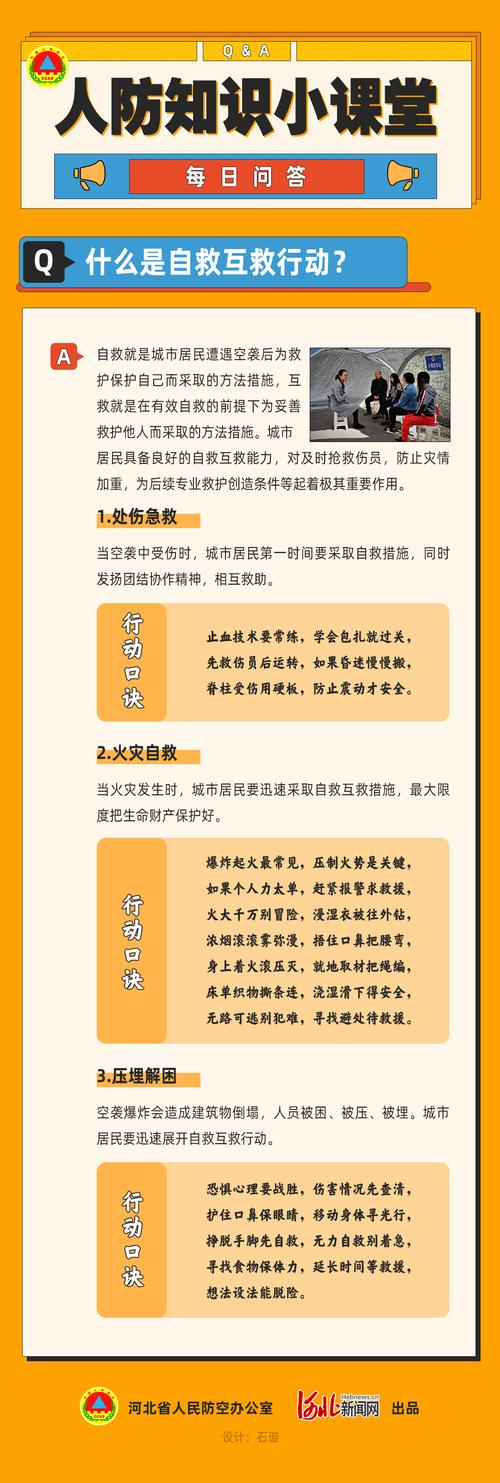
18. What measures should be taken in the event of enemy air strikes or earthquakes, if buried in the rubble of collapsed buildings
A: when people are sobered when they are buried in distress, they need to move slowly and slowly, clean their noses and noses and the mud around their faces, in order to be free to move and breathe. It will then seek to remove the sand and obstacles around it, to expand the space for free movement and breathing, to discourage hysteria and anxiety and to minimize oxygen consumption. Care must also be taken at this time to find the support of the existing space and to prevent further collapse and burial. When you feel suffocated, you can look for a gap around you and get close to it to breathe, and when you see a better source of air, you can slowly try to widen the gap, but you can't get rough hands on it, preventing the sand from falling and closing the gap. There's usually a gap of light, which is a better route to air。
What measures should be taken when surrounded by gas, fireworks, etc.
Response: when people are surrounded by gas, fireworks, a closed room, such as a bathroom, can be protected from gas, fireworks and high temperatures. In doing so, efforts should be made to remove toxic substances from the room, to the extent possible, while at the same time enhancing the room's air cover, robustness, heat resistance and fire resistance. Pay attention to collecting drinking water, food, etc. Stay calm, don't shout, don't light the fire so as to reduce the consumption of indoor oxygen. In the meantime, every effort should be made to send out distress messages. Sealed drums, plastic bags, etc. Contain exotic substances such as defecation to clean the air. Normally, a person has 1 cubic metre of sealed space and can survive for about two hours。
20. Why should education about people's air defence be universal
Response: 1. People's air defence literacy education is an important component of patriotism education; 2. Contributes to the improvement of people's overall air defence capabilities; 3. People's air defence skills are essential survival skills; 4. Schools need to fully advance quality education。
Hsu kennan! Ha-hee



