A lot of friends who assemble computers have this question: does the cpu's own nuclei become completely useless when it comes to purchasing cpus? In fact, the answer is not as absolute as you would have imagined, and the nuclei will not be completely idle because of its uniqueness, and it can still be valuable in many contexts。
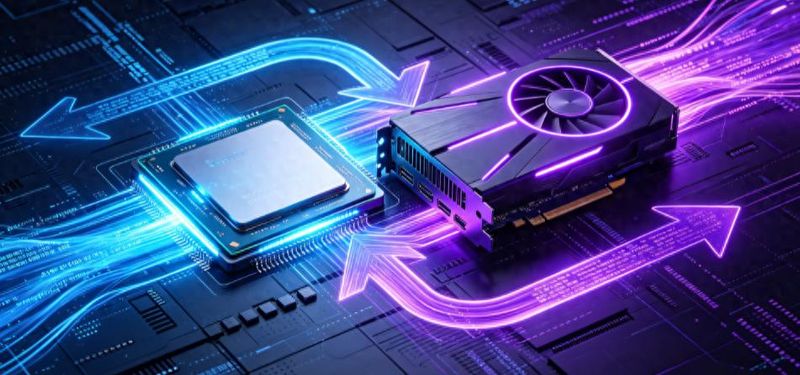
Most of the main panels, after detecting the installation of an independent graphic card in the host, will default on the pre-eminence of the display, while temporarily blocking the nuclei, which is why the video lines are plugged into the main panel interface and the screen is not properly lit. But that doesn't mean that the nuclei are “decommissioned” in this sense, and we can make the nuclei and the nuclei run simultaneously in the system, with different functions and functions, as long as we go into the main plate of the bios interface and open up a large number of nuclear monitors to support the options。
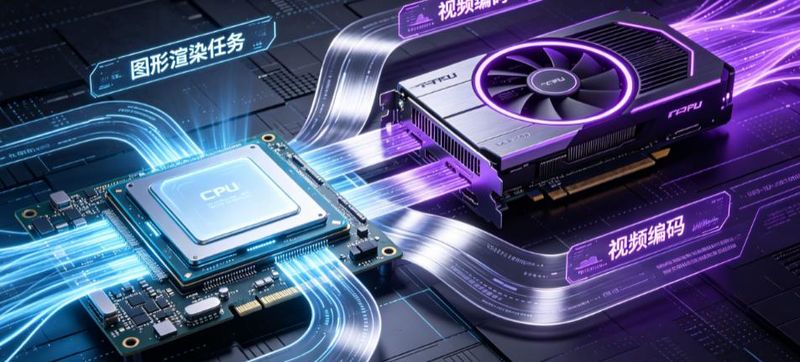
In practical use, it is evident that unique work pressures can be effectively shared, and in many day-to-day and professional settings it is evident that the increase has been experienced. The day-to-day use of double-screen, multi-screen office entertainment allows users to connect the main monitor to a single show, which is used to run large games, large software, and the secondary monitor is nuclearly visible on the main panel interface and is used to browse web pages, view mail, and play video. Such a mix would not only save unique and visible resources, but would also effectively circumvent the fall-off of parts of the game during multiple-screen switching, the cardon problem. For video clippings and live streaming of creative crowds, the benefits are more pronounced, especially in the case of intel cpu, which has a strong video decryption capability, where video clippings allow the nuclei to take on video previews and video decoding, where the exclusive focus is on special effects production and video export, and where software and hardware interact with each other can significantly increase overall productivity. In addition to this, the nuclei is a good helper in the sorting of hardware. When a computer fails to turn on and the screen is not bright, the unique display is removed, the monitor is connected to the main panel interface, and the nuclei are used to quickly determine the failure on the independent card and facilitate subsequent overhaul。
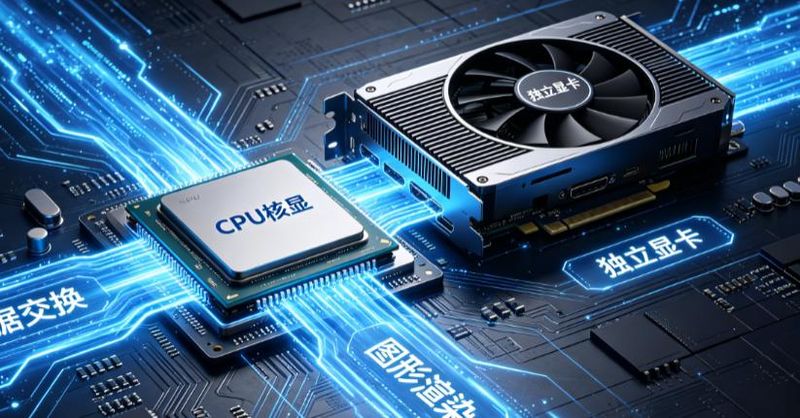
To understand the practical role of the cpu, you can choose with your own needs. In intel processor, for example, the suffix f model is a non-nuctile version, and the non-f version is a spectrometric version that you can select with flexibility based on the use of scenes and budgets. If daily video clips, live broadcasts, or long-term multiscreen devices are used, it would be appropriate to select the cpu directly with a nuanced cpu, which would actually produce a more efficient use, with the additional cost being fully valued。
If your computer is used primarily to play games, with a single screen and a tight budget, it would be more cost-effective to give priority to a non-nuclei version, which, after all, does not raise the game frame, save the budget to upgrade memory, solid hard drives, or graphic cards, and make the whole machine more expensive. If cpus with and without nucleus are small and within a hundred dollars, then it is recommended to go directly to the nucleo version, which would be equivalent to an additional guarantee at a small cost, in the event that a single malfunction is sent for repair, and that reliance on the nucleo will allow normal access to the internet and basic services will not render the entire computer completely unusable。