At some point, flat prices rose to between $22,000 and $25,000 per square metre, drawing on the proximity of the park, attracting prospective investors and new buyers. The reality in 2026, however, has given these optimistic expectations a heavy blow – the price of high-level just-needed dwellings has fallen back to $16,000-18,000 per square metre, and part of the housing stock has even fallen to between $14,000 and 15,000, falling by more than 25 per cent, making it a veritable low price for the eastern region of wu. From “no one can take” to “no one wants”, it is not only the fate of a single block, but it is a microcosm of the cruel division of suzhou city. Why are these regions the first to fall so badly when the entire market is undergoing deep adjustment? What kind of structural crisis is behind it
Field hits -- the real picture of a drop of more than 25% of the plates and the people. Marriage
Walking on the main road of the town, building new sub-districts, it is difficult to hide the cold. The window of the intermediary shop was marked with a price reduction label, and the words “sold urgently” and “sold honestly” were particularly visible. A senior real estate broker stated: “the second-hand room in this direction is now proliferating, but with little to see, it is difficult for many landlords to drop prices. Previously close to the park was the point of sale, and now the supply of new houses outside the park has been limited, the metro connection has fallen short of expectations, and new buyers have gradually moved to a city with higher sexual prices, the wu gang plate.”
The data support this visual feeling. In december 2024, the price of second-hand houses averaged $14,191 per square metre, a decline of 2. 43 per cent in the ring ratio and 17. 38 per cent in comparison with the previous year. Entering 2025, the decline has not stopped, with average prices falling to $12138 per square metre in december, a decline of 9. 03 per cent over the previous month and 14. 47 per cent over the previous year. From the highest point of $25,000 per square metre to less than $15,000 per square metre, the drop was close to 40 per cent, which is not just an adjustment, but a reassessment of the value of the region by the market。
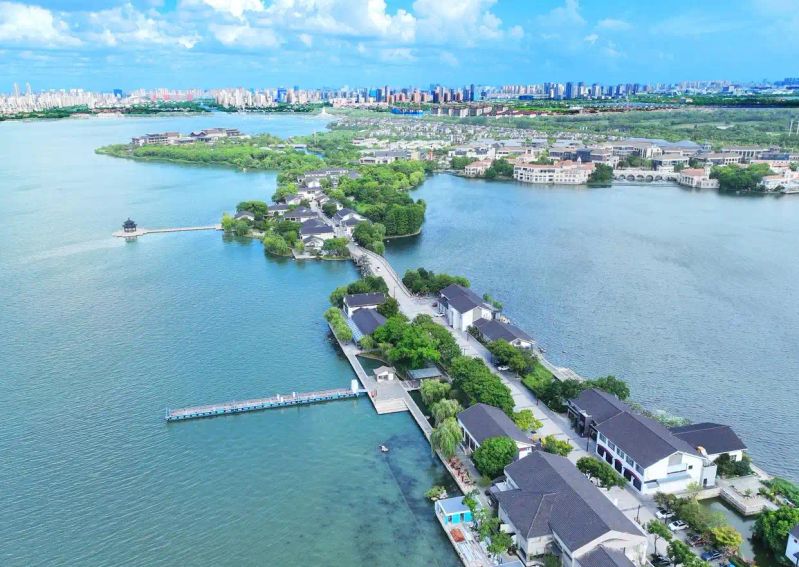
Not only was it straight, but it was the lake and cross-section of the south-west suburbs of wu centre, where the fall in house prices in 2026 was the highest in the region. These plates, based mainly on communal attributes, are located in the cultural and ecological areas of suzhou, far from the heart of the main town, with high commuting costs. During the previous few years, the market period had been marked by a blind increase in the price of some of the traveler's disks and the yoga project, and by overdrafting the future value. In 2026, the market went down, with a total retreat in investment demand, with improved demand coming together in the new city of taihu, with high stock of new houses on the lake and across the country, and extremely poor circulation of second-hand houses。
The intermediary, mr. Zhang, revealed that “high-rise housing across the lake fell from $18,000 to $13,000 to $14,000 per square metre, and prices in some remote sub-regions fell by more than 25 per cent, which is truly unmarketable. It is not enough to buy old age, young people are too far away from work and investors are too afraid to touch.”
Also in a difficult situation are the streets of shanshan and the provinces along the taihe lake. These areas of lake-view resources, which had previously been characterized by the ecological advantages of the lake, were characterized by improvements and vacations, but the packages were marked by a lack of medical, educational and commercial resources, inaccessibility, a marked seasonal residence, a low resident population and a low mobility of second-hand rooms. In 2026, the country's cultural properties were cold, the demand for vacation-type properties was shrinking, the supply of new houses was overstretched, and the prices of the lakeview and villa projects jumped significantly, with some projects falling from 30,000 to 20,000, and the prices of ordinary dwellings continued to fall。
Depth profiling -- "fatal injury" in common with the crash
A careful look at these falling plates reveals strikingly similar “fatal wounds” on them, which were ignored during the market boom and exposed during the adjustment period。
It's not enough. It's not enough. Inaccessibility is a disease of these plates - distance from the core, weak or behind schedule, and high commuting costs. Even though it is close to the park, the metro has fallen short of expectations, while the peri-urban blocks, such as the lake and the cross-border, lack subway planning, weak industrial support and limited local employment. School districts, which are generally more hard hit, generally lack quality education resources and are less attractive to home buyers. Business scarcity is also evident, large commercial complexes are missing, and the ease of living is significantly reduced, making it difficult to develop an adequate habitat。
Products are structurally contradictory to supply and demand. The high level of product homogenization is another painful point in these regions — the development of a large number of similar household-type, positioning buildings during the same period, leading to intense internal competition. The problem of oversupply has been highlighted, and in the history of land supply, these regions have concentrated on the transfer of large quantities of land, which has put pressure on new housing stock to devolve. The demand side, on the other hand, is significantly shrinking, the plate is not sufficiently dynamic, it is not supported by industry and population imports, and it is just short-lived when investors retreat。
One notable phenomenon was the further increase in the price segmentation of houses in the wu centre region in 2026, which saw a marked fall in prices in some areas, particularly in newly needed and remote areas, while core improvements remained relatively stable. Blocks such as the core area of anti-wood malfeasance, the new city of taihu, wu centre, cross creek, etc., have remained flat and have fallen very little, depending on maturity, subway superiority, quality school districts and industrial support. This strong contrast bears witness to a cruel reality: uncooperative, weak industrial and under-inflow blocks, which are most vulnerable during market adjustment periods。
Retrospective sources - deep logic and market revelation behind the fall
This fall in the depth of parts of the sioux region is no longer a simple cyclical market, but is a logical consequence of the return of marginal block values in urban development. When the tide retreats, whoever swims naked can see。
Beyond cycles — structural adjustments rather than simple fluctuations. Suzhou city is going through a deep "k-type divide". According to market observations, local housing prices in suzhou city can be crossed, while in some cases prices are still falling. Like the twin lake blocks, the house price remained at 67,000 flats and continued to be the highest in suzhou; the price of the lake east and west block also remained high. And it's not very strong over there, from 54,000 to 53,000. Behind this division is the manifestation of the resource concentration effect — the core zone is more resilient with mature support, industry and population base; and the marginal plate needs to be re-stabilized because of its natural insufficiency and the general trend towards deinvestment and return to the nature of residence。
Home buyers are advised how to identify and avoid future risk areas. Faced with a fragmented market, buyers need to establish a more rational regional value assessment framework:
Look at the fall of planning — beware of long-term visions that remain on paper and value what has been achieved. Subway, school, business, and so forth, cannot be planned, and the actual pace and use of construction must be seen。
Check supply and demand data - focus on the supply of land, new houses and second-hand houses. In 2025, the stock of new houses in suzhou was still over 18 months old, and part of the outer suburbs “in exchange for price” remained the main melody. The second-hand house market is marked by a stock of 170,000 + units in large cities and nearly 100,000 in urban areas。
Identification of population flows - study of sector industrial layout and net inflow/outflow. Demand for housing cannot be sustained without industrial support to attract the working population。
Select product differences — avoiding the selection of symmetrical and mediocre buildings. In markets with excess products, greater risk resistance is achieved only through scarce and differentiated projects。
To return to the nature of residence, to advance rationally in a divided market
The truth about suzhou's house prices is not the collapse of the overall market, but the sharp division of values within cities. Some of the marginal plates were exposed by structural defects after the tides had receded, ranging from overheating to overcooling, completing the market's brutal reassessment of their true value。
The general trend towards the return of real estate to residential properties is clear. In 2026, the high-end improved housing market in suzhou was rich in supply and demand, with an average of 156 square metres of construction space at an average cost of $5 million, and a medium- and high-end project sale of an average of $80 million. This shows that markets are moving towards quality and improvement, and that home buyers are more concerned with their own needs and long-term values than with speculation。
The current period of market adjustment may be an opportunity for real self-supporting demanders to revisit demand and rational choice. It is perhaps the biggest inspiration from the time of the restructuring of the building market that we move away from the concept of speculation, return to the very nature of residence and find a truly “home fit for ourselves” in a divided market。
Do you have any friends in suzhou who buy houses in the crash zone? What was their story like? Welcome to the news