In recent years, industrial automation has developed rapidly, driven by technological advances. As a key vehicle for technological progress, instrumentation not only provides the core support for industrial automation, but also expands its application from traditional industries to emerging areas such as semiconductors, low-altitude economies, new sources of energy, health care and environmental monitoring, facilitating market size into rapid growth. The relevant data show that the global market for laboratory instrumentation is expected to exceed $200 billion in 2025, and that the chinese market is expected to exceed a trillion yuan, with a compound annual growth rate of about 10 per cent。
At the same time, however, the development of services after the sale of instrument instruments lags behind market growth, and the structural contradictions of “less supply after the sale of upstream instrument instruments by manufacturers and high demand for downstream end-users” are becoming more pronounced. When we interviewed industry experts and tried to analyse the reasons for the lag in services after sale in the industry, we found that they coincided with the many pains of the industry itself。
Painful one: slow response after sale
The equipment's stability and accuracy are extremely high in the instrumentation industry, and in case of equipment failure, the responsiveness of after-sales services has a direct impact on the user's experimental progress and scientific results. However, slow responses to post-sales services are prevalent in many enterprises. Users are often required to go through cumbersome processes, including failure identification, spare parts procurement, billing and door-to-door visits by engineers, which take longer. In particular, some imported equipment is sold for more than 72 hours。
In addition, the lack of an effective service management system in some enterprises has resulted in poor information transmission and problems being quickly located and resolved. This inefficient response not only increases the user's downtime, but may also cause further damage to the equipment as a result of delays in maintenance, thereby affecting the user's confidence in the brand. Especially for some time-sensitive research projects, after-sales inefficiency has become one of the most painful areas of the industry。
Pain 2: there's a gap in professional staff
Instruments are usually highly specialized and complex, and the technical level of post-sale service providers is extremely high, and new engineers require a three-year training cycle to be able to perform complex maintenance tasks. However, the supply of professional services within the industry is clearly inadequate。
On the one hand, the training of existing technical staff has not kept pace with technological advances, resulting in a lag in service capacity, as instrument technology is being upgraded. On the other hand, the industry's limited attractiveness to highly skilled personnel and the tendency of many young people to enter high-paying areas such as the internet or finance have resulted in brain drain and recruitment difficulties. The talent gap not only limits the ability of enterprises to provide high-quality services, but also makes the industry vulnerable to growing market demand。
Pain 3: the spare parts supply chain is inefficient
The efficiency of the spare parts supply chain is an important safeguard for after-sale services, but the issue of the spare parts supply chain is prominent in the instrumentation industry. Many enterprises have had to wait for weeks or even months to complete maintenance owing to the poor management of spare parts stocks, which has resulted in a shortage of critical components or a long delivery cycle. In addition, some imported instrument spare parts rely on overseas supply chains, which are affected by factors such as logistics, customs clearance and further reduced efficiency。
Inefficiency in the supply chain not only prolongs equipment maintenance time but also increases the operating costs of users. For some high-value instruments, the shortage of spare parts may even force users to replace the entire machine, causing waste of resources。
Pain: high cost of after-sales services
The high cost of after-sales services in the instrumentation industry is another major obstacle to enterprise development. The cost of services comes mainly from labour costs, spare parts procurement, logistics transport and maintenance of equipment. Owing to the complexity of the instrumentation technology, maintenance often requires the presence of specialized engineers and higher manpower costs. At the same time, the cost of production and transportation of spare parts continues to rise, in particular the high cost of spare parts for imported equipment. In addition, the pursuit of short-term profits by some enterprises, while neglecting the optimization of service systems, has led to inefficient resource utilization and increased costs。
The high cost of after-sales services not only reduces the profitability of enterprises, but may also shift to users, weakens market competitiveness and hinders the sustainable development of industries。
Pain: quote charges are confused
Currently, the instrument maintenance industry has not developed uniform standards and norms for charging fees. While some industry associations and organizations are promoting industry self-regulation, the overall impact is limited. For example, in the instrument maintenance process, quotations and fee settlements should include fault information, maintenance content, breakdown of prices, etc., but in practice, the failure of some maintenance enterprises to strictly enforce this requirement has resulted in low price transparency, difficulties for users to understand specific charges and standards during maintenance and is prone to unnecessary charges。
In particular, some high-end scientific instruments, owing to the existence of a certain degree of market monopoly, have generated high benefits for some suppliers by lowering service standards, preventing third-party suppliers from repairing, and putting in place “no fix” unfair clauses, which have placed considerable cost pressure on users in many of the country's research institutions。
Pain: insufficient digital penetration
With the rapid development of new generations of information technologies, such as artificial intelligence, large models and others, digital technology should have become an important tool for improving the efficiency of post-sales services, but digital penetration in instrumentation remains low. Some enterprises continue to rely on traditional methods of manual recording and telephone communication, and lack such digital means as remote surveillance, failure forecasting and online support. This not only reduces service efficiency, but also limits the ability of enterprises to have real-time control over the operational status of equipment。
The under-digitization is also reflected in the use of data, and a large number of user feedback and service data are not effectively integrated to support service improvements. By contrast, highly digitized enterprises are able to significantly improve the quality of their services by diagnosing rapid positioning problems remotely, or even early warning failures。
Breakdown: building new competitiveness with third-party after-sale service providers
Currently, a growing number of equipment manufacturing enterprises are choosing a professional third-party after-sales service provider to obtain after-sales services at a higher cost, although in the instrumentation industry, the third-party after-sales service market is still developing, subject to high technical thresholds, high equipment values and long spare parts cycles。
It is worth noting that the participation of third-party service providers adds not only an option to the after-sale service chain for instrumentators or users, but also a third-party contribution to building new services-centred competitiveness in terms of increasing customer vis-à-vis vis-à-vis vis-à-vis customers, digital transformation and extended service coverage。
Paing yun an, a national post-sale service specialist, is one of the representative enterprises in the vertical field of post-sale services。
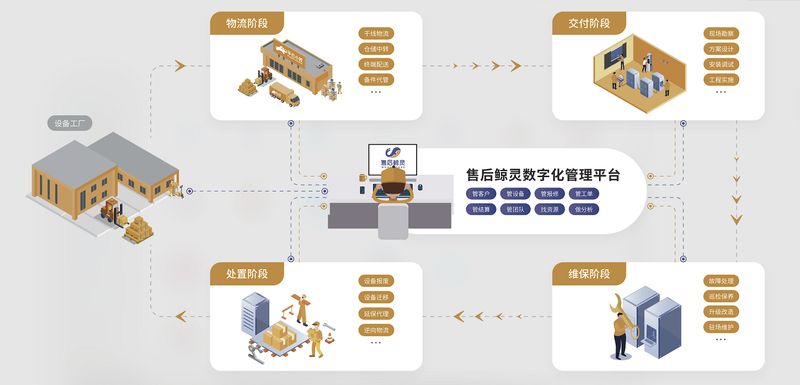
When the equipment's out of the factory, you can give it to the flat cloud
Thanks to the mature one-stop system of after-sales services for pyrotechnics, as well as the deep-seated metrology and detection industry gene, the flat cloud instrument has created four main advantages in increasing response efficiency, reducing costs and technological empowerment:
Nationwide coverage + smart deployment, localized delivery
The downtime of critical equipment can have a direct impact on production efficiency and safety. For example, in the high-precision manufacturing industry, the failure of key measurement instruments could lead to tens of thousands of dollars in loss per hour。
The flat cloud system shares the resources of the national service point of the flat cloud smith and the wide-wire measurement, with more than 60 movement control command centres and technical service platforms throughout the country. Based on the service management information system (smis), all service orders are programmed intelligently, assigning area- and skill-matched engineers to the door, with a two-hour on-site response achieved as soon as possible。
For example, a customer of a company that controls a firm has established a third-party inspection and testing laboratory in multiple locations with a variety of instruments and equipment, a high frequency of use and a high demand for daily overhaul. Through a housekeeping service in the flat cloud, smart engineers are assigned to the home twice a week. In particular, through a detailed check in the preceding period, as well as a number of service experiences in the later period, the flat cloud instrument has significantly improved the recovery rate for a single failure by treating the client's vulnerable items, consumables and even the permanent spare parts and consumables in the vehicle for the engineers who served。
Specialists, eight years on average
The flat cloud instrument is the successor of over 20 years of expert resources in the measurement and detection industry for wide-wire measurements, with senior specialists in physicoanalysis, precision measurements, environmental testing equipment, electronic measurements, etc., and experienced specialist engineers who can more quickly diagnose problems and provide accurate solutions, while long-term experience has enabled them to predict potential failures and reduce unnecessary downtime for customers through preventive maintenance。
In the case of a laboratory relocation project for a state-owned unit of measurement, the team of experts in the flat cloud instrumentation has designed and implemented an integrated relocation programme, which, with extensive experience and sophisticated technology, has completed in just 20 days more than 1,000 equipment for the relocation laboratory, including high-value instruments such as a material tester, gas chromatography-mass spectrometer and an ion spectrometer。
Following the original sop, with multi-brand capability
In recent years, “maintenance openness” has gradually been achieved in the area of the maintenance of scientific instruments, and there has been a consensus on high value for money services, which also places high demands on compliance with third-party services。
The flat cloud system works closely with the original plant and its agents, and the service process follows the original plant's service content and process standards, and spare parts for the original plant are adequately supplied. At the same time, the professional team at the flat cloud also has a cross-branding multibrand service capability that is good at achieving compatibility optimization or system integration between different brands of equipment。
A wireless terminal client based in guangdong who produces, develops and uses a wide variety of instrumentation equipment, involving multiple brands. An integrated management system helps him to set up a full life cycle desk account for all equipment, integrates reporting channels, integrates maintenance worksheets, and reduces the average length of repairs to the client's equipment from 168 to 72 hours, significantly reducing the downtime rate。
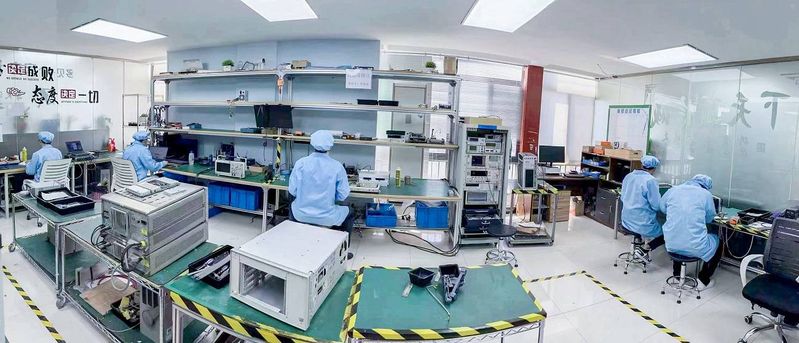
Hiraki yun yi an huadong maintenance centre
After-sales service, saas platform, digital upgrading of enabling enterprises
At the beginning of its establishment, the parent company, paing yun an, provided its clients with after-sales digital management tools to help upgrade the industry, and the self-study "saaas based on network synergy and data intelligence" has served over 3 million worksheets。
In the instrumentation industry, full life-cycle management of instruments is essential. Through data analysis, enterprises can predict maintenance requirements for equipment, optimize equipment use strategies and reduce the occurrence of accidental malfunctions. For example, the platform could provide predictive maintenance functions by analysing historical service data, identifying potential problems ahead of time and alerting clients to arrange maintenance, thereby extending equipment life and reducing maintenance costs。
As the technology of artificially intelligent megamodels matures, flat clouds will also be sold to manage the saas system to access large models such as deepseek, to enable the use of ai for trial, intelligent learning, intelligent scheduling, etc., to help enterprises to digitize their management。
Summary
“services are products”, a strategic perception of most high-end equipment enterprises. In the instrument industry, after-sales services will continue to evolve in the future in the direction of digitization, intelligence, high accuracy and stability, with excellent third-party after-sales service solutions providers, ultimately helping business clients to become more responsive, cost-effective and technology-enabling. The bene consultancy data show that when the rate of service response increases by 10 per cent, the client referral rate increases by 6. 2 per cent, while the increase of the customer referral rate per 1 per cent leads to a 0. 7 per cent increase in the market share, a non-linear growth effect that makes quality after-sale services a strategic moat for equipment enterprises。