


Safe production management is a response to human, material and environmental insecurity, as well as management deficiencies. It involves the use of safety techniques, organizational management, safety education, etc., for decision-making, planning, organization and control activities to reduce and eliminate safety risks and achieve the goal of safe production. Work safety management is the focus of enterprise management, and some of the issues in the management of work safety are summarized here。
Safe management of production, safety first and prevention first。
“security first” means that security is the top priority for all economic sectors and enterprises, and that, in the event of a conflict between security and production, production is subject to safety and safety is paramount. Production must be safe and unsafe。
Prevention is primarily about taking all necessary measures to prevent accidents, pre-empting them, increasing inputs, eliminating hazards and preventing them。
To this end, the enterprise will make safe work the permanent theme of construction production, so that the “three remain unchanged”, i. E., the “security first” position will remain unchanged at any time and under no circumstances; the security of the main leadership will remain unchanged; and the integrated governance will remain unchanged。
Thldl. Org. Cn, to strengthen the safe management of production, to prevent the reduction of production safety accidents, to safeguard the lives and property of the population, to promote economic development and to facilitate the legal regulation of safe production in production establishments。
1) the business unit is the subject of safe production. The safety of production act provides for strict and clear conditions for the safe working conditions required for the operation of production, the responsibility of the principals and the safety of production. It is important to promote greater safety management in production units。
2) the safety of production act clearly defines the status and responsibilities of all levels of government in relation to safe production work, and is conducive to the leadership of all levels of government in safe production. It is intended to ensure the safety and security of workers. It is conducive to the sanctioning of all types of safe production violations and to the creation of a strong legal and regulatory environment that deters the perpetrators of such violations and achieves safe production。
3) the safe production act clearly defines the responsibilities of the safety supervision authorities at all levels, as well as the safety supervision authorities of the relevant departments, which are required by law to carry out their duties, work together, work together and work together to promote safe production。
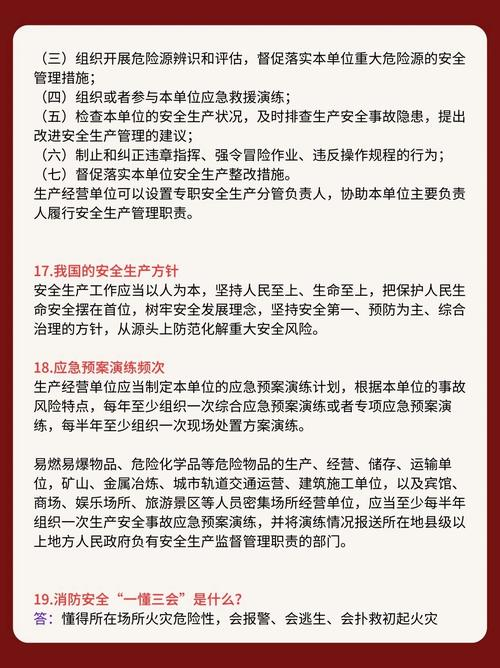
4) implement the requirements of the law on safe production to address the relationship between safe production and stable development, making safe production an important task and adopting favourable measures to curb major and extraordinary accidents and promote economic development。
In order to achieve safe production, enterprises must strengthen their full capacity, process and safety management at all levels. The safety management of the whole person is the subject of the participation of the employees of the enterprise, based on the human factor, and the management of the various measures taken to achieve the objective of safe production. Overall management has proved to be a fundamental guarantee for achieving safe production, an important way for enterprises to improve their economic efficiency and a measure to rejuvenate them。
The principles of “manage safety” and “who is responsible” are upheld in safe production。
The responsibility for safe production is an important component of corporate economic accountability and is central to the security management system. The legal representative of the enterprise is the first responsible person for the safe production of the enterprise. The establishment and implementation of the responsibility for safe production means that the specific tasks, responsibilities and rights of managers, managers, engineers and workers at all levels of the enterprise are clearly defined in order to harmonize safety and production organizationally and to establish the principles of “manage safety” and “who is responsible”. There is a division of labour at the security level, where everyone has a personal responsibility, and implementation is done. Linking leadership, technical cadres, workers and functional departments directly related to security, has resulted in a rigorous security management system. In the event of an accident, responsibility can be identified, lessons learned from both sides can be drawn and security management better ensured。
In the field of safe production, there is a system of management of safe production that combines corporate responsibility, state supervision and mass oversight。
It is the responsibility of enterprises to ensure the safety of their production. It is the responsibility of enterprises and their subjective authorities to ensure that it is carried out in accordance with the provisions of the law on the safety of production. It also seeks to improve working conditions, establish a sound safety and security system and strengthen the security of the entire workforce, the whole process and the whole spectrum of management. It is also subject to monitoring and inspection by government security oversight bodies and trade union organizations. The general assembly of employees of an enterprise shall discuss on a regular basis the safety of work, the programme for the protection of labour in production, and shall carry out a wide range of public monitoring and inspection activities, relying on the public for the safety of work。
Safe production is a complex system project, and enterprises must adopt a variety of effective approaches to integrated governance. In the field of safe production, a combination of administrative, economic, legal and educational safety management techniques is used。
1) the principle of non-existence of cause of accident
2) the principle of non-punishment of persons responsible for accidents
3) the principle of non-education for the general population
(4) the principle of non-preservation is not implemented。
Firms must seriously pursue the construction of standard sites for safety quality, increase on-site controls, focus, cut to death, standard operations and contain accidents. Security management must focus on six priorities:
A. Strict security management of the construction of existing railway lines to ensure the safety of railways
(b) reinforcement of safety controls for the construction of bridges and protection against major casualties
C. Strengthening tunnel and metro standardization operations to protect against crashes
D. Strengthening the management of explosive hazards to prevent explosions and fire incidents
(e) strengthening of the management of the construction of the quechua line and the implementation of labour protection
F. Rigorous regulations to secure transport。
The idea behind the construction of security is to take effective measures to focus on six areas: the quality of the workforce, the rules and regulations governing teams, the standardization of on-site management, the implementation of machinery and safety mechanisms。
By decree no. 75 of the state council of 1 march 1991, the regulations on the reporting and treatment of accidents and casualties of employees at enterprises were issued。
Casualties fall into five categories, namely, minor injuries, serious injuries, death accidents, major death accidents, and particularly fatal accidents。
Depending on the extent of the injury caused to the victim, the accident can be classified as:
Minor injuries: accidents that cause the victim to lose one or more working days without reaching the level of serious injury。
Serious injury: in accordance with state council decree no. 75, the regulation on the reporting and handling of accidents by employees of enterprises explains: “several serious injury continues to be carried out in accordance with the ministry of labour (60)'s opinion on the scope of serious accidents, no. 56 (see, in particular, china railway construction general, selected safety working papers, p. 387)。
Death accidents: an accident involving one or two deaths。
Major death: means an accident in which three to nine people died。
Incidence of extreme death: refers to an accident involving more than 10 deaths per event。



