Foreword: the 3d printer is a complete farewell to the era of high prices
If the time was taken back seven or eight years ago to mention the 3d printer, the first impression of the vast majority of the population remained that industrial equipment, expensive and complex, existed only in factory workshops and university laboratories. An introductory desktop machine starts at $23,000, and the medium end of the main brand has stabilized at more than $3,000 a year, and ordinary lovers and student parties want to experience the pleasure of making things, either by gnawing their budgets into new machines, or by crouching on second-hand platforms to pick up old machines。
In 2026, however, the entire consumer 3d printing industry has already undergone dramatic changes. Based on the well-established electronic manufacturing industry chain in the country, the technological upswing of national manufacturers, and the cost of compressed hardware for large-scale production, the desktop 3d printer, which used to be high above, has gone down to a threshold of $1,000. Just recently, a front-line branded flagship cash machine fell directly into the $700 level, with a daily sales price of $689, and a 3. 2-inch high-level touch screen, during which there was a high level of discussion in the creative and digital circles of students。
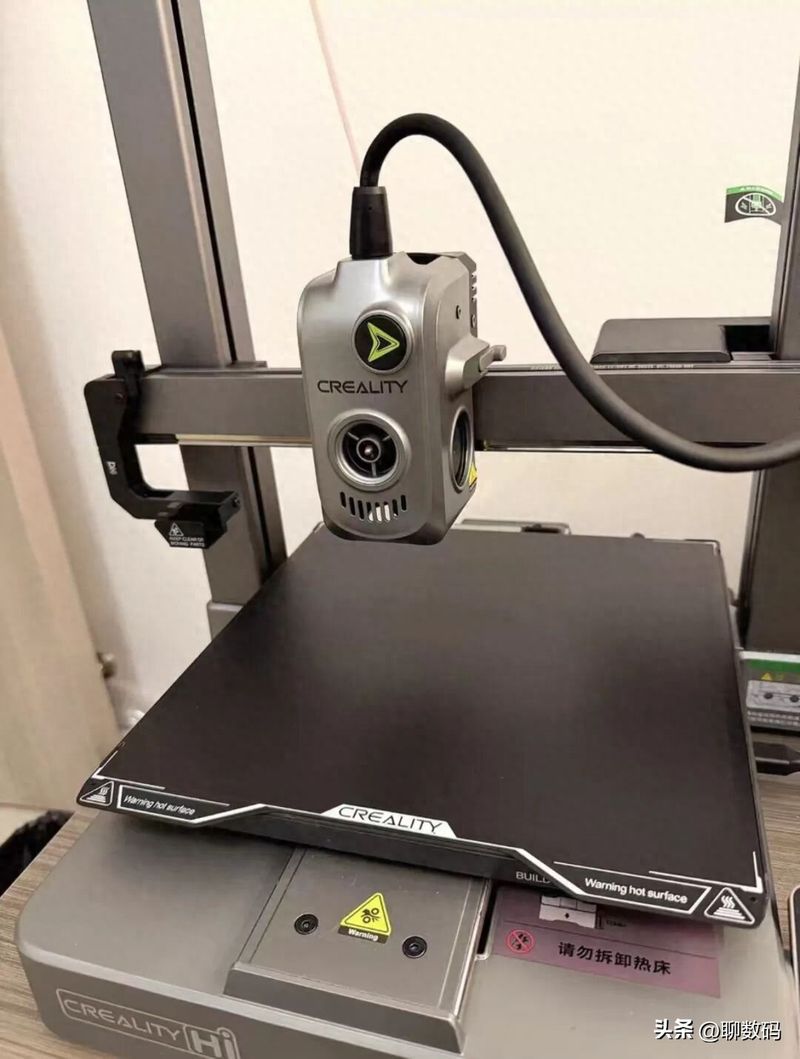
A lot of fans are asking me in their personal letters: "does the big $689 brand new 3d printer work well?" what are you gonna do with a few hundred dollars for a cell phone? Did the touch screen just have to be configured? Today, with a sophisticated digital perspective, let's dismantle the flat-priced flagship, talk about the current logic of 3d printers, second-hand devices to hide the pits, and rational options for different groups of people to spend the minimum amount of money on a 3d printout。
I. Major changes in industry: 3d printers entering the normal desk from a multimillion dollar industrial facility
In order to understand the gold content of this $689 pricing, we have to clear the price and technology changes that have taken place in consumer level 3d printers over the years。
In the early years, 3d printing technology had long been monopolized by overseas brands and desktop-type pricing had generally been low. Around 2017, domestic producers officially launched the civil market, spearheading the introduction of a 1,000-dollar primer, and for the first time pushing 3d printers to the public eye. But the product shortboard at that stage was obvious: there was no automatic flattening, full-body buttons, no screens, the computer operation had to be connected throughout, new hands were debugged for hours, printing failure was common, and the audience was limited to hard core digital players。
In a few short years, the national manufacturer completes the technical turnover. The data show that in the first half of 2026, our consumer-grade 3d printer production increased by 48. 5 per cent over the same period. In the global consumer-grade desktop market, the domestic output of equipment has reached more than 90 per cent, with firm pricing and technical voice. Two core changes radically changed the industry landscape:
First, the cost of compressed hardware for scalable production. (a) shenzhen's mature mechanical and electrical supply chain, which has significantly reduced the price of core parts such as electric machines, main panels, temperature-control modules and jets, has cost hundreds of dollars in primary controls, and now has a direct cost of bulk purchases
Second, technology is decentralized and high-end functionality is fully available. The automatic platform flattens, the thermostat, the silent master plate and the high-resolution touch screens, which used to carry only medium-to-high-end configurations above 2000 yuan, are now fully decentralized to the 1,000-dollar entrance type。
In the past, we used to say that $1,000 was the price threshold for 3d printers, and once that price fell, the average person would be free of pressure. This is a large machine of $689, which cuts directly through the mass consumption psychological defence. As you know, the minimum price for promotion, which was generally over $850 in the previous brand with a touch screen, is now down by more than $160, directly depriving the second cell phone of its maximum price advantage。
A lot of people wonder, "is low prices equal to reduced water? It must be made clear here that this 689-dollar machine is part of the branded flagship, not a simplistic version. The airframe framework, moving structure and temperature control system, which follows the brand's 1,000-dollar equivalent, simply simplifys non-essential extension parts, and core printing hardware does not have any castration, which can be the core base of the blast。
Core bright spots dismantled: 3. 2 inches of touch screen, how many pain spots have been solved
The largest sub-section of this type of machine is the 3. 2-inch colour-to-colour touch screen. A lot of starters think that screens can and can't do anything about printing, and you can only understand how useful touch screens are when they're more practical than screenless buttons. In the light of long-term empirical experience, i will draw a picture of its practical value。
One, separate from the computer. Zero basics
A 3d printer with no screen button has a hard limit: all model files, parameter settings must be imported via a computer connected to a data line. Once the computer is occupied and there are no notebooks outside, the machine becomes a direct setup. Students are placed in dormitories, and parents place their children in study rooms, making it difficult to match computers at all times。
And 3. 2 inches touch screens can directly deposit the sliced model into the sd card, and when the machine is inserted, the finger light screen can select the file and start printing with one key. Simple daily changes in temperature, printing speed, feed failure, suspension, termination of mission, all on screen, without any further extraction of data lines and repeated debugging of computer software. For primary and secondary school students, manual enthusiasts' daily diy, the threshold for use is reduced by half。
2. Real-time visualization of state to significantly reduce print failure rate
There is no more crushing 3d printing than a few hours after printing, when models are found to be wrong, heads are blocked, platforms are strewn, waste material and time. The traditional key type, which can only be judged by indicating the state of operation, nozzle temperature, hotbed temperature, print progress and surplus of materials can only be viewed at the computer end and cannot be monitored in real time。
Touch screens show real-time nozzle temperature, hotbed constant temperature, remaining printing time, and print progress per layer. In the event of temperature abnormalities and a cut-off of materials, the screens are a reminder that we can suspend the mission in time to avoid waste. The screen status preview function helps us avoid the vast majority of basic printing accidents, especially when there is no printing at night。
3. The menu logic is visualized and new hands leave the memory of cumbersome parameters
The primary players suffer most from the basic operation of calibration of equipment, platform alignment, and adaptation of consumables. Pure keys type requires several combinations of keys to be remembered and one-step-by-one reading of the instructions, which often takes more than an hour to level a machine。
This machine-type tactile system carries a self-researchable ui interface, with automatic alignment, platform fine-tuning, utilisation, and solidware upgrades all into a graphic guide menu. Following the screen, the base user can complete the whole machine calibration in 20 minutes. Family children learn 3d modelling and creative course exercises, which do not require the full help of their parents to complete the entire printing process independently。
In addition to touchscreen, the core hardware configuration of the 689-dollar machine is equally visible: the static-driven main panel, night-print noise control within 45 db, dormitories and bedrooms will not disturb the population; support mainstream pla consumables, with the vast majority of third-party consumables on the market, without the need to bind high-priced brand consumables; fast-dismantling printing platforms, with easy access to finished products and easy cleaning of residues; and support wifi wireless file, with a small mobile phone program that allows printing tasks to be carried out, taking into account convenience and stability。
Iii. Depth comparison: 689 brand new, why a 3d printer
For a long time, new players with a limited budget have preferred second-hand platforms for 3d printers. Hundreds of dollars can be found in an early 1,000-dollar machine, which appears to be worth more than anything, but the hidden costs and pits of second-hand equipment are far more than you can imagine. When a brand-new big machine is $689 with a touch screen, the second-hand device is completely out of value, and we compare it from five core dimensions。
1 hardware losses are irreversible and maintenance costs are far above the price range
Desktop 3d printers are high-volume-consuming electrical equipment, and jets, moving belts, bearings and hotbeds are consumables. Most of the second cell phones have been in use for one to three years, and the jets are subject to wear and tear, head-blocking, a gap in long-term vibrations of the moving frame and a significant decline in print accuracy. Many sellers simply clean up their appearances before selling them, concealing internal ageing problems, and in less than a month or two, there are printing errors and frequent blockages。
The replacement of an original jet-loading spare would cost $80-150 and the maintenance of the set of moving packages would cost close to $200. It appears that the second hand is $200 cheaper than the whole new, and once a failure occurs, the price of the repairs is even, and the following repeated repairs are bottomless. This is a new 689-dollar machine with one year of official brand security, a free replacement of spare parts for non-anthropogenic failure, and a direct sale of hardware, with no concern。
2. Solids are old and unable to adapt to new models and materials ecology
In recent years, large model communities have been able to adapt to the new version of equipment solidware parameters with a free 3d model. The old cell phone-type solids cannot be upgraded year after year, many of the new slice parameters are incompatible and the downloading of a good-looking model cannot be properly printed. In order to upgrade the solids, many of the old master plate hardware is not supported and can only fit old parameters, with poor details and high failure rates。
The branding system is constantly updated, printing algorithms are continuously optimized, and is compatible with mainstream slice software and a mass public model library. Whether it is a print-manufacturing set-up, a home-based spare parts, a teaching kit, a single key fit of parameters, with no need to trim them, and a growing gap in the experience of long-term use。
3. Lack of accompanying curricula and technical support and the lack of clarity in the use of new hands
The vast majority of second-hand sellers simply transfer equipment and will not provide a system-use tutorial and materials-adaptation programme. Facing the problems of flattening, scrambling, slicing and miscalculation, the newcomers have been able to find solutions on their own and have spent considerable time trying them. Many of the second-hand 3d printers were found to be too difficult to debug, left to eat ash at home, and hundreds of dollars went directly into water。
A brand-new machine is selected, and businesses offer a complete newer course, a guide to the selection of consumables, a common model resource kit, and a customer service to answer one-on-one debugging questions. In particular, students are used to complete creative work, scientific competitions, and when they encounter parameter problems, they can consult directly with technical customers, significantly reducing learning time costs。
4. Unsafe, aging fuselage with electricity
The long-term use of power lines and temperature control modules for old used equipment is ageing, and local overheating can easily occur as hotbed temperature controls fail. Many low-cost second-cell phones do not have temperature protection mechanisms and there is a considerable risk of electricity safety when they are not printed at night. The brand-new machine has been tested for safety at the plant, and it has been equipped with temperature and power outage protection, fuel outage shut-downs, and new-dollar circuits, which are safer for families and children。
Five, the second-hand water is too deep, the platform is too hot. Prevention
The second-hand platform is filled with a large number of refurbishers, fault repairers and stickers. Some of the merchants recovered the faulty chalices, which, after simple repair and refurbishment, were sold as well-known brand two mobile phones. It is difficult for ordinary players to tell whether the main board, the nozzle has been repaired, and it is difficult to defend their rights to receive goods that are not on board and that are prone to dark disease. The new formal channel type, with invoiced, full serial numbers, transparent sources, and no retrofitting packages。
A combination of economics: $689 takes the brand type with touch screens, brands with brands of brands, brands with brands of new quality security, state-of-the-art solids, compared to $500-600 with a full-blown cell phone, and spends an extra hundred times on stabilizing experiences, one-year quality assurance, and saving hearts and minds。
Iv. Proposals for different groups of people to buy, and rational consumption is not blind
I must remind you that many readers are ready to start by reading the price. 3d printers, which are digital tools, are only rational consumption on an as-needed basis, and should not be placed blindly because of low prices. In combination with different user groups, targeted procurement is provided。
Primary and secondary school students start-up studies, parent-child dey household users
This group of people preferred the 689 touch screen type, which fits perfectly. A simple operation allows children to complete their printing on their own, which is used to complete scientific and technical studies, produce manual models, general science studies, and achieve a full value for money; on the other hand, pla materials are environmentally friendly, household safety coefficients are high, and daily printing of stationery box parts, small pieces, toys and parts is very practical. The selection of a higher-price machine type is not recommended, and the entry fee fully meets the learning needs and is not charged for a high-speed functional premium。
2. New hands starters, manual lovers, model players
If you have just entered 3d printing, you want to search for a model, a diy small object, this type of machine is the best solution. The touch screen reduces the difficulty of debugging, stabilizes hardware reduces the cost of error tests, opens the door to hundreds of dollars in budget, and even if the medium-end machine is upgraded, the machine can be used for routine sampling and bulk printing of small parts without idleness. Remember not to start with a high-end machine of $23,000 at once, which makes it difficult for starters to take full advantage of their functions, resulting in budget waste。
3. Studios, small sample, high frequency commercial users
This entry type is not appropriate if it requires long, uninterrupted printing, high-precision industrial sampling, large-scale modelling. It is recommended that the budget be increased to select medium-end machines of more than 1,000 dollars with high-speed printing, closed-ring motion, a thermostat, hardware intensity, printing efficiency, longer-term operation stability and high-intensity commercial demand。
Four. Just curious. No regular use
If you're just having fun for a moment, you don't have creative learning, long-term diy needs, you don't recommend it. In addition to the cost of purchasing machines, 3d printers have long-term expenditure on consumables, with a market price of $50-70 for a one-kilogram pla. In addition to being a waste of money, it takes up home space. It is possible to go to the 3d print shop under the line and see if you have a long-term need to use it before considering the start-up equipment。
V. Operational dry goods: new machines set up like this, double the success rate of printing
Now that we're talking about the door-to-door selection, we're sharing a couple of small new machine set-up techniques, and we're working on them, so the new guy can quickly get a perfect model and collect it back up:
1. New machines will be opened and fully automated. (b) do not skip screen-guided steps, and place the machine on solid desktops to avoid the body shaking, which will reduce the problem of printing the bottom edge by 80 per cent
2. Pla materials are preferred by newcomers. Low, non-stop, low temperature of pla materials, suitable for the vast majority of household environments, and less difficult to debug from the start, such as abs and carbon fibre
3 use touchscreen preset parameters. (a) the pla exclusive temperature programme, which is built into the screen and can be called directly, without blindly modifying the nozzle temperature and printing speed
4. When unused for a long period of time, remove the nozzle and clean the residue, turn off the power supply, and prevent the long-term retention of the material in the nozzle from causing a blockage and extending the life of the entire machine。
At the end: technology is inclusive, and everyone is free to create
Looking back at the development of digital products over the years, many of the former professional equipment has slowly moved into public life, at a time when technology and supply chains at the national level have been optimized. Drones, professional sports cameras, tablet computers, and now consumer level 3d printers, the high-price barriers are being broken, and we can experience the pleasures of cutting-edge technology without spending any more money。
The large flagship aircraft dropped to $689, not only as a simple price promotion, but also as a sign signal of complete civilization for 3d printing. When the brand-new machine is affordable, simple enough to operate and good enough to sell, it is natural that we no longer have to spend our energy on second-hand pits and guard ourselves against pits of second-hand equipment. The best way to open digital consumption is to look rationally at the price reduction of digital products, to buy them on demand, to use good products themselves, and to make technology truly serve our learning, hobby and daily lives。
Interactive topics
After this period, i'd like to ask you: do you have any plans to start a 3d printer? What do you think is the most useful home-based scenario for 3d printers? If you had a budget of $700, would you have chosen this brand-new touch screen, or would you have continued to pry? You are welcome to leave your views in the comment area, and we will share our discussions。