A lot of people want to learn how to fix cars, and the first reaction is, "do you know how to fix engines first?", "do you want to buy a bunch of tools first." in fact, those who can really fix a car are often not looking for difficult repairs at first hand, but rather putting the basic tools and basic knowledge to the fore. The tools are right and learning efficiency will double; the tools will not work and the best master will not move。
We'll learn to fix the logic first
Before learning how to fix a car, do not rush to back down the code, unload the large items and create a basic awareness that cars are made up of machines, circuits, fluids and control systems. You need to know which system is responsible for what and then find the corresponding tools. For example, what screws are used, what voltage is measured, and what interiors are removed, are not scattered knowledge, but rather the starting point of the car。
A lot of rookies make a mistake: they buy whatever tools they take, and they get a lot of tools, and they're not really used much. Learn how to identify tools, then learn how to regulate their use, and then do independent maintenance. It's a key order. It'll help you to get less curved。
Basic hand tools

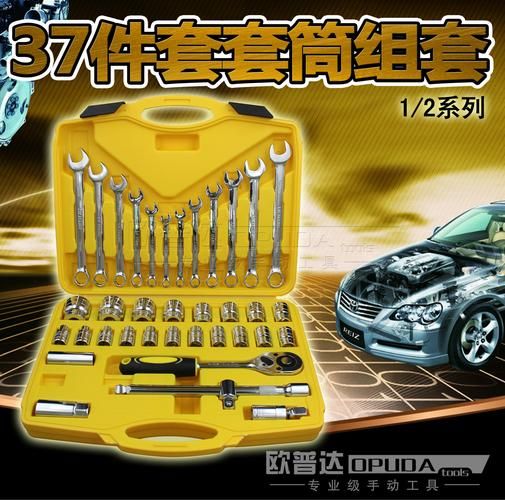
In the introductory phase, the first contact was the basic hand tools. The most common are screwdrivers, wrenches, pliers, drums, thorn wrenchs and crowbars. They look ordinary, but almost all maintenance scenes are used. For example, screwdrivers are used to disassemble inner packagings and small fixtures, wrenchs are suitable for securing nuts of different specifications, and clamps are often used to bind, pull and cut。
The basic hand tools are not “workable”, but rather learn to select the specifications and apply the force. The most frequent problem for newcomers is the mismatch in the size of the tool, which leads to screw-sliding teeth, nut damage and subsequent repair is more problematic. In particular, the adequacy of the drums and wrench, which directly affect the efficiency of dismantling and spare parts protection。
It is recommended that beginners become familiar with common specifications, such as common crosses, one-word screwdrivers, open wrenchs of different sizes and drums. Instead of pursuing a “high set” at the outset, the first step in refining high-frequency tools is the real entry point. You have to be able to see a fixture to judge which tool is the best。
Measurement tool
Capital repairs are not simply “disassembly” or “disassembly”, but often depend on measurement. The most basic measurement tools include universal meters, travel card meters, tire gauges and temperature detection tools. Their effect is not to make you a master at once, but to help you move from "touching cars" to "seeing data."。

A universal watch is one of the most valuable tools for newers to learn at the earliest possible time, helping you to check for voltage, resistance and breakage, suitable for checking common problems such as electric cylinders, fuses and poor circuit access. If you're going to learn to fix it, it's almost the first type of test tool you have to have. It's okay not to look at numbers, to learn how to take the pen, how to switch the block, how to keep it safe。
Curved card meters are used primarily to measure sizes, such as the thickness of parts, apertures, gaps, etc. The tire table is the basic tool for tyre maintenance. Whether or not a measurement tool determines whether you can move from a “will do” to a “will judge”. This step is important, because maintenance is not by its very nature arbitrary, but rather a question of correctness。
Disassembly helper
In addition to hand tools and measurement tools, dismantling aids are also important. The most common are pallets, interior decorating tools, magnetic pickers, parts collection boards, flashlights and jacks. They may not look like much, but they are particularly useful in physical maintenance, which enhances efficiency and reduces damage。
For example, the interior decorating tool reduces the probability of breaking card buttons; the magnetic picker is suitable to extract the screws that fall into the gap; and the parts collector avoids mixing the broken screws, resulting in no location being found when loaded back. A lot of mistakes in autopsy learning are not not going to be fixed, but rather are not going to be “structured and organized”。

The newcomers must develop a habit of “observing, recording, categorizing before dismantling”. It is suggested that photographs or simple tagging should be taken, even if it is simply a filtering or a panel. This, although slower, would significantly reduce the risk of misloading, leakage and would be more consistent with the idea of standard maintenance。
Safety
Learn to fix, safety must be in front. Common protective items include gloves, goggles, work clothes and slippers. A lot of people think that these are “necessary” parts, but they're not. Common oil stains, metal shredding, sharp edges and high-temperature components at the site of car repairs, without basic protection, are easily injured during the learning process。
A truly qualified mechanic must first learn to protect himself. For example, proper gloves should be worn to avoid hand scratching; eye glasses should be used with detergents or rust agents, to the extent possible, to avoid liquid splattering; and slippers and normative support are more essential when working under the vehicle. The greater the security consciousness, the more stable the learning state。
Let's not lose our protective steps in order to speed up, but it's much more important to “slower, but safer” in avionic learning. If you have just entered the house, even at the level of knowledge tools, you have to prepare the protective gear together and develop professional habits。

Introduction order
If you're zero base, it's recommended to follow the order of "cognition-tool-activism". The first step is to understand the basic system of vehicles and the basic relationship between engines, chassis, circuits and fluids; the second step is to familiarize itself with the names, uses and specifications of commonly used tools; and the third step is to move from the simplest of dismantling, inspection, cleaning and practice to detection and maintenance。
It is not necessary to challenge complex troubleshooting at the outset and to standardize simple actions before there is an opportunity for complex maintenance. For example, changes in light bulbs, rain scratches, examination of electric bottles, foetal pressure, and removal of inner packagings are basic exercises that are well suited to new recruits. They're not very difficult, but they help you build confidence and a sense of hand。
It's the best thing to do about learning and learning, and it's the worst thing to do. After each exercise, it is recommended that the name of the tool, its use, its steps and its prone to error be recorded. So you'll find that the knowledge of the tools is not back-to-back, but in one operation。
The pit avoidance advice

The common pits are three main ones: first, the purchase of too many tools, second, the neglect of safety and third, the acute difficulty. The tools are not as good as they are, but match the stages. The mastery of hf basic tools during the induction phase is sufficient to sustain most learning scenarios。
What really opens the gap is not how many tools you have, but whether you know when, how and to what extent each tool is used. Many people think that learning to fix a car is based on “goldy”, but more importantly on care, discipline and patience. Watching, recording and confirming are at the heart of technological growth。
If you're getting ready to learn auto repairs, don't rush to fix big cars, start with basic tools and basic actions. And when you can judge the tools, regulate the dismantling, secure the basics, and complete the basics, you're really moving to the gas level。
What do you learn first? The answer is clear: first learn to know, then learn tools, then practice. The basic tools are taken through, safety habits are developed, standards of common action are practiced, and subsequent learning is made easier. What else do you want to know about the initials? It is welcome to continue to follow up on the “zero basics built, the first five practical exercises”。