1 introduction
Concrete has good durability, fire-proofness and plasticity and is widely used in the area of construction work. However, concrete is influenced by a variety of primary and objective factors, such as its own materials, engineering design, and the external environment, which increase the probability that concrete cracks will occur. In the event of serious cracks, the use of buildings is directly impaired and their useful life reduced. Therefore, in the construction of concrete, the common causes of cracks should be analysed to enhance control and governance in many ways。
2 causes of concrete cracks
2. 1 design issues
First, infrastructure design is not reasonable. The foundation is the foundation of the building, and failure to design structural parameters such as ground-based carrying capacity, base factor, pit spacing, etc., would raise the risk of an uneven deposition of the building, thereby increasing the current risk of concrete fragmentation in the floor area and, in serious cases, more significant wall cracks。
Second, it doesn't make sense. A reduction in the number of bands in order to reduce the construction costs of the project during the design of the construction structure would lead to partial fragmentation of the concrete that is now being poured。
In accordance with existing norms, when construction is of a height of less than 10 m and the concrete shear wall structure is contained on three floors, the structure is designed to reduce appropriately the banding rate of steel bars within the shear wall, but may not be less than 0. 15 per cent。
2. 2 material issues
Concrete material, if of its own quality, has a negative impact on the state of stress of existing concrete components and increases the risk of local fragmentation. A higher alkali content in raw materials such as cement, additives, etc., in concrete blends, or higher active components such as in-bone silicate minerals, indeterminate silicon dioxide, can cause alkaline-boil reactions to concrete structures (aar), which in turn leads to reduced durability, cracking and structural deterioration. In addition, the selection of fast-scrutinized or high-alkali cement material for concrete formulation leads to increased hydro-thermal reaction, constant increase in temperature within the concrete structure and ultimately crack problems。
2. 3 response effects
Concrete structures have long been subject to routine static, kinetic loads and secondary stress, and their internal structural stress may accumulate and expand。
Once the stress is greater than the tensile or adhesive strength of concrete, concrete can break. As the upper load of the building continues to increase, there may be a horizontal shift or vertical deformation of the ground-based structure, which will increase the stress of concrete. Fragmentation problems arise when the response exceeds the concrete tolerance limit. In addition, if the bars within the concrete structure are rusted, the steel structure expands, and then the steel may be two to six times its size. The expansion of rusty steel bars puts greater pressure on the surrounding concrete structures, generating more internal stress, leading to vertical fragmentation of concrete structures。
2. 4 temperature differential effects
When the internal and external temperature of the concrete structure varies significantly, it is likely to cause the internal and external processes of concrete expansion or contraction not to be synchronized and generate heat stress. However, when thermal stress exceeds the tensile strength of the concrete essence, the weak parts of the structure or areas with larger constraints are prone to fragmentation. When temperatures are below 0°c and concrete is water-saturated, concrete is prone to freezing. As the size of the ice is significantly larger than that of water, the ice-free process can generate a greater effect of expansion. The freezing of concrete during the initial condensation phase can disrupt the internal structure as a result of the formation of crystals, resulting in the disruption of the waterization of cement. At this point, concrete intensity will be reduced by 30 to 50 per cent. In addition, the construction of rooms around the corner of the sun is subject to more restrictive conditions and is vulnerable to temperature differentials and contractions in concrete. When the plates are not equipped to withstand these stressors, 45° cracks are found in the weak。
2. 5 construction process issues
First, when the concrete is prepared, the failure to mix the concrete, the bone and the water within the concrete with sufficient intensity increases the probability of structural cracks and breakboard problems. Failure to do so can lead to large amounts of bubbles in concrete, lower structural intensity and increase the risk of fragmentation. If the condensation of concrete is prolonged, the coarse particles are stratified, resulting in an uneven distribution of internal stresses and cracks when bearing larger loads or temperature changes. Second, if, during the construction of concrete sites, power outages, outages and mechanical malfunctions are interrupted, and later periods of work continue, the temperature and contraction rates of new and old concrete may vary, creating greater stress heat or uneven contractions, and thus cracks along the border between old and new concrete. In addition, poor ground-level mapping, low surface condensation, lack of cleanness, intensities, over-drying or dampness also results in uneven contractions of concrete during the hardening process, leading to cracks in concrete surfaces。
Control and control of concrete cracks
3. 1 project overview
A commercial centre is a complex of commercial, office, recreational and multifunctional structures, using a concrete-clip wall structure with a total construction area of 80,000 m2, of which 20,000 m2 and 60,000 m2 are below ground and above ground. A total of 3 floors of the basement are used mainly for garage and equipment use, and 20 floors of the floor are located mainly in the main sectors of commercial, office and recreational areas。
3. 2 construction readiness
3. 2. 1 preparation of materials
Concrete is made of cement, bone, additives and water blending. In accordance with the criteria of general silicate cement, gb175-2007, 5-40 mm class gravel is selected as crude bone material, with a control of not more than 1 per cent of mud. The salsa, as a fine bone material, contained less than 3% mud. I ~ ii grind fine ash as a blend, which is kept below 20%. The relevant technical indicators are shown in table 1 below。
3. 2. 2 technical preparations
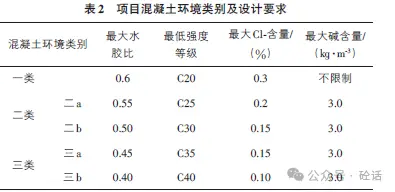
The project was designed for a life of 50 years. The project concrete environment type and design requirements are shown in table 2. The basic concrete ratio shall meet the requirement that: 1 m3 concrete cement use not less than 300 kg, with a sand rate of 40%, anti-seeming concrete ash ratio of 0. 55, concrete ash ratio not greater than 0. 60 in other locations, and concrete control time of 6-8h。
3. 3 building infrastructure
First, the design of the architecture is strictly in accordance with the relevant norms. If there is a dent in the flat structure, the engineering designer is to deploy the beam here, with an appropriate increase in the banding rate in the floor interface area above the ground floor to ensure that it is compatible with the building structure and bears the stress generated within the building。
Secondly, infrastructure should be strengthened. If the actual construction length of the building is greater than the standard design value, the concrete engineering works are to be carried out with additional local belts. It is recommended that the control be applied at a distance of about 30 cm and a width of 0. 7-1 m。
3. 4 cement construction process
3. 4. 1 concrete transport
The development of the transport programme is preceded by a careful analysis of the co-operation between the mixing station, the transport vehicle and the mechanical equipment for its construction, requiring at least one concrete tank vehicle to be on standby at the construction site. The time interval and control of the transport of tankers is within 30-min to prevent the premature entry into the state of condensation before concrete material is poured. The project plans to be equipped with nine concrete tankers based on the capacity of the construction operation. The mixer is rotated at 1. 5 r/min speed throughout the transport to ensure that concrete is well-balanced and mobile. Two tankers adjacent to each other will operate for a period not exceeding 15min to ensure continuity in the supply of materials。
3. 4. 2 pumping tubes installed
In this project, pumps are used to transport concrete and are installed horizontally or vertically. A 125 mm seamless steel pipe is selected as a horizontal tube, with a turn position connecting to a 90° curve with a radius of 10,000 mm. The size of the hole is set on the floor so that the local vertical pump pipe passes through the floor, while wedges are placed at the entrance of the pump pipe。
3. 4. 3 concrete
The interior walls of the pipeline shall be lubricated with concrete slurry. Cement slurry used in the recovery of the pipe would be used for subsequent treatment of the injections for the construction of the stitches. In the project, if concrete pumps are sent longer than 45min or partial decomposition problems, there is a need to quickly flush the remaining concrete from the pressure water and to collect the water for washing in time to avoid infiltration into the ploughed concrete structures. Throughout the pumping process, concrete reserves in the cauldron must not be below 2/3 of the cam height. When installing a material network screening, the bone or alien in which a large particle size occurs should be circumvented, so as to avoid disruption of construction caused by local congestion. In the course of the construction, the planting and intermittent periods are to be kept within the initial concrete period and, if beyond that time, the stretching stitches are to be considered。
In this project, ground-based structures, shearing walls and concrete columns are used to conduct compact vibrations using an insertion booster; the principle of fast-plugging is to control the vibration time based on concrete collapse and avoid problems such as leakage, hyperbrow, etc. For positions with large band densities or overlapping beams, a small booster should be used instead. Pistol plugs are to be evenly plattered and the angle of the insertion is to be controlled at 45°-50°. When the concrete layer is no longer significantly sunk and air-free bubbles spill out and the surface of the surface is covered with ashle, the shock stops。
3. 5 control of concrete temperature cracks
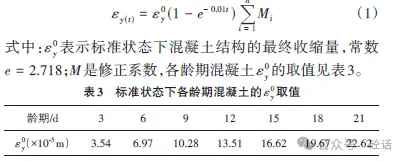
In the construction project, many of the bulk concrete is affected by the hydrocrystalization of cement, which may have temperature cracks, and should be theoretically measured。
Computation of condensation deformations of concrete of different ages according to formula (1) (εy(t)):
Calculates whether the anti-fissile level meets the design requirements according to formula (2):
(t)/fct=1. 05(2)
In form: fct indicates pressure resistance design value of 2. 01 mpa for 28d of concrete; sub(t) represents age of t and external binding is the temperature stress calculation value for 2d。
In the project, in order to effectively control the temperature cracks, the concrete mix was carried out using a slurry-cover process. For the concrete that has been laid, a secondary vibration is carried out before the final condensation in order to remove the voids and moisture generated at the lower end of the local level of the condensed water and to increase the resistance of the entire structure. Within 12h of the completion of concrete construction, the builder is required to use cover + water to enhance temperature maintenance and for a period exceeding 14d。
4 dealing with concrete cracks
4. 1 surface dust
Surface ash is a mass of cement, cement slurry, epoxy liquid, etc., painted on the cracks or concrete layer. The concrete slurry is coated with the concrete around the cracks and the concrete is trimmed, so that the whole surface is flat. After being washed, the wet state is maintained through water spills, which are then evenly painted with cement sands (1:1) to (1:2) and the total thickness of the coating is controlled at 1-2 cm. When the water is collected, iron beams are used to crush and wipe. Cement slurry, usually made from medium fine sand, is marked above 32. 5. When temperatures are high, water is required to be painted after 3-4h, and grass is covered to prevent direct sunlight。
4. 2 filling method
When filling cracks are performed, the worker usually digs a “v” or “u” slot along the gap and then embeds the filling material into it to improve the overall performance of the concrete structure. Epoxy resin slurry, polymer cement slurry, etc. Are commonly used filling materials. When concrete cracks are more than 1 mm wide and the internal steel bars are not rusted, the preferred filling method is used。
4. 3 chemical mulcanization
The chemical slurry method is a technique used to inject solutions made from chemical materials into structural cracks with pressure delivery devices such as a slurry pump, so as to achieve a combination of water-proofing, leaking, patching or strengthening. It is usually chosen to conduct slurry operations during the cold season, when the gap reaches its maximum opening, in order to prevent the cracks from being pulled open again or to form new stitches. When the slurry is filled with a full crack and pressure is steady between 5 and 10min, the slurry ends。
5 concluding remarks
The reasons for the problem of building concrete cracks are many, and the construction party is expected to follow the principle of “precautionary, patch-backed” by carefully implementing construction preparations, upgrading infrastructure design levels, strengthening the control of concrete irrigation and maintenance processes, ensuring timely repair of cracks according to their type, width, etc., and reducing the impact of structural cracks and improving the quality and safety of construction work。