In recent years, our innovative enterprises have emerged as springs, but intellectual property issues have tended to become “soft” on the competitive stage. While many enterprises have effectively protected their innovations, including through the submission of patent applications, there is also a need to maximize the use of intellectual property rights for large enterprises with large intellectual property volumes. For the time being, the most effective way to integrate an enterprise's intellectual property rights (iprs) is through the implementation of standards for the management of bips (hereinafter referred to as the tpp)。
On 1 march 2013, our first national standard for the management of intellectual property rights in enterprises, the code for the management of intellectual property rights in enterprises (hereinafter referred to as the norms), was formally implemented. For more than a year now, the code has emerged as a new and important basis for the work of local intellectual property and intellectual property intermediaries, with significant implications for the upgrading of the overall level of innovation and the transformation of the industrial structure of our enterprises。
System management upscaling the pace of development
“the basis for the management of an enterprise's intellectual property rights (iprs) lies in the fact that an enterprise must place the ipr in a reasonable position and match it with the human, financial and material resources commensurate with it.” in an interview with a chinese intellectual property journalist, the relevant head of the hier group's intellectual property department stated that, as the subject of the intellectual property system, companies should properly understand the value and role of intellectual property, place the intellectual property sector alongside, or even above, the production, marketing, financial and hierarchical organizational sectors, and identify in the strategic objectives of the enterprise the objectives of the various stages of disaggregating intellectual property rights and the path forward。
The haier group has its own unique insight into the way in which corporate intellectual property management is carried out, and they have always done so — the heil group has created an intellectual property administration that has always placed intellectual property work in a very important position as a result of innovation and as a safeguard; the heil group has an internal intellectual property team of nearly 40 people, 12 of whom are chinese patent agents, through global resource integration, and nearly 10 external intellectual property practice and management experts provide them with intellectual property strategy development, process system planning and operational practical guidance。
“the management experience of the haile group deserves to be replicated. In response to the real needs of our enterprises, as early as the second half of 2011, the national intellectual property authority began to study the design of a project to promote the regulation of intellectual property rights in enterprises, and in 2012 began a pilot project to develop and promote national standards for the code. Since june 2012, the national intellectual property agency has been launching a pilot project in six provinces and municipalities: beijing, hebei, zhejiang, shaanxi, hunan and jiangxi.” in an interview with chinese intellectual property journalists, the relevant director of the patent management division of the national intellectual property agency stated that in 2012, the national intellectual property administration had conducted training on standards for the management of intellectual property in enterprises, with 386 enterprises participating in the pilot and 39 service providers. The pilot programmes and initiatives in the region have been developed with a high degree of attention, alignment and commitment from the participating provinces and municipalities。
It is understood that, to date, enterprises and relevant intermediaries involved in the ongoing pilot exercise have achieved good results by strengthening their own intellectual property administration. The shandong seon shwe passive, inc. (hereinafter referred to as sing shwe passive), located in the city of yanjong province, actively develops the intellectual property administration system and implements it in its day-to-day work. Companies include aspects of the mandate of the ipr panel, patent administration, patent awards and sanctions, patent work appraisal, etc., in their patent management system, encouraging business innovation and job inventions among employees. At present, the sing shwe movement has largely developed a system of intellectual property management systems and regulations that provide a solid theoretical and technical basis for corporate intellectual property management and protection。
Development synergies tailored to local conditions
“in the context of this process, the provincial and municipal intellectual property offices have been active in promoting this process, establishing a mechanism for it, developing a programme for it, establishing a leadership group and ensuring its smooth functioning in terms of organizational mechanisms.” according to the director of the patent management department of the national intellectual property authority, in 2013 the intellectual property directorates of 30 provinces and municipalities throughout the country developed a programme of continuous work, 25 provinces and municipalities established a leadership group, and 16 provinces and municipalities have integrated the work of the directorates of intellectual property with local supervisors in the areas of quality supervision, science and technology, state enterprises and small and medium-sized enterprises. In most provinces and municipalities, consistent work is promoted in conjunction with the work of local enterprises, such as the development of niche enterprises. To date, there have been ongoing efforts in the provinces, cities and territories of henan, jiangsu, zhejiang and beijing, and in each province and city, this has been gradually taking place。
It is understood that since the launch and full implementation of the ongoing process, the beijing municipal intellectual property authority (ipb) has joined the beijing quality technology supervisory authority, the beijing municipal economic and informatization commission, the beijing people's government's state assets supervisory board and the sino-kang village science and technology park management board to set up a working group to promote standards for the management of intellectual property rights in enterprises, to develop a pilot programme for the implementation of norms for the management of intellectual property rights in enterprises in beijing, to select a standardized steering body for the management of intellectual property rights in enterprises of qualified quality, to conduct a series of training on corporate intellectual property rights regulations, to organize a manual of guidelines for the regulation of intellectual property rights in enterprises in beijing and to initiate an online platform for the standardization of enterprise intellectual property management throughout the country, with a view to creating a bridge for the exchange of experiences, standard counselling, acceptance management, and information exchange. In addition, the city of beijing has adopted a three-prompt approach of self-referral by enterprises, counselling by professional counselling institutions and expert evaluation by expert evaluation boards, which better reflects the principles of fairness and fairness. As a result of various efforts, more than 100 entities were declared to have participated in the standardization of intellectual property management in beijing in 2013。
“the continuity of efforts not only creates a permanent link between the work of governments and that of enterprises around intellectual property rights, but also enhances the quality and scope of the operations of the staff of the intellectual property system and the personnel of the intermediary services, which can be described as creating a `second line of supervision' in intellectual property rights. In an interview with the china intellectual property reporter, the director of the department of intellectual property of shandong province said that shandong province was not the first country to work on corporate intellectual property issues, but shandong province had seized the key point of the country's efforts to launch a national process of harmonization, moving from passive acceptance to proactive design, and indeed found a real “catcher” for the intellectual property administration in its work around the business。
Drawing on the professional staff of the national intellectual property agency and the results of the pre-existing provinces, anhui province has organized an excellent pool of teachers, targeting intermediaries throughout the province with a certain level of continuity and strength, as well as priority enterprises with a certain level of intellectual property administration. Training in enterprise continuity has been carried out on a number of occasions, in a focused and hierarchical manner. Awards have been issued to enterprises that have been certified through a continuous process and that have made a strong effort to disseminate their best practices and performances, so as to actively create a social climate for business continuity。
“with the experience of more than a year of practical implementation of the norms, it is not difficult to find that consistency can indeed strengthen the overall management of intellectual property rights by enterprises, reduce the gaps in the management of intellectual property rights by different types of enterprises, gradually strengthen the transformational upgrading of enterprises, and further enhance the capacity of enterprises to manage intellectual property rights, so that the intellectual property rights of enterprises can truly be used to their best use.” according to the relevant director of the patent management division of the national intellectual property office. (intellectual reporter lee qun)
National consistency abc
1. What is the consistency of intellectual property rights
Intellectual property rights are consistent with the implementation of the corporate intellectual property regulation. The code on the management of intellectual property rights in enterprises, which came into effect on 1 march 2013, was drafted by the national intellectual property authority and approved by the general directorate for quality control and quarantine and the national committee for standardization, and is the country's first national standard for the management of intellectual property in enterprises。
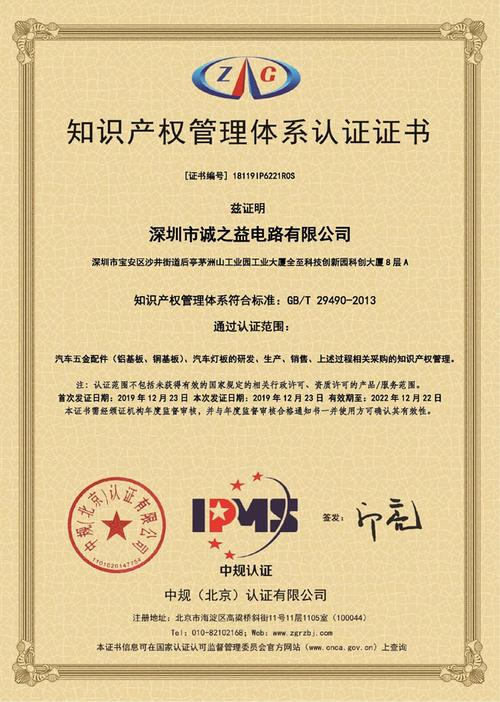
2. What is the context in which the norms on the regulation of intellectual property rights in enterprises are being introduced
In recent years, the dominant position of our enterprises in the process of technological innovation has gradually been established and their intellectual property capacity has been growing, but the pressure for transformational upgrading and competition with domestic and foreign markets has been increasing. A uniform standard of intellectual property administration will help to increase the competitive power of enterprises in the market as soon as possible。
3. What is the purpose of the corporate intellectual property code
The corporate intellectual property regulatory code, which is designed to standardize the enterprise's intellectual property management system, aims to guide enterprises in establishing a scientific, systematic and regulated intellectual property management system, to help them fully implement the national intellectual property strategy, to respond positively to the current global intellectual property competition and to effectively increase the contribution of intellectual property rights to the development of enterprises。
4. What is the core of the continuum
At the heart of the ongoing work is the creation of enterprises with intellectual property advantages, which is an important task for the current and future period of the patenting of enterprises by the national intellectual property agency, and the implementation of standards for the management of corporate intellectual property rights (iprs) is an important bridge and foundation for the overall upgrading of the intellectual property rights (ipr) capabilities of enterprises and the competitiveness of markets in the information age。
What are the main elements of the corporate intellectual property (ipr) regulation
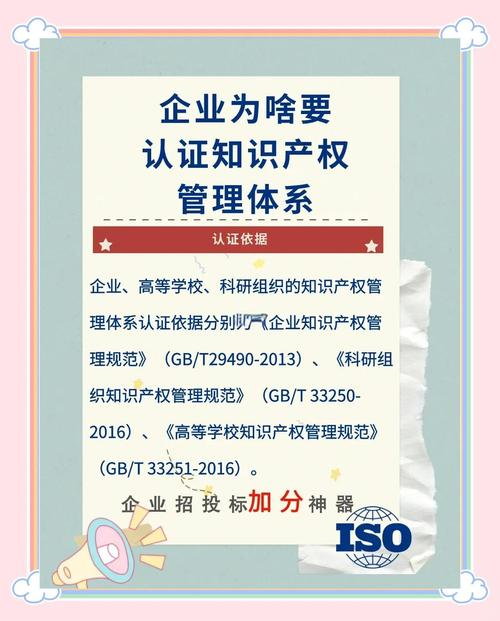
The corporate intellectual property management code provides a process-based model for the management of enterprise intellectual property, which guides enterprises in the planning, implementation, inspection and improvement of their intellectual property management systems, divided into nine chapters, covering the scope of corporate intellectual property management norms, normative references, terminology and definitions, enterprise intellectual property management systems, managerial responsibilities, resource management, basic management, implementation and operation, auditing and improvement。
How has the process of harmonization been advanced

In the second half of 2011, the national intellectual property authority began work on a plan to promote the regulation of intellectual property rights in enterprises and to draft a code on the regulation of intellectual property rights in enterprises。
In june 2012, the national intellectual property authority began pilot work on continuous standards in six provinces and municipalities of beijing, hebei, zhejiang, shaanxi, hunan and jiangxi. In 2012, the national intellectual property authority conducted training on standards for the management of intellectual property in enterprises, bringing the number of enterprises participating in pilot projects to 386 and the number of service providers to 39. Pilot work programmes and initiatives in the region have been developed in the participating provinces and municipalities and have been effective。
In september 2012, the norms on the management of intellectual property rights in enterprises (approval draft) were publicly consulted。
On 1 march 2013, the code on the management of intellectual property rights in enterprises was formally implemented with the approval of the national directorate for quality surveillance and quarantine and the national committee for standardization management。
In may 2013, the national intellectual property authority issued a circular to initiate the implementation of standards for the management of enterprise intellectual property。
7. What are the objectives of the continuum
The priority is to promote the establishment of a more standardized system of consistent work and a marketable model of certification services throughout the country, to develop a system of continuous advisory services to meet the needs of enterprises, to focus on the development of a cadre of skilled and consistent professionals, and to provide a solid support package, with a focus on supporting enterprises with intellectual property advantages at the national level and on demonstrating them, and to actively promote high-technology enterprises. If progress is successful, by 2015 regulatory mechanisms for the standardization of enterprise intellectual property management will be established and improved throughout the country; thousands of high-quality enterprises will be nurtured, with a pool of enterprises with core patents, a highly competitive patent system and a more internationally competitive intellectual property advantage; consistent enterprise efforts will result in long-lasting mechanisms; corporate managers will be made more aware of intellectual property control and will be better governed and trained to develop a pool of professionals familiar with corporate intellectual property management standards。
(ipr)