From the mba think tank encyclopedia (https://wiki. Mbalib. Com/)
Metering
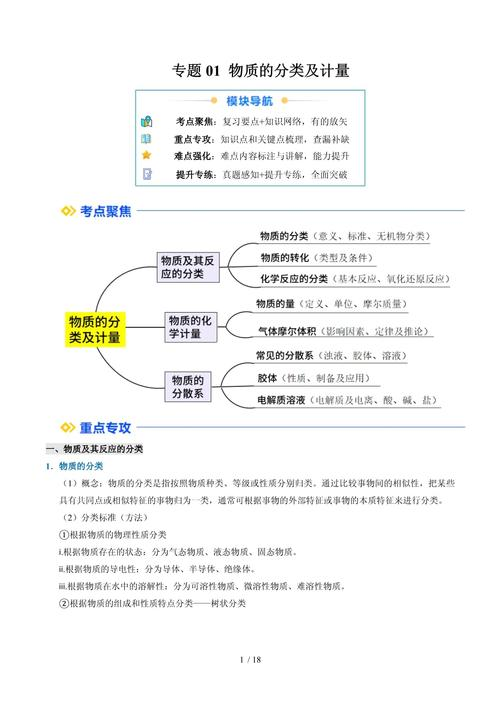
Measurement refers to the measurement of the quantity guaranteed by technical and legal means in an accurate, reliable and uniform manner. A broad understanding refers to the entire field of measurement knowledge. Measurement has historically been referred to as “measurement”。
Measurement, which covers industrial and agricultural production, defence construction, scientific experiments, domestic and foreign trade, and people's lives, is an important technological basis for the national economy。
With the development of production and science and technology, modern measurement goes well beyond “measurement”. There is an independent discipline - metrology - of length, thermal, mechanics, electromagnetic, radio, time frequency, ionizing radiation, optical, acoustic, chemistry, etc。
The elements of measurement can normally be summarized in six areas: unit of measure and unit of measure: measurement instruments (or measurement instruments), including metrology benchmarks, metrology standards and work measurement devices for units of measurement: quantities and tracers, including calibration, calibration, testing, testing and detection: physical constants, measurement of material and material properties: measurement uncertainty, data processing and measurement theory and their methods: measurement management, including measurement assurance and measurement monitoring。
Measurements are divided into three categories: scientific measurement, engineering measurement and rule of law measurement, each representing the three dimensions of measurement, basicity, applicability and public good。
Characteristics of measurement are accuracy, consistency, traceability, and legality。
Content of metrology studies
The studies on metrology include:
(l) the unit of measure and its benchmarks, establishment, reproduction, preservation and use
(2) the measurement characteristics of volume transfer, measurement principles, measurement methods, measurement uncertainties and measuring devices
(3) the ability to measure people
(4) measurement of the rule of law and management
(5) all theoretical and practical issues related to measurement
(1) the country currently classifies metrology by profession into 10 major categories: geometry, temperature, mechanics, electromagnetics, electronics, time frequency, ionizing radiation, opticals, acoustics, chemistry (with standard'mass)。
(2) in terms of disciplines, metrology can be divided into legal metrology, general metrology, technical metrology, quality metrology, theoretical metrology, etc., depending on the nature of the mission。
(3) the international organization of standardization of metrology (oiml) divides metrology into industrial metrology, commercial metrology, astronomical metrology, medical metrology, etc. According to the field of application。
Measuring the relationship with consumers
The promulgation of the metrology law of the people's republic of china has added another weapon to the consumer's protection of his or her rights, but since the metrology law is more professional and not easily accessible to a wide range of consumers, a brief description of the relationship with consumers will be provided。
Many commodities in commercial activities are accounted for on the basis of the quantity of commodities, which is mostly determined by measuring devices. For example, commodities such as food, cotton, oil, meat, sugar and vegetables are measured using a variety of heavy measuring devices - weighs the scales; fabrics, wool and various fibre-optic textiles are measured in sizes; water, electricity, gas, etc. Are measured in meters such as meters, meters, gas meters, etc. The seller and buyer settle on the basis of the indicative values of these measuring devices, and therefore their accuracy will have a direct bearing on the economic interests of both parties. If the measurement value is larger than the real value of the commodity, the consumer will suffer economic losses; on the contrary, the measurement value is smaller than the real value of the commodity, and the seller will lose。
As a result, the strengthening of measurement oversight, the severe suppression and punishment of offences committed through the use of measuring devices and the assurance of the accuracy of commercial measuring devices are among the important guarantees of fair trade and the preservation of the interests of consumers at large. The metrics act provides that: “if damage is caused to the state and to consumers by the use of substandard measuring devices or by the destruction of the accuracy of measuring devices, compensation is ordered for the loss, confiscation of measuring devices and violations of the law, and a fine may be imposed.” the promulgation of the metrics act provides the legal basis for further strengthening and developing commercial measurement and safeguarding consumer interests. The general consumer needs to assist the measurement sector in strengthening the supervision and management of metrology devices in order to safeguard national and consumer interests。
Our measurement system
Our system of measurement regulations consists of three parts:
1) the measurement method of the people's republic of china
(2) administrative regulations for measurement and local regulations by the standing committees of the provincial, municipal and autonomous regions
3) measurement management practices and technical norms developed by the executive branch of the state council, sectoral measurement management practices developed by the relevant departments of the state council, and local measurement management practices developed by the executive branch of measurement at the county level and above。
Elements of metrology
The basic elements of the measurement are:
1) measuring legislative purpose
2) adjustment of scope
3) unit of measure
4) metrology management
5) measuring oversight
6. Measuring authorizations
7. Measurement certification
8. Measuring the handling of disputes