


Learn to follow the spirit of the party's 20th 3rd plenum
Author: goli (researcher at the centre for research and research on socialism in china during the new age of xi jinping, jiangsu province, and professor at the party school of china communist party of jiangsu province)
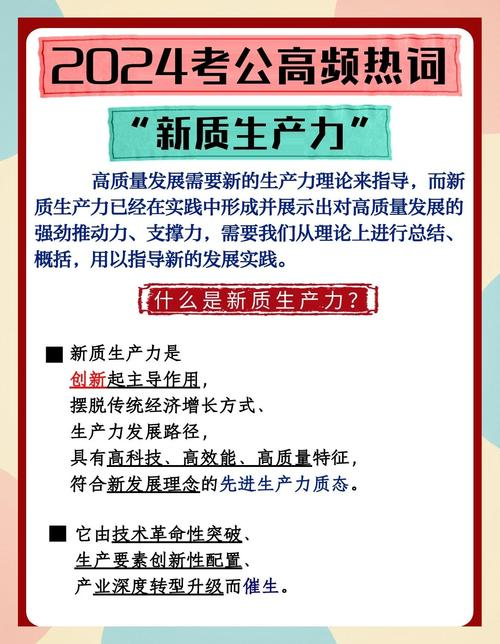
Intellectual property rights (iprs) are fundamental safeguards for innovation-driven development and an effective governance tool for the enhancement of a country's sti capacity. General secretary xi emphasized that “innovation is the first engine of development, and the protection of intellectual property rights is the protection of innovation”, and that “new quality productivity is marked by innovation, both at the technological and business model level and at the regulatory and institutional level. It is important to continue with the big article on innovation, which promotes the accelerated development of new quality productivity and “the full construction of a modern socialist state, which must better advance intellectual property protection”. These important statements provide insight into the intrinsic link between intellectual property protection and the development of new quality productivity. Placing innovation at the heart of the country's modernization and construction, constantly improving the intellectual property system, investing in raising the level of intellectual property protection and better translating the advantages of the intellectual property system into governance effectiveness are important for accelerating the development of new qualitative productivity and promoting quality development in all its aspects。
1. Enhancing the functioning of intellectual property protection systems to stimulate the dynamism and dynamism of science, technology and innovation

Increased protection of intellectual property rights is both an important element of improving property rights regimes and an essential step towards the activation of science, technology and innovation. Since its eighteenth anniversary, the party's centre, with comrade xi at its core, has maintained that science, technology and innovation are at the heart of the country's development. It attaches great importance to building a legal system for science, technology and innovation. It has continued to improve legislation in the area of science, technology and innovation. It has also promoted the revision of a number of laws and regulations, such as the patent act, the copyright act, the anti-improper competition act and the science and technology progress act, and the act to promote the conversion of scientific and technological results. At its twenty-third plenary session, the party clearly stated its general objective of further and comprehensive reform “to continue to improve and develop the socialist system of chinese identity and to promote the modernization of the country's system of governance and its capacity for governance”. It proposed “to improve the property rights system, protect all forms of economic property on an equal and permanent basis, in accordance with the law, and establish an efficient system for the integrated management of intellectual property rights”. Institutional building, accelerated improvement of the intellectual property system and the building of institutional mechanisms to support comprehensive innovation can provide a good ground for new quality productivity development。
Science, technology and innovation are important drivers for the development of new quality productivity. According to general secretary xi, “new quality productivity is largely driven by technological revolutions. The ability of science, technology and innovation to generate new industries, new models and new dynamics is central to the development of new qualitative productivity.” this means focusing on national strategies and the realities of economic and social development, strengthening basic research and promoting science, technology and innovation, especially original and subversive technological innovation; building on the breakthroughs of key common technologies, front-line leading technologies, modern engineering technologies and subversive technological innovations, making full use of the institutional advantages of new forms of nation-building, maintaining the core of key technologies, continuously upgrading original innovation capabilities and nurturing new dynamics for the development of new quality productivity。
Better use of intellectual property as an incentive to safeguard and to stimulate the creativity of all kinds of major innovation can provide a powerful impetus for the development of new quality productivity. Today, the world's century-old changes are accelerating, a new wave of scientific and technological revolutions and industrial transformations are advancing, and the scientific and technological revolution is intertwined with big players. The field of high technology has become the forefront of international competition and the main battlefield. It should be clear that the relatively weak original innovation capacity of our country and the human constraints of some key core technologies have not fundamentally changed. It is important to strengthen the supply of new track systems in new areas, to establish a sound intellectual property protection system, to break down institutional barriers, to seize the high points of scientific and technological competition and future development and to raise the level of autonomous innovation. Focusing on intellectual property issues in the areas of big data, artificial intelligence, quantum technology and so forth, improving protection rules such as patent rights, copyrights and so forth as soon as possible in order to create new industries, new models and new dynamics. Increased intellectual property protection of sti outcomes will better underpin key core technological imperatives and help achieve high-level technological self-reliance. Stricter protection of high-input and long-term technologies, such as biopharmaceuticals, genes, seeding, chinese medicine, and the timely revision of specific legislation, such as regulations for the protection of new varieties of plants, firmly support the basic system of comprehensive innovation。
2. Use intellectual property governance tools to promote better integration of government and effective markets
Intellectual property rights (iprs) are central to the modernization of national governance systems and capacities as an important strategic national resource. According to general secretary xi, “the intellectual property protection of working relations modernises the state's system of governance and the capacity to govern, relationships develop with high quality and people's well-being”. The history of the creation, transformation and development of the intellectual property regime has been characterized by a relatively well-developed system of intellectual property protection in countries that are technologically advanced and economically prosperous. The party's twenty-third plenary session focused on the theme of modernizing china and outlined strategic initiatives to deepen economic institutional reform. Dealing with the relationship between government and markets is at the heart of economic institutional reform and is the subject of institutional mechanisms for developing new quality productivity. Intellectual property rights (iprs) are a catalyst for the development of new quality productivity, a accelerator for quality development, and serve an indispensable dual function of institutional and technological supply. Accelerating the transformation of intellectual property rights and promoting the transformation of scientific and technological results is an effective way to promote the deeper integration of science, technology and industrial innovation. It is an important step forward in accelerating the self-reliance of high-level science and technology in the new context and the development of new quality productivity in the light of local conditions。
New quality productivity needs to be nurtured and driven by both markets and governments. General secretary xi emphasized that “the development of new quality productivity requires further comprehensive and deeper reforms to develop new production relationships that are appropriate”. This requires a rationalization of the relationship between productivity and production relations, the economic base and the superstructure. Developing new quality productivity requires both advanced government planning guidance, scientific policy support, market mechanism regulation, and continuous innovation by microentrepreneurs such as firms. It requires deep-seated reforms in the economic, science and technology institutions, as well as a focus on cutting-edges that constrain the development of new quality productivity, as well as deep-seated factor-marketing reforms, innovations in factor allocation, and accelerated convergence of advanced and high-quality elements into new quality productivity。
Intellectual property rights (iprs) serve as a bridge for the transformation of science and technology results into real productivity, effectively serving as an intellectual property governance tool and promoting better integration of government and effective markets, if the institutional barriers to new qualitative productivity development are to be further removed. General secretary xi emphasized that “only strict protection of intellectual property rights can improve modern property rights systems, deepen factor market reforms and promote a decisive role for the market in allocating resources and a better role for the government”, an important scientific statement that illustrates the important role of enhanced intellectual property protection in promoting better integration of government and effective markets. Properly understanding and grasping the relationship between strict protection of intellectual property rights and the prevention of abuse of rights, both by raising the level of protection of intellectual property rights and by strictly combating abuses such as monopolistic agreements, abuse of market dominance and malicious tort proceedings; by raising the illegal costs of malicious acts such as betting, hoarding and resale of trademarks; by preventing the phenomenon of “zombie trademarks”; and by creating a fair and orderly market-based, rule-of-law business environment. (c) accelerate research on the construction of rules for the protection of intellectual property rights in data, improve systems for the protection of data property rights and facilitate the flow of data elements to new quality productivity; further deepen the reform of the system of ownership of scientific and technological results in jobs, and the way in which innovators participate in the distribution of intellectual property rights, in order to fully stimulate the dynamism of human innovation and the transformation of scientific and technological results。
Unleashing the effectiveness of international coordination of intellectual property rights and expanding the high level of openness to the public

Protection of intellectual property rights is a long-standing focus and hotspot for the international community, creating new institutional advantages for our participation in international competition for intellectual property rights and providing not only a strong support for the opening of international markets for our enterprises, but also a new impetus for the development of intellectual property rights worldwide. For example, at the beginning of the reform and opening-up process, my country began to establish a system of intellectual property rights and to actively accede to the relevant international conventions, integrate itself into the system of international rules, continuously raise the level of intellectual property protection and provide the necessary guarantees for a new pattern of openness to the outside world. Since the 18th anniversary of the party, our country has advanced further in the building of a strong intellectual property power and in its historic achievements in the cause of intellectual property rights, moving beyond a path of chinese-specific intellectual property development. The secretary-general of xi stated that “the protection of intellectual property rights (ipr) working relations in the country is open to the outside world and that only strict protection of iprs can optimize the business environment and create new institutions for a higher level of open economy”. Strengthening the rule of law guarantees of intellectual property rights is also a necessary requirement for deep participation in global intellectual property governance and for a high level of openness。
High levels of openness to the outside world are necessary for the development of new qualitative productivity. General secretary xi stressed that “the expansion of high levels of openness to the outside world, deep participation in global industrial division of labour and cooperation, and good use of both domestic and international resources” and “the creation of a sound international environment for the development of new quality productivity”. Accelerating the development of new qualitative productivity will require ever-widening high levels of openness to the outside world, steadily expanding the system of rules, regulations, regulations, standards and so forth, constantly enhancing our voice in regional and global economic and trade patterns and proactively shaping a favourable external environment。
The integrated promotion of international cooperation and competition in intellectual property rights and the creation of a new, high level of openness to the outside world are conducive to a sound international environment for the development of new qualitative productivity. Against the backdrop of increased global trade and economic friction, international rules on intellectual property are ushering in a new wave of profound adjustments and changes. According to general secretary xi, “to promote international cooperation and competition in the field of intellectual property rights in an integrated manner”, “to adhere to the concept of a community of human destiny, to the principles of openness, inclusion and balance, and to participate deeply in global intellectual property governance within the framework of the world intellectual property organization”. The proper treatment of the relationship between domestic and international law on intellectual property rights emphasized that the rule of law on intellectual property rights could not be separated from the development of national realities, preventing “blind follow-up” of protection standards in developed countries, and strengthening cooperation on international exchanges of intellectual property rights and promoting improved rules on international protection of intellectual property rights. In international negotiations on the protection of intellectual property rights, it is important to be bold and effective in their struggle, without abandoning legitimate interests and safeguarding national interests; to insist on common bargaining and sharing; to contribute to the improvement of intellectual property rights and related international rules and standards of international trade and investment; and to guide and promote a more just and rational development of the global intellectual property governance system. Deepen regional cooperation on intellectual property, strengthen collaboration on intellectual property law with the “one way forward” countries, and promote knowledge-sharing and information flows; expand the scope of intellectual property cooperation, expand external cooperation in such areas as vetting mandates, cross-border law enforcement, dispute settlement, and promote intellectual property protection and trade facilitation to help our enterprises “go out”. Good intellectual property stories from china, the provision of chinese programmes, active integration into the global intellectual property governance system, striving to create a new and high level of openness to the outside world and creating a sound international environment for the development of new quality productivity。
The day of light (06th edition, december 05, 2024)



