Since the 1990s, the world economy has increasingly developed in two directions: first, the knowledge economy has taken the lead in developed countries; and second, economic globalization and integration. With the emergence of new economic patterns, the pattern of competition among enterprises should change accordingly. Among them, a group of theorists and practitioners turned their eyes from tangible to intangible assets, arguing that the real investment in business would not be machinery, but knowledge. The “physicalization” of intangible knowledge and its effective use are key to the competitiveness of modern enterprises. In this context, more and more enterprises are focusing on knowledge management or intellectual capital management。
The book begins with an analysis of the current state of management of intellectual capital in domestic and foreign enterprises and seven topical issues in intellectual capital management: (1) how to manage knowledge workers; (2) how to help knowledge workers quickly find the knowledge they need; (3) how to transform the knowledge of individual knowledge workers into intellectual capital owned by the organization; (4) how to make organizational knowledge flow; (5) how to make the organization learn more quickly; (6) how to measure the organization's intellectual capital; and (7) who to manage the organization's intellectual capital。
The book then provides a systematic review of the history of intellectual capital management as a whole as a subject, with its main research content, representative character, definition and composition of intellectual capital management. No reader has been reached with intellectual capital management, and reading this chapter will provide a clearer and more systematic understanding of intellectual capital management。
According to this book, effective management of intellectual capital in modern enterprises consists mainly of:
(1) building an effective information technology platform, which is the basis for intellectual capital management; (2) effective human capital development and management, which is at the heart of intellectual capital management; (3) knowledge flow and transfer and sharing, which can only make full use of the enterprise's intellectual capital; (4) transforming the intellectual capital of an individual into the intellectual capital of an organization and promoting the growth of the intellectual capital of an organization so that it does not depend on a few key employees for the sound functioning of the organization. To that end, the book builds the theoretical framework for intellectual capital management through empirical research, literature reading and theoretical research. On the basis of this theoretical framework, the following issues were examined:
1. A theoretical framework for capacity-based human capital development and management was proposed and specific approaches analysed。
2. Based on the concept of knowledge networking, the analysis focused on human and technological networks. Models of transfer and sharing of intellectual capital were analysed, ways of transferring and sharing intellectual capital within enterprises and ways of converting external intellectual resources into internal intellectual capital。
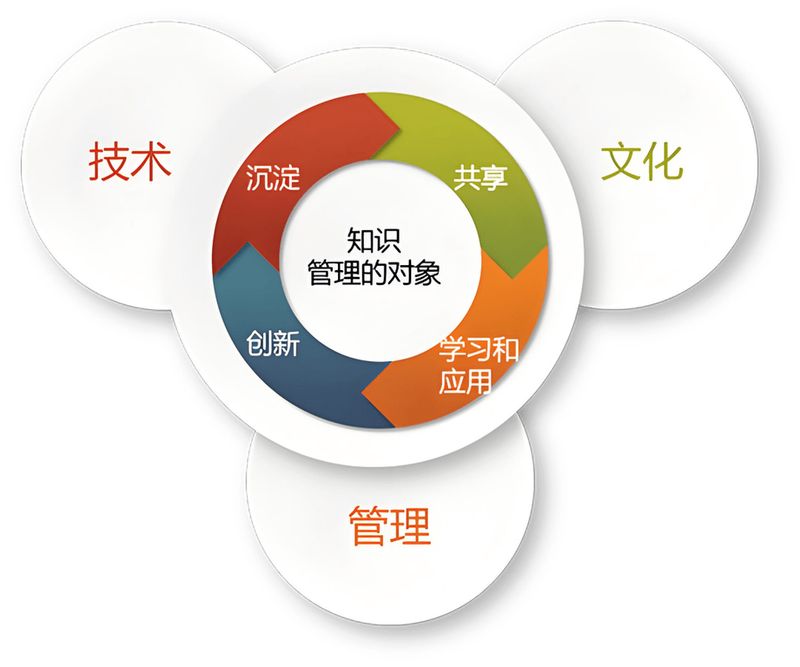
Around the two issues of “what is the internal logical process of conversion of individual intellectual capital to organizational intellectual capital” and “how to effect conversion” the concept of organizational learning is the cornerstone of the capital conversion model between individual intellectual capital, team intellectual capital and organizational intellectual capital, and proposes a four-phase capital conversion process. These four phases are constantly revolving and organizational intellectual capital, individual intellectual capital and team intellectual capital are increasing. There are currently three main ways of capital conversion in our enterprises: the conversion of individual intellectual capital to organizational intellectual capital, the conversion of team intellectual capital to organizational intellectual capital, and the conversion of co-creational intellectual capital to organizational intellectual capital. In a typical case, this chapter analyses the characteristics of each path to conversion of intellectual capital, the impediments, the mechanisms for conversion and the organizational guarantees for its realization, and concludes with the basic characteristics of the various paths to conversion。
4. An organizational intellectual capital evaluation system was built on the basis of an overview of the available intellectual capital measurement literature。
In the context of the question “what is the inherent logic of organizational intellectual capital growth” an analysis was made of the underlying mechanisms of organizational intellectual capital growth, particularly in the case of mutations. Technological change and management change are the two main ways in which the intellectual capital of a volatile organization can grow。
This chapter first discusses the general framework for the growth of intellectual capital in market-oriented volatile organizations guided by strategy, and then, by analysing four typical cases, summarizes the main features of the growth of intellectual capital in volatile organizations that are dominated by technology change and management change。
The book analyses the current state of intellectual capital management in domestic and foreign enterprises, reviews the entire development history of intellectual capital management in the evolution of disciplines and the application of business practices and reveals seven key issues in intellectual capital management. Through empirical research, literature reading and theoretical research, the book constructs theoretical parameters and operational paradigms for intellectual capital management, as reflected in:
Created a new framework for hr management
Analysis of the patterns and pathways of intellectual capital sharing
(b) the inherent mechanisms for organizational intellectual capital growth
(b) explored the pooling and conversion of intellectual capital from individuals to organizations
An evaluation system of organizational intellectual capital has been constructed。