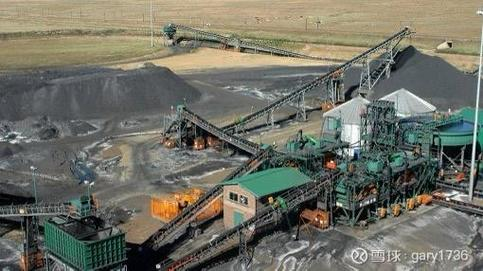
Exploration of the importance of deep processing and utilization of coal: the energy crisis has increasingly affected people's lives and security since the twenty-first century. Coal is one of the most important sources of energy resources, and coal production affects, to some extent, the development of other industries and socio-economic progress. It provides a summary of current problems in the coal industry and responses thereto, as well as a programme for the development of modern coal research talent. Keywords: coal processing; coal utilization; talent development: tq529 bibliography code: article a: 1009-2374 (2014)24-0118-02 coal is a scarce, non-renewable resource, that is, less spent. Thus, the rational use of coal resources is required in order to increase the amount of time spent on the total resources available. While the country's current coal resources are abundant, there are many problems in their exploitation, such as over-exploitation, low utilization rates, low recovery rates, waste of resources and pollution of the environment. For sustainable economic development, the sound processing of coal becomes a necessary subject of research and exploration for economic development today. The history of the development of the coal industry can be summarized in the following three phases as the country's development strategy for the coal industry is adjusted: the first stage is the exploration and exploitation of coal resources. During this phase, the coal industry focused most on the exploration and exploitation of coal resources in order to find more coal reserves and increase coal production. The second phase is the construction and expansion of coal production. During this period, most coal enterprises shifted their core of development to such areas as rapid expansion and increased production, resulting in massive waste of resources, environmental pollution and ecological damage. The third stage is the deep processing of coal, with a reasonable increase in its utilization and value. This is also the stage in which today's coal-producing enterprises are going through a process in which they not only achieve rapid development but also seek ways and means of further processing coal, using coal resources more scientifically and rationally, and seeking new ways to develop efficiently, with the single objective of maximizing benefits. The problems of the coal industry in development, which has long been bound by traditional industrial development concepts, have been in serious opposition to sustainable development strategies through a business model of “high extraction rates, high consumption rates, high emission values, high pollution and low efficiency, low pollution”. In pursuing sustainable development strategies, problems such as inadequate industrial structures, low product utilization, serious ecological damage and low levels of mining technology are obstacles that cannot be overlooked. 2. 1 the management of coal resources is reflected in a number of ways, first of all in the inequitable distribution of resources, and in the fact that many of the approving bodies represent the state in the non-reimbursable allocation of resources to coal enterprises, but there are a number of disadvantages in the inefficient exploitation of the coal resources obtained by legal persons or private individuals. The second is that administrative segregation and management fundamentally impedes enterprise expansion. The third is the lack of strict approval. The fourth is the false ownership of coal energy. 2. 2 the organization of the coal industry coal enterprises are generally smaller in size, but have a larger presence. At the same time, there are unregulated developments, and in the same region there are multiple enterprises that work together, which are detrimental to management, do not create large-scale corporate enterprises and limit the improvement of the industrial chain of coal enterprises. While effective scientific and technological means of extraction should be the driving force behind the development of coal, the current contribution of scientific and technological progress to economic growth is only 35 per cent, which clearly does not provide support and assistance for the development of the coal industry, and is now largely dependent on large-scale investment in capital and labour. Limited technological levels, low levels of mining equipment and significant gaps in technological structures in coal enterprises, as well as the fact that human exploitation still accounts for more than half of the total, have not been accompanied by an increase in safety levels, resulting in the tragedy of many major accidents. The importance of the deep processing and use of coal the application of the concept of scientific development remains the guiding philosophy in the field of deep processing and use of coal in modern societies, and the construction of a conservation society should be the main requirement of scientific development. The rational use of coal resources must be considered in terms of technological innovation and industry regulation, with particular attention to the implementation and improvement of policies. The relevant sectors have proposed measures to restructure the coal price system and to integrate policies to improve the coal sector, starting with the value structure of coal products, in order to essentially eliminate the loss of resources from coal production. Second, the strengthening of macro-regulation of coal commodities, the efficient and rational use of resources, the gradual monitoring of the coal market and the punishment of waste are important guarantees for the protection of coal resources. 4. 1. The basic teaching principle 4. 1. 1 focuses on the development of innovative and practical capacities. It is necessary to integrate in-school and out-of-school education, to build training bases, to combine knowledge with practice, to enable students to better understand and master knowledge and to develop competencies and qualities in harmony. 4. 1. 2 the circulatory and operationalization of teaching. In practice, teaching programmes must be easily operational, and must be monitored and evaluated, in strict compliance with the teaching norms of “practical practice, practice and theory”, so that theoretical teaching and practical teaching are properly distributed, coordinated, supported and structured so that theoretical knowledge can be better adapted to practice and the external factors, such as the content, manner and conditions of teaching, are coordinated. 4. 1. 3 application of the principle of competence. In practical development, emphasis should be placed on the competency-based core of teaching, its components and technical characteristics, which should be in line with the principle of competence enhancement. Only by means of competence can each student be educated in a professional manner that is based on his or her own potential, enhances different skills and qualities. 4. 2. The basic teaching system 4. 2. 1 strengthens the social practices of students. In practice, educational, practical and operational activities are provided to groups of students in order to encourage students to participate actively, take the initiative and think carefully. These include the following:。the tutor is to teach every student to observe social phenomena and discover them. Question