In industrial automated production lines, there are often machines for “pornography” - industrial cameras working. They do not shoot randomly, as they do with their mobile phones, but rather with timing, rhythm and even “coherence”。
Today, in simple language, we're going to help you figure out how industrial cameras actually take pictures. What are the common collection patterns? When should we use it
I. How do industrial cameras work? Four common ways
The industrial camera's "pornography" is actually a collection of images. There are several models for this process, one by one:
Continuous mode: camera has been "live" 2. Trigger mode: someone shouted "photography" before it was shot
Software trigger: the host is controlled by code, for example by writing a trigger software(), and the camera takes one。
Hardware trigger: external equipment gives a telecommunications signal (e. G., uplink or high level) and the camera responds immediately。
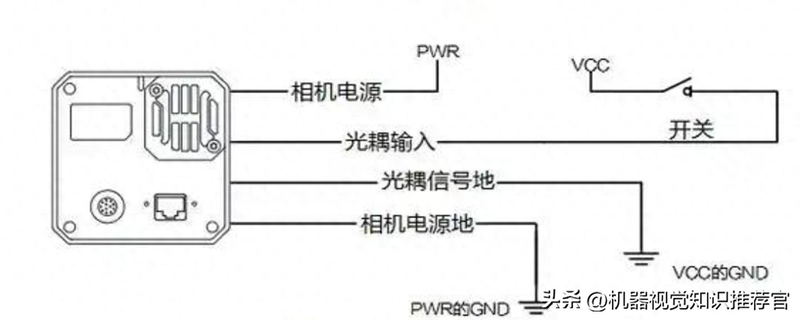
Synchronization mode: multiple cameras are taken together and are well aligned with the 4-timed sync mode: how did the synchronous 2 with the clock come with the trigger signal
To be honest, the trigger signal is to tell the camera, "it's time to take one!"
Software. Hardware iii. What are the forms of triggering “actions”
The signal is not a "shot" but a "voltage". Industrial cameras understand the following:
The way it's triggered, the way it's going, the way it's going, the way it's going, the way it's going, the way it's going, the way it's going, the way it's going, the way it's going, the way it's going, the way it's going, the way it's going, the way it's going, the way it's going, the way it's going, the way it's going, the way it's going, the way it's going, the way it's going, the way it's going, the way it's going, the way it's going, the way it's going, the way it's going, the way it's going, the way it's going, the way it's going, the way it's going, the way it's going, the way it's going, the way it's going, the way it's going, the way it's going, the way it's going, the way it's going, the way it's going, the way it'
Iv. Two trigger patterns: what's the difference between the vs level
How does it work
V. Which model would be more appropriate for different applications
The scene, the recommended mode, the reason, the security, the normal detection, the continuous pattern, the economy, the real time lab debugging, the occasional taking of one, the software triggers, the simple control, the non-wire, the high-speed production line detection, the hardware triggers, the accuracy, stability, multi-angle co-production, the synchronization or timing, the simultaneous filming, the zero error
6. Summarizing the sentence: not as complex as possible, but as appropriate